Review: The People Who Paint Rocks by Michael Stewart Hansen

Synopsis:

The People Who Paint Rocks is a multi-generational horror epic that transcends the boundaries of its genre. What begins as a period horror/drama in 1910 Santa Fe evolves into a chilling supernatural thriller by 1975, where a pregnant nurse and a detective tormented by spiritual doubt race to stop an evil older than memory. A moody, unsettling, and unrelentingly atmospheric work that grips the reader from the first page and refuses to let go.

The opening act is steeped in Western gothic, introducing us to Albert McCord, a grieving husband and father seeking revenge on the wolf that took his family. But the creature he hunts is no ordinary predator—it is the origin of something far more terrifying. Hansen cleverly seeds this early chapter with themes of loss, legacy, and the illusion of control. Albert’s struggle is both physical and existential, as he fends off his late wife’s scheming family while unknowingly chasing a malevolent force that will haunt generations to come.

Fast-forward to 1975, and the novel pivots into psychological horror, following Charlie, a pregnant nurse caught in a web of ritualistic murders, and Alonzo, a detective whose beliefs are unraveling. This shift is not jarring but deliberate, echoing the disjointed sense of time that defines much of the book’s unsettling tone. The narrative connection between Albert and the events six decades later becomes a dark thread pulling the characters toward an inevitable confrontation.

Favorite Lines:

“You got more balls than brains, son.”

“Some rocks are hard to read. Some are easy.”

“The wolf he’d hunted so determinedly suddenly seemed insignificant compared to the secrets the red rocks had been keeping.”

My Opinion:

I received a copy of this book from the author in exchange for my honest opinion.

Michael Stewart Hansen’s The People Who Paint Rocks splices a dust-blown 1910 New Mexico western to full-tilt folk-horror and somehow makes the seams feel natural. From page one we’re pitched into camp-fire mist and an injured stranger clutching a dead infant, while a spectral wolf circles just out of the light. What starts as a classic “frontier bad-omen” tale quickly sprawls across decades and states, dragging in an orphan-stuffed mission school, a crooked land grab, and a sanitarium where nuns hiss Latin that would curdle holy water. The mood stays taut because Hansen never lets the supernatural drown the human stakes; every eerie set piece, from a wolf pacing in a carnival cage to a demon-tinged asylum corridor, lands on the backs of characters already bowed by grief or greed.

At the center is Albert McCord, a rancher still raw from losing his family to a “black wolf”—animal, spirit, or both. His dogged hunt stitches the novel’s timelines together: one minute he’s evangelizing dynamite-strong coffee with his ranch hand Earl, the next he’s staring down that same black beast against a blood-red mesa. The wolf’s menace is real enough to draw actual Winchester fire, yet it also feels like whatever evil the locals have been whispering about since the priests of Our Lady of Sorrows were found slaughtered on All Hallows’ Eve. When Albert finally realizes the painted stones dotting his land may be grave markers rather than kids’ crafts, the horror pivots from creature-feature to something far older and sadder.

The large cast could have ballooned into chaos, but Hansen doles out POVs like camp-fire stories—each one lurid, self-contained, and building the overarching mythos. William Ward, the whiskey-soaked heir who wants Albert’s ranch, is more tobacco-spit than moustache-twirl, yet his brand of entitled cruelty fits the book’s grimy view of power. Later chapters jump to a 1970s asylum where Sister Kinney’s bone-snapping transformations crank the horror to Exorcist-level body fear, all while a pregnant nurse and an unnervingly prescient child pass painted rocks like cursed postcards. The tonal gear shifts might jar some readers, but the through-line—wolves, faith, and buried sins—keeps the engine firing.

What really sells the novel is the language: plain-spoken frontier grit bumping against sudden poetry. Hansen can describe a saloon stare-down with the same weight he gives a wolf’s last breath or a nun’s Latin snarl, and the dialogue rings true whether it’s ranch-hand humor or courtroom doom-saying. If there’s a flaw, it’s that the time jumps demand close attention—blink and you’ll miss which decade you’re bleeding in—but the payoff is worth the occasional whiplash. By the time Albert stands ankle-deep in desert soil written over with painted stones, the book has earned every chill.

Summary:

Overall, The People Who Paint Rocks is a gritty, big-hearted mash-up of western, creature feature, and generational ghost story. Come for the demon wolf and six-gun showdowns, stay for the way Hansen turns painted pebbles into the creepiest grave markers this side of Stephen King country. It’s messy, mean, and—when the sun finally comes up over Red Rocks—oddly hopeful. Happy reading!

Check out The People Who Paint Rocks here!
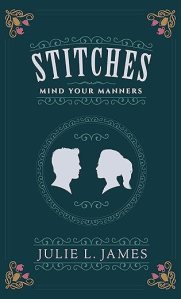


Review: Stitches by Julie L. James

Synopsis:

After an unpleasant experience getting stitches leaves her disenfranchised with doctors, Hero Atticus Taylor decides to be proactive. Capitalizing off of her literary-inspired name, she creates the Hero Atticus Taylor School of Manners for All Doctors, and uses both her prejudice toward doctors and her passion for Emily Post to educate medical students in all forms of etiquette. Her job has been a fulfilling and successful endeavor, until an agitating interaction with a former heart surgeon has Hero’s manner betraying her.

Doctor Lee Taylor is interested in enrolling the surgical students he oversees in Hero’s manners school but he can’t help himself from asking her on a date within minutes of meeting her. He is direct, decisive, and confident. Hero’s refusal and assumption that he is just like every other doctor who belittles her profession, only makes her more interesting to him. Even though he is completely smitten with Hero, Lee cannot see to gracefully reveal his secrets as their courtship continues.

Favorite Lines:

“If you leave this school having learned one thing, let it be this: Manners are the glue of society.”

“Don’t you all think she should have to go out to dinner with me to make up for the ruined sweater, and the permanent scar I’ll have on my stomach until I die?”

“Yes. My doctors permit me to have two cups a day. One with children so that I can scare them half to death, and one with a beautiful face for the evenings.”

My Opinion:

I received a copy of this book from the author in exchange for my honest opinion.

Julie L. James’s Stitches starts with what feels like a rom-com collision in a hospital corridor: Hero Taylor, etiquette coach extraordinaire, is determined to civilize doctors, while superstar surgeon Dr. Lee Taylor strides in convinced he needs no polishing. Their very first run-in—complete with an airborne water bottle—makes it clear the book will balance slapstick energy with a sharp look at professional pride.

Hero’s crusade for better bedside manners grew out of a childhood accident that left her literally stitched together and philosophically convinced that courtesy saves lives. The classes she runs at her “Madhatters School” offer endless comic fodder as she pits teacup drills and mock-patient role-plays against Lee’s arched-eyebrow scepticism. Their back-and-forth lands because both characters mean well; it’s just that one teaches polite small talk and the other performs trauma surgery.

Halfway through, the story pivots: Lee reveals a personal health crisis that suddenly makes Hero’s lessons feel less like window dressing and more like survival gear. The tension between keeping calm for patients and facing your own mortality gives the romance real weight, turning former sparring partners into reluctant confidants.

James keeps the mood light with zippy dialogue and meme-ready banter, yet she layers in enough medical detail and emotional honesty to ground the comedy. Late-night heart-to-hearts, a chaotic children’s tea party, and a surprisingly tender discussion of Greek myths all showcase writing that moves smoothly from laugh-out-loud to lump-in-throat without whiplash. The result is a love story that respects both the scalpel and the spoon.

Summary:

Overall, Stitches is a breezy weekend binge for readers who like their enemies-to-lovers stories sprinkled with hospital drama and anchored by genuine stakes. Expect quick laughs, a few gut-punch moments, and the feel-good reminder that a little kindness—delivered at exactly the right moment—can be as healing as any procedure. Happy reading!

Check out Stitches here!


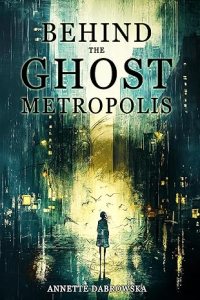
Review: Behind the Ghost Metropolis by Annette Dabrowska

Synopsis:

Fans of Sylvia Plath, “The Flower That Went Mad” and Charles Bukowski will find pieces of themselves in this edgy debut poetry collection.

I look right through the light
it fills me with courage and strength
to fight against my demons
I’m not alone anymore
I slowly stand up


Behind the Ghost Metropolis dives into the shadows of the mind—mental health, trauma, loneliness—but it also finds light in hope, travel, and resilience. Written during Annette’s manic and depressive episodes, these poems are raw and deeply personal, reflecting her struggle with bipolar disorder and her fight to rise above the odds.

She wrote these poems to break the stigma around mental illness and to remind anyone feeling lost or defeated that there is always hope. This book is for those who’ve been knocked down, dragged through darkness, and still seek their own hidden light.

When writing, Annette draws inspiration from some of the greatest poetic minds in American and Polish contemporary poetry – Sylvia Plath, Anne Sexton, Beatniks, Charles Bukowski, Edward Stachura, and Rafał Wojaczek.

Just like her favorite poets, she often finds herself in different dimensions of cruel whispers, far from the dreamland. But that’s the price she pays for her creations, and she keeps writing because of this artistic force inside her heart and mind.

Favorite Lines:

As I do with all short story and poetry collections, rather than picking out specific lines, I would like to highlight a few of the poems that resonated the most with me:  Youth, Wild Horses, Illusion, 43. ***, 45. ***

My Opinion:

I received a copy of this book from the author in exchange from my honest opinion.

I would like to put a trigger warning as this collection does deal with complex subject matters such as mental health and trauma and may not be suitable for everyone.

I have always been a big fan of poetry but it is not often that I get a request to review a collection on Likely Story so I knew I had to jump at the chance especially when reading that Dabrowska draws inspiration from many poets including Charles Bukowski; who I adore.

Annette Dabrowska’s debut poetry collection, Behind the Ghost Metropolis, is an evocative exploration of the human condition that dives deeply into themes of mental health, trauma, resilience, and hope. This raw and intimate collection balances a hauntingly beautiful portrayal of darkness with moments of light and healing, creating a vivid emotional journey that resonates on a deeply personal level.

Dabrowska’s prose is striking in its simplicity and power. With language that is both unflinching and tender, she captures the turmoil of inner battles and the fragile yet indomitable strength of the human spirit. Each poem feels like a window into the poet’s soul, offering readers a sense of shared experience and connection. Her ability to weave universal emotions into such personal reflections is what makes this collection truly remarkable.

The book is a masterclass in balancing vulnerability with empowerment. Poems reflecting on loss, despair, and loneliness are interwoven with moments of courage, self-discovery, and the search for freedom. Dabrowska’s imagery strikes a chord that lingers long after the final page.

One of the collection’s greatest strengths is its accessibility. Dabrowska doesn’t rely on ornate language or obscure references to convey her emotions. Instead, she uses plain yet poignant language that cuts straight to the heart, making these poems feel like personal confessions shared in trust. This openness invites readers to find pieces of themselves within the lines, creating a deeply immersive experience.

The shorter poems in particular stand out, delivering bursts of raw emotion that are both intense and immediate. At the same time, the collection’s longer pieces delve into the complexities of human resilience, showing that even in moments of despair, there is always a glimmer of hope to be found.

Behind the Ghost Metropolis is a testament to the power of poetry to heal, connect, and inspire. It’s a collection that reminds us that we are never truly alone, even in our darkest moments, and that strength can be found in embracing vulnerability. Whether you’re a seasoned poetry lover or new to the genre, this collection offers a deeply moving and unforgettable experience.

Summary:

Overall, I would highly recommend this collection of poems for anyone seeking a raw and relatable exploration of the human spirit. Dabrowska’s voice is a powerful addition to contemporary poetry, and her debut is sure to leave a lasting impact.

Check out Beyond the Ghost Metropolis here!


Review: MMMM: and the music that made me by Heather Joy

Synopsis:

Do you need a laugh or a mindless read? How about song suggestions for your next playlist? You can find that and more in Heather Joy’s explicit debut.

Heather Joy’s essays are balanced with pop culture references and her tireless crusade to spark a connection (which sometimes leans on the debaucherous side of things). 

Favorite Lines:

As always with short stories and collections, rather than picking favorite lines, I am picking a favorite chapter. In this memoir, the chapter that I found particularly engaging, which quite frankly surprised myself, was “Mixed Media”. It focuses on today’s society’s addiction to technology as well as the impact that art has had across generations. Joy makes some compelling arguments that feel loud and bold but I found that I respected many of them.

My Opinion:

I received a copy of this book from the author in exchange for my honest opinion.

This is my first book from Joy and she had me hooked from the Introduction. I knew rather quickly that her sense of humor and writing style were going to have me aggressively exhaling out of my nose many times throughout this book (I’m sure you know what I mean) and I was excited to dive right in as I am always a fan of creative works such as these. 

A collection of 13 personal essays, Joy takes us through her life from her early party-girl days to becoming a single mother working for engineering firms. This memoir is full of raw honesty, dark humor, and overall compelling writing. While Joy is writing from her own personal experiences, I found that I could relate to a lot of them in my own way and I imagine that other readers will feel the same. I am appreciative that Joy shared such deeply personal experiences with us to remind us that we are not alone in our own experiences and the impacts they leave on our lives.

I think what I found most compelling in this collection was Joy’s author voice and tone. I found that Joy brought a unique sense of energy and creativity that really shined through and kept me thoroughly engrossed and entertained throughout the memoir. She is brutally honest both with herself and the world around her which I thought only added to her remarkable storytelling abilities and brought a very personal but relatable perspective on a variety of topics.

Summary:

Overall, I found this book to be incredibly rewarding and I quite frankly feel a bit awe struck that I got to experience it. I would call this a diamond in the rough and would recommend to anyone who is interested in personal memoirs that focus on one woman’s take on just everything life.

Check out MMMM: and the music that made me here!


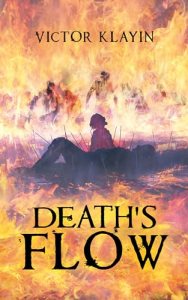
Review: Death’s Flow by Victor Klayin

Synopsis:

Sometimes, you’re your own worst enemy…
Zaleck, a young albino farmer’s son from a little backwater town, wakes up not to the comfort of his home, but to the confines of a prison cart. His limbs bound, his voice stolen by a gag, panic mounts as he contemplates his fate, unaware of why he even became a target.
Yet, amidst despair, fate — or perhaps something more arcane — intervenes as he’s freed with the help of two other captives: Arneth and Vellis. Arneth, a scholar belonging to an obscure order of master manipulators, who wields knowledge as well as a sword, and who seems to manipulate fate itself. Vellis, a master markswoman whose prowess with the bow is matched only by the shadows of her past. Her ties to the nobility are as complex as the web of secrecy around her. An ex-soldier, she carries the weight of her skills and the burden of her past, her eyes always on the lookout for the next threat, her hand always steady.
Pursued relentlessly by their captors, in service of a dark priest from the powerful “Death Kingdom”, the trio must fight not only to survive, but also learn to trust and work together, uncovering the true reason for their capture.
Soon, they find they might even be able to hide from the slavers, but they can’t ever outrun the consequences of their actions.

Favorite Lines:

“Lying is so classless. It’s much more fun having the truth work for you.”

“Blame and responsibility are different things, Vel. Maybe I’m not to blame, but I can stop this, so I choose to make it my responsibility.”

My Opinion:

I received a copy of this book from the author in exchange for my honest opinion.

This story follows Zaleck who is stolen away from his family’s farm when he is captured by slavers. He teams up with Arneth and Vellis as they try to uncover the mystery of why they were targeted in the first place and attempt to escape the very slavers that captured them.

I wasn’t quite sure what to expect when I decided to read this book but I can tell you that I was not disappointed in my decision. I found myself drawn in from page one with an excellent hook and was hardly able to put the book down until the last page because I needed answers!  Klayin did a great job at building an immersive world that made me feel like I was there right along with the characters; readers will even get a map at the start of the book to reference whenever they need. I also thought that the character development was very well executed. I really enjoyed reading about Zaleck, Arneth, and Vellis’ journeys not only in the outside world but also within themselves. I also just thought that the concept of flow was really interesting and how you can never do the same thing twice with it.

I don’t really have any complaints with this one. I thought the story was unique, the character writing was well done, and the pacing was just right. 

Summary:

This book has it all – adventure, suspense, mystery, magic, action, and fantasy. Klayin did a fantastic job of weaving these themes together into an addictive experience that will leave readers wanting more. I would recommend to anyone but especially those that have interests in one of the themes I mentioned previously. Happy reading!

Check out Death’s Flow here!


Review: Starting Over by L.F. Roth

Synopsis:

Embark on a transformative journey through the hallowed halls of an English boarding school in the enchanting year of 1966. In Starting Over, a captivating tale unfolds as we are introduced to a diverse cast of characters who, against the backdrop of their extraordinary work with children who possess unique abilities, navigate their own intricacies and conflicts.

Amidst the corridors that echo with the dreams and challenges of the young minds they nurture, these remarkable individuals find solace and strength in their shared vulnerability. Their distinctive needs intertwine, creating a tapestry of complex relationships, unexpected alliances, and profound personal growth.

As the story unfurls, the characters are confronted with the inevitable winds of change, sweeping away the familiar to make room for new beginnings. Through trials and triumphs, they discover the resilience of the human spirit and the extraordinary power of embracing the unknown.

Favorite Lines:

Please write something that’ll help me stay awake.
Like what?
Oh, anything. Use your imagination.
I can’t. I’m so tired I could hallucinate.
So am I. Addicts should do night duty instead of drugs.

“And time, as he himself was well aware, will drag when you least want it to.”

My Opinion:

I received a copy of this book from the author in exchange for my honest opinion.

It has been quite some time since I have read a book like this. The easiest way I can describe it is it made me thinking of assigned books in school like Catcher in the Rye, The Outsiders,  or The Grapes of Wrath. Not because they share any particular themes or similarities, but the vibe of cozy, slice of life type of narrative was there. I know I am going to catch flack for calling any of those books listed above cozy or slice of life but it is the closest I can get to putting my finger on the emotions I felt reading this book.

This story is a pretty calm, tame book featuring a decently sized cast of characters that at first I had a hard time wrapping my head around but as the story goes on, it gets easier. I actually ended up appreciating the level of care Roth put into describing each character and scene throughout the book.

I don’t really  have any complaints for this book as long as you know what you’re getting into. If you’re looking for a page turning, at the edge of your seat type of book then this is not it. This is for lazy weekends in the sun when you’re looking to relax and not think too hard.

Summary:

Overall, if you like calm fictional books that feel like sitcoms with a variety of characters, then this book could be for you!

Check out Starting Over here!