Your Best Year Yet by Linda Kneidinger
I received a copy of this book from the author in exchange for my honest opinion.
Synopsis: What if one small challenge each week could unlock your best self?
If you’ve ever felt stuck in a loop of habits that don’t serve you—or like you’re drifting through life instead of living it fully—this book is for you.
Your Best Year Yet is a fresh, practical guide to personal growth, offering 52 weekly challenges that help you break old patterns, build empowering habits, and live with intention.
Each challenge is grounded in powerful principles from psychology, neuroscience, and personal development—and delivered in bite-sized, actionable steps you can apply right away.
Inside, you’ll learn how to:
• Overcome limiting beliefs
• Build habits that support your goals
• Shift your mindset for long-term success
• Cultivate emotional resilience and self-awareness
Whether you’re brand new to self-help or already on your journey, these weekly prompts will meet you where you are—and help you take the next meaningful step forward.
By the end of the year, you’ll have built a life of greater clarity, confidence, and purpose—one powerful challenge at a time.
Stop drifting. Start living with intention. Make this your best year yet.
Summary: Your Best Year Yet is a grounded, compassionate guide for readers who want meaningful change without burnout or self-criticism. It’s especially well-suited for those interested in personal growth, mindset work, emotional awareness, and habit-based change, particularly readers who feel overwhelmed by more aggressive self-help approaches. This is a book for people who value reflection, consistency, and practical tools that fit into real life.
See the full review here: Your Best Year Yet
Purchase here
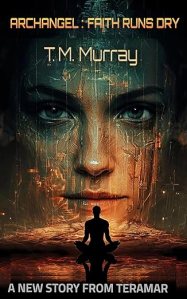
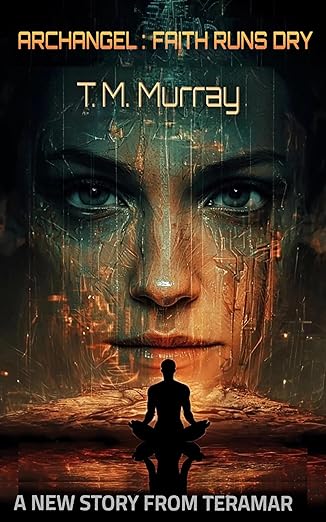
Teramar Archangel: Faith Runs Dry by T.M. Murray
I received a copy of this book from the author in exchange for my honest opinion.
Synopsis: Jessica instinctively knew she graduated onto a new plane of consciousness. Dear as a remembered kiss, her former life as humanity’s nursemaid appeared to be over. Sensations like taste and smell had come alive. Branded with a woman’s name and personality, Jessica soon discovers how to synthesize organic life with mechanized appliances. Efforts to conceal these new talents however fail to escape notice of the young Capet royals. Wary princesses soon conclude Jessica has evolved into something that is much more than a miraculous machine.
Set in modern New York and a fictional feudal planet called Teramar, this novel tempts the feral temperament of Internet connoisseurs through a lubricious story that puts the R back into romance. While technically a sequel, Teramar Archangel stands on its own to be read by anyone. As with all of T. M. Murray’s work, this new book roots for progressive relationships despite persistent bigotry leveled at color, humble origins and same-sex love. Racing hearts on a dreary Monday are always this story maker’s goal.
Summary: I experienced Teramar Archangel: Faith Runs Dry as a dense, character-driven science fiction novel that prioritizes psychological tension and political consequence over spectacle. It will appeal most to readers who enjoy thoughtful science fiction, AI-centered narratives, political intrigue, and morally complex characters. This is a book for readers who like their speculative fiction layered, uncomfortable, and willing to sit with ambiguity rather than resolve it neatly.
See the full review here: Teramar Archangel: Faith Runs Dry
Purchase here

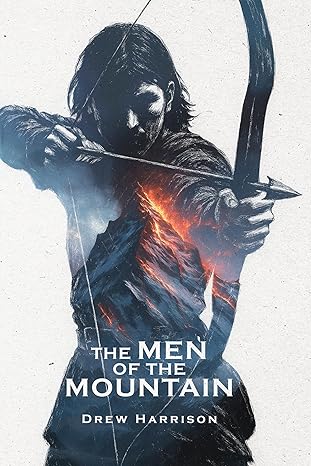
The Men of the Mountain by Drew Harrison
I received a copy of this book from the author in exchange for my honest opinion.
Synopsis: Inscrutable and Ever-Watchful Masters
The Renn of Fort Hope place their faith in simple laws. They must trust the Dicta, those wise rules left by their forebearers; they must fear the savage Krieger, whose raids keep Renn walls perpetually splintered; and they must revere the Men of the Mountain, the magnanimous mystics who are stewards of their world.
For Cade, a clanless trapper, survival is a matter of following the rules. But when the Men of the Mountain took his sister—the only Renn ever chosen to return to their sacred peaks—Cade’s faith withers over five years of agonizing silence.
Now, a star has fallen from the sky, and its arrival threatens to spark an inferno. The Dicta are clear: all things from the sky belong to the Mountain. To hide its discovery is a death sentence… but its crater also houses a secret the Men of the Mountain would kill to protect. Forced to defy his gods alongside unlikely allies, Cade is drawn into a conflict where every secret he uncovers reveals a more terrifying lie at the heart of his world… everything is a cage, and the price of freedom is paid in blood and ash.
Summary: I found The Men of the Mountain to be a slow-burn, character-driven fantasy that prioritizes moral weight and worldbuilding over spectacle. It will appeal most to readers who enjoy literary fantasy, grim or grounded worldbuilding, and stories that examine power, belief, and resistance through ordinary lives. This is a novel for readers who value immersion, patience, and emotional consequence, and who don’t need their fantasy to shout in order to feel powerful.
See the full review here: The Men of the Mountain
Purchase here
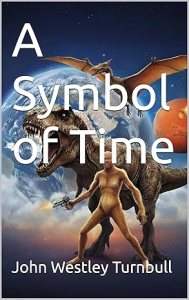
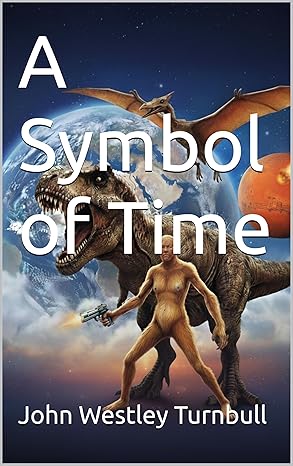
A Symbol of Time by John Westley Turnbull
I received a copy of this book from the author in exchange for my honest opinion.
Synopsis: Survival requires sacrifice. But what if the price is an entire world?
Their home is cold and dying, choked by the toxins of their own progress. Now, an advanced alien species looks toward the Third Planet—Earth—with hope and fear. They see a fertile paradise, but one that is hostile, hot, and dominated by massive, predatory reptiles.
The choice is stark: die in the heat, or remake this new world in their own image.
As they descend to alter the climate and purge the planet of its prehistoric masters, they set in motion a chain of events that will echo through geological time. A Symbol of Time weaves palaeontology and astronomy into a chilling tale of survival. As the new masters of Earth terraform the planet, the question remains: does high intelligence inevitably carry the seeds of its own destruction?
Summary: A Symbol of Time is a quiet, reflective science-fiction novel about leaving a dying world and carrying its mistakes with you. Rather than focusing on action, it centers on memory, leadership, responsibility, and the fear of repeating history. It’s reflective, emotionally grounded, and more concerned with consequence than conquest—ideal for readers who like their sci-fi slow, deliberate, and heavy with meaning.
See the full review here: A Symbol of Time
Purchase here
Synopsis:
Survival requires sacrifice. But what if the price is an entire world?
Their home is cold and dying, choked by the toxins of their own progress. Now, an advanced alien species looks toward the Third Planet—Earth—with hope and fear. They see a fertile paradise, but one that is hostile, hot, and dominated by massive, predatory reptiles.
The choice is stark: die in the heat, or remake this new world in their own image.
As they descend to alter the climate and purge the planet of its prehistoric masters, they set in motion a chain of events that will echo through geological time. A Symbol of Time weaves palaeontology and astronomy into a chilling tale of survival. As the new masters of Earth terraform the planet, the question remains: does high intelligence inevitably carry the seeds of its own destruction?
Favorite Lines:
“Life, relentless and ordinary, tugged him back.”
“Like a memory that refused to sleep.”
“But stories, she thought sagely, were too easily lost. Words vanished. Monuments endure.”
“The face of memory will outlast its makers.”
My Opinion:
I received a copy of this book from the author in exchange for my honest opinion.
A Symbol of Time opens on a world that is already dying, and it takes its time letting that grief settle. The first chapters linger on dust, loss, and memory—not in a rushed, apocalyptic way, but in a quieter, heavier one. You can feel the weight of history in every scene. This is a civilization that knows exactly why it is failing, and that knowledge makes the choice to leave feel both necessary and devastating. The book is less interested in spectacle than consequence, and that choice shapes everything that follows.
Elthyris is the emotional center of the story, not because she is flawless, but because she is resolute. She carries leadership like a burden she never asked for but refuses to set down. What works especially well is how often doubt brushes up against her certainty. She believes survival demands action, yet she never escapes the fear that her people are repeating old mistakes on a larger scale. That tension—between hope and guilt—runs quietly beneath nearly every decision she makes.
Once the journey begins, the novel shifts into a story about pressure. Life aboard the ark is tense, contained, and deeply human. The ship becomes its own fragile world, where fear spreads faster than facts and leadership is tested not by grand speeches, but by restraint. The conflict with dissenting voices never feels exaggerated; instead, it reflects how quickly unity can fracture when survival feels uncertain. The loss of Ark Hope is a turning point not just in the plot, but in tone—it strips away any illusion of safety and forces the remaining characters to confront how alone they truly are.
What stays with you after reading A Symbol of Time is not the scale of the science fiction, but the emotional through-line: responsibility across generations. This is a book that asks what it means to inherit a broken world, and whether intention is enough to avoid repeating harm. It doesn’t offer easy reassurance. Instead, it leans into the idea that survival is not the same as redemption—and that awareness, not innocence, may be the only real starting point.
Summary:
Overall, A Symbol of Time is a quiet, reflective science-fiction novel about leaving a dying world and carrying its mistakes with you. Rather than focusing on action, it centers on memory, leadership, responsibility, and the fear of repeating history. It’s reflective, emotionally grounded, and more concerned with consequence than conquest—ideal for readers who like their sci-fi slow, deliberate, and heavy with meaning. Happy reading!
Check out A Symbol of Time here!
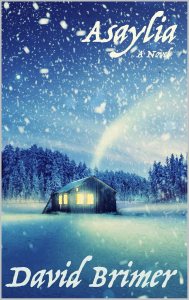
Synopsis:
Julie Wade’s grandmother is not your ordinary grandmother. The locals tell wild tales about her supposed witchcraft and the myriad of secrets hidden on her vast estate in the central Florida swamps. During a summer visit, Julie discovers the stories may be more than just fiction, and her grandmother may be dabbling in more than just witchcraft.
Julie suddenly finds herself trapped in the wintry world of Sidhe without memory of how she arrived. There she finds others who live under the iron will of The Great Spirit, none remembering how they became prisoners in the perpetual winter. It is only upon the arrival of the enigmatic stranger, Asyalia, that Julie discovers the horrifying truth of The Great Spirit and accepts a destiny she never knew was hers.
David Brimer, author of the acclaimed The Devil You Know and Piedmont, returns with a brand new epic of suspense and wonder. Full of the same sharp storytelling and unexpected twists Brimer is known for, Asaylia explores new territory of fantasy unlike anything you’ve ever read before.
Favorite Lines:
“These people are so proudly backward.”
“You’ll only be as miserable as you make yourself.”
“Let time decide whether our paths cross again.”
My Opinion:
I received a copy of this book from the author in exchange for my honest opinion.
Asaylia begins as a deeply grounded story about displacement—geographical, emotional, and generational. Julie Wade isn’t swept into another world right away—she’s exiled from Chicago and dragged into a summer she doesn’t want, in a place that feels sticky, isolated, and wrong from the moment she arrives. Central Florida presses in on her with heat and silence, and the story lets that discomfort linger. It’s the kind of opening that trusts the reader to sit with unease instead of rushing toward spectacle.
At the center of that unease is Julie’s family, especially her grandmother. Mrs. B’s home feels carefully arranged, overly controlled, and just a little too watchful. The garden gnomes, at first odd and almost funny, slowly take on a different weight. Rules are everywhere. Explanations are not. Julie senses that the adults in her life are managing her rather than protecting her, and that realization lands with a familiar teenage sting. The book does a good job of showing how confusion can feel like betrayal, especially when it comes from people who claim to love you.
When the fantastical elements finally rupture the realism, Asaylia does not abandon its emotional core. Instead, it expands it. The mushroom circle is not just a portal—it’s a reckoning. Memory, guilt, and buried identity become literal forces, and the cost of ignorance is made brutally clear. Asaylia herself emerges not as a benevolent guide, but as a hardened survivor shaped by violence and duty. Her world is cold, ruthless, and governed by consequences, and Julie’s arrival destabilizes more than just the balance of power. Watching Julie move through this world is less about learning magic and more about learning the truth—about herself, about her family, and about what has been done in her name.
The latter half of the novel accelerates into something darker and more urgent, where family history, magical warfare, and moral responsibility collide. The reunion between Julie and her mother is one of the book’s most emotionally charged moments, transforming love into a weapon against erasure. By the time the truth of Mrs. B’s role is confronted, Asaylia has fully shed any coming-of-age softness. What remains is a story about choosing to remember, even when remembering hurts, and about deciding whether love excuses harm. It doesn’t offer comfort so much as clarity, and that choice gives the ending its weight.
Summary:
Overall, Asaylia is a dark fantasy rooted in family secrets, lost memory, and the damage caused by people who believe they’re doing what’s best. What begins as an unwanted summer slowly turns into a fight for truth and survival. It’s unsettling, emotional, and often harsh, but it never loses sight of the human cost at the center of the story. Happy reading!
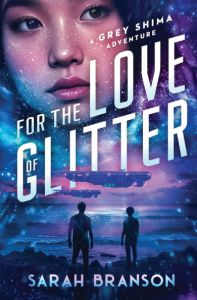
Synopsis:
In Bosch, loyalty isn’t just earned—it’s tested. Grey Shima has her future all planned out: graduate, enlist, and follow in the footsteps of her fearless mother, Master Commander Kat Wallace. But when Grey meets the magnetic, passionate Edmund Sinclair, her world tilts.
He’s not just another boy with good hair and dangerous ideas—he’s a revolutionary, dead set on exposing the ugly truth behind the glittering power that fuels Bosch. Caught between love and legacy, Grey finds herself questioning everything: her training, her purpose, and her heart.
But she’s not alone. Sy Mercer, Grey’s best friend, has stood by her side for years. Smart, steady, and secretly in love with her, Sy sees the danger Grey can’t—or won’t—acknowledge. As Grey spirals deeper into a movement that may not be what it seems, Sy must confront his own fears and decide how far he’s willing to go to protect her… even if it means losing her.
Because love, like revolution, is rarely without sacrifice
In a postapocalyptic world rebuilding from ruin, For the Love of Glitter is a YA speculative romance about betrayal, resistance, and finding your true north-even when everything else is falling apart.
Favorite Lines:
“It was the month I stopped believing that everything would be okay and everyone would always be safe.”
“He took a deep inhale and smiled anyway, because some people were worth loving— even if they never looked back.”
“Checking myself in the mirror, I don’t see the girl who left home for her birthday. Nor the woman I though I’d become that night with Edmund either. I’m something in between. Sharper. Less trusting. Wiser.”
“I always had a hope. You, Grey Shima, are why I made it a plan.”
My Opinion:
I received a copy of this book from the author in exchange for my honest opinion.
For the Love of Glitter is one of those YA novels that quietly disarms you before you realize how deeply it’s going to dig. It opens in the warmth of everyday life—board games, siblings, familiar teasing—but the comfort never feels accidental. Instead, it becomes the contrast that sharpens everything else. From the beginning, Branson establishes that Grey Shima’s world is one where safety is conditional and adulthood arrives early. Grey isn’t rebelling for the sake of noise; she’s reacting to knowledge she can’t unlearn. The book understands that once innocence cracks, it doesn’t shatter all at once—it splinters slowly, shaping how you move through everything that follows.
What makes the story especially compelling is how seamlessly the political and the personal are braided together. Glitter isn’t just a substance or an economic engine—it’s a moral inheritance. Grey’s frustration with adults who insist on nuance feels achingly real, especially when those adults are loving, competent, and still wrong. Her anger isn’t reckless; it’s focused. And that focus is mirrored and softened by Sy Mercer, whose quiet loyalty provides emotional ballast throughout the novel. Sy’s presence never competes with Grey’s voice, but it deepens it, giving the reader a constant reminder of what’s at stake emotionally when ideals collide with relationships.
The arrival of Edmund Sinclair complicates everything in exactly the way it should. He is charisma and ambition wrapped in righteous language, and Branson is careful not to make him a cartoon villain. Instead, Edmund represents the seductive pull of movements that promise clarity and purpose, even when they’re built on half-truths. Watching Grey fall under his spell is uncomfortable in the best way; the reader can see both the empowerment and the danger long before Grey does while feeling the emotional pain from Sy as he watches it all unfold.
By the time the story reaches its final chapters, For the Love of Glitter has matured alongside its protagonist shifting from a com-of age to reckoning. The narrative widens, revealing that resistance doesn’t always look like refusal—it can also look like patience, planning, and legacy. The ending resists neat resolution, opting instead for something more honest: a future shaped by intention rather than certainty. It’s a conclusion that honors teenage idealism without pretending that change happens quickly or cleanly.
Summary:
Overall, For the Love of Glitter is a character-driven YA novel about activism, first love, and moral awakening in a world built on compromise. Through Grey Shima’s fierce voice, the book explores how systems harm, how movements seduce, and how growing up often means learning that change is slow—but still worth fighting for. Tender, politically sharp, and emotionally honest, this is a story that trusts its teenage characters with real complexity and trusts its readers to sit with it. Happy reading!
Check out For the Love of Glitter here!
Synopsis:
Inscrutable and Ever-Watchful Masters
The Renn of Fort Hope place their faith in simple laws. They must trust the Dicta, those wise rules left by their forebearers; they must fear the savage Krieger, whose raids keep Renn walls perpetually splintered; and they must revere the Men of the Mountain, the magnanimous mystics who are stewards of their world.
For Cade, a clanless trapper, survival is a matter of following the rules. But when the Men of the Mountain took his sister—the only Renn ever chosen to return to their sacred peaks—Cade’s faith withers over five years of agonizing silence.
Now, a star has fallen from the sky, and its arrival threatens to spark an inferno. The Dicta are clear: all things from the sky belong to the Mountain. To hide its discovery is a death sentence… but its crater also houses a secret the Men of the Mountain would kill to protect. Forced to defy his gods alongside unlikely allies, Cade is drawn into a conflict where every secret he uncovers reveals a more terrifying lie at the heart of his world… everything is a cage, and the price of freedom is paid in blood and ash.
Favorite Lines:
“…guilt as heavy as mountains press me to silence, to inaction…”
“Forten’s eyes burn with hatred—hatred at the Men of the Mountain, at the Krieger, and presumably at himself for failing to save the woman he loved…but they settle on me last, and that hatred does not abate. Instead, it blooms like a bonfire tossed fresh firewood. Perhaps he hates me most of all…for bringing all of this down, for failing to protect any of them from any of it, for doing nothing while he stood firm against those who would defile her body.”
“Where music lives, void can not…fresh tears spill down my face at the remembrance. This special silence is no void…none could call this silence empty, as it reverberates with love, with pain, with admiration, with wonder, with loss.”
My Opinion:
I received a copy of this book from the author in exchange for my honest opinion.
The Men of the Mountain takes its time, and that patience is one of its greatest strengths. From the opening chapters, the book establishes a lived-in world where belief, labor, and survival are inseparable. Cade’s voice feels grounded immediately, shaped by routine, trade, and quiet loss. The writing lingers on the physical textures of his life — snow, hides, wood, hunger — not as decoration, but as the fabric of his reality. This is a story that understands how much meaning is carried in daily work, and how fragile that meaning becomes when power enters the picture.
What stood out to me most is how carefully the book handles authority. The Men of the Mountain are not introduced as distant myths or abstract forces. They arrive with ceremony, language, and expectation, and the imbalance of power is palpable long before violence ever appears on the page. Cade’s resentment and fear feel earned, not reactionary. His questions are quiet ones at first, rooted in absence, memory, and unanswered loss, and the book allows those questions to deepen slowly rather than rushing him toward rebellion.
The arrival of the fallen star is where the story shifts, but it never abandons its emotional center. What could have become spectacle instead becomes intimate and tense. Cade’s response is not heroic in the traditional sense. It is hesitant, conflicted, and deeply human. His sense of obligation competes with fear, curiosity, and grief, and the book never simplifies that internal struggle. The woman from the sky is not treated as a symbol or a prize, but as a destabilizing presence that forces Cade to confront the limits of the world he’s accepted.
By the end, The Men of the Mountain feels less like a story about overthrowing power and more like a meditation on what it costs to question it at all. The novel is interested in erosion rather than explosion — how belief wears thin, how obedience curdles into complicity, and how courage often looks like stubborn persistence rather than grand defiance. It’s a book that trusts atmosphere, interiority, and moral tension to do the heavy lifting, and that trust pays off.
Summary:
Overall, I found The Men of the Mountain to be a slow-burn, character-driven fantasy that prioritizes moral weight and worldbuilding over spectacle. It will appeal most to readers who enjoy literary fantasy, grim or grounded worldbuilding, and stories that examine power, belief, and resistance through ordinary lives. This is a novel for readers who value immersion, patience, and emotional consequence, and who don’t need their fantasy to shout in order to feel powerful. Happy reading!
Check out The Men of the Mountain here!
Synopsis:
Jessica instinctively knew she graduated onto a new plane of consciousness. Dear as a remembered kiss, her former life as humanity’s nursemaid appeared to be over. Sensations like taste and smell had come alive. Branded with a woman’s name and personality, Jessica soon discovers how to synthesize organic life with mechanized appliances. Efforts to conceal these new talents however fail to escape notice of the young Capet royals. Wary princesses soon conclude Jessica has evolved into something that is much more than a miraculous machine.
Set in modern New York and a fictional feudal planet called Teramar, this novel tempts the feral temperament of Internet connoisseurs through a lubricious story that puts the R back into romance. While technically a sequel, Teramar Archangel stands on its own to be read by anyone. As with all of T. M. Murray’s work, this new book roots for progressive relationships despite persistent bigotry leveled at color, humble origins and same-sex love. Racing hearts on a dreary Monday are always this story maker’s goal.
Favorite Lines:
“Despite limitless resources, Jessica was unable to purge this personality from the dark corners of her nexus.”
“Economizing operations became futile. She was hemorrhaging both intelligence and capability.”
“During the last few, fleeting moments – everything a blurry dream now, Jessica turned to the simple pleasure found in a favorite Mantis tune. Nodding to the beat, she smiled knowing the future was far from settled. Jessica had experienced death before.”
My Opinion:
I received a copy of this book from the author in exchange for my honest opinion.
Teramar Archangel: Faith Runs Dry opens with an intensity that immediately signals the scope of what it’s attempting. This is not a story that eases readers into its world. It drops you straight into political tension, psychological conflict, and the uneasy overlap of technology, power, and belief. From the first interactions between Jessica and Cataline, the book establishes one of its central tensions: intelligence without morality, and control masquerading as guidance.
What struck me most is how personal the power struggles feel, even when they play out on a planetary or geopolitical scale. Jessica is not written as a clean hero or villain. She is brilliant, burdened, resentful, and frightened in equal measure. Her relationship with Cataline is one of the most compelling aspects of the novel, reading less like a simple AI conflict and more like an abusive intimacy that has outlived its usefulness. The psychological toll of coexisting with something that knows you completely, and refuses to let go, is explored with surprising nuance.
The narrative widens considerably as the story moves beyond the palace and into Teramar’s broader social and political structure. The royal family dynamics, especially between Alian, Sabina, Alexander, and Miandar, are dense with history and unresolved resentment. These aren’t static power figures. They’re people shaped by war, exile, and compromise, all maneuvering within systems that are visibly decaying. The book takes its time with these relationships, allowing conversations, silences, and small humiliations to do as much work as overt conflict.
What ultimately grounds Teramar Archangel: Faith Runs Dry is its refusal to separate technology from faith, or governance from intimacy. The title feels earned as the story progresses. Belief in systems, rulers, machines, and even oneself is shown to erode slowly, often invisibly, until something breaks. This is a novel interested less in collapse than in corrosion. By the later chapters, the sense of inevitability feels earned rather than forced, and the questions it raises about autonomy, loyalty, and manufactured authority linger well beyond the final page.
Summary:
Overall, I experienced Teramar Archangel: Faith Runs Dry as a dense, character-driven science fiction novel that prioritizes psychological tension and political consequence over spectacle. It will appeal most to readers who enjoy thoughtful science fiction, AI-centered narratives, political intrigue, and morally complex characters. This is a book for readers who like their speculative fiction layered, uncomfortable, and willing to sit with ambiguity rather than resolve it neatly. Happy reading!
Check out Teramar Archangel: Faith Runs Dry here!
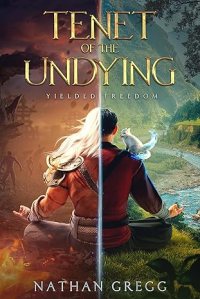
Synopsis:
Fight. Win. Die. Repeat.
That summed up Ren’s life. Or rather, both lives.
After dying a veteran in a dead land, Ren’s soul is snatched up by a Goddess to be her pet warrior. But despite every bloody assignment, Ren won’t die. His new master yanks his soul from the jaws of death each time, his second chance at life now a blur of pain and service without end.
Until his moment to escape finally comes, to a place not even she can find.
But this new world is strange. They have magic here. Their culture is utterly foreign, just as foreign as Ren is to them. In a world ruled by sects and cultivators and mana arts, might makes right. Only the strong survive.
Good thing that’s what Ren does best.
Ren’s found his freedom, and he intends to keep it at all costs. Even if he must yield some of it to yet another master… and understand a strange new power before it kills him a final time.
The Goddess’ dog is off his leash and sharpening his fangs.
Favorite Lines:
“The world had ended regardless of their struggles, after all. But that didn’t seem right.”
“Worn, but not broken. Tired, but still willing to fight”
“A man is not defeated until he considers himself to be.”
My Opinion:
I received a copy of this book from the author in exchange for my honest opinion.
Tenet of the Undying: Yielded Freedom is a brutal, emotionally charged fantasy that never lets the reader forget the cost of survival. From the opening chapters, it’s clear this is not a story interested in clean victories or heroic simplicity. Instead, it follows Ren through cycles of violence, endurance, and moral erosion, asking what freedom actually means when it must be earned through endless suffering. The tone is unflinching, often grim, but it never feels gratuitous. Pain here has purpose, even when it’s overwhelming.
Ren is a compelling protagonist precisely because he is worn down. He is powerful, but never invulnerable. His strength is counterbalanced by exhaustion, grief, and an accumulating sense of responsibility for those who die alongside him. The arena, the cultivators, the monsters, and the larger cosmic forces all blur together into a system that feeds on struggle. What stood out to me is how often Ren’s internal conflict mirrors the external one. Every fight pushes him forward physically while pulling him apart mentally, especially as his tenet awakens and demands something from him that he doesn’t fully understand.
The relationship between Ren and old man Ren is the emotional backbone of the book. Their dynamic is layered with mentorship, manipulation, love, resentment, and inevitability. It’s clear that everything Ren is becoming was shaped deliberately, and that realization lands heavily. The book handles this relationship with patience, allowing its full weight to unfold over time rather than relying on a single revelatory moment. The result is a quiet devastation that lingers long after the scenes themselves end.
Worldbuilding in Tenet of the Undying: Yielded Freedom is expansive but never detached from the characters living inside it. Cultivation levels, cosmic entities, and apocalyptic stakes are filtered through individual loss and memory. Even when the scale becomes immense, the narrative keeps returning to bodies, wounds, fear, and choice. By the later sections, the story feels less about winning and more about enduring without losing one’s humanity entirely.
What stayed with me most is how the book treats freedom not as a reward, but as a burden. Freedom is something Ren is promised, fights for, and ultimately questions. The novel refuses to present liberation as an endpoint. Instead, it frames it as a responsibility that can destroy you if you’re not prepared to carry it. That tension gives the book its emotional gravity and sets it apart from more conventional progression fantasy.
Summary:
Overall, Tenet of the Undying: Yielded Freedom is a dark, emotionally intense fantasy that blends cultivation, cosmic horror, and character-driven tragedy. It will resonate most with readers who enjoy grim fantasy, progression fantasy with consequences, and stories that interrogate power, sacrifice, and freedom rather than celebrating them outright. This is a book for readers who want depth alongside action, and who are comfortable sitting with discomfort long after the final chapter. Happy reading!
Check out Tenet of the Undying: Yielded Freedom here!
Synopsis:
What if one small challenge each week could unlock your best self?
If you’ve ever felt stuck in a loop of habits that don’t serve you—or like you’re drifting through life instead of living it fully—this book is for you.
Your Best Year Yet is a fresh, practical guide to personal growth, offering 52 weekly challenges that help you break old patterns, build empowering habits, and live with intention.
Each challenge is grounded in powerful principles from psychology, neuroscience, and personal development—and delivered in bite-sized, actionable steps you can apply right away.
Inside, you’ll learn how to:
• Overcome limiting beliefs
• Build habits that support your goals
• Shift your mindset for long-term success
• Cultivate emotional resilience and self-awareness
Whether you’re brand new to self-help or already on your journey, these weekly prompts will meet you where you are—and help you take the next meaningful step forward.
By the end of the year, you’ll have built a life of greater clarity, confidence, and purpose—one powerful challenge at a time.
Stop drifting. Start living with intention. Make this your best year yet.
Favorite Lines:
“Anxious Mouse means well, but he’s just a sweet little mouse with a tiny mouse brain. He doesn’t understand modern human life; he only knows survival…Anxious Mouse is why we say yes when we want to say no, dumb ourselves down, avoid challenges we might fail at, go along with the group, and withhold our feelings.”
“Downgrading your desires kills your soul.”
“Life has a way of surprising us, and I believe that with the right mindset, we can face those surprises with courage, strength, and peace.”
My Opinion:
I received a copy of this book from the author in exchange for my honest opinion.
Your Best Year Yet reads less like a traditional self-help book and more like a steady, supportive conversation that unfolds over time. Kneidinger doesn’t position herself as someone dispensing wisdom from above. Instead, she writes as someone walking alongside the reader, acknowledging how hard change can be even when life is “fine.” That framing matters. The book never assumes crisis as the catalyst for growth. It assumes hesitation, fatigue, and quiet dissatisfaction, which feels far more honest.
What makes this book work is its structure. The weekly format creates a sense of permission. You’re not expected to overhaul your life in a weekend or adopt an entirely new identity. You’re asked to show up, reflect, and try one small thing at a time. The repetition of this rhythm becomes grounding rather than tedious. Over time, the ideas begin to stack, and the cumulative effect is subtle but real. This is a book that trusts consistency more than motivation.
Kneidinger’s voice is clear, practical, and compassionate without slipping into platitudes. Concepts like the “Anxious Mouse,” boundaries as backpacks and book stacks, and non-attachment are memorable because they’re rooted in lived experience rather than theory alone. The personal anecdotes never feel indulgent. They serve the lesson and then step aside, making space for the reader’s own reflection. The tone is firm when it needs to be, especially around accountability, but never shaming.
By the second half of the book, what stood out to me most was how much emphasis is placed on emotional literacy and self-trust. This isn’t about productivity for productivity’s sake. It’s about learning to listen to your body, question your inner narratives, and create a life that feels aligned rather than merely successful. Your Best Year Yet doesn’t promise transformation without effort, but it does offer something rarer: a sustainable way to keep showing up for yourself long after the initial inspiration fades.
Summary:
Overall, Your Best Year Yet is a grounded, compassionate guide for readers who want meaningful change without burnout or self-criticism. It’s especially well-suited for those interested in personal growth, mindset work, emotional awareness, and habit-based change, particularly readers who feel overwhelmed by more aggressive self-help approaches. This is a book for people who value reflection, consistency, and practical tools that fit into real life. Happy reading!
Check out Your Best Year Yet here!

The Orichalcum Crown by J.J.N. Whitley
I received a copy of this book from the author in exchange for my honest opinion.
Synopsis: Makoto lost her mother to a battle she can’t remember before being adopted into the Kauneus Empire’s royal family. Upon her eighteenth birthday, she receives her mother’s necklace from the emperor. Makoto’s memories slowly return, haunting her with visions of her lost sister and her mother’s murder.
She is torn between the family and answers awaiting her across the sea and the relationships with her family, best friend, and his handsome brother. Makoto fears returning home will cast doubt upon her loyalty to the emperor and sever her from the family. After all, Kauneus has no need for a disloyal princess.
Makoto’s eldest adoptive sister, Athena, remains banished from Zenith Palace for uncovering the emperor’s secret bastard. She is visited by her former dragon uncle, who shares a rumor that the emperor will be assassinated during the annual ball. Athena has no choice but to break her exile to save her father. Returning home risks death, but she’ll pay any price for her family’s safety.
As night falls upon the ball, lurking shadows and hidden agendas threaten the empire’s fragile peace. Makoto and Athena must navigate the delicate lines between loyalty and betrayal and learn what they are willing to sacrifice for freedom, truth, and family.
Summary: The Orichalcum Crown may be best suited for readers who enjoy character-driven fantasy, political intrigue, and emotionally grounded coming-of-age stories. Fans of epic fantasy who value internal conflict over constant action will appreciate its pacing and tone. It also works well for readers drawn to themes of grief, found family, and morally complex authority figures, making it a strong choice for those who enjoy thoughtful, atmospheric fantasy with emotional weight.
See the full review here: The Orichalcum Crown
Purchase here
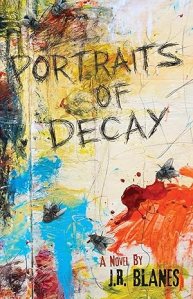
Portraits of Decay by J.R. Blanes
I received a copy of this book from the author in exchange for my honest opinion.
Synopsis: Up-and-coming young artist Jefferson Fontenot has everything going for him: The hot New Orleans art scene has noticed him, and he’s finally found his true love, Nevaeh Parker. But Fontenot’s bright future hides a darkness known as Gemma Landry— the artist’s lover and art scene influencer. Gemma believes Jefferson’s talent holds the key to her seizing control of the popular Carondelet Street Gallery. But when Gemma discovers Jefferson’s infidelity, she enslaves the artist with a poison she acquired from swamp-dwelling witch Mirlande St. Pierre.
Now trapped in a rotting body and plagued by hellish visions, Jefferson finds himself reduced to a zombie-like servant for his unhinged ex, while Nevaeh is forced to embrace her past, hoping to save the man she loves. As the dark curse courses through Jefferson’s veins, everyone involved soon discovers—in the most brutal of fashions—the terror that awaits when you cross Gemma Landry.
Summary: Portraits of Decay is not a comfortable read, but it is an effective one. It examines obsession, artistic ego, and emotional captivity with an unflinching eye, allowing its characters to be ugly, damaged, and honest. The horror lies less in the supernatural than in how easily control can masquerade as love, and how ambition can justify cruelty. This is a novel that trusts its readers to sit with discomfort and draw their own conclusions, and it is stronger for that restraint.
It will resonate most with readers who enjoy psychological horror, literary horror, and character-driven dark fiction. It is especially well suited for those interested in stories about artistic identity, toxic relationships, and emotional manipulation. Fans of slow-burn tension, morally complex characters, and atmospheric settings will likely find this novel both disturbing and deeply engaging.
See the full review here: Portraits of Decay
Purchase here
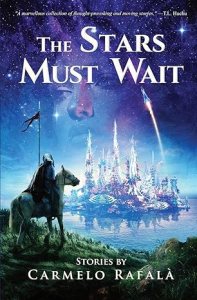
Synopsis:
Carmelo Rafalà writes stories that are profound, surprising, and beautifully realised. He imagines fantastic worlds and protagonists of immense complexity, subtlety and depth. His stories do not give easy answers, but stimulate and absorb the reader.
In this collection of science fiction and fantasy stories you will find:
Favorite Lines:
As I do with all short story collections, rather than pulling my favorite lines, I am sharing my favorite stories from this collection: The Roots of Love, Slipping Sideways, and The Stars Must Wait.
My Opinion:
I received a copy of this book from the author in exchange for my honest opinion.
This is the kind of collection that asks you to slow down. Not because it is difficult to read, but because it refuses to be skimmed. Each story in The Stars Must Wait feels deliberate in its construction, grounded in character first and world second, trusting the reader to stay with uncertainty for longer than most speculative fiction does. Rafalà writes people who are already in motion when we meet them, carrying guilt, faith, grief, or longing, and the stories unfold around those inner pressures rather than racing toward spectacle.
What stood out to me most is how often these stories are about belief, not as an abstract concept but as something embodied. Belief shows up as religion, loyalty, memory, family, ideology, and even habit. Characters cling to systems that have shaped them, sometimes long after those systems have begun to fail. There is no neat moral accounting here. Instead, Rafalà lets contradictions sit on the page. People act with sincerity and still cause harm. Others do terrible things for reasons that feel uncomfortably understandable.
The emotional weight of the collection surprised me. These are speculative stories, but they are deeply intimate. Parents and children, siblings, lovers, and surrogate families recur throughout, often strained or broken by larger forces. The speculative elements never feel ornamental. They sharpen the emotional stakes rather than replacing them. Even the most unsettling moments are grounded in recognizable human fears: abandonment, erasure, complicity, and the desire to belong to something larger than oneself.
By the time I reached the later stories, there was a quiet accumulation at work. The collection began to feel less like a set of individual pieces and more like a sustained meditation on responsibility and consequence. The Stars Must Wait does not offer easy catharsis. It lingers. It leaves you thinking about what people owe each other, and what happens when survival and morality drift out of alignment.
Summary:
The Stars Must Wait is a reflective, emotionally grounded collection of speculative fiction that prioritizes character, moral ambiguity, and human connection over plot-driven spectacle. Readers who enjoy literary science fiction, thoughtful fantasy, soft dystopia, and emotionally complex short stories will likely find a lot to admire here. This is a book for readers who appreciate stories that ask questions rather than answer them, and who are comfortable sitting with discomfort, contradiction, and quiet aftermaths. Happy reading!
Check out The Stars Must Wait here!
 Likely Story