Review: The Amalfi Secret by Dean and Catherine Reineking

Synopsis:

When Gabe Roslo arrives in Amalfi, Italy, a long-awaited reunion with his grandparents takes a tragic turn. His beloved grandfather is dead—and a cryptic diary left behind is Gabe’s only clue to the mystery surrounding his sudden death. But what starts as a personal tragedy quickly spirals into a high-stakes international puzzle.

Teaming up with Anna, a resourceful Roman local, Gabe follows a trail of hidden truths that stretches from the stunning Amalfi coast to the corridors of global power. Secret codes, powerful enemies, and a legacy of deception pull them into a world where nothing is as it seems. With each twist, they are forced to question their allies and uncover dark secrets that could shift the global balance of power.

But as the walls close in, Gabe and Anna must risk everything to expose the truth before it’s buried forever. Will they decipher the mystery and reveal the sinister forces at play? Or will they become the next victims of The Amalfi Secret?
Perfect for fans of Dan Brown and Robert Ludlum, The Amalfi Secret is a pulse-pounding thriller that will keep you guessing until the final, breathtaking twist.

Favorite Lines:

“She was slight of stature and frail to look at, but he knew from experience that she had an inner strength that would get her through almost any trial.”

“The Italians sure have style. Only  here would someone wear black leather driving gloves.”

“We Italians are more concerned with beauty than perfection.”

My Opinion:

I received a copy of this book from the author in exchange for my honest opinion.

The Amalfi Secret is the kind of thriller that sneaks up on you. It starts quietly, almost cinematically, and before you realize it, you’ve been swept into a world of prophecies, politics, and secrets buried deep in the marble corridors of history. The story moves between the present and the past with a rhythm that feels effortless, and even when the stakes climb, the authors manage to keep the human element right where it belongs—at the center. What surprised me most wasn’t the espionage or the religious intrigue, but the emotion underneath it all. It’s a story about love, legacy, and how far people will go to protect the truth.

There’s a gravity to the writing that reminds me of old-school political thrillers, but with more heart. Gabe Roslo is not your typical hero; he’s quietly capable, haunted, and deeply loyal. His grief feels genuine, and his need for answers pulls you along as much as the mystery itself. The story’s backdrop—the cliffs of Amalfi, the solemn air of Rome, the shadowed corners of the Vatican—adds an atmospheric beauty to the unfolding tension. You can almost smell the sea salt and espresso as danger closes in.

I also appreciated that the authors didn’t rush the reveal. They take their time, letting secrets drip out through journal entries, coded mirrors, and the wary exchanges between friends who might not be what they seem. Every conversation feels loaded, every clue slightly out of reach. The pacing builds slowly but deliberately. And just when you think you understand the scope of the story, it widens again—to global conspiracies, ancient orders, and moral choices that test faith and loyalty.

This isn’t just a novel about espionage or religion—it’s about the spaces between them. About belief turned dangerous, power wrapped in prophecy, and how history never stays buried for long. It’s a slow burn that rewards patience and curiosity, a blend of The Da Vinci Code’s intrigue with All the Light We Cannot See’s emotional depth. If you like stories that balance intellect with heart, this one lingers after you close the book.

Summary:

Overall, The Amalfi Secret is a richly layered political and historical thriller that blends mystery, faith, and love against a vivid European backdrop. It’s ideal for readers who enjoy intelligent thrillers, religious or historical mysteries, dual-timeline narratives, and character-driven suspense. Happy reading!

Check out The Amalfi Secret here!


Review: Pigeon-Blood Red by Ed Duncan

Synopsis:

For underworld enforcer Richard “Rico” Sanders, it seemed like an ordinary job: retrieve his gangster boss’s stolen goods, and teach the person responsible a lesson.

But the chase quickly goes sideways and takes Rico from the mean streets of Chicago to sunny Honolulu. There, the hardened hit man finds himself in uncharted territory, when innocent bystanders are accidentally embroiled in a crime.

As Rico pursues his new targets, hunter and prey develop an unlikely respect for one another.

Soon, he is faced with a momentous decision: follow his orders to kill the very people who have won his admiration, or refuse and endanger the life of the woman he loves?

Favorite Lines:

“If you were in a fight for your life against hopeless odds and could pick just one person to help even them out, he would be your choice every time.”

“You remind me a little of myself before I smartened up.”

My Opinion:

I received a copy of this book from the author in exchange for my honest opinion.

Pigeon-Blood Red begins like a crime story you think you already know — a lost item, a hitman, a debt gone bad — but Ed Duncan turns it into something surprisingly human. Beneath the violence and deception runs a quiet thread of loyalty, fear, and the tiny sparks of conscience that survive even in people who’ve long given up pretending to be good.

The story follows Rico — a disciplined, unflinching enforcer whose calm masks something almost noble — and Robert McDuffie, a desperate gambler who makes one very bad choice: stealing a necklace worth far more than his life. It’s a story built on momentum — one thing going wrong after another, until everything comes crashing down.

What I liked most is how Duncan writes violence without glamorizing it. His sentences are clean and deliberate, as if his characters are trying to convince themselves that control is still possible. But there’s always something cracking beneath the surface — a conscience, a flicker of guilt, or maybe just exhaustion.

The pacing works—sharp dialogue, short scenes, no filler. You can tell Duncan knows this world, but he never overexplains it. I finished it in a single sitting and wanted to keep going, which is all you can really ask from a crime novel.

If you like your crime fiction with heart — not sentimental, but human — this one will surprise you. It’s about how easy it is to cross a line, and how hard it is to come back once you do.

Summary:

Overall, Pigeon-Blood Red is a fast-moving crime thriller that digs into the choices people make when survival is the only goal left. It’s not just about gangsters or stolen jewels — it’s about what happens when morality and necessity collide. It’s a story for readers who like their thrillers grounded in realism, where the danger feels as psychological as it does physical. Happy reading!

Check out Pigeon-Blood Red here!


Review: Wooden Dolls Game by Ivonne Hoyos

Synopsis:

In a game of life and dolls, Mary Jane Crowell struggles to find a peaceful life for everyone, free from chaos and drama. The Crowells raised her non-identical twins, Mary Jane and Antonia, in a fair way with no distinctions or preferences. Somehow, even when kids come from the same family they can grow with opposite personalities.

Moving to a new place means to make many decisions like the color of a room wall, a simple game of chance makes Mary Jane victorious for the pink room. This triggers a dark feeling in her sister, and she decides to give a touch of black in revenge. As teenegars they grow appart and are too different. Mary Jane is a good example at school, with good grades and the student who will give the graduation speech. On the contrary, Antonia doesn’t have a chance to graduate, consumes drugs and is an agressive girl.

An unusual set of wooden dolls comes to Mary Jane and she discovers the magic of dolls, and that by recreating the last episodes of her life she can rewind time and fix all problems triggered by her sister. A series of travels in time teaches her a final lesson that is not in her hands to change destiny and that clock hands don’t stop actions triggered by peoples’ intrinsic nature. They always detonate heaven itself or irrevocable chaos.

Favorite Lines:

“Time is an inexistent physical dimension; it is well used by ones and wasted by others. Nevertheless, time is not as dangerous as human nature. It is so powerful that even if time could be rewound, clock hands won’t stop actions triggered by peoples’ intrinsic nature. They always detonate either heaven itself or irrevocable chaos.”

“Somehow, it is being said that hard lessons are not always a way to strengthen character, but to trigger frustration.”

My Opinion:

I received a copy of this book from the author in exchange for my honest opinion.

What begins as a tender domestic tale—a family moving into a new home, twin sisters finding their first sense of individuality—slowly evolves into something darker, stranger, and impossible to forget. Wooden Dolls Game is a haunting psychological thriller about childhood envy, love, identity, and the kind of family wounds that don’t fully heal, even when everyone pretends they have.

Hoyos captures the fragile tension between innocence and obsession through Mary Jane and Antonia Crowell, twin sisters whose bond fractures over something as simple—and as symbolic—as the color of a bedroom. The early chapters feel deceptively calm, filled with family rituals, cardboard boxes, and small joys, until the wooden dolls enter the story and turn playtime into prophecy.

This is a novel that thrives on atmosphere. There’s an eerie domestic stillness beneath every scene: a family dinner, a fairground, a painted wall. Hoyos writes with cinematic precision; you can feel the weight of the paintbrush in Antonia’s hand, the splinters of the wooden dolls, the tension building between sisters who love and resent each other in equal measure.

While the dialogue at times leans simple—true to its child narrators—the psychological undercurrent is chillingly mature. The novel’s real horror is not in the supernatural, but in how jealousy and love can coexist in the same heartbeat. The “game” isn’t just about dolls; it’s about control, inheritance, and the ways trauma rewinds time in our minds, forcing us to relive what we can’t forgive.

Readers who enjoyed Sharp Objects by Gillian Flynn will find echoes here: the fragile domestic world turning on itself, sisterhood as both salvation and curse. This book lingers—not because of what it shows you, but because of what it makes you remember.

Summary:

Overall, at its heart, Wooden Dolls Game is about the things families try to hide — the arguments, the comparisons, the moments when love feels unfair. It’s a story for readers who like their fiction a little unsettling and deeply human.

Fans of psychological dramas, dark family fiction, and slow-burn suspense will connect most with this one. It’s not a horror story in the traditional sense, but it’s full of dread in the quiet, ordinary moments. Happy reading!

Check out Wooden Dolls Game here!


Review: The Collectors by Richard A. Danzig

Synopsis:

The Collectors is the third book in the award winning Chance Cormac legal thriller series. The first two books “Facts Are Stubborn Things” and “Punch Line” are both best sellers on Amazon.

Chance is retained by a client who believes that he has been the victim of fraud when he purchased a valuable abstract painting that may be a forgery. Chance soon learns that both the painting and his client, might not be what they seem.

Chance is then summoned to Costa Rica to help Damian and JR who are caught up in the black market of selling human organs. Facing police corruption and danger, it may be too late to help to save his friends.

Favorite Lines:

“Art is meant to be seen. A painting in a vault is like a flower growing underground.”

“I learned early on that one of the keys to success is to always delegate responsibility to the most capable person.”

“I’m the luck one. A dream job doing the two things I love most – looking at art and making money.”

“I think if she wants it, it’s the best lesson in life. To work hard at something you love, to build confidence and self-esteem. Learn to win and learn to lose. Laugh because it’s only a game.”

My Opinion:

I received a copy of this book from the author in exchange for my honest opinion.

Richard A. Danzig’s The Collectors is a fast-paced thriller set at the intersection of the art world and organized crime, following Chance, and a cast of allies and enemies as they navigate stolen masterpieces, criminal networks, and personal codes of loyalty. 

What drew me into The Collectors right away was its mix of adrenaline and atmosphere. This isn’t just a story about stolen art—it’s about survival, identity, and the ways people justify the choices they make when life pushes them to the edge. From the early combat fight scenes, to the moments of quiet reflection on scars—both physical and emotional—the book doesn’t let you forget that its characters are people who have already paid heavy prices.

The art-world angle was particularly fascinating. Paintings aren’t just commodities here—they’re symbols of power, greed, and memory. Beauty becomes dangerous when hidden, hoarded, or traded like currency, and Danzig captures that tension with sharp precision.

At the same time, the book is driven by relationships. Family promises sit alongside the betrayals and shifting loyalties of the criminal underworld. These contrasts give the novel depth. It isn’t just about art forgery or organized crime—it’s about what people decide is worth protecting, and what they’re willing to sacrifice along the way.

By the time the story edges toward its conclusion, it becomes clear that the heart of The Collectors isn’t the money, the fame, or even the paintings. That’s what stayed with me. For all its action, the novel lingers because it asks readers to think about what truly matters when everything else can be bought or stolen.

Summary:

Combining gritty action with meditations on beauty, family, and survival, The Collectors delivers both suspense and heart—reminding us that beneath the heists and betrayals, the real stakes are love, trust, and what it means to protect what’s yours. It’s a story that entertains, but it also lingers after the final page, asking bigger questions about what we value and protect when the world demands compromise. Readers who enjoy thrillers, contemporary fiction, and character driven crime novels may enjoy this book. Happy reading!

Check out The Collectors  here!


Review: Hunting the Red Fox by W. Kenneth Tyler Jr.

Synopsis:

This is the story of Perry Barnes, a multi-talented man who made one bad teenage mistake in the weeks leading up to his high school graduation in 1942. On a lark he “borrowed” some jewelry that wasn’t technically his. The local judge took it personally and gave Perry the choice of an assignment to a newly formed Army special operations unit at the start of World War II or go to jail for 15 years. As a result he winds up being trained by the United States government in the skills and arts of sabotage, killing, self-preservation, espionage and ultimately how to be a first class jewel thief.

Along the way he finds himself in the movie business in the Hollywood of the 1950’s, then uses his immense physical skills in pursuit of excellence as a journeyman golfer on the PGA tour of that era with the likes of Ben Hogan, Jimmy Demaret and Arnold Palmer. Before the adventure is over Perry has stolen the world famous Mecklenburg Diamond from a known jewel thief, worth a fortune, with the intention of returning it to the authorities for love, of all things.

All the while he is befriended by the most bewildering array of characters, some real, some not, who add marvelous vignettes of clever humor, situational intrigue, and steamy romance as he earnestly pursues the one goal he covets most: finding true love, martial companionship and family.

Favorite Lines:

“In short, he was both a Man’s Man and a Ladies Man in the old sense of those terms.”

“She was clearly befuddled and exasperated, which caused her face to display the most marvelous oxymoronic look of sensual wholesomeness. I think I was smitten.”

My Opinion:

I received a copy of this book from the author in exchange for my honest opinion.

W. Kenneth Tyler, Jr.’s Hunting the Red Fox is a story that doesn’t just entertain—it invites you to sit down at the table, pour a bourbon, and listen in as secrets are slowly, almost reluctantly, unveiled. What begins as a casual meeting between Roger Mace, an amateur writer and golf enthusiast, and the magnetic Perry Barnes, an aging Southern gentleman with a silky drawl, unfolds into a sweeping tale of love, regret, mischief, and the kind of life you almost can’t believe anyone actually lived.

Tyler has a gift for pacing. Just as you think you’ve settled into a charming yarn about golf in the 1950s, the ground shifts—suddenly you’re in the middle of jewel heists, military intrigue, and confessions that leave you wondering how much of Perry’s story is truth and how much is performance. And that’s the real hook: Perry himself. He’s equal parts con man and philosopher, hustler and gentleman, a character who charms both the reader and his would-be chronicler, Roger.

The book also strikes an interesting balance between humor and weight. One minute you’re laughing at Roger’s painfully awkward attempts at interviewing, and the next you’re drawn into Perry’s memories of loss, survival, and the choices that haunt him even at eighty-two. By the time the so-called “Red Fox” begins to reveal himself, you realize this isn’t just a story about golf or crime or even redemption—it’s about how an ordinary man’s life can intersect with history in the most unexpected ways.

It’s a long, winding tale, but Tyler knows how to keep you listening. Like Roger himself, you come away unsure whether Perry Barnes is telling you the whole truth, but convinced that you’ve been given a gift in hearing his story at all.

Summary:

Overall, Hunting the Red Fox blends memoir-style storytelling with novelistic suspense, leaving readers to weigh for themselves whether Perry Barnes was simply a man with colorful tales or a true “Red Fox” whose life was stranger than fiction. Readers who enjoy historical fiction thrillers full of suspense, espionage, and memoir-style narratives may enjoy this book. Happy reading!

Check out Hunting the Red Fox here!


Monthly Features – June 2025

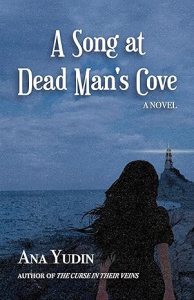
A Song at Dead Man’s Cove by Ana Yudin

I received a copy of this book from the author in exchange for my honest opinion.

Synopsis: Never turn your back on the ocean…

2023. Another person has disappeared at Dead Man’s Cove in coastal Washington. Jaded from her job at the historic Irving Hotel, Zarya wanders to the scene of the tragedy. She has heard her Russian mother’s tales of rusalki—vengeful spirits that have died unclean deaths near a body of water—and never paid them much attention. But now, on a misty headland beside an abandoned lighthouse, Zarya locks eyes with the rusalka and is chosen to be the next victim. She must unearth the siren’s tragedy before Rusalka Week, a period in early summer when water-spirits roam freely on land.

1850. Josephine has just joined her newlywed husband in Washington, in the lighthouse erected by local businessman Hurley Irving. Marriage is not quite what she expected, and her melancholia grows over the course of the winter. The medic prescribes pregnancy as the antidote. What he doesn’t realize is how far Josephine is willing to go in order to become a mother.

The Gothic horror novel follows two protagonists, a modern-day misanthrope who fears intimacy and a woman in the Victorian era who thinks stealing love will make her whole. But how long can a person hide from love, and can love really be taken by force?

Summary: A Song at Dead Man’s Cove is a mesmerizing, multilayered ghost story that manages to be both otherworldly and deeply human. Ana Yudin delivers a narrative that is as much about ancestral trauma and unspoken truths as it is about sirens and shipwrecks. It’s a tale of women silenced by history—singing now through salt and shadow to be heard.

Highly recommended for fans of Silvia Moreno-Garcia, Erin Morgenstern, and readers who crave gothic atmosphere with a feminist edge.

See the full review here: A Song at Dead Man’s Cove
Purchase here


With Time to Kill by Frank Ferrari

I received a copy of this book from the author in exchange for my honest opinion.

Synopsis: Everyone deserves a second chance, but how far would you go for one?

In the gritty streets of Edinburgh, Garry Plumb is about to find out. Living life on the periphery, never fitting in and always on his own, Garry’s world opens up when he meets Billy, the peculiar bus driver who has been watching him. Billy knows exactly how it feels to be ignored and his influence on Garry is immediate.

For the first time, Garry knows what it means to have his very own best friend. But this friendship is unlike any other, as Billy reveals how Garry can fix his entire life by changing his past.

But when the DCI John Waters, a relentless detective hunting a clever serial killer, enters Garry’s life, their friendship is put to the ultimate test.

Garry is willing to do anything for a second chance at life but, after meeting Billy, he has to ask would he kill for it?

This dark and captivating tale of self-discovery, murder and redemption will keep readers on the edge of their seats. With Time to Book One, a perfect blend of Scottish crime and sci-fi thriller, will leave you wanting more.

Summary: Overall, With Time to Kill is a gleefully dark mash-up of police procedural, serial-killer horror, and high-concept time travel. If you like your thrillers smart, Scottish, and just a little bit unhinged, clear an evening—you’ll race through this and immediately want the sequel.

See the full review here: With Time to Kill
Purchase here


The People Who Paint Rocks by Michael Stewart Hansen

I received a copy of this book from the author in exchange for my honest opinion.

Synopsis: The People Who Paint Rocks is a multi-generational horror epic that transcends the boundaries of its genre. What begins as a period horror/drama in 1910 Santa Fe evolves into a chilling supernatural thriller by 1975, where a pregnant nurse and a detective tormented by spiritual doubt race to stop an evil older than memory. A moody, unsettling, and unrelentingly atmospheric work that grips the reader from the first page and refuses to let go.

The opening act is steeped in Western gothic, introducing us to Albert McCord, a grieving husband and father seeking revenge on the wolf that took his family. But the creature he hunts is no ordinary predator—it is the origin of something far more terrifying. Hansen cleverly seeds this early chapter with themes of loss, legacy, and the illusion of control. Albert’s struggle is both physical and existential, as he fends off his late wife’s scheming family while unknowingly chasing a malevolent force that will haunt generations to come.

Fast-forward to 1975, and the novel pivots into psychological horror, following Charlie, a pregnant nurse caught in a web of ritualistic murders, and Alonzo, a detective whose beliefs are unraveling. This shift is not jarring but deliberate, echoing the disjointed sense of time that defines much of the book’s unsettling tone. The narrative connection between Albert and the events six decades later becomes a dark thread pulling the characters toward an inevitable confrontation.

Summary: Overall, The People Who Paint Rocks is a gritty, big-hearted mash-up of western, creature feature, and generational ghost story. Come for the demon wolf and six-gun showdowns, stay for the way Hansen turns painted pebbles into the creepiest grave markers this side of Stephen King country. It’s messy, mean, and—when the sun finally comes up over Red Rocks—oddly hopeful.

See the full review here: The People Who Paint Rocks
Purchase here


Review: Deadly Vision by T.D. Severin

Synopsis:

A revolutionary medical breakthrough. A technology, so advanced, people will kill to prevent its discovery. Dr. Taylor Abrahms, rising above his troubled past, is an expert in the burgeoning field of Medical Virtual Reality. A gifted researcher, he’s created an experimental fusion of virtual reality, artificial intelligence, and microsurgery that will revolutionize the way surgery is performed. With the Virtual Heart Project (VHP), Taylor can enter a virtual recreation of his patient’s beating heart and perform critical, life-saving surgery entirely within the realm of virtual reality. But in the political war zone of San Francisco University Medical Center, not everyone is thrilled. With a health care crisis threatening to bankrupt the nation, advanced biotechnology is a flashpoint in health care reform. Taylor’s research is scapegoated and he finds himself caught between warring factions in medicine and politics that will do anything to shut his project down, a battle that rages all the way to an upcoming Presidential election. Soon, Taylor finds himself the target of nonstop attacks: the destruction of his career, scientific sabotage, and murder, as those associated with the Virtual Heart Project are killed, one by one. Fighting for his medical career and eventually his life, Deadly Vision tells the tale of Taylor’s battle against overwhelming odds, political machinations, sabotage and murder, to bring this modern technology to reality and save the life of someone he loves.

Favorite Lines:

“Face time was a powerful currency in power-hungry Washington.”

“Blind idealism is a death sentence, Taylor.”

“Taylor didn’t think he’d ever get used to how amazing it was, to be standing inside a beating heart.”

My Opinion:

I received a copy of this book from the author in exchange for my honest opinion.

Todd Severin’s Deadly Vision tees up a Silicon-Valley whistle-blower murder, a bleeding-edge medical breakthrough, and a scorched-earth U.S. Senate race—then fires the starting gun on page one. The plot bounces between Dr. Taylor Abrahms, an earnest ER resident refining a “Virtual Heart” laser-surgery platform, and Senator Randolph McIntyre, a savvy populist who smells political gold in attacking Big Tech. Their collision course is set the moment a frantic programmer is gunned down on his way to the Justice Department, and the tension never really lets up.

Characters drive the fun. Abrahms is the sort of bright-eyed idealist who still believes science can change the world if you just work hard enough, while McIntyre is a back-slapping master of the photo-op who weaponises public fear with chilling ease. The supporting cast pops off the page too—think caffeine-fueled coders, hospital lifers who can fillet a budget request with two sharp questions, and money-men who treat venture capital like live ammunition.

What makes the thriller click is how grounded the breakthrough tech feels. Severin layers in the grant meetings, committee approvals, and cost-benefit knife fights that usually get hand-waved in this genre. When Abrahms finally demo-drives his digital heart, it’s exhilarating and utterly believable—but you can feel lobbyists and bureaucrats waiting to pounce the second something misfires.

Beneath the chase scenes and Senate hearings lurks a real ethical debate: how far should medicine bend to politics, and who actually benefits when it does? Severin lets those questions simmer without slowing the pace. A couple of late-book twists flirt with movie-villain bombast, yet the breathless energy carries them over the line and straight into a satisfyingly tense finale.

Summary:

Overall, Deadly Vision is a big, crunchy page-turner for anyone who likes their techno-thrillers wired with hospital monitors and Beltway intrigue. Expect smart science, messy conspiracies, and a hero stubborn enough to keep swinging even when the stakes jump from research funding to national security. Happy reading!

Check out Deadly Vision here!


Review: With Time to Kill by Frank Ferrari

Synopsis:

Everyone deserves a second chance, but how far would you go for one?

In the gritty streets of Edinburgh, Garry Plumb is about to find out. Living life on the periphery, never fitting in and always on his own, Garry’s world opens up when he meets Billy, the peculiar bus driver who has been watching him. Billy knows exactly how it feels to be ignored and his influence on Garry is immediate.

For the first time, Garry knows what it means to have his very own best friend. But this friendship is unlike any other, as Billy reveals how Garry can fix his entire life by changing his past.

But when the DCI John Waters, a relentless detective hunting a clever serial killer, enters Garry’s life, their friendship is put to the ultimate test.

Garry is willing to do anything for a second chance at life but, after meeting Billy, he has to ask would he kill for it?

This dark and captivating tale of self-discovery, murder and redemption will keep readers on the edge of their seats. With Time to Book One, a perfect blend of Scottish crime and sci-fi thriller, will leave you wanting more.

Favorite Lines:

“Good morning, fabulous Major Investigations Team of this fair city.”

“It was clear to anyone observing Waters and his team that the level of respect he commanded and, in turn, the support he provided was unparalleled.”

“The sky was clear and the air a little muggy, which was great for the flowers. Doing not nearly so well was the salmon pink shirt Billy wore, which threatened to show the world exactly what his nipples looked like as he made his way to the hospital.”

My Opinion:

I received a copy of this book from the author in exchange for my honest opinion.

Frank Ferrari’s With Time to Kill doesn’t so much open as detonate. Within the first few pages we meet Garry Plumb, an Edinburgh every-man whose crippling invisibility at the office hides a far darker secret: he is also “one of the most prolific serial killers no one has ever heard of”. Ferrari drops that bombshell with such off-hand confidence that you know you’re not putting this book down after that.

From there the book splits its focus between Garry’s quietly methodical murders and Detective Chief Inspector John Waters, a rum-voiced Highlander whose Major Investigations Team is scrambling to explain a sudden spike in corpses around the city. Waters’s squad-room banter—equal parts gallows humour and procedural grit—gives the thriller its pulse, and the moment they realise all the victims were “assigned female at birth” the anxiety kicks up a gear. Running parallel is the oily bus-driver Billy Blunt, whose cheerful note slips under Garry’s fingers at lunchtime and drags the story into a gloriously seedy pub called The Northern Lights.

What elevates the novel beyond a straight serial-killer chase is Ferrari’s time-travel conceit. Garry isn’t just killing; he’s pruning history with an organic device he calls a “Carrier,” hopping back to erase abusers and bullies before they ever bloom. The ethical whiplash is terrific fun: one minute you’re rooting for him as avenging angel, the next you’re recoiling as the body-count rises. Ferrari keeps that moral compass spinning but never lets the sci-fi mechanics bog the narrative; the rules are clear enough to follow yet just sketchy enough to stay unnerving.

Stylistically, the prose lands somewhere between Tartan Noir and Blake Crouch’s twisty thrillers. Ferrari writes working-class Edinburgh with an affectionate sneer—sticky pub carpets, passive-aggressive rain, and HR managers you’d cheerfully shove off North Bridge. The pacing sprints, brakes, then careens again, and while a couple of subplot threads feel set up for book two, the central cat-and-mouse delivers the promised gut-punch. A special shout-out to Waters, whose Occam’s-razor lecture is the most charming digression on medieval philosophy I’ve read in a police procedural

Summary:

Overall, With Time to Kill is a gleefully dark mash-up of police procedural, serial-killer horror, and high-concept time travel. If you like your thrillers smart, Scottish, and just a little bit unhinged, clear an evening—you’ll race through this and immediately want the sequel. Happy reading!

Check out With Time to Kill here!


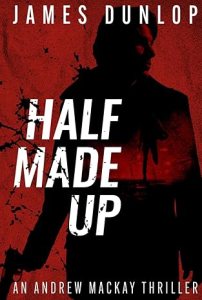
Review: Half Made Up by James Dunlop

Synopsis:

How far would you go for a friend? Andrew MacKay, the sort of man who’s more likely to bet his last penny on a losing horse than lift a finger for anything resembling responsibility, is about to find out. An incurable gambler, chain-smoker, and binge drinker, Andy’s only real talent lies in outliving his own poor choices. But when his mate is shot dead and robbed of a classified secret, Andy finds himself bound to retrieve it, purely out of loyalty and an alarming lack of common sense.

Andy learns the stolen secret is a new nerve agent deadly enough to make any terrorist giddy with joy. Wanting nothing more than to ignore the whole thing, he finds himself drawn into a web of corporate espionage, government corruption, and terrorists with excellent taste in chemical warfare. He’ll have to rely on his wits to stay one step ahead of MI-5, who want him behind bars, if he hopes to recover the secret, and stop the zealots from killing thousands.

Time is running out. Andy’s got only one chance to make things right. Can he do it?

Favorite Lines:

“You’ve certainly put your Bowflex to good use.”

“…efficiency is a highly-developed form of laziness.”

“But I want to die doing something like this, something I hate. That way I won’t have to finish it.”

My Opinion:

I received a copy of this book from the author in exchange for my honest opinion.

James Dunlop’s Half Made Up is a razor-sharp, whip-smart thriller that blends satire, spycraft, and introspective noir into one hell of a ride. The story follows Andy MacKay, a disgraced ex-military man turned reluctant operative, who careens through a vividly sketched London filled with rogue agents, cryptic clues, slippery allies, and more than a few fists to the face.

MacKay is the ideal narrator for this noir-meets-modern-espionage tale—cynical, self-deprecating, and barely held together by caffeine, whisky, and muscle memory. Dunlop’s voice is rich with wit and wry observation, and his protagonist’s internal monologue walks the line between hilarity and heartbreak with real finesse.

At its core, Half Made Up is about blurred lines—between truth and fiction, law and disorder, loyalty and survival. What begins as a rogue inquiry into a murder snowballs into a much deeper conspiracy involving nerve agents, shady intelligence units, extremist networks, and betrayals that cut to the bone. Yet amid the action and political maneuvering, there’s a striking emotional undercurrent, particularly in MacKay’s fractured relationships—with women, with his past, and with his own moral compass.

The writing is punchy and cinematic, with pacing that rarely relents. From pub ambushes and tube-station chases to backroom beatings and breathless getaways, every chapter ends with a hook sharp enough to pull you through the next. But Dunlop never skimps on texture—his similes are deliciously absurd, and his asides are often more telling than the action.

Summary:

Half Made Up is a blistering, witty, and emotionally resonant debut that proves James Dunlop has the chops to stand alongside authors like Mick Herron and Ian Fleming. If you like your thrillers with more punchlines than platitudes—and aren’t averse to your heroes being half-unhinged—this book deserves a place on your shelf. Beneath the biting humor and barroom brawls is a novel that asks serious questions about morality, manipulation, and memory in a world where everything might be… well, half made up. Happy reading!

Check out Half Made Up here!


Review: No Stars: Victor Wolff Book 1 by Henri Leag

Synopsis:

Victor buried his conscience long ago—six feet deep beneath a smile he perfected under the training of Adolf Wren, the merciless head of a corporate empire that spans the galaxy. He was trained to be heartless. Ruthless behind a polished mask.
But redemption has a way of clawing its way back to the surface. When Victor is hired to rescue Marilyn Finch, the daughter of Wren’s bitter rival Norton Crow.
In this gripping interstellar thriller, Victor must confront the enemies closing in on every side, and bring Wren’s empire crumbling down on the secrets that make up its foundation. But how can he do that without giving in to the very monster he’s trying to escape?

Favorite Lines:

“Power, the most valuable resource in the universe.”

” The phrase ‘ignorance is bliss’ comes to mind. He wishes for ignorance now. But knowing. Knowing is a curse. Knowing has him in a terrible grip, and it won’t let him go until he does something about it. He knows he can’t go back. No matter what he tells himself, he can’t go back.”

“The contrast between the two rooms is like the contrast between light and shadow. There’s no dancing in the sitting room. No real smiles here. It’s all fake happy.”

My Opinion:

I received a copy of this book from the author in exchange for my honest opinion.

Henri Leag’s No Stars is a sleek, gripping noir thriller that pulls readers into a world where power is currency, trust is a weakness, and survival depends on making the right move before it’s too late. Set in the towering metropolis of Urbis—a city of wealth, corruption, and hidden dangers—the novel follows Victor Wolff, a man who knows how to play the game. As a high-level consultant, his job is to navigate the shadowy corridors of influence, ensuring those in power stay there. But when a new job forces him to choose between ambition and survival, Victor quickly realizes he’s in deeper than ever before.

Victor Wolff is the perfect noir anti-hero—calculating, composed, and always three steps ahead. He’s a man who understands that words can be sharper than knives, and in Urbis, that’s how you stay alive. But while he thrives in the game of deception, No Stars doesn’t just present him as an untouchable figure—it peels back the layers of his confidence, revealing cracks in his armor. His biggest strength isn’t his power; it’s his ability to read a room, manipulate a conversation, and know when to walk away.

Urbis itself is a character in the novel, dripping with wealth and excess at the top while the lower levels are filled with people trying to climb their way up. Leag paints a cinematic world of gold-trimmed tuxedos, penthouse meetings, and whispered threats over expensive whiskey. The novel’s setting is sleek, stylish, and brimming with an undercurrent of danger—like Blade Runner meets John Wick, where every handshake hides a dagger and every ally could be the next enemy.

The novel’s pacing is razor-sharp, each chapter tightening the noose as Victor realizes that the game he’s playing might not have a way out. There’s always another layer to the deception, another move on the board, and just when he thinks he has control, the rules change. The tension never lets up, keeping readers locked in as Victor fights to stay ahead of the storm. At its core, No Stars is about power—who has it, who wants it, and what it takes to hold onto it.

Summary:

Overall, for fans of noir thrillers, political intrigue, and high-stakes deception, No Stars delivers in every way. Henri Leag has crafted a fast-paced, intelligent thriller that is as stylish as it is intense. With a protagonist you can’t look away from and a world where every choice has consequences, this is a novel that lingers long after the final page. Happy reading!

Check out No Stars here!