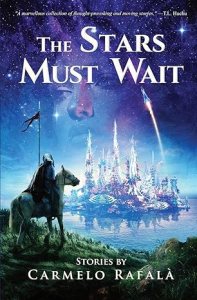
Synopsis:
Carmelo Rafalà writes stories that are profound, surprising, and beautifully realised. He imagines fantastic worlds and protagonists of immense complexity, subtlety and depth. His stories do not give easy answers, but stimulate and absorb the reader.
In this collection of science fiction and fantasy stories you will find:
- A zealous convert, a woman of rumour and myth, and a dangerous pilgrimage across pirate filled seas.
- A warrior travels to a far land to mourn and put his violent past behind him, but strange gods of an even stranger people intrude.
- Abandoned in the Ozarks, sisters face a malevolent presence reaching out from the darkness.
- Two friends struggle with their strained relationship, but reconciliation may literally require other realities. These are stories of identity and belonging, and our deep-seated desire to control our own narratives. Discover this unique and talented author.
Favorite Lines:
As I do with all short story collections, rather than pulling my favorite lines, I am sharing my favorite stories from this collection: The Roots of Love, Slipping Sideways, and The Stars Must Wait.
My Opinion:
I received a copy of this book from the author in exchange for my honest opinion.
This is the kind of collection that asks you to slow down. Not because it is difficult to read, but because it refuses to be skimmed. Each story in The Stars Must Wait feels deliberate in its construction, grounded in character first and world second, trusting the reader to stay with uncertainty for longer than most speculative fiction does. Rafalà writes people who are already in motion when we meet them, carrying guilt, faith, grief, or longing, and the stories unfold around those inner pressures rather than racing toward spectacle.
What stood out to me most is how often these stories are about belief, not as an abstract concept but as something embodied. Belief shows up as religion, loyalty, memory, family, ideology, and even habit. Characters cling to systems that have shaped them, sometimes long after those systems have begun to fail. There is no neat moral accounting here. Instead, Rafalà lets contradictions sit on the page. People act with sincerity and still cause harm. Others do terrible things for reasons that feel uncomfortably understandable.
The emotional weight of the collection surprised me. These are speculative stories, but they are deeply intimate. Parents and children, siblings, lovers, and surrogate families recur throughout, often strained or broken by larger forces. The speculative elements never feel ornamental. They sharpen the emotional stakes rather than replacing them. Even the most unsettling moments are grounded in recognizable human fears: abandonment, erasure, complicity, and the desire to belong to something larger than oneself.
By the time I reached the later stories, there was a quiet accumulation at work. The collection began to feel less like a set of individual pieces and more like a sustained meditation on responsibility and consequence. The Stars Must Wait does not offer easy catharsis. It lingers. It leaves you thinking about what people owe each other, and what happens when survival and morality drift out of alignment.
Summary:
The Stars Must Wait is a reflective, emotionally grounded collection of speculative fiction that prioritizes character, moral ambiguity, and human connection over plot-driven spectacle. Readers who enjoy literary science fiction, thoughtful fantasy, soft dystopia, and emotionally complex short stories will likely find a lot to admire here. This is a book for readers who appreciate stories that ask questions rather than answer them, and who are comfortable sitting with discomfort, contradiction, and quiet aftermaths. Happy reading!
Check out The Stars Must Wait here!
 Likely Story