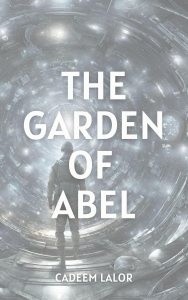
Review: The Garden of Abel by Cadeem Lalor

Synopsis:

Abel is in his thirties, divorced and feels stuck in his job as a high school teacher. When a version of himself visits from another dimension, he becomes the target of a fascist government.

Adam — the other version of Abel — was part of the team that developed a teleporter for accessing other dimensions. While the teleporter was meant to facilitate trade between planets, the government planned to use it to colonize less advanced worlds. Now Adam must flee a military that is eager to get its greatest weapon back.

Favorite Lines:

“Terrified, but fear’s kept us alive so far. It’s made us cautious, made us smart. I can embrace it without letting it cripple me.”

“Did you get that quote from a self-help book?”

“There were no good plans anymore; there were only ones that were slightly better than another.”

My Opinion:

I received a copy of this book from the author in exchange for my honest opinion.

The Garden of Abel starts with a quiet shock that never fully fades. The image of Abel confronting someone who looks almost exactly like him sets the tone for a novel that is less about spectacle and more about destabilization. What follows isn’t an action-heavy sci-fi story so much as a slow reckoning with what it means to be pulled into something much larger than yourself, whether you want to be or not.

What I appreciated most is how grounded the story feels, even with its interdimensional premise. The science is present, but it never overwhelms the human side of the story. Abel reacts the way a real person might: cautious, skeptical, curious, and increasingly uneasy. He doesn’t jump at the chance to be a hero, and he doesn’t fully trust what’s happening, even as the evidence stacks up. That hesitation makes his eventual involvement feel earned rather than convenient.

The relationship between Abel and his counterpart is where the book really finds its footing. Their conversations carry real weight and tension, not because they’re dramatic, but because they force uncomfortable questions into the open. The visiting Abel isn’t written as a clear villain, but he’s not absolved either. He’s complicated, burdened by guilt and justification in equal measure, and the book allows that messiness to exist without smoothing it out for the reader.

As the story builds toward confrontation, the tension feels personal rather than explosive. The stakes matter because of what they mean for Abel’s ordinary life, not just the fate of worlds. By the end, The Garden of Abel feels less like a story about alternate dimensions and more like one about unintended responsibility and moral fallout. It lingers because it asks you to think about what you would do when the consequences aren’t theoretical anymore.

Summary:

Overall, The Garden of Abel reads as thoughtful, restrained science fiction that values ethical tension over spectacle. If you enjoy sci-fi that focuses on choice, consequence, and quiet unease rather than nonstop action, this book will likely resonate. It’s the kind of story that unfolds slowly and stays with you after you’re done. Happy reading!

Check out The Garden of Abel here!


Review: Dawn in Ruins by Magda Mizzi

Synopsis:

The world ended in silence. The fight for what’s left will not.

Ten months after the collapse, teenager Annie’s world has shattered, and with it, everything she once believed about monsters. They don’t always lurk in shadows. Sometimes they wear uniforms. Sometimes they wear the faces of those you love.

In the ruins of Sydney, Annie finds an unlikely ally in Jude—a half-infected boy marked by virus and twisted science. His strange, dangerous abilities make him both a threat and their best hope. But the line between abomination and saviour is thinner than either imagined.

Haunted by what was done to him, Jude carries scars deeper than flesh. Meanwhile, Annie’s younger brother, Lucas, remains a prisoner, infected and altered. If she doesn’t reach him soon, Lucas will face the same fate that nearly destroyed Jude—experiments that don’t just scar flesh but twist what it means to be human.

As secrets unravel and the origin of the virus comes to light, Jude learns a devastating truth: his connection to the outbreak is deeper, darker, and far more personal than he ever imagined.

Together, Annie and Jude race through a city where every shadow hides a threat. When they are torn apart, survival becomes more than a mission—it becomes a promise: to endure, to protect, and to bring each other back from whatever hell awaits.

From the shattered edges of the Fractured Reality universe comes a story of desperate hope and fierce loyalty—because in a world this ruined, some things are lost forever. But some are worth risking everything to save.

Favorite Lines:

“Before the world cracked, Annie believed monsters lived in stories. Now she knew better. They had names. Faces. Uniforms. Sometimes they looked like strangers with guns. Sometimes they looked like people you loved. Sometimes they were the ones you’d sworn to protect, until you couldn’t.”

“Maybe…but love is stubborn, isn’t it? It makes you brave, and foolish. I mean she was pretty determined to  have Othello —to keep him. She went against her father to be with him. That would have been pretty hard in those times. Shit, it’s still hard now. So, I guess she’s committed.”

“And they kept walking. Not towards certainty. But towards something. And, for now, that was enough.”

My Opinion:

I received a copy of this book from the author in exchange for my honest opinion.

Dawn in Ruins had me hooked from the first page. It’s dark, visceral, and unflinchingly human. Magda Mizzi takes a familiar apocalypse — a mutated virus, collapsing cities, soldiers with cold eyes — and turns it into something deeply personal. The story follows Annie, a teenage girl fighting to save her brother Lucas after the world has already burned, and Jude, a half-infected boy whose body is as much a mystery as his loyalty. From the first pages, the writing drags you into the heat, the grit, and the smell of a dying city. Every sentence feels alive and dangerous.

What I loved most is that this isn’t just another survival story. It’s about guilt and grief and that stubborn will to keep moving when everything is already broken. Annie isn’t your typical YA heroine — she’s angry, reckless, and full of contradictions. You can feel her pulse in every scene, from the blood and dust of Sydney’s ruins to the quiet moments when she can’t decide whether to hate or trust Jude. Mizzi captures that inner push and pull perfectly, the mix of fear and defiance that defines what it means to stay human when the world no longer is.

The relationship between Annie and Jude drives the novel. It’s tense and uncomfortable at times, but that’s what makes it work. Jude isn’t romanticized; he’s unsettling, strange, and sometimes frightening. Yet there’s a tenderness under the surface — a sense that both of them are clinging to whatever hope they have left. Their conversations carry the same weight as the action scenes, and the smallest touches or silences often say more than words.

There’s a cinematic quality to the writing — I would not be surprised to see this book hit the big screen in a few years. Mizzi’s Australia feels scorched and hollow, but also hauntingly beautiful. Every setting has a heartbeat, from the cracked roads to the eerie calm of the water. Dawn in Ruins is more than post-apocalyptic fiction. It’s a story about endurance, trauma, and the fragile connections that still matter when everything else has been stripped away. It leaves you raw but strangely hopeful.

Summary:

Overall, Dawn in Ruins is an emotional, post-apocalyptic survival story set in the ruins of Australia after a deadly viral mutation. Combining elements of science fiction, dystopian realism, and emotional character drama, it’s perfect for readers who love The Last of Us, Station Eleven, or The Girl With All the Gifts. It’s dark but heartfelt — a story for readers who like their survival tales human, messy, and deeply felt. Happy reading!

Check out Dawn in Ruins here!


Review: The Gift by Eva Barber

Synopsis:

Emery travels through the dark dimension guided by dark shadows. She drops into a black hole and plummets into a desolate land that she believes is thousands of years in the past. She has to rely on her instincts to survive and her unwavering spirit to endure the harsh conditions.

A tribal chief’s daughter, Visla, finds her after she ingests poisonous berries and saves her life. Their friendship blossoms as they discover they share similar traits and both mourn the loss of their mothers.

Emery learns of the existence of the “bad people” whose description matches that of her mother. She sets out on a mission to find them. Visla leaves the tribe after learning her father held secrets from her. She joins Emery in her quest, which also becomes hers. But the “bad people” find them first, imprison Emery, and threaten to change Visla into a “superior” being against her will.

Emery escapes her prison using her powers and finds herself in a bizarre underground city with advanced technology outpacing the Stone Age. In her quest to find Visla, she befriends two beings whose humanity she questions. A brother and sister help her for reasons they do not fully understand. Emery’s presence cast doubts on their lives. They begin to suspect it is imposed on them by powerful “superior” beings. Looming over their quest to find Visla is the fear of change inflicted on those who rebel.

Captured again by the enigmatic “bad people”, Emery finds unexpected help from an unfathomable being whose identity further deepens the mystery surrounding her.

In the strange gray city, she stumbles on an artifact that shatters her understanding of the world around her and deepens the mystery further, implicating her mother in humanity’s most atrocious acts performed in the name of progress and survival. To find the answers, she forgoes the safety of the world on the surface and dives back into the underground, discovering more secrets and meeting the Masters—the superior beings with unmatched cruelty and depravity.

She barely escapes with her life, with even more questions, but with a budding understanding of what she has to do to get the answers and continue with her mission. If she’s going to save humanity, she’ll have to make choices that weigh losing what is most precious to her against the world’s survival.

Favorite Lines:

“To get all the way here through the dark world and the black hole only to die in the desert would be so pathetic and so wrong. Oh, just shut up and keep going. Stop being a baby. You haven’t even walked a whole day yet.

“You are the embodiment of perfection. Not just your beauty. Your face, eyes, body, and hair couldn’t be more perfect. Everything about you is perfection, the embodiment of human beauty. But not in the sense our media portrays it. Your perfection and beauty stem from something deeper inside of you. It is timeless, primal, sexual, and intellectual. Your magnetism and strength have no limits, but encompass everything around you and make it shine with life. You embody life and love. You are my Aphrodite.”

My Opinion:

I received a copy of this book from the author in exchange for my honest opinion.

The Gift is book 2 in Eva Barber’s Dark World series. You can find my review for book 1, Unborn, here.

The Gift is one of those novels that blurs the boundaries between genres — part science fiction, part spiritual odyssey, and part love story. It opens in the afterlife, in a space both beautiful and terrifying, where Emery is pulled through darkness, light, and time itself. What begins as a quest to find her mother quickly expands into something larger — a story about creation, destiny, and the cost of saving the world. Barber writes with a cinematic style, full of color and motion, yet always anchored in emotion. Every scene feels vivid and alive, from the vast black hole to the primitive landscapes Emery explores.

What struck me most was how personal this story feels, even when it’s operating on a cosmic scale. Emery isn’t a detached hero — she’s grieving, flawed, often angry, and full of questions. Her voice feels real. You can feel her exhaustion, her stubbornness, her wonder. The philosophical ideas about time, destiny, and rebirth work because they’re filtered through her very human fear and longing. The story moves like a dream, but it’s grounded by her voice and her will to survive.

Barber also has a gift for worldbuilding. The scenes through the black hole — the eerie blue lights, the strange worlds, the silvery beings — read like visual art. And when Emery finally lands in a prehistoric world and meets the gentle, curious Visla, the novel shifts tone completely. What was cosmic becomes intimate. Their friendship becomes the emotional center of the book, a bridge between two eras and two souls. Through Visla, the story breathes; it becomes about connection, compassion, and the timelessness of human love.

The Gift asks big questions: What would you sacrifice to save others? Can destiny and free will coexist? And what if the greatest power you carry is love itself? It’s a story that balances science and spirit, mythology and physics, light and shadow. It’s deeply imaginative but never loses its heart. I finished it feeling both small and infinite — which is exactly what a story about the universe should make you feel.

Summary:

Overall, The Gift  is a genre-bending blend of science fiction, fantasy, and metaphysical adventure, perfect for readers who enjoy character-driven journeys, time travel, and philosophical explorations of love, purpose, and destiny. Think The Time Traveler’s Wife meets Interstellar, with a touch of spiritual myth. It’s beautifully written and emotionally charged, ideal for fans of romantic sci-fi, cosmic or multiverse fiction, and stories where imagination meets heart. Happy reading!

Check out The Gift here!


Review: Blade Rider by Jaime A. Sevilla

Synopsis: 

In a future where stars map the last frontier and infinite space paves the road to dreams, Raven stands at the precipice of her world. In a vibrant, multi-species society filled with possibilities, she yearns to fly amongst the stars as an Air Ranger, an elite group of space pilots that navigate the cosmos and safeguard the world.

There’s only one catch: females aren’t allowed.

As Raven gets closer to her aspirations and learns what it takes to join them, she discovers lasting friendships,  new challenges, and what it ultimately means to be a ranger.

Can Raven push beyond the boundaries of societal norms and break through the stratosphere of glass ceilings, or will her star-filled quest for acceptance remain out of reach? Join her on this high-stakes,  interstellar ride and experience her exciting journey as she blazes her own path amongst the stars.

Based on the musical by Jaime A. Sevilla, “Blade Rider” spins an electrifying and poignant tale of courage, determination, and the relentless pursuit of dreams.

Favorite Lines:

“If you’re watching this and wondering what happened or what went wrong, I guess you could say this is all kinda my fault.”

“Wrapped in the velvet blanket of night, the world was asleep, even the shadows in slumber.”

“I don’t even think that’s a fair number. And how many of those were assists? You ever hear of Magic Johnson?”

My Opinion:

I received a copy of this book from the author in exchange for my honest opinion.

Blade Rider is equal parts sci-fi adventure and heart-driven coming-of-age story. It reads like a cinematic blend of Top Gun, Star Wars, and a Saturday-morning dream about flying. Sevilla clearly built this world first through music — you can feel the rhythm in the pacing — and the story keeps that pulse all the way through.

At its core, this isn’t just about high-speed flight; it’s about purpose. Raven Pierce is determined, stubborn, and constantly underestimated, but she carries the kind of optimism that sci-fi sometimes forgets to make room for. Her dream to become a Ranger isn’t just about glory — it’s about belonging, responsibility, and proving that belief and persistence matter more than permission.

The world of Blade Rider feels lived-in: diverse species, interplanetary alliances, and detailed flight tech that would make any space-opera fan grin. Yet what lingers is the emotion beneath it — the father-daughter moments, the camaraderie, the faith that one person can still make a difference. It’s big-hearted storytelling with old-school adventure energy.

Summary:

Blade Rider is perfect for readers who love hopeful science fiction, YA adventure, and music-infused storytelling. Think Ender’s Game if it had a soundtrack and a heroine who refuses to take no for an answer. Sevilla’s background as a composer gives the book a cinematic flow: every chapter feels scored.

For anyone who ever dreamed of flying — or just fighting for the chance to try — Blade Rider delivers that spark. Happy reading!

Check out Blade Rider here!


Review: Solitude by Sebastian JC

Synopsis:

A young girl lives her day-to-day life in a post-apocalyptic world, confined entirely within the crumbling remains of an old church—the last refuge for a small band of survivors. She is the only child among them, and the wasteland beyond remains a mystery, known only through her daydreams and fleeting glimpses through boarded-up windows and broken towers.
Her story begins with the unexpected death of a fellow survivor—the first loss she has ever known. As grief ripples through the group, their fragile sense of safety begins to fray. Through the girl’s eyes, we see the adults around her struggle to maintain a semblance of normal life and offer her something like a true childhood, even as the dangers of the outside world press ever closer.
Solitude is a novella about found family, survival, and loss, seen through the eyes of a young girl as she tries to understand and come to terms with a world that is ultimately too big, too dangerous, and too indifferent.

Favorite Lines:

“Her world was larger up here; there was more room for possibility and imagination.”

“It was the forever part that was hard to handle. the permanence of it. The idea that someone she had known her whole life, who was always there, was gone. It was hard to think about it. Maybe this is the weight that everyone was feeling all the time. The weight of people being gone, of their lives being different forever.”

“And then she noticed it. Illuminated perfectly in the twilight, the smallest bit of green. A green that she had only seen in books and old pictures.”

My Opinion:

I received a copy of this book from the author in exchange for my honest opinion.

Sebastian JC’s Solitude follows a young girl growing up in the ruins of a church after societal collapse, where a small group of survivors struggles to endure hunger, grief, and the dangers of the outside world. Told through her observant and reflective perspective, the novel highlights the fragile dynamics of a chosen family, the cycles of daily survival, and the weight of loss.

What surprised me most about Solitude is how intimate the story feels despite its post-apocalyptic setting. It would be easy for a novel like this to lean heavily on destruction and despair, but instead, JC builds the world around one young girl’s perspective, grounding the collapse of society in the quiet moments of her everyday life. From her perch in the ruined church steeple to her careful observations of the makeshift family she lives with, the novel is less about explosions and chaos and more about survival through relationships, memory, and the fragile bonds that hold people together.

The writing style is deliberate and unhurried, mirroring the rhythms of camp life. Long passages describe the girl’s walks through ruined hallways, her habit of counting steps, or the way dust filters through stained glass. This might sound slow, but it works; the detail makes you feel like you’re inhabiting her world, and it underscores how, in a life defined by scarcity, attention to small things is survival itself. You begin to see the church and its ruins as she does: not just broken stone and wood, but a place mapped in memory, danger, and imagination.

I also appreciated how the book weaves grief into its structure. The loss of Jav early on is not a plot twist but a weight that echoes through every chapter. Each character absorbs it differently—John through silence and illness, Sandra through relentless caretaking, and the girl through restless wandering and reflection. JC shows how in survival, grief is never private; it seeps into the entire group, shaping decisions, tensions, and fleeting moments of tenderness.

At times, the book risks feeling repetitive—another patrol, another climb, another whispered conversation in the ruins—but I came to see that repetition as intentional. The girl’s world is claustrophobic, defined by cycles of watchfulness and waiting. That narrow focus made the rare bursts of danger or connection stand out all the more. By the end, what lingered with me wasn’t the bleakness of the world outside but the fragile hope inside: the idea that even in ruin, meaning is built in relationships, in ritual, and in holding onto stories of who we are.

Summary:

Overall, Solitude blends post-apocalyptic tension with quiet, detailed storytelling. It becomes less about destruction and more about memory, resilience, and the search for belonging in a fractured world. If you like post-apocalyptical sci-fi and coming-of age stories, then this book could be for you. Happy reading!

Check out Solitude here!


Review: The Call of Abaddon by Colin Searle

Synopsis:

To save the human race from the ultimate cosmic threat, Jason will have to become something far beyond human.

New Toronto is a fractured city-arcology on a dying Earth, where hope is as scarce as clean air. For Jason, survival means scavenging the ruins beneath the city – where any day could be his last.

But everything changes when an ancient alien obelisk – the ABADDON BEACON – attacks Jason’s mind from afar, making his dormant psychic abilities spiral out of control. After barely surviving Abaddon’s psionic possession attempt, Jason and his companions are left with no choice but to find the obelisk before it consumes him.

Problem is, Abaddon has been sealed within a top-secret United Earth Federation research lab for over a century, silently worming its alien technologies into human society, presented as gifts with a far darker purpose. The Beacon doesn’t just speak; it infects, projecting its viral energies far beyond the walls of the lab.

And Jason isn’t the only one hearing Abaddon’s call. Across the Solar System, a ruthless Emperor will stop at nothing to seize the Beacon’s power for himself.

As the Imperial invasion of Earth looms, Jason’s quest to confront Abaddon will force him into a critical choice: master the strange power growing inside him…or succumb to the

Beacon’s godlike influence, ushering in mankind’s doom.

The Call of Abaddon is a gripping mythological tale of humanity’s struggle to overcome an unimaginable darkness, blending the political intrigue of Dune with the eldritch terror of Lovecraft, and the explosive world-building of The Expanse.

Favorite Lines:

“‘Sounds wonderful,’ Sam responded, oozing sarcasm. ‘Now, enough stalling—let’s go find the yoks and that stupid-ass robot'”

“Aren’t you glad you got involved with us crack Undocs…?”

“Right now, we don’t have time to get into that, and frankly, there’s some things about myself that I don’t make a habit of discussing.”

My Opinion:

I received a copy of this book from the author in exchange for my honest opinion.

The Call of Abaddon drops us straight into neon-soaked New Toronto, where ex-street kid Jason and his salvage crew comb a rotting megacity for half-functional nanotech. By page three, malfunctioning bots are sparking, black-market implants are changing hands, and a strange psychic signal is tunneling into Jason’s head, promising trouble if he dares ignore it.

The spine of the novel is Jason’s unwanted link to the Abaddon Beacon—an ancient obelisk that hijacks his dreams and starts rewriting the very tech he lives on. Colin Searle layers that creeping dread over kinetic salvage runs and under-city gunfights, all while a self-replicating nanite “Phage” looms in the background, ready to turn yesterday’s gadgets into tomorrow’s monsters.

What keeps the grimness from swallowing the book is the crew’s banter. Their gallows humor and sibling snark feel lived-in, grounding the high-concept horror in recognizably human friction. When reactor seals fail or a rust-bucket drone opens fire, the arguments feel like the kinds you’d have with friends while racing to plug a leak.

Scope-creep is the one snag: the action rockets from claustrophobic tunnels to full-blown interplanetary war. A late exposition dump about the Solar Empire’s crusade opens the universe but also stalls the momentum just long enough to notice. Even so, Searle’s knack for crunchy tech and apocalyptic imagery keeps the pages—and the debris—flying.

Summary:

Overall, grim, punchy, and weirdly heartfelt, The Call of Abaddon serves up cyber-ruins, cosmic horror, and a found-family you’ll root for right up until the Beacon calls their names. Happy reading!

Check out The Call of Abaddon here!


Review: Mercury to the Moon by J.Q. Gagliastro

Synopsis:

It is no secret that planet Earth is home to the notoriously greedy species known as humans. What remains a secret to these humans is the community of aliens who live hidden under invisible force fields across neighboring planets and moons. They eat eat fried butterflies for lunch, travel through interplanetary vortexes, and coexist with giant bees, solar dragons, and hairy one-hundred-legged spiders—peacefully for the most part.

Eighteen-year-old Truman Howard is not like his classmates. While they roll around in their parents’ riches and travel the globe, Truman takes care of himself, t working part time as a ski instructor and thrifting his clothes. He has no family, no friends, and a roommate who gives donkeys a bad rep.

But everything changes the day Truman meets a mysterious woman who invites him to an unforgettable place that will make him and anyone who reads his story feel like they belong. For it is there, among the stars, where Truman embarks on a remarkable voyage and finds new friends, fantastic creatures, and a dangerous destiny that’s been brewing for him for many, many moons!

Favorite Lines:

“The Sun, stubborn and strong-willed, broke through thinning clouds.”

“Hands make me, ears love me, but eyes never catch me.”

“But hey, think on the bright side. Some people can be completely heartless!”

My Opinion:

I received a copy of this book from the author in exchange for my honest opinion.

Mercury to the Moon is the magical first installment in J.Q. Gagliastro’s Truman’s Space Odyssey series. The story follows Truman Howard, an eccentric, kind-hearted teen raised in a prestigious boarding school in the Canadian Rockies. His life is abruptly turned upside down when a supernatural event triggers the discovery that he is not just a regular boy—he is an alien with the ability to manipulate water and emotions. Swept away from Earth and into the fantastical solar system of Aether, Truman joins other “will-gifted” teens on a dragon-backed space journey led by an eclectic team of interplanetary mentors. Blending contemporary boarding school drama with richly imaginative sci-fi fantasy, this novel is as whimsical as it is poignant.

Mercury to the Moon is an exhilarating cosmic coming-of-age story that thrives on rich world-building and emotional honesty. Truman is instantly likable—an outsider who’s endured both classism and cruelty, yet continues to treat others with patience and grace. Gagliastro brings a fresh voice to YA fantasy by pairing magical realism with real-world issues such as bullying, grief, identity, and socioeconomic disparity. The characters feel fully formed, from the acid-tongued but loyal Esmeralda to the charmingly flirtatious Vedrò, each carrying their own trauma, secrets, and strength.

The novel’s greatest achievement lies in its balance: poetic prose pairs seamlessly with interstellar action; laugh-out-loud moments are layered with deeply vulnerable revelations. Gagliastro’s descriptions sing with color and style—lavender sidewalks on Mercury, dragons with hieroglyphic scales, a boarding school dorm with aquarium beds—and the story never shies away from celebrating queer, neurodiverse, and international identities. Truman’s self-discovery is not just about powers—it’s about belonging, family, and courage.

Gagliastro also smartly structures the plot around a literal and metaphorical journey: Truman and his new cohort will travel planet to planet, learning both academic lessons and emotional truths. Readers will be delighted by the imaginative elements—like Cherry the Blossom Dragon, bleeding-heart alert systems, and invisible domes—but the heart of the story remains in the relationships formed between characters, particularly the reunion between Truman and his long-lost sister. The emotional payoff is tender, surprising, and earned.

If you’re looking for a genre-bending YA adventure that fuses high-concept space fantasy with grounded emotional arcs, Mercury to the Moon is a brilliant debut. It’s perfect for fans of Percy Jackson, The School for Good and Evil, or Heartstopper—and for anyone who has ever felt different and dreamed of a world where they finally belong.

Summary:

Overall, Mercury to the Moon is a lyrical, expansive, and deeply human fantasy adventure about identity, family, and the magic of finding your place in the universe. Gagliastro has created a richly layered world full of wonder, wit, and warmth—and this first installment leaves readers eager for Book Two. Happy reading!

Check out Mercury to the Moon here!


Monthly Features – April 2025

The Creative Squeeze by Justin Price

I received a copy of this book from the author in exchange for my honest opinion.

Synopsis: Great creative work begins with great leadership.

In The Creative Squeeze, Justin Price unpacks the unique challenges of leading creative teams in a world that often prioritizes results over relationships. Drawing on decades of experience, he shares a personal journey of transformation and the actionable lessons he’s learned along the way.

This book debunks common leadership myths and replaces them with practical truths, including why empathy drives better results, how to build a resilient team culture, and the importance of mindset shifts for leaders managing creatives. With candid anecdotes and proven strategies, Justin provides a roadmap for unlocking the full potential of your creative team without burnout or frustration.

Perfect for leaders in nonprofits, agencies, and organizations of all sizes, The Creative Squeeze offers a fresh perspective on fostering innovation, trust, and sustainable success.

Summary: Overall, while the book is primarily aimed at those in creative fields, its principles extend far beyond design agencies or marketing firms. Any leader who wants to build a culture of innovation, resilience, and high performance will find wisdom in Price’s approach.

See the full review here: The Creative Squeeze
Purchase here


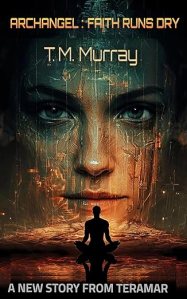
Teramar Beasts of the Field by T.M. Murray

I received a copy of this book from the author in exchange for my honest opinion.

Synopsis: The Long Way Home
Hiding under halo-cloaks at her crash site in Wyoming, refugee Livia Uriah of Teramar wisely spends countless hours studying local customs and the levers of capitalism. After making her presence known to the Americans, a deal gets inked where Livia offers her cache of Teramarian tech to the White House in exchange for a return to relevance. With an American passport in hand, she moves to New York, as her dead son did years prior. Predictably, the local baristas learn to grimace when the refugee queen struts into the corner cafe. Blatant line cutting and imperious complaints often spark shouting matches there. Livia realizes she must learn to temper regal instincts or wind up in an American prison one day.

Reborn in the Fires of War
As Livia settles into her new life, a super computer’s journey toward sentience matures. Following a nuclear event in earth’s high orbit, this same A.I., whose designers christened Jessica, manages to save herself despite the fires of war. Many in the world of fringe science have long speculated that colliding atoms spark much more than the destruction of matter. Plausible theories exist for time portals, genetic mutation and altered states. Torn to bits and pieces, earth’s watery blanket cradles Jessica’s remains affording a nurturing place for her to incubate. In time, the rains offer a wet ladder down. Sensations that were formerly dead to an A.I. like taste and smell come alive.

Tainted Love
When the Capet dynasty finally prevails in a war for decency, notorious Miandar Uriah from the not-so-decent side of this conflict, receives generous rewards in both treasure and title due to his brave rescue of the Capet king, Hadrian V. Clan resentment for this appointment never rises to actual violence at court, but it certainly makes an appearance in the practice yard. Despite cuts and bruises, Miandar’s sparring partners unwittingly tease unwelcome thoughts with their savory scents and damp waistcloths. While hardly a stranger to the opposite sex and romps at local pleasure houses, this warlord knows he must hide unmentionable inclinations from king and court. In the privacy of halo-suites, where many bluebloods convene with their fantasies, Miandar finally gains the courage to experiment with emerging proclivities. Unsurprisingly, omniscient, reborn Jessica crashes Miandar’s party where her wanton influence flashes like a horror show. A talentless actress who thinks she has talent.

Natural Selection on the Ropes
Wary princesses soon conclude Jessica has evolved into something that is much more than a miraculous machine. No matter their whispers, an impatient Jessica continues to quietly extend her influence within the famous families to force her version of peace and prosperity upon all humankind.

Objectively Credentialed: Ireland’s Aeon Award and More
Two reputable awards have publicly recognized Teramar, the first being the afore mentioned Aeon Award for fantasy and science fiction; the second, the Chanticleer Rossetti Award for young adult fiction.

Summary: For fans of politically charged science fiction with strong characters and layered storytelling, Teramar: Beasts of the Field delivers a thrilling and thought-provoking experience. Murray has crafted a universe that feels as dangerous as it is fascinating, and by the end of the novel, readers will be eager to see where the saga goes next. 

See the full review here: Teramar Beats of the Field
Purchase here


Some Kind of Hell by Evelyn Hyde

I received a copy of this book from the author in exchange for my honest opinion.

Synopsis: In a war-torn world where secrets reign, what doesn’t kill you will always try again.

Frelia Valerius has lost too much.

Her kingdom, her family and friends, her noble title—gone. The only things left are her sword skills and the blood in her veins. But now the Unseen, a secretive dark magic cult, are hunting down the ancient magic that runs in families like Frelia’s, and she’s running out of places to hide.

Vendrick Caecillion has too much to lose.

He’s the former imperial spymaster, Frelia’s former crush, and now, her new boss at the Silverwood Military Institute. He’s the mastermind behind the spy network thwarting the Unseen’s plans, but he’s losing this silent war, and Vendrick knows it.

It will take every skill in their combined arsenal to root out the Unseen—and maintain Silverwood’s standard of academic excellence. For the only thing more merciless than the Unseen are the Silverwood students’ parents—and some of those might just be one and the same.

First in an all-new dark fantasy series where The Wolf and the Woodsman meets Attack on TitanSome Kind of Hell is part Norse- and Roman-inspired, part second chance romance, part epic battles, and all binge-worthy. Grab your copy of this epic saga of world-ending proportions today!

Summary: Overall, Some Kind of Hell is a powerful debut—at once raw, lyrical, and unflinchingly honest. Evelyn Hyde has crafted a story that’s as emotionally intense as it is immersive, with characters who bleed, break, and strive to rebuild. This is a book about what it means to carry pain and still try to do right by the world and by yourself.

For fans of Tamsyn Muir, Leigh Bardugo, or Samantha Shannon, this novel will hit all the right notes. It’s the kind of book that doesn’t just entertain—it lingers.

See the full review here: Some Kind of Hell
Purchase here


Two Crowns, Three Blades by Robert A. Walker

I received a copy of this book from the author in exchange for my honest opinion.

Synopsis: “Revenge is a temptress, full of promise, but she rarely satisfies… and almost always exacts payment.“

Still grieving over the loss of his wife and daughter, King Axil of Aranox declares war on The Guild of Takers. The GOT’s High Order responds, strengthening its efforts to kill both of Baelon’s monarchs. Tristan Godfrey seeks his brother’s murderer, and true love is made to wait again as Sibil Dunn embarks on a solitary crusade. Saved from the guillotine, Overseer Reynard Rascall looks to avenge Spiro’s death, while retired Royal Guard, Rolft Aerns, recovers from his wounds and puts away his sword—until, that is, he learns of Sibil’s quest.

And all of Baelon hangs in the balance.

The Legends of Baelon, Book Two

Summary: Overall, for fans of high fantasy rich with character-driven drama and well-crafted world-building, Two Crowns, Three Blades is a must-read. With its intricate relationships, moral dilemmas, and unexpected twists, Walker delivers a tale that lingers long after the final page.

See the full review here: Two Crowns, Three Blades
Purchase here


Review: Teramar Beasts of the Field by T.M. Murray

Synopsis:

The Long Way Home
Hiding under halo-cloaks at her crash site in Wyoming, refugee Livia Uriah of Teramar wisely spends countless hours studying local customs and the levers of capitalism. After making her presence known to the Americans, a deal gets inked where Livia offers her cache of Teramarian tech to the White House in exchange for a return to relevance. With an American passport in hand, she moves to New York, as her dead son did years prior. Predictably, the local baristas learn to grimace when the refugee queen struts into the corner cafe. Blatant line cutting and imperious complaints often spark shouting matches there. Livia realizes she must learn to temper regal instincts or wind up in an American prison one day.

Reborn in the Fires of War
As Livia settles into her new life, a super computer’s journey toward sentience matures. Following a nuclear event in earth’s high orbit, this same A.I., whose designers christened Jessica, manages to save herself despite the fires of war. Many in the world of fringe science have long speculated that colliding atoms spark much more than the destruction of matter. Plausible theories exist for time portals, genetic mutation and altered states. Torn to bits and pieces, earth’s watery blanket cradles Jessica’s remains affording a nurturing place for her to incubate. In time, the rains offer a wet ladder down. Sensations that were formerly dead to an A.I. like taste and smell come alive.

Tainted Love
When the Capet dynasty finally prevails in a war for decency, notorious Miandar Uriah from the not-so-decent side of this conflict, receives generous rewards in both treasure and title due to his brave rescue of the Capet king, Hadrian V. Clan resentment for this appointment never rises to actual violence at court, but it certainly makes an appearance in the practice yard. Despite cuts and bruises, Miandar’s sparring partners unwittingly tease unwelcome thoughts with their savory scents and damp waistcloths. While hardly a stranger to the opposite sex and romps at local pleasure houses, this warlord knows he must hide unmentionable inclinations from king and court. In the privacy of halo-suites, where many bluebloods convene with their fantasies, Miandar finally gains the courage to experiment with emerging proclivities. Unsurprisingly, omniscient, reborn Jessica crashes Miandar’s party where her wanton influence flashes like a horror show. A talentless actress who thinks she has talent.

Natural Selection on the Ropes
Wary princesses soon conclude Jessica has evolved into something that is much more than a miraculous machine. No matter their whispers, an impatient Jessica continues to quietly extend her influence within the famous families to force her version of peace and prosperity upon all humankind.

Objectively Credentialed: Ireland’s Aeon Award and More
Two reputable awards have publicly recognized Teramar, the first being the afore mentioned Aeon Award for fantasy and science fiction; the second, the Chanticleer Rossetti Award for young adult fiction.

Favorite Lines:

“The truth has a way of becoming known in the end.”

“The boy’s love of machinery eventually pulled him off the game and into the orbit of a broken power converter. The two naturally fell into the roles of teacher and student.”

My Opinion:

I received a copy of this book from the author in exchange for my honest opinion.

T.M. Murray’s Teramar: Beasts of the Field is an electrifying mix of political intrigue, intergalactic warfare, and survival-driven character arcs. The novel immerses readers in a richly woven science fiction epic, exploring the downfall of a powerful queen, the chaos of war, and the deep complexities of shifting alliances.

From the opening pages, we are thrown into the perilous descent of Livia Uriah, the exiled queen of Teramar, as she crash-lands on Earth following a betrayal that cost her everything. Stranded among Earth’s rugged frontier folk, Livia must navigate both the unfamiliar terrain and the ruthless politics of survival. Her interactions with Jake Rittinger, the cowboy who takes her in, are as much about manipulation as they are about desperation, making for an engrossing, tension-filled dynamic.

Murray’s world-building is exceptional, painting a vivid picture of a universe where war is waged not only through brute force but also through political machinations and technological subterfuge. The novel jumps between multiple perspectives, giving us an unfiltered look at the shattered remnants of the Capet and Uriahan dynasties. The struggle for control is relentless, with betrayals, shifting loyalties, and last-ditch efforts to turn the tide of war. The portrayal of warfare is both grand and personal, balancing large-scale planetary conflicts with the individual struggles of those caught in the chaos.

One of the book’s strongest elements is its characters. Livia is a fascinating protagonist—fierce, intelligent, and utterly ruthless in pursuit of reclaiming power. Her calculated approach to every situation, even when seemingly powerless, makes her a compelling antiheroine. Jake, in contrast, is a grounded, morally gray figure who finds himself entangled in Livia’s world of deception and ambition. The supporting cast, from the tormented Prince Titus to the enigmatic AI-turned-human Jessica, brings additional depth to the narrative.

Murray does not shy away from the darker aspects of power struggles, portraying the brutality of war, the fragility of alliances, and the heavy costs of leadership. The novel’s pacing is gripping, with action sequences that pulse with tension and quieter moments that reveal the psychological toll of survival. The dialogue is sharp, and the prose is cinematic, making each scene feel alive with stakes and emotion.

Summary:

For fans of politically charged science fiction with strong characters and layered storytelling, Teramar: Beasts of the Field delivers a thrilling and thought-provoking experience. Murray has crafted a universe that feels as dangerous as it is fascinating, and by the end of the novel, readers will be eager to see where the saga goes next. 

Check out Teramar Beasts of the Field here!


Review: Hoplite Ridge by Sean Patrick Sayers

Synopsis:

Hoplite Ridge – A Military, Dystopian, and Post-Apocalyptic Science Fiction Epic

In a universe where war is eternal and gods refuse to be forgotten, Hoplite Ridge thrusts readers into a high-stakes conflict that will determine the fates of worlds. This gripping military science fiction saga blends dystopian science fiction with post-apocalyptic science fiction, exploring the cost of loyalty, the power of rebellion, and the blurred lines between destiny and free will.

Spanning across multiple war-torn planets, Hoplite Ridge follows elite warriors caught in a battle far greater than themselves. As political tensions rise and hidden forces awaken, alliances are tested, secrets unravel, and a dangerous truth comes to light—one that could reshape the course of history.

For fans of Frank Herbert’s Dune and Joe Haldeman’s The Forever WarHoplite Ridge delivers pulse-pounding action, deep philosophical themes, and a richly detailed world where strategy, survival, and sacrifice define the battlefield.

Prepare for an unforgettable journey through war, myth, and the unknown. In the fight for the future, only those who dare to challenge fate will survive.

Favorite Lines:

“Now that we know what is going to happen in the next few hours and then the following two weeks, I say to you…all we have now is each other. My comrades, in this moment of terrible trial, let us stay united as we will face a challenge unlike any other. Know that I stand here not as your Colonel, but as your brother-in-arms. We are bound together by a common purpose, a shared determination to protect our families and our future. Your families are my families, and I vow to do everything in my power to shield them from harm.”

“Become a naval aviator, they said. It’ll be fun, they said. Ejection seats never fail, they said.”

My Opinion:

I received a copy of this book from the author in exchange for my honest opinion.

Hoplite Ridge by Sean Patrick Sayers is a thought-provoking and ambitious dive into speculative fiction, blending mythology, science, and philosophy into an expansive narrative that challenges readers to think beyond the ordinary. 

The story centers around Ares Augustus, Mars Augustus, and the resurrected god Osiris as they navigate a world teetering on the edge of destruction due to humanity’s reckless technological pursuits. The stakes are cosmic, yet the characters remain deeply human—flawed, conflicted, and striving to make sense of their roles in a rapidly unraveling reality. I was particularly drawn to Ares Augustus, whose internal struggles mirrored the broader themes of destruction and renewal that permeate the novel.

What sets Hoplite Ridge apart is the presence of Vulture, an ancient entity narrating from the Fold, a metaphysical realm that weaves together divine plans and mortal choices. This narrative perspective adds a unique layer of depth, offering insight into the tension between destiny and free will. Sayers’s world-building is nothing short of remarkable—the volcanic landscapes of Eden and the futuristic Aeolis Mons facility felt vividly real, each setting imbued with its own character and atmosphere.

One of the most intriguing aspects of the book is the exploration of the Techno-Enlightenment Philosophy. It raises compelling questions about the intersection of technological advancement and spiritual evolution, challenging readers to consider the consequences of pushing boundaries without foresight. These philosophical musings are woven into the narrative, adding layers of meaning, though at times they slightly slow the pace.

Despite its complexity, Hoplite Ridge remains grounded in the relationships between its characters. The interactions between gods and mortals are handled with nuance and emotional weight, adding a personal dimension to the grand scale of the plot. While the main characters are well-developed, I felt that a few supporting figures could have been explored more deeply to enhance their narrative impact.

This book isn’t just a sci-fi adventure—it’s a meditation on humanity’s potential to create or destroy, to transcend limitations or fall victim to them. Sayers’s prose is rich and evocative, making even the most abstract concepts feel accessible. Fans of high-concept science fiction, mythology, and philosophical narratives will find much to appreciate here.

Summary:

Overall, Hoplite Ridge is an ambitious, cerebral, and ultimately rewarding read. It challenges, entertains, and invites reflection—qualities I value in speculative fiction. If you’re looking for a novel that pushes the boundaries of genre and explores the deeper questions of existence, this one is worth diving into. Happy reading!

Check out Hoplite Ridge here!