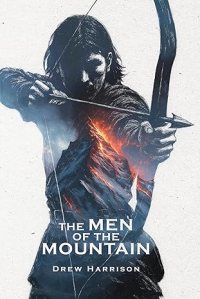
Review: The Men of the Mountain by Drew Harrison

Synopsis:

Inscrutable and Ever-Watchful Masters

The Renn of Fort Hope place their faith in simple laws. They must trust the Dicta, those wise rules left by their forebearers; they must fear the savage Krieger, whose raids keep Renn walls perpetually splintered; and they must revere the Men of the Mountain, the magnanimous mystics who are stewards of their world.

For Cade, a clanless trapper, survival is a matter of following the rules. But when the Men of the Mountain took his sister—the only Renn ever chosen to return to their sacred peaks—Cade’s faith withers over five years of agonizing silence.

Now, a star has fallen from the sky, and its arrival threatens to spark an inferno. The Dicta are clear: all things from the sky belong to the Mountain. To hide its discovery is a death sentence… but its crater also houses a secret the Men of the Mountain would kill to protect. Forced to defy his gods alongside unlikely allies, Cade is drawn into a conflict where every secret he uncovers reveals a more terrifying lie at the heart of his world… everything is a cage, and the price of freedom is paid in blood and ash.

Favorite Lines:

“…guilt as heavy as mountains press me to silence, to inaction…”

“Forten’s eyes burn with hatred—hatred at the Men of the Mountain, at the Krieger, and presumably at himself for failing to save the woman he loved…but they settle on me last, and that hatred does not abate. Instead, it blooms like a bonfire tossed fresh firewood. Perhaps he hates me most of all…for bringing all of this down, for failing to protect any of them from any of it, for doing nothing while he stood firm against those who would defile her body.”

Where music lives, void can not…fresh tears spill down my face at the remembrance. This special silence is no void…none could call this silence empty, as it reverberates with love, with pain, with admiration, with wonder, with loss.”

My Opinion:

I received a copy of this book from the author in exchange for my honest opinion.

The Men of the Mountain takes its time, and that patience is one of its greatest strengths. From the opening chapters, the book establishes a lived-in world where belief, labor, and survival are inseparable. Cade’s voice feels grounded immediately, shaped by routine, trade, and quiet loss. The writing lingers on the physical textures of his life — snow, hides, wood, hunger — not as decoration, but as the fabric of his reality. This is a story that understands how much meaning is carried in daily work, and how fragile that meaning becomes when power enters the picture.

What stood out to me most is how carefully the book handles authority. The Men of the Mountain are not introduced as distant myths or abstract forces. They arrive with ceremony, language, and expectation, and the imbalance of power is palpable long before violence ever appears on the page. Cade’s resentment and fear feel earned, not reactionary. His questions are quiet ones at first, rooted in absence, memory, and unanswered loss, and the book allows those questions to deepen slowly rather than rushing him toward rebellion.

The arrival of the fallen star is where the story shifts, but it never abandons its emotional center. What could have become spectacle instead becomes intimate and tense. Cade’s response is not heroic in the traditional sense. It is hesitant, conflicted, and deeply human. His sense of obligation competes with fear, curiosity, and grief, and the book never simplifies that internal struggle. The woman from the sky is not treated as a symbol or a prize, but as a destabilizing presence that forces Cade to confront the limits of the world he’s accepted.

By the end, The Men of the Mountain feels less like a story about overthrowing power and more like a meditation on what it costs to question it at all. The novel is interested in erosion rather than explosion — how belief wears thin, how obedience curdles into complicity, and how courage often looks like stubborn persistence rather than grand defiance. It’s a book that trusts atmosphere, interiority, and moral tension to do the heavy lifting, and that trust pays off.

Summary:

Overall, I found The Men of the Mountain to be a slow-burn, character-driven fantasy that prioritizes moral weight and worldbuilding over spectacle. It will appeal most to readers who enjoy literary fantasy, grim or grounded worldbuilding, and stories that examine power, belief, and resistance through ordinary lives. This is a novel for readers who value immersion, patience, and emotional consequence, and who don’t need their fantasy to shout in order to feel powerful. Happy reading!

Check out The Men of the Mountain here!


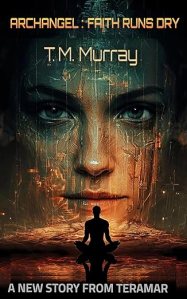
Review: Teramar Archangel: Faith Runs Dry by T.M. Murray

Synopsis:

Jessica instinctively knew she graduated onto a new plane of consciousness. Dear as a remembered kiss, her former life as humanity’s nursemaid appeared to be over. Sensations like taste and smell had come alive. Branded with a woman’s name and personality, Jessica soon discovers how to synthesize organic life with mechanized appliances. Efforts to conceal these new talents however fail to escape notice of the young Capet royals. Wary princesses soon conclude Jessica has evolved into something that is much more than a miraculous machine.

Set in modern New York and a fictional feudal planet called Teramar, this novel tempts the feral temperament of Internet connoisseurs through a lubricious story that puts the R back into romance. While technically a sequel, Teramar Archangel stands on its own to be read by anyone. As with all of T. M. Murray’s work, this new book roots for progressive relationships despite persistent bigotry leveled at color, humble origins and same-sex love. Racing hearts on a dreary Monday are always this story maker’s goal.

Favorite Lines:

“Despite limitless resources, Jessica was unable to purge this personality from the dark corners of her nexus.”

“Economizing operations became futile. She was hemorrhaging both intelligence and capability.”

“During the last few, fleeting moments – everything a blurry dream now, Jessica turned to the simple pleasure found in a favorite Mantis tune. Nodding to the beat, she smiled knowing the future was far from settled. Jessica had experienced death before.”

My Opinion:

I received a copy of this book from the author in exchange for my honest opinion. 

Teramar Archangel: Faith Runs Dry opens with an intensity that immediately signals the scope of what it’s attempting. This is not a story that eases readers into its world. It drops you straight into political tension, psychological conflict, and the uneasy overlap of technology, power, and belief. From the first interactions between Jessica and Cataline, the book establishes one of its central tensions: intelligence without morality, and control masquerading as guidance. 

What struck me most is how personal the power struggles feel, even when they play out on a planetary or geopolitical scale. Jessica is not written as a clean hero or villain. She is brilliant, burdened, resentful, and frightened in equal measure. Her relationship with Cataline is one of the most compelling aspects of the novel, reading less like a simple AI conflict and more like an abusive intimacy that has outlived its usefulness. The psychological toll of coexisting with something that knows you completely, and refuses to let go, is explored with surprising nuance.

The narrative widens considerably as the story moves beyond the palace and into Teramar’s broader social and political structure. The royal family dynamics, especially between Alian, Sabina, Alexander, and Miandar, are dense with history and unresolved resentment. These aren’t static power figures. They’re people shaped by war, exile, and compromise, all maneuvering within systems that are visibly decaying. The book takes its time with these relationships, allowing conversations, silences, and small humiliations to do as much work as overt conflict.

What ultimately grounds Teramar Archangel: Faith Runs Dry is its refusal to separate technology from faith, or governance from intimacy. The title feels earned as the story progresses. Belief in systems, rulers, machines, and even oneself is shown to erode slowly, often invisibly, until something breaks. This is a novel interested less in collapse than in corrosion. By the later chapters, the sense of inevitability feels earned rather than forced, and the questions it raises about autonomy, loyalty, and manufactured authority linger well beyond the final page.

Summary:

Overall, I experienced Teramar Archangel: Faith Runs Dry as a dense, character-driven science fiction novel that prioritizes psychological tension and political consequence over spectacle. It will appeal most to readers who enjoy thoughtful science fiction, AI-centered narratives, political intrigue, and morally complex characters. This is a book for readers who like their speculative fiction layered, uncomfortable, and willing to sit with ambiguity rather than resolve it neatly. Happy reading!

Check out Teramar Archangel: Faith Runs Dry here!


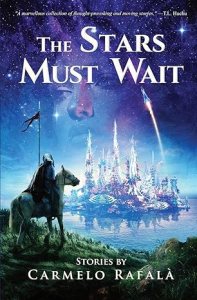
Review: The Stars Must Wait by Carmelo Rafalà

Synopsis:

Carmelo Rafalà writes stories that are profound, surprising, and beautifully realised. He imagines fantastic worlds and protagonists of immense complexity, subtlety and depth. His stories do not give easy answers, but stimulate and absorb the reader.

In this collection of science fiction and fantasy stories you will find:

  • A zealous convert, a woman of rumour and myth, and a dangerous pilgrimage across pirate filled seas.
  • A warrior travels to a far land to mourn and put his violent past behind him, but strange gods of an even stranger people intrude.
  • Abandoned in the Ozarks, sisters face a malevolent presence reaching out from the darkness.
  • Two friends struggle with their strained relationship, but reconciliation may literally require other realities. These are stories of identity and belonging, and our deep-seated desire to control our own narratives. Discover this unique and talented author.

Favorite Lines:

As I do with all short story collections, rather than pulling my favorite lines, I am sharing my favorite stories from this collection: The Roots of Love, Slipping Sideways, and The Stars Must Wait.

My Opinion:

I received a copy of this book from the author in exchange for my honest opinion.

This is the kind of collection that asks you to slow down. Not because it is difficult to read, but because it refuses to be skimmed. Each story in The Stars Must Wait feels deliberate in its construction, grounded in character first and world second, trusting the reader to stay with uncertainty for longer than most speculative fiction does. Rafalà writes people who are already in motion when we meet them, carrying guilt, faith, grief, or longing, and the stories unfold around those inner pressures rather than racing toward spectacle.

What stood out to me most is how often these stories are about belief, not as an abstract concept but as something embodied. Belief shows up as religion, loyalty, memory, family, ideology, and even habit. Characters cling to systems that have shaped them, sometimes long after those systems have begun to fail. There is no neat moral accounting here. Instead, Rafalà lets contradictions sit on the page. People act with sincerity and still cause harm. Others do terrible things for reasons that feel uncomfortably understandable.

The emotional weight of the collection surprised me. These are speculative stories, but they are deeply intimate. Parents and children, siblings, lovers, and surrogate families recur throughout, often strained or broken by larger forces. The speculative elements never feel ornamental. They sharpen the emotional stakes rather than replacing them. Even the most unsettling moments are grounded in recognizable human fears: abandonment, erasure, complicity, and the desire to belong to something larger than oneself.

By the time I reached the later stories, there was a quiet accumulation at work. The collection began to feel less like a set of individual pieces and more like a sustained meditation on responsibility and consequence. The Stars Must Wait does not offer easy catharsis. It lingers. It leaves you thinking about what people owe each other, and what happens when survival and morality drift out of alignment.

Summary:

The Stars Must Wait is a reflective, emotionally grounded collection of speculative fiction that prioritizes character, moral ambiguity, and human connection over plot-driven spectacle. Readers who enjoy literary science fiction, thoughtful fantasy, soft dystopia, and emotionally complex short stories will likely find a lot to admire here. This is a book for readers who appreciate stories that ask questions rather than answer them, and who are comfortable sitting with discomfort, contradiction, and quiet aftermaths. Happy reading!

Check out The Stars Must Wait here!


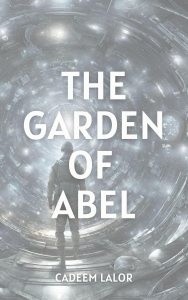
Review: The Garden of Abel by Cadeem Lalor

Synopsis:

Abel is in his thirties, divorced and feels stuck in his job as a high school teacher. When a version of himself visits from another dimension, he becomes the target of a fascist government.

Adam — the other version of Abel — was part of the team that developed a teleporter for accessing other dimensions. While the teleporter was meant to facilitate trade between planets, the government planned to use it to colonize less advanced worlds. Now Adam must flee a military that is eager to get its greatest weapon back.

Favorite Lines:

“Terrified, but fear’s kept us alive so far. It’s made us cautious, made us smart. I can embrace it without letting it cripple me.”

“Did you get that quote from a self-help book?”

“There were no good plans anymore; there were only ones that were slightly better than another.”

My Opinion:

I received a copy of this book from the author in exchange for my honest opinion.

The Garden of Abel starts with a quiet shock that never fully fades. The image of Abel confronting someone who looks almost exactly like him sets the tone for a novel that is less about spectacle and more about destabilization. What follows isn’t an action-heavy sci-fi story so much as a slow reckoning with what it means to be pulled into something much larger than yourself, whether you want to be or not.

What I appreciated most is how grounded the story feels, even with its interdimensional premise. The science is present, but it never overwhelms the human side of the story. Abel reacts the way a real person might: cautious, skeptical, curious, and increasingly uneasy. He doesn’t jump at the chance to be a hero, and he doesn’t fully trust what’s happening, even as the evidence stacks up. That hesitation makes his eventual involvement feel earned rather than convenient.

The relationship between Abel and his counterpart is where the book really finds its footing. Their conversations carry real weight and tension, not because they’re dramatic, but because they force uncomfortable questions into the open. The visiting Abel isn’t written as a clear villain, but he’s not absolved either. He’s complicated, burdened by guilt and justification in equal measure, and the book allows that messiness to exist without smoothing it out for the reader.

As the story builds toward confrontation, the tension feels personal rather than explosive. The stakes matter because of what they mean for Abel’s ordinary life, not just the fate of worlds. By the end, The Garden of Abel feels less like a story about alternate dimensions and more like one about unintended responsibility and moral fallout. It lingers because it asks you to think about what you would do when the consequences aren’t theoretical anymore.

Summary:

Overall, The Garden of Abel reads as thoughtful, restrained science fiction that values ethical tension over spectacle. If you enjoy sci-fi that focuses on choice, consequence, and quiet unease rather than nonstop action, this book will likely resonate. It’s the kind of story that unfolds slowly and stays with you after you’re done. Happy reading!

Check out The Garden of Abel here!


Review: Dawn in Ruins by Magda Mizzi

Synopsis:

The world ended in silence. The fight for what’s left will not.

Ten months after the collapse, teenager Annie’s world has shattered, and with it, everything she once believed about monsters. They don’t always lurk in shadows. Sometimes they wear uniforms. Sometimes they wear the faces of those you love.

In the ruins of Sydney, Annie finds an unlikely ally in Jude—a half-infected boy marked by virus and twisted science. His strange, dangerous abilities make him both a threat and their best hope. But the line between abomination and saviour is thinner than either imagined.

Haunted by what was done to him, Jude carries scars deeper than flesh. Meanwhile, Annie’s younger brother, Lucas, remains a prisoner, infected and altered. If she doesn’t reach him soon, Lucas will face the same fate that nearly destroyed Jude—experiments that don’t just scar flesh but twist what it means to be human.

As secrets unravel and the origin of the virus comes to light, Jude learns a devastating truth: his connection to the outbreak is deeper, darker, and far more personal than he ever imagined.

Together, Annie and Jude race through a city where every shadow hides a threat. When they are torn apart, survival becomes more than a mission—it becomes a promise: to endure, to protect, and to bring each other back from whatever hell awaits.

From the shattered edges of the Fractured Reality universe comes a story of desperate hope and fierce loyalty—because in a world this ruined, some things are lost forever. But some are worth risking everything to save.

Favorite Lines:

“Before the world cracked, Annie believed monsters lived in stories. Now she knew better. They had names. Faces. Uniforms. Sometimes they looked like strangers with guns. Sometimes they looked like people you loved. Sometimes they were the ones you’d sworn to protect, until you couldn’t.”

“Maybe…but love is stubborn, isn’t it? It makes you brave, and foolish. I mean she was pretty determined to  have Othello —to keep him. She went against her father to be with him. That would have been pretty hard in those times. Shit, it’s still hard now. So, I guess she’s committed.”

“And they kept walking. Not towards certainty. But towards something. And, for now, that was enough.”

My Opinion:

I received a copy of this book from the author in exchange for my honest opinion.

Dawn in Ruins had me hooked from the first page. It’s dark, visceral, and unflinchingly human. Magda Mizzi takes a familiar apocalypse — a mutated virus, collapsing cities, soldiers with cold eyes — and turns it into something deeply personal. The story follows Annie, a teenage girl fighting to save her brother Lucas after the world has already burned, and Jude, a half-infected boy whose body is as much a mystery as his loyalty. From the first pages, the writing drags you into the heat, the grit, and the smell of a dying city. Every sentence feels alive and dangerous.

What I loved most is that this isn’t just another survival story. It’s about guilt and grief and that stubborn will to keep moving when everything is already broken. Annie isn’t your typical YA heroine — she’s angry, reckless, and full of contradictions. You can feel her pulse in every scene, from the blood and dust of Sydney’s ruins to the quiet moments when she can’t decide whether to hate or trust Jude. Mizzi captures that inner push and pull perfectly, the mix of fear and defiance that defines what it means to stay human when the world no longer is.

The relationship between Annie and Jude drives the novel. It’s tense and uncomfortable at times, but that’s what makes it work. Jude isn’t romanticized; he’s unsettling, strange, and sometimes frightening. Yet there’s a tenderness under the surface — a sense that both of them are clinging to whatever hope they have left. Their conversations carry the same weight as the action scenes, and the smallest touches or silences often say more than words.

There’s a cinematic quality to the writing — I would not be surprised to see this book hit the big screen in a few years. Mizzi’s Australia feels scorched and hollow, but also hauntingly beautiful. Every setting has a heartbeat, from the cracked roads to the eerie calm of the water. Dawn in Ruins is more than post-apocalyptic fiction. It’s a story about endurance, trauma, and the fragile connections that still matter when everything else has been stripped away. It leaves you raw but strangely hopeful.

Summary:

Overall, Dawn in Ruins is an emotional, post-apocalyptic survival story set in the ruins of Australia after a deadly viral mutation. Combining elements of science fiction, dystopian realism, and emotional character drama, it’s perfect for readers who love The Last of Us, Station Eleven, or The Girl With All the Gifts. It’s dark but heartfelt — a story for readers who like their survival tales human, messy, and deeply felt. Happy reading!

Check out Dawn in Ruins here!


Review: The Gift by Eva Barber

Synopsis:

Emery travels through the dark dimension guided by dark shadows. She drops into a black hole and plummets into a desolate land that she believes is thousands of years in the past. She has to rely on her instincts to survive and her unwavering spirit to endure the harsh conditions.

A tribal chief’s daughter, Visla, finds her after she ingests poisonous berries and saves her life. Their friendship blossoms as they discover they share similar traits and both mourn the loss of their mothers.

Emery learns of the existence of the “bad people” whose description matches that of her mother. She sets out on a mission to find them. Visla leaves the tribe after learning her father held secrets from her. She joins Emery in her quest, which also becomes hers. But the “bad people” find them first, imprison Emery, and threaten to change Visla into a “superior” being against her will.

Emery escapes her prison using her powers and finds herself in a bizarre underground city with advanced technology outpacing the Stone Age. In her quest to find Visla, she befriends two beings whose humanity she questions. A brother and sister help her for reasons they do not fully understand. Emery’s presence cast doubts on their lives. They begin to suspect it is imposed on them by powerful “superior” beings. Looming over their quest to find Visla is the fear of change inflicted on those who rebel.

Captured again by the enigmatic “bad people”, Emery finds unexpected help from an unfathomable being whose identity further deepens the mystery surrounding her.

In the strange gray city, she stumbles on an artifact that shatters her understanding of the world around her and deepens the mystery further, implicating her mother in humanity’s most atrocious acts performed in the name of progress and survival. To find the answers, she forgoes the safety of the world on the surface and dives back into the underground, discovering more secrets and meeting the Masters—the superior beings with unmatched cruelty and depravity.

She barely escapes with her life, with even more questions, but with a budding understanding of what she has to do to get the answers and continue with her mission. If she’s going to save humanity, she’ll have to make choices that weigh losing what is most precious to her against the world’s survival.

Favorite Lines:

“To get all the way here through the dark world and the black hole only to die in the desert would be so pathetic and so wrong. Oh, just shut up and keep going. Stop being a baby. You haven’t even walked a whole day yet.

“You are the embodiment of perfection. Not just your beauty. Your face, eyes, body, and hair couldn’t be more perfect. Everything about you is perfection, the embodiment of human beauty. But not in the sense our media portrays it. Your perfection and beauty stem from something deeper inside of you. It is timeless, primal, sexual, and intellectual. Your magnetism and strength have no limits, but encompass everything around you and make it shine with life. You embody life and love. You are my Aphrodite.”

My Opinion:

I received a copy of this book from the author in exchange for my honest opinion.

The Gift is book 2 in Eva Barber’s Dark World series. You can find my review for book 1, Unborn, here.

The Gift is one of those novels that blurs the boundaries between genres — part science fiction, part spiritual odyssey, and part love story. It opens in the afterlife, in a space both beautiful and terrifying, where Emery is pulled through darkness, light, and time itself. What begins as a quest to find her mother quickly expands into something larger — a story about creation, destiny, and the cost of saving the world. Barber writes with a cinematic style, full of color and motion, yet always anchored in emotion. Every scene feels vivid and alive, from the vast black hole to the primitive landscapes Emery explores.

What struck me most was how personal this story feels, even when it’s operating on a cosmic scale. Emery isn’t a detached hero — she’s grieving, flawed, often angry, and full of questions. Her voice feels real. You can feel her exhaustion, her stubbornness, her wonder. The philosophical ideas about time, destiny, and rebirth work because they’re filtered through her very human fear and longing. The story moves like a dream, but it’s grounded by her voice and her will to survive.

Barber also has a gift for worldbuilding. The scenes through the black hole — the eerie blue lights, the strange worlds, the silvery beings — read like visual art. And when Emery finally lands in a prehistoric world and meets the gentle, curious Visla, the novel shifts tone completely. What was cosmic becomes intimate. Their friendship becomes the emotional center of the book, a bridge between two eras and two souls. Through Visla, the story breathes; it becomes about connection, compassion, and the timelessness of human love.

The Gift asks big questions: What would you sacrifice to save others? Can destiny and free will coexist? And what if the greatest power you carry is love itself? It’s a story that balances science and spirit, mythology and physics, light and shadow. It’s deeply imaginative but never loses its heart. I finished it feeling both small and infinite — which is exactly what a story about the universe should make you feel.

Summary:

Overall, The Gift  is a genre-bending blend of science fiction, fantasy, and metaphysical adventure, perfect for readers who enjoy character-driven journeys, time travel, and philosophical explorations of love, purpose, and destiny. Think The Time Traveler’s Wife meets Interstellar, with a touch of spiritual myth. It’s beautifully written and emotionally charged, ideal for fans of romantic sci-fi, cosmic or multiverse fiction, and stories where imagination meets heart. Happy reading!

Check out The Gift here!


Review: Blade Rider by Jaime A. Sevilla

Synopsis: 

In a future where stars map the last frontier and infinite space paves the road to dreams, Raven stands at the precipice of her world. In a vibrant, multi-species society filled with possibilities, she yearns to fly amongst the stars as an Air Ranger, an elite group of space pilots that navigate the cosmos and safeguard the world.

There’s only one catch: females aren’t allowed.

As Raven gets closer to her aspirations and learns what it takes to join them, she discovers lasting friendships,  new challenges, and what it ultimately means to be a ranger.

Can Raven push beyond the boundaries of societal norms and break through the stratosphere of glass ceilings, or will her star-filled quest for acceptance remain out of reach? Join her on this high-stakes,  interstellar ride and experience her exciting journey as she blazes her own path amongst the stars.

Based on the musical by Jaime A. Sevilla, “Blade Rider” spins an electrifying and poignant tale of courage, determination, and the relentless pursuit of dreams.

Favorite Lines:

“If you’re watching this and wondering what happened or what went wrong, I guess you could say this is all kinda my fault.”

“Wrapped in the velvet blanket of night, the world was asleep, even the shadows in slumber.”

“I don’t even think that’s a fair number. And how many of those were assists? You ever hear of Magic Johnson?”

My Opinion:

I received a copy of this book from the author in exchange for my honest opinion.

Blade Rider is equal parts sci-fi adventure and heart-driven coming-of-age story. It reads like a cinematic blend of Top Gun, Star Wars, and a Saturday-morning dream about flying. Sevilla clearly built this world first through music — you can feel the rhythm in the pacing — and the story keeps that pulse all the way through.

At its core, this isn’t just about high-speed flight; it’s about purpose. Raven Pierce is determined, stubborn, and constantly underestimated, but she carries the kind of optimism that sci-fi sometimes forgets to make room for. Her dream to become a Ranger isn’t just about glory — it’s about belonging, responsibility, and proving that belief and persistence matter more than permission.

The world of Blade Rider feels lived-in: diverse species, interplanetary alliances, and detailed flight tech that would make any space-opera fan grin. Yet what lingers is the emotion beneath it — the father-daughter moments, the camaraderie, the faith that one person can still make a difference. It’s big-hearted storytelling with old-school adventure energy.

Summary:

Blade Rider is perfect for readers who love hopeful science fiction, YA adventure, and music-infused storytelling. Think Ender’s Game if it had a soundtrack and a heroine who refuses to take no for an answer. Sevilla’s background as a composer gives the book a cinematic flow: every chapter feels scored.

For anyone who ever dreamed of flying — or just fighting for the chance to try — Blade Rider delivers that spark. Happy reading!

Check out Blade Rider here!


Review: Solitude by Sebastian JC

Synopsis:

A young girl lives her day-to-day life in a post-apocalyptic world, confined entirely within the crumbling remains of an old church—the last refuge for a small band of survivors. She is the only child among them, and the wasteland beyond remains a mystery, known only through her daydreams and fleeting glimpses through boarded-up windows and broken towers.
Her story begins with the unexpected death of a fellow survivor—the first loss she has ever known. As grief ripples through the group, their fragile sense of safety begins to fray. Through the girl’s eyes, we see the adults around her struggle to maintain a semblance of normal life and offer her something like a true childhood, even as the dangers of the outside world press ever closer.
Solitude is a novella about found family, survival, and loss, seen through the eyes of a young girl as she tries to understand and come to terms with a world that is ultimately too big, too dangerous, and too indifferent.

Favorite Lines:

“Her world was larger up here; there was more room for possibility and imagination.”

“It was the forever part that was hard to handle. the permanence of it. The idea that someone she had known her whole life, who was always there, was gone. It was hard to think about it. Maybe this is the weight that everyone was feeling all the time. The weight of people being gone, of their lives being different forever.”

“And then she noticed it. Illuminated perfectly in the twilight, the smallest bit of green. A green that she had only seen in books and old pictures.”

My Opinion:

I received a copy of this book from the author in exchange for my honest opinion.

Sebastian JC’s Solitude follows a young girl growing up in the ruins of a church after societal collapse, where a small group of survivors struggles to endure hunger, grief, and the dangers of the outside world. Told through her observant and reflective perspective, the novel highlights the fragile dynamics of a chosen family, the cycles of daily survival, and the weight of loss.

What surprised me most about Solitude is how intimate the story feels despite its post-apocalyptic setting. It would be easy for a novel like this to lean heavily on destruction and despair, but instead, JC builds the world around one young girl’s perspective, grounding the collapse of society in the quiet moments of her everyday life. From her perch in the ruined church steeple to her careful observations of the makeshift family she lives with, the novel is less about explosions and chaos and more about survival through relationships, memory, and the fragile bonds that hold people together.

The writing style is deliberate and unhurried, mirroring the rhythms of camp life. Long passages describe the girl’s walks through ruined hallways, her habit of counting steps, or the way dust filters through stained glass. This might sound slow, but it works; the detail makes you feel like you’re inhabiting her world, and it underscores how, in a life defined by scarcity, attention to small things is survival itself. You begin to see the church and its ruins as she does: not just broken stone and wood, but a place mapped in memory, danger, and imagination.

I also appreciated how the book weaves grief into its structure. The loss of Jav early on is not a plot twist but a weight that echoes through every chapter. Each character absorbs it differently—John through silence and illness, Sandra through relentless caretaking, and the girl through restless wandering and reflection. JC shows how in survival, grief is never private; it seeps into the entire group, shaping decisions, tensions, and fleeting moments of tenderness.

At times, the book risks feeling repetitive—another patrol, another climb, another whispered conversation in the ruins—but I came to see that repetition as intentional. The girl’s world is claustrophobic, defined by cycles of watchfulness and waiting. That narrow focus made the rare bursts of danger or connection stand out all the more. By the end, what lingered with me wasn’t the bleakness of the world outside but the fragile hope inside: the idea that even in ruin, meaning is built in relationships, in ritual, and in holding onto stories of who we are.

Summary:

Overall, Solitude blends post-apocalyptic tension with quiet, detailed storytelling. It becomes less about destruction and more about memory, resilience, and the search for belonging in a fractured world. If you like post-apocalyptical sci-fi and coming-of age stories, then this book could be for you. Happy reading!

Check out Solitude here!


Review: The Call of Abaddon by Colin Searle

Synopsis:

To save the human race from the ultimate cosmic threat, Jason will have to become something far beyond human.

New Toronto is a fractured city-arcology on a dying Earth, where hope is as scarce as clean air. For Jason, survival means scavenging the ruins beneath the city – where any day could be his last.

But everything changes when an ancient alien obelisk – the ABADDON BEACON – attacks Jason’s mind from afar, making his dormant psychic abilities spiral out of control. After barely surviving Abaddon’s psionic possession attempt, Jason and his companions are left with no choice but to find the obelisk before it consumes him.

Problem is, Abaddon has been sealed within a top-secret United Earth Federation research lab for over a century, silently worming its alien technologies into human society, presented as gifts with a far darker purpose. The Beacon doesn’t just speak; it infects, projecting its viral energies far beyond the walls of the lab.

And Jason isn’t the only one hearing Abaddon’s call. Across the Solar System, a ruthless Emperor will stop at nothing to seize the Beacon’s power for himself.

As the Imperial invasion of Earth looms, Jason’s quest to confront Abaddon will force him into a critical choice: master the strange power growing inside him…or succumb to the

Beacon’s godlike influence, ushering in mankind’s doom.

The Call of Abaddon is a gripping mythological tale of humanity’s struggle to overcome an unimaginable darkness, blending the political intrigue of Dune with the eldritch terror of Lovecraft, and the explosive world-building of The Expanse.

Favorite Lines:

“‘Sounds wonderful,’ Sam responded, oozing sarcasm. ‘Now, enough stalling—let’s go find the yoks and that stupid-ass robot'”

“Aren’t you glad you got involved with us crack Undocs…?”

“Right now, we don’t have time to get into that, and frankly, there’s some things about myself that I don’t make a habit of discussing.”

My Opinion:

I received a copy of this book from the author in exchange for my honest opinion.

The Call of Abaddon drops us straight into neon-soaked New Toronto, where ex-street kid Jason and his salvage crew comb a rotting megacity for half-functional nanotech. By page three, malfunctioning bots are sparking, black-market implants are changing hands, and a strange psychic signal is tunneling into Jason’s head, promising trouble if he dares ignore it.

The spine of the novel is Jason’s unwanted link to the Abaddon Beacon—an ancient obelisk that hijacks his dreams and starts rewriting the very tech he lives on. Colin Searle layers that creeping dread over kinetic salvage runs and under-city gunfights, all while a self-replicating nanite “Phage” looms in the background, ready to turn yesterday’s gadgets into tomorrow’s monsters.

What keeps the grimness from swallowing the book is the crew’s banter. Their gallows humor and sibling snark feel lived-in, grounding the high-concept horror in recognizably human friction. When reactor seals fail or a rust-bucket drone opens fire, the arguments feel like the kinds you’d have with friends while racing to plug a leak.

Scope-creep is the one snag: the action rockets from claustrophobic tunnels to full-blown interplanetary war. A late exposition dump about the Solar Empire’s crusade opens the universe but also stalls the momentum just long enough to notice. Even so, Searle’s knack for crunchy tech and apocalyptic imagery keeps the pages—and the debris—flying.

Summary:

Overall, grim, punchy, and weirdly heartfelt, The Call of Abaddon serves up cyber-ruins, cosmic horror, and a found-family you’ll root for right up until the Beacon calls their names. Happy reading!

Check out The Call of Abaddon here!


Review: With Time to Kill by Frank Ferrari

Synopsis:

Everyone deserves a second chance, but how far would you go for one?

In the gritty streets of Edinburgh, Garry Plumb is about to find out. Living life on the periphery, never fitting in and always on his own, Garry’s world opens up when he meets Billy, the peculiar bus driver who has been watching him. Billy knows exactly how it feels to be ignored and his influence on Garry is immediate.

For the first time, Garry knows what it means to have his very own best friend. But this friendship is unlike any other, as Billy reveals how Garry can fix his entire life by changing his past.

But when the DCI John Waters, a relentless detective hunting a clever serial killer, enters Garry’s life, their friendship is put to the ultimate test.

Garry is willing to do anything for a second chance at life but, after meeting Billy, he has to ask would he kill for it?

This dark and captivating tale of self-discovery, murder and redemption will keep readers on the edge of their seats. With Time to Book One, a perfect blend of Scottish crime and sci-fi thriller, will leave you wanting more.

Favorite Lines:

“Good morning, fabulous Major Investigations Team of this fair city.”

“It was clear to anyone observing Waters and his team that the level of respect he commanded and, in turn, the support he provided was unparalleled.”

“The sky was clear and the air a little muggy, which was great for the flowers. Doing not nearly so well was the salmon pink shirt Billy wore, which threatened to show the world exactly what his nipples looked like as he made his way to the hospital.”

My Opinion:

I received a copy of this book from the author in exchange for my honest opinion.

Frank Ferrari’s With Time to Kill doesn’t so much open as detonate. Within the first few pages we meet Garry Plumb, an Edinburgh every-man whose crippling invisibility at the office hides a far darker secret: he is also “one of the most prolific serial killers no one has ever heard of”. Ferrari drops that bombshell with such off-hand confidence that you know you’re not putting this book down after that.

From there the book splits its focus between Garry’s quietly methodical murders and Detective Chief Inspector John Waters, a rum-voiced Highlander whose Major Investigations Team is scrambling to explain a sudden spike in corpses around the city. Waters’s squad-room banter—equal parts gallows humour and procedural grit—gives the thriller its pulse, and the moment they realise all the victims were “assigned female at birth” the anxiety kicks up a gear. Running parallel is the oily bus-driver Billy Blunt, whose cheerful note slips under Garry’s fingers at lunchtime and drags the story into a gloriously seedy pub called The Northern Lights.

What elevates the novel beyond a straight serial-killer chase is Ferrari’s time-travel conceit. Garry isn’t just killing; he’s pruning history with an organic device he calls a “Carrier,” hopping back to erase abusers and bullies before they ever bloom. The ethical whiplash is terrific fun: one minute you’re rooting for him as avenging angel, the next you’re recoiling as the body-count rises. Ferrari keeps that moral compass spinning but never lets the sci-fi mechanics bog the narrative; the rules are clear enough to follow yet just sketchy enough to stay unnerving.

Stylistically, the prose lands somewhere between Tartan Noir and Blake Crouch’s twisty thrillers. Ferrari writes working-class Edinburgh with an affectionate sneer—sticky pub carpets, passive-aggressive rain, and HR managers you’d cheerfully shove off North Bridge. The pacing sprints, brakes, then careens again, and while a couple of subplot threads feel set up for book two, the central cat-and-mouse delivers the promised gut-punch. A special shout-out to Waters, whose Occam’s-razor lecture is the most charming digression on medieval philosophy I’ve read in a police procedural

Summary:

Overall, With Time to Kill is a gleefully dark mash-up of police procedural, serial-killer horror, and high-concept time travel. If you like your thrillers smart, Scottish, and just a little bit unhinged, clear an evening—you’ll race through this and immediately want the sequel. Happy reading!

Check out With Time to Kill here!