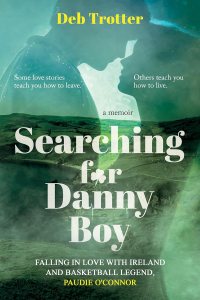
Review: Searching for Danny Boy: Falling in Love with Ireland and Basketball Legend, Paudie O’Connor by Deb Trotter

Synopsis:

Debbie, a North Carolina-born recent college graduate, is determined to write a life on her own terms. Her quest for agency leads her far from home, beginning with a summer job opportunity at an Irish castle that promises adventure and a chance to prove herself. When Debbie and her best friend, Marygray, arrive in Ireland in 1972, they discover a country brimming with beauty, tradition, and danger, where rigid expectations collide with their friendly American energy and attitudes.

The two friends’ exciting prospects of working in a romantic Irish castle are quickly dashed when they are fired, thrown out into the rain, and forced to thumb across Ireland, penniless and in search of new jobs. Their journey plunges them into Ireland during The Troubles, a period of intense political upheaval. What begins as carefree exploration becomes a dangerous game of cat-and-mouse as they evade unexpected IRA encounters.

As they thumb across Ireland, a kindly tour guide helps Debbie and Marygray navigate a landscape of shifting loyalties, and they land at a famous hotel in Killarney, where they find work as waitresses. It is here that Debbie encounters Paudie O’Connor—a charismatic basketball player and future star whose impact on the sport in Ireland and across Europe will eventually become magnetic and monumental. Their romantic connection is instant. Passionate. Impossible to ignore. Paudie’s presence on the court—and in Debbie’s life—serves as a catalyst for her his steadfast support, disciplined passion, and belief in her potential empower her to claim her voice in a world that often tests her resolve.

When a return to the United States becomes inevitable, Debbie’s journey expands beyond romance into a broader, future-facing dream—one that centers on her own path and the life she must build at home.

Back in America, her week with Paudie and later memories of him, as well as her self-discovery, broaden Debbie’s world. In 2015, she learns the full extent of Paudie’s basketball legacy in Ireland and Europe, discovering that his achievements and influence ripple through Irish sport and culture. Their connection remains a lifeline across time, a quiet undercurrent that persists even as the future remains beautifully unsettled.

Searching for Danny Falling in Love with Ireland and Basketball Legend, Paudie O’Connor is a bold, intimate memoir of risk, identity, and the power of love to redefine a life. It blends courage with Irish history, offering a travelogue of escape, exploration, and a stubborn, generous pursuit of one’s truth. Readers are invited on a journey where friendship, resilience, romance, and transformation intersect, and where the question of what comes next lingers long after the last page.

Why you will love it …

A bold coming-of-age story set against The Troubles and the intertwined worlds of Irish basketball. A heroine who forges her own path, prioritizing agency, courage, and empathy, inspired by Paudie O’Connor’s love and leadership. A deep friendship between two strong, loyal women. A romance that shapes how a woman chooses to live her life, and a man who becomes a cultural icon in the history of Irish sport. A vivid cross-cultural travel memoir tracing a life from North Carolina to Ireland and back – A thoughtful meditation on friendship, memory, legacy, and how a single romantic encounter can reshape a life.

Favorite Lines:

“I love it! The scenery. The people. Everything except the weather.”

I will never, ever let anyone make me feel small again.”

“Only my Paudie could have done this”

My Opinion:

I received a copy of this book from the author in exchange for my honest opinion.

There’s something about this book that feels… personal in a way that sneaks up on you. At first, it reads like a nostalgic, almost dreamy memoir—young American girl goes to Ireland, chases adventure, maybe finds love. But the deeper you get into it, the more it becomes about memory—how it lingers, how it distorts, and how some people never really leave you.

What stood out most to me was how vivid everything feels. Ireland isn’t just a backdrop here—it’s practically a character. The rain, the accents, the chaos of the castle, the humor in the culture clash—it all feels lived-in. You can tell this is a story that’s been carried for decades. There’s a kind of softness to the way it’s told, like someone revisiting a younger version of themselves with both fondness and a little bit of ache.

And then there’s Paudie. The book really hinges on him—not just as a love interest, but as this larger-than-life presence that kind of defines a whole chapter of the author’s life. Their relationship feels intense in that early-20s, everything-is-heightened kind of way. It’s romantic, but also messy and a little idealized—which, honestly, makes it feel more real. You can see how he becomes this benchmark that no one else quite reaches later on.

What I didn’t expect was how much of the story is about after. Not just the summer in Ireland, but what happens when you leave something like that behind. The long-distance, the letters, the years passing, the “what if” feeling that never fully settles. That’s where the book hit harder for me. It’s less about a love story that was and more about a love story that stayed—even when life moved on.

Overall, this feels like a memoir written from a place of reflection more than resolution. It’s not trying to tie everything up neatly. It’s just… remembering. And I think that’s what makes it work.

Summary:

Overall,  this is a nostalgic, emotional memoir that starts as a travel/love story but becomes something deeper about memory, timing, and the kind of love that lingers long after it’s over. Not perfectly polished, but very genuine and easy to get swept into. Happy reading!

Check out Searching for Danny Boy here!



Review: Enoch Mast’s Ballroom by Paul H. Lepp

Synopsis:

Plantations filled the Antebellum Period and mansions the Gilded Age. Much is known about those who lived and designed them, little is known about those who built and renovated them. At the time, the public had their halls and theaters to discuss their issues, and the wealthy had their private auditoriums or ballrooms to weigh what the public was saying. The story of Enoch Mast’s Ballroom takes place on the eve of World War I and covers all types of terrain, ending where it began in Cleveland, Ohio. It revolves around a contract Enoch Mast entered with the Lasbrith family to renovate their ballroom on Euclid Avenue, a location better known as Millionaires Row. He entered this agreement against the advice of associates and friends who told him they never pay the full amount. The Lasbriths’ have an army of lawyers on retainer and who always give any work to be done to the highest bidder and then have their lawyers beat the contractor down to the price found on the lowest bid. This approach didn’t work on Enoch Mast. He succeeds in taking over their ballroom, it becomes his. There he leaves his mark on the ballroom and history.

Favorite Lines:

“The lion’s share of history consists of anonymous people and random events.”

The past always surrenders its secrets to fate…

“Let the cube explain to them the present can’t exist without the past, and  the future can’t exist without the present—the present trapped between the two.”

My Opinion:

I received a copy of this book from the author in exchange for my honest opinion.

Enoch Mast’s Ballroom opens quietly, almost deceptively so, with a stonemason, a cemetery, a single object placed with care. At first, I thought I was settling into a historical piece. Instead, I realized pretty quickly that this book is interested in something slower and stranger: how stories get embedded in objects, how history speaks when people don’t, and how much meaning can be hidden in what looks ornamental.

What struck me most is how patiently the novel builds its scaffolding. The voice lingers. It circles. It pauses to look backward before it ever moves forward. At times, this felt indulgent—but more often, it felt intentional. The book seems deeply aware of time: how people experience it, how nations mark it, how individuals are crushed or shaped by it. Enoch Mast himself is less a traditional protagonist and more a gravitational center. Lives, events, and ideas orbit him, sometimes loosely, sometimes with uncomfortable closeness.

There’s a heavy historical weight here—slavery, class divisions, labor, wealth, power—but it’s filtered through a personal lens that keeps it from becoming a textbook. Still, this isn’t light reading. The book asks you to sit with uncomfortable truths and to notice patterns that repeat themselves across generations. The metaphor of the ballroom works especially well: a space meant for beauty, display, and privilege, sitting atop systems that are far less elegant. I found myself thinking about how often wealth hides violence simply by polishing its surfaces.

That said, this book won’t be for everyone. The pacing is deliberate, sometimes slow to the point of testing your patience, and the narrative voice can feel distant. If you’re looking for a tight plot or constant forward motion, this may feel frustrating. But if you’re willing to let the book unfold on its own terms, it rewards attention. By the time I finished, I didn’t feel like I had just read a story—I felt like I had walked through a long corridor of American memory, stopping at doors that are usually left closed.

Summary:

Overall, I would recommend this to readers who enjoy literary historical fiction, idea-driven narratives, and books that linger on symbolism, class, labor, and the long shadows of American history. As a slow, reflective historical novel that’s more concerned with memory, power, and what gets buried than with plot momentum, this book may be best suited for patient readers who don’t mind a deliberate pace and prefer atmosphere and reflection over action-heavy storytelling. Happy reading!

Check out Enoch Mast’s Ballroom here!


Review: Her Lethal Crown Assassin by A P Von K’Ory

Synopsis:

A MAFIA PRINCESS
DARK KNIGHT BRITISH ARISTOCRAT
WHO’D BURN DOWN THE PLANET FOR HER

When powerful Mafia fathers need to settle debts, even daughters become currency. But Ambrosia Gianovecci Derossa has never been anyone’s pawn—and at twenty-one, she’s done playing by her father’s rules.

Ambrosia

Kidnapped from my Swiss holiday by a lethally gorgeous knight and whisked off to London on his private jet, I should be terrified. Instead, I’m fascinated. My captor is a stone-cold Crown assassin with impeccable manners and a plan to use me as bait for my notorious father. What he doesn’t know? There’s no love lost between the Phantom and his rebellious daughter.

Enjoying my captivity baffles my royalty abductor. The twisted attraction crackling between us floors him. Mafia princess. Knighted British gentleman killer who’s honor-bound to treat me respectfully. Kryptonite. I plan to take full advantage and charm him out of his rigid self-control.

Unfortunately, he’s about as easily swayed as the Rock of Gibraltar.

Damien

The Crown tasks me with one mission: capture the Phantom, an American crime lord more powerful than the Vatican and twice as elusive. A Royal Marines Commando, I’m built for impossible missions. Kidnapping his daughter to smoke him out should have been simple.

Think again. Now I’m trapped in a London penthouse, playing bodyguard to a 21-year-old who’s pure temptation wrapped in designer silk. Any involvement violates every code of ethics in my profession and threatens my knighthood. She’s forbidden territory.

But she flirts without boundaries, pushing me toward something dark and possessive that has nothing to do with duty. She shatters my armour, makes my resistance chains disintegrate, and awakens a hunger I’ve never known. With her, sin looks so devastatingly beautiful. I need divine f*cking intervention.

And I’m starting to wonder if I even want that.

Favorite Lines:

“God, give me strength. And Devil, please rip it the fuck away.”

“The gods aren’t heroes, the assassins are. The villains aren’t monsters, the angels are. The titans shy away from cruelty, the heroes drink it to survive. Give the villain your heart and he’ll save it in anticipation of possible further use for it down the road. Give the hero your heart and he’ll crush it under his feet on his way to his heroic deeds. The bad boys are the ones who take and admit they’re doing so, take it or leave it. The good boys are the heart-stealers who slip silently into it and then away with it, never to be seen again, leaving you with an empty hollow in your chest.”

“In the darkness, I hold her close and wonder if healing can really be this simple— if love can truly be stronger than shame.”

My Opinion:

I received a copy of this book from the author in exchange for my honest opinion.

Within the first pages we get birthday betrayal, mafia politics, a controlling father known as The Phantom, and a daughter who is done being traded like hard currency. Ambrosia Giannovecci Derossa is not soft. She’s sharp. Angry. Wounded. Gothic. She walks into rooms like she’s both the bomb and the fuse.

And then we get Damien. 

Elite Royal Marine. Calm. Surgical. Tactical. The kind of man who runs chemical simulations for breakfast and treats kidnapping like a chess problem. His perspective shifts the tone from emotional rebellion to strategic surveillance. Where Ambrosia burns, Damien calculates.

What makes the book compelling is that it’s not just a romance — it’s a collision course. A mafia princess raised to be bartered. A British operative tasked with using her as bait. Neither of them fully what they appear. Both more dangerous than advertised.

The setting leans fully into excess — private jets, Swiss Alps penthouses, rooftop helipads, armored SUVs. But the luxury isn’t decorative. It’s part of the tension. Every opulent space is also a potential trap. Every high-end suite doubles as a battlefield.

The pacing feels cinematic. Surveillance scenes. Tactical planning. Chemical mixtures. Helicopter arrivals. You can practically hear the score swelling under it all. It reads like a blend of mafia dynasty drama and espionage thriller, layered with simmering attraction neither side wants to admit.

The writing is bold and unapologetic. It doesn’t whisper. It declares. Internal monologues can run long. Metaphors occasionally stretch. Dialogue sometimes leans theatrical rather than subtle. But there’s ambition here — big themes, big stakes, big power dynamics. It commits fully to its world.

At its core, this story is about control. Who has it. Who loses it. And what happens when two people who are used to operating at the highest levels of power find themselves circling each other. It’s intense. It’s dramatic. It’s morally gray.

Summary:

Overall, this story is a high-stakes collision between a furious mafia heiress and a calculating British operative tasked with kidnapping her. Set against a backdrop of extreme wealth and global power politics, the story blends dynasty drama with tactical espionage. The writing leans bold and sometimes theatrical, but the tension, scale, and cinematic ambition keep it gripping. If you enjoy morally gray characters, elite military strategy, mafia power struggles, and attraction layered over danger, this delivers intensity from start to finish. Happy reading!

Check out Her Lethal Crown Assassin here!


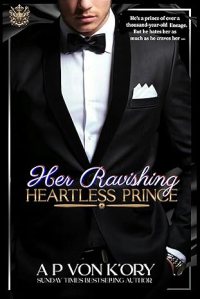
Review: Her Ravishing Heartless Prince by A P Von K’Ory

Synopsis:

He’s a European prince with a thousand-year lineage—and he hates her as much as he craves her.

Alyssa:

Prince Carl-Theodor Frederick Maximillian Christoph Albert Maria Johann Anselm is as insufferable as his name is long. Arrogant, powerful, entitled—everything I despise wrapped in devastatingly gorgeous packaging.

So I do what I do best: verbally eviscerate him and his precious bloodline with razor-sharp insults. I avoid him like the plague.

But avoidance only delays the inevitable.

Soon he has me exactly where I’ve been secretly fantasizing—on my knees before him. The problem? I can’t tell if this is seduction or revenge. Prince Hot and Cold swings between arctic ice and molten lava, dragging me to the edge of beautiful insanity.

The real question: will I survive the fall?

Prince Carl-Theodor:

Alyssa obliterates my world like a derailed train the moment we meet. Her beauty blinds me—then her vicious tongue insults thirteen thousand years of noble bloodline.

No one has ever dared.

As Head and Defender of the House of Saxony-Bremer, I vow on my ancestors’ graves to make her pay. I’ll bend her. Break her. Make her beg until she drowns in regret.

But here’s the twisted irony that threatens everything: hurting her destroys me too.

I can watch her crumble, hear her wounded cries—but the moment she surrenders, something in my chest stops cold.
Have I sworn an oath that will damn us both? And why does her pain feel like my own destruction?

Favorite Lines:

“She emboldened, motivated, encouraged, and inspired me tirelessly over the months.”

“But above all else, I have half the entire planet’s butterflies residing merrily in my belly.”

“I love her like the devil loves sinners and God loves the devil for being capable of that.”

“For that, I’ll love him even after death and in every other entity form I become.”

My Opinion:

I received a copy of this book from the author in exchange for my honest opinion.

There is something wildly unapologetic about this book. From the first chapter, Alyssa announces herself as messy, sexual, ambitious, and emotionally reactive in a way that feels both over-the-top and strangely honest. She is not a soft heroine. She is sharp-edged, proud, dramatic — and I kind of loved that about her.

Carl-Theodor, on the other hand, is less brooding prince and more simmering strategist. His inner monologue runs on discipline, revenge, family honor, and suppressed desire. The tension between them is not sweet. It’s combative. Competitive. Magnetic in a way that feels dangerous rather than tender.

What really drives this book is pride. Hurt pride. Family pride. Social pride. Romantic pride. The entire story pulses with ego clashes and misinterpretations that spiral into obsession. Their chemistry thrives on restraint and retaliation. Every conversation feels like a fencing match. Sometimes they wound each other deliberately. Sometimes they do it accidentally. Either way, sparks fly.

The world-building is lavish — castles, heiress empires, royal jewelry, elite universities, helicopter landings at Burj Al Arab. It leans hard into opulence. If you like billionaire/royalty romance that fully commits to excess, this delivers.

That said, this book is not subtle. It is dramatic in all caps. Characters monologue. Emotions explode. Internal thoughts can be theatrical. But there’s a sincerity to it that makes it compelling even when it’s chaotic.

At its core, this is a story about two powerful people who refuse to yield first. It’s ego vs ego. Attraction vs revenge. Control vs surrender. And honestly? Watching them circle each other is half the fun.

Summary:

Overall, this is a high-drama, ego-heavy royal romance where attraction and revenge walk hand in hand. If you enjoy dominant alpha tension, pride-fueled misunderstandings, and romance wrapped in luxury and lineage, this delivers an intense, indulgent ride. Happy reading!

Check out Her Ravishing Heartless Prince here!


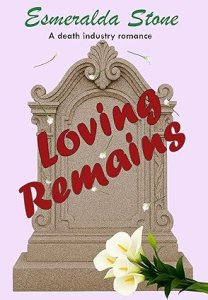
Review: Loving Remains by Esmeralda Stone

Synopsis:

Isaac Collins is trying to run Teagan’s Funeral Home and keep his life as calm as possible.

Cory Hughes is just trying to keep her head—and her death consultant business—above ground.

Thrown together by circumstance, a bit of guilt, and a lot of attraction, Isaac and Cory begin an uncomfortable friendship and soon realize the things that make them different may also be why they can’t seem to stay away from each other. And it could be just in time. Because not everything is as it seems at Teagan’s Funeral Home.

A romantic mystery for adult readers looking for mature characters, honest and open-door intimacy, dark humor, and a happily ever after that feels earned.

Favorite Lines:

“There were some laughs that made you instantly laugh with them. Some  laughs that you couldn’t help but laugh at. And some laughs that were horrific and terrible, like a five-car pile-up you couldn’t turn away from.”

“No one should sit unclaimed for years on end, just waiting to see if someone remembered them.”

“I’ve learned that passing judgement on another person’s actions without knowing all the information can cause more damage than letting things go.”

“That death was supposed to be natural, which meant it was ugly and messy at times.”

My Opinion:

I received a copy of this book from the author in exchange for my honest opinion.

Loving Remains is one of those books where the premise sounds quirky—maybe even a little playful—but the emotional weight sneaks up on you fast. A romance set within the death industry could easily tip into gimmick territory, but this story doesn’t do that. Instead, it treats death as something constant, unavoidable, and deeply human, weaving it into a love story that feels tender, messy, and surprisingly grounded.

What really carries the book is its understanding of grief—not just as a singular event, but as something that lingers and reshapes people. Cory and Isaac aren’t blank slates waiting to fall in love; they’re both already carrying loss, anxiety, guilt, and complicated histories with death long before they meet. Their connection doesn’t magically fix those things. If anything, it brings them closer to the surface. That honesty gives the romance more depth than you might expect, especially for a book that also allows itself to be funny, steamy, and occasionally chaotic.

The death-industry setting isn’t just background flavor. It actively informs the book’s questions about control, ritual, and what it means to “do right” by the dead and the living. There’s a clear tension between traditional funeral practices and more personal, less sanitized approaches to death, and the book doesn’t pretend there’s one perfect answer. Instead, it shows how those choices are often shaped by fear, love, and the desire to protect ourselves from pain—even when that protection backfires.

That said, Loving Remains isn’t a light read emotionally, even when the tone is warm. It deals openly with loss, trauma, addiction, and mental health, and those themes aren’t just mentioned in passing. The pacing is steady, occasionally slower when it sits with heavier moments, but it feels intentional rather than indulgent. By the end, the book feels less like a traditional romance arc and more like a quiet argument for intimacy built on understanding rather than rescue.

Summary:

Overall, Loving Remains is a death-industry romance that’s far more emotionally grounded than its premise suggests. It blends grief, mental health, and love into a story that’s tender, funny, and occasionally heavy, without losing its warmth. It’s a romance about choosing connection while still honoring loss, and it treats death as something to be faced honestly rather than hidden away. Readers who enjoy character-driven romance, stories that engage thoughtfully with grief and mental health, and books that balance emotional weight with genuine warmth may enjoy this book. Happy reading!

Check out Loving Remains here!


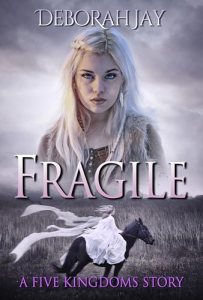
Review: Fragile by Deborah Jay

Synopsis:

If you could heal your own body, what risks would you take?

When a childhood accident reveals Betha has a talent for magic, her terrified family insist she must never use it, for in Tyr-en, sorcery attracts the death penalty.

Brokered in marriage to an elderly lord, Betha must give up her dreams of serving in the kingdom’s guard, but as court life and intrigue become her adult world, she starts to discover there are advantages to her new position.

Settling into the privileged life of a noblewoman, she is unprepared when false accusation brings tragedy to her family, yet she determines to bring the guilty party to justice. Will she be able to do so without using magic? Or will she die trying?

FRAGILE is the origin story of a character who grew from a bit part in book #1 of THE FIVE KINGDOMS series, to a major player by book #3. It is a stand-alone story, but also an ideal entry point into the main series.

Trigger descriptions of injuries, self-harm, and torture.

Favorite Lines:

“She might never achieve her childhood dreams, but she could at least make the most of her situation.”

“Some things are worth a woman enduring for the benefits they bring.”

My Opinion:

I received a copy of this book from the author in exchange for my honest opinion.

Fragile is one of those books that looks like it’s going to be about magic, but ends up being about power — who has it, who doesn’t, and what it costs to take some back for yourself. From the opening chapters, Betha is framed as small, breakable, and constrained by everyone else’s fear. The irony, of course, is that she may be the most dangerous person in the room.

What makes this story compelling isn’t just Betha’s forbidden healing magic, but the way that magic is entangled with pain, control, and pleasure. This is not a clean, heroic ability. It’s intimate. Addictive. Complicated. The narrative never lets the reader forget that Betha’s power comes from harm — and that knowledge quietly shapes every choice she makes.

The world-building is confident without being overwhelming. Court politics, marriage arrangements, social hierarchy, and religious doctrine all feel lived-in rather than explained. Betha’s forced marriage to Lord Herschel is especially effective in how unromantic and transactional it is. The book doesn’t soften that reality, and it doesn’t rush Betha’s emotional adjustment either. Her growth feels incremental, often uncomfortable, and deeply human.

Friendship becomes one of the story’s strongest counterweights. The relationships Betha forms with other women at court — particularly Denia and Pirolanni — give her access to information, influence, and a kind of education she was never offered at home. These scenes crackle with subtext, gossip, and quiet maneuvering, reminding the reader that survival in this world often depends on who is listening when you speak.

By the time the novel moves into its darker turns — accusation, captivity, and reckoning — Betha is no longer simply reacting. She has learned how to endure, how to observe, and how to choose when to act. Fragile doesn’t pretend that power comes without consequence, but it does argue that denying yourself agency can be just as dangerous. In the end, the title feels less like a description of Betha herself and more like a warning about the systems built to contain her.

Summary:

Overall, Fragile is a character-driven fantasy that’s far more interested in power, autonomy, and survival than spectacle. What stands out most is how Betha’s healing magic is framed as intimate, dangerous, and morally complicated rather than heroic. The book excels at quiet tension—court politics, constrained marriages, and female friendships carry as much weight as the magic itself. While dark and sometimes uncomfortable, the story feels intentional and controlled, ultimately arguing that denying agency can be as destructive as wielding power recklessly. Happy reading!

Check out Fragile here!


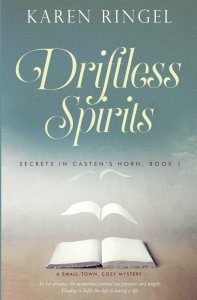
Review: Driftless Spirits by Karen Ringel

Synopsis:

Charlotte Burke can’t shake her recurring dream. Over and over again she dreams of finding a mysterious journal on a candlelit desk while wandering through a strange house in the middle of the night. Every dream has shown her a framed picture of an old woman sitting at the same desk, except the latest version. Last night, the woman stood and offered Charlotte a keyring. In the morning, Charlotte woke up with her car keys in her hand.

Her best friend is worried but skeptical when Charlotte insists the house is real. The dream is metaphorical, Ivy says, reflecting Charlotte’s restless state. Ivy gifts her a journal and urges her to take the trip her subconscious is demanding before she wakes up behind the wheel. A roadtrip of self-discovery will help Charlotte figure out what she really wants.

Charlotte agrees to the trip but not for Ivy’s reasons. To her, the house, the journal and the woman in her dream are all too real. She sets off to do the impossible. She doesn’t know it yet, but if she can find the house and uncover its secrets in time, she might save far more than her driftless life.

Favorite Lines:

“It’s the kind of place that passerby barely notice and would never stop. It’s also the kind of place that’s cherished if you live there.”

“The internet has everything if you look hard enough.”

“Sometimes you just have to take a chance and jump.”

“Drifting through some days was fine but drifting through her years without intention squandered a precious gift.

My Opinion:

I received a copy of this book from the author in exchange for my honest opinion.

From the opening dream sequence, Driftless Spirits establishes an atmosphere rooted in intuition, restlessness, and the slow pull of something unnamed. Charlotte’s story feels immediately familiar in the best way. She is not running from tragedy or danger but from stagnation, from the unsettling realization that her life has begun to feel paused. That emotional starting point gives the book a gentle but persistent momentum.

What Ringel does especially well is treat place as both setting and catalyst. Wisconsin’s Driftless region is not just where the story happens, it is part of what the story is about. The landscape mirrors Charlotte’s internal state: winding roads, unexpected valleys, quiet towns that seem easy to overlook unless you stop and really look. Casten’s Horn feels lived in rather than constructed, and its routines, celebrations, and peculiar rhythms give the town a sense of layered history without overwhelming the narrative.

Charlotte herself is an easy protagonist to root for because her doubts feel honest and unembellished. Her curiosity outweighs her fear, but just barely, and that balance keeps the tension grounded. The mystery elements arrive slowly and organically, never disrupting the cozy tone but gently complicating it. The supernatural aspects are understated and feel more like an extension of intuition and memory than something overtly threatening, which makes them more intriguing than alarming.

At its core, Driftless Spirits is a story about listening. Listening to instincts, to forgotten history, to places that seem to call quietly rather than loudly. The novel resists neat answers and dramatic twists, opting instead for gradual revelation and emotional payoff. It invites the reader to slow down, pay attention, and trust that small moments can still carry significance. The result is a story that feels comforting without being predictable, and reflective without losing narrative direction.

Summary:

Overall, Driftless Spirits may appeal to readers who enjoy cozy mysteries, gentle supernatural elements, and character-driven stories set in small towns. It is well suited for those who appreciate atmospheric storytelling, introspective journeys, and mysteries that unfold through mood and discovery rather than danger. Readers who enjoy themes of self-rediscovery, intuition, and place-based storytelling will likely find this a satisfying and quietly engaging read. Happy reading!

Check out Driftless Spirits here!


Review: Unborn by Eva Barber

Synopsis:

Olesya was not born like other people but was found in the Siberian Forest by a couple unable to have children. Plagued by mysterious visions and dreams, she struggles to fit into a society both as a socially inept but brilliant child and as she becomes part of a research team to discover the nature of dark matter. The findings of this discovery never make it to the scientific community as the project leader goes missing and the physics lab blows up, destroyed by a powerful foe with seemingly noble intentions.

Seattle detectives question Olesya in connection with the explosion and the disappearance of her boss. She becomes a person of interest until she herself goes missing. From her kidnappers, she learns that her parents, knowing she lacked a belly button, suspected she was created by the Russian government as part of a scientific experiment, and emigrated to the USA to hide and protect her. She also learns she possesses powers related to dark matter and of the existence of a brother held captive since his discovery by the Russian government. Even though she suspects her kidnappers’ interest in her and their motivations aren’t so noble, she joins them in rescuing her brother. Catastrophic world events following the successful rescue force her to continue working with her foes to save the world from destruction.

While working to save the world, Olesya experiences a moral dilemma and becomes someone she never thought she’d be—a mother. Olesya learns of mysterious chambers scattered around the world, and her visions return to haunt her, until she opens the chambers and learns their secrets, wishing she hadn’t. Now she faces the heart-wrenching realization that she must travel into a dark dimension to save the world from self-destruction. Worse yet, her daughter, Emery, is the key to humanity’s salvation and must follow her mother once she becomes an adult because she is the only being who can travel where no one else can to restore balance to the universe and return with an extraordinary gift for humanity. But powerful entities have reasons to keep the gift away from humanity and will do anything to stop her.

Favorite Lines:

“Being different is not something you should be ashamed of. It’s something you should be proud of.”

“For years now, her hope had lain buried deep inside, waiting for the right moment to awaken.”

My Opinion:

I received a copy of this book from the author in exchange for my honest opinion.

Eva Barber writes Unborn with an eerie tenderness that makes the strange feel familiar, the impossible feel almost believable. It’s a novel that mixes the beauty of myth with the sharp edges of science, and it does so without ever losing sight of its humanity.

The story begins in a Russian forest, where a baby is found alone and impossibly alive. Her name is Olesya. She’s perfect — except she doesn’t have a belly button. That single detail feels small at first, but Barber builds the entire story around it. What does it mean to be created instead of born? To belong to a family, but not to the natural order that defines one? Those questions stay at the heart of Unborn, even as the story stretches across centuries, countries, and dimensions.

What I loved most is how the book keeps its balance — it’s dark without being bleak, intelligent without ever becoming cold. The writing feels cinematic, full of quiet tension and visual detail: candlelight against snow, the hum of a laboratory, a mother’s hand trembling as she holds something she can’t quite understand. And yet, under all of that, the story is deeply emotional. It’s about motherhood, creation, and the lengths we’ll go to protect what we love — even when we’re not sure what it really is.

By the time I reached the end, I realized that Unborn isn’t really about science or the supernatural. It’s about inheritance — what we carry from those who came before, and what we unknowingly pass on. It’s about the ache of being human in a world that keeps asking us to prove we exist.

Summary:

Overall, Unborn is a haunting, beautiful story about science, motherhood, and the unknowable threads that connect us. It’s the kind of book that lingers quietly after you’ve finished it — the kind that leaves you wondering whether what you just read was speculative fiction or something closer to a modern myth.

If you like stories that mix atmosphere and emotion — think The Time Traveler’s Wife, Never Let Me Go, or The Daughter of Doctor Moreau — you’ll find something to love here. It’s for readers who enjoy a story that makes you think and feel at the same time; readers who don’t mind when mystery lingers even after the answers come. Happy reading!

Check out Unborn here!


Crimson Secrets: Love’s Dark Labyrinth by XuXa

Synopsis:

Shadows linger in whispers of love; can you trust the heart that betrays you?

When I met Malik, it was all hot glances and sizzling touches in dark corners. We were supposed to be a casual fling—intense, short, purely physical. But the deeper I fell into his bed, the deeper I fell into his secrets.

Now, danger shadows every whisper and kiss. Malik’s past isn’t just dark—it’s dangerous. And it’s catching up with us fast.

As threats close in, our fiery affair turns into a desperate fight for survival. Each touch could be our last. We’re playing with fire, and I’m not sure we’ll both make it out unburned.

Can our passion overcome the past, or will his secrets tear us apart?

Favorite Lines:

“But trust was a thin thread stretched too far between her fragile union of flesh and soul, which was now tortured by doubt, fears, and suspicions.”

“The night had been heavy with secrets…”

“But they had survived. More importantly, they had learned to love”

My Opinion:

I received a copy of this book from the author in exchange for my honest opinion.

Crimson Secrets pulled me in from the first page. It’s a book that feels drenched in mood—rain against glass, the pulse of the city at night, a woman standing at the edge of something she doesn’t yet understand. XuXa’s story isn’t just about love; it’s about the danger that hides inside of it, the places it can take us when we stop paying attention.

At the center of the story is Nia, a woman who looks like she has it all together: a sharp career, confidence, control. But when she meets Malik, everything starts to shift. He’s magnetic in the way people are when they’re equal parts promise and warning. What begins as attraction turns into something darker, tangled with secrets neither of them are ready to face. Watching Nia try to hold onto herself as her world unravels is what makes this book so compelling—it’s love, obsession, and awakening all rolled into one.

XuXa writes with a cinematic rhythm. You can almost see the light move across a room, hear the weight of silence between two people who want something they shouldn’t. The story balances its sensuality with tension so sharp it borders on anxiety. Each scene builds like a slow exhale, leading to revelations that are as emotional as they are dangerous.

What I loved most is that the book never settles into being just one thing. It’s romantic, yes—but also psychological, suspenseful, and surprisingly introspective. By the end, Crimson Secrets isn’t about finding love so much as it’s about finding yourself again after love has burned through everything else. Nia’s journey feels messy, real, and deeply human. It’s the kind of story that lingers with you—the way certain people do, long after they’re gone.

Summary:

Crimson Secrets: Love’s Dark Labyrinth is a dark, seductive story about what happens when love and danger start to look the same. XuXa writes with a sharp, visual style that makes every moment feel cinematic and alive. It’s part thriller, part romance, and part reckoning—a story about how power shifts when truth finally comes to light. At just shy of 70 pages, this book could be a quick read for anyone interested in erotic suspense thrillers. Happy reading!

Check out Crimson Secrets here!


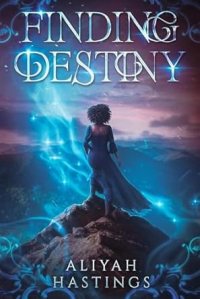
Review: Finding Destiny by Aliyah Hastings

Synopsis:

The truth is hidden in plain sight, and the answers will cost her everything.

Tara has spent her life chasing the truth, the mystery of her father’s death, and the secrets buried with him. But when she is torn from her quiet existence and thrust into the heart of Velmora, a city consumed by a malevolent presence, she stumbles into something ancient.

What she thought was a simple pursuit of truth was only the beginning. Each revelation unveils a deeper layer of deceit. And when a sacred ceremony ends in bloodshed, Tara is forced to flee. But running is not enough. The Queen is rising, and her influence is rapidly expanding; even the heavens aren’t safe.

The world is teetering on the brink. What’s she going to do?

Favorite Lines:

“Another day dawned, indifferent to my feelings, a quiet statement.”

“Love makes you do weird things.”

“I didn’t heal, not yet. But I sat. I breathed. And for now, that was enough.”

My Opinion:

I received a copy of this book from the author in exchange for my honest opinion.

Aliyah Hastings’ Finding Destiny is a lush, imaginative coming-of-age tale wrapped in fantasy’s shimmer and shadow. From the very first pages, the novel strikes a balance between aching nostalgia and the thrill of stepping into an unknown world. It opens quietly, with a young woman caught between memory and longing, but soon tumbles into an adventure threaded with myth, family secrets, and a search for belonging.

What makes this story stand out is its lyrical detail. Hastings lingers on sensory moments—the warmth of sunlight breaking through curtains, the sting of stepping on a seashell, the whisper of air inside a cavern—as if reminding us that destiny isn’t just found in grand revelations but in the small textures of living. Each chapter feels both intimate and cinematic, pulling you from pink-painted bedrooms into cavernous secrets and chateaus that breathe menace.

The heart of the book, though, isn’t just fantasy spectacle—it’s vulnerability. The protagonist’s longing for connection, her memories of lost love, and her search for her place in a fractured world all carry an honesty that feels deeply human. Hastings doesn’t shy away from pain or disappointment, but she always threads hope through the narrative. When the heroine finally realizes that destiny is not about running away but stepping fully into herself, the moment lands with quiet, powerful clarity.

For readers who enjoy fantasy woven with emotion, Finding Destiny is both immersive and poignant. It’s a story about courage, grief, and the possibility of transformation—written with a voice that makes you pause and savor.

Summary:

Overall, Finding Destiny is a beautifully written fantasy about grief, self-discovery, and courage. Poetic detail and heartfelt emotion make this novel linger long after the last page. Happy reading!

Check out Finding Destiny here!