Review: The Amalfi Secret by Dean and Catherine Reineking

Synopsis:

When Gabe Roslo arrives in Amalfi, Italy, a long-awaited reunion with his grandparents takes a tragic turn. His beloved grandfather is dead—and a cryptic diary left behind is Gabe’s only clue to the mystery surrounding his sudden death. But what starts as a personal tragedy quickly spirals into a high-stakes international puzzle.

Teaming up with Anna, a resourceful Roman local, Gabe follows a trail of hidden truths that stretches from the stunning Amalfi coast to the corridors of global power. Secret codes, powerful enemies, and a legacy of deception pull them into a world where nothing is as it seems. With each twist, they are forced to question their allies and uncover dark secrets that could shift the global balance of power.

But as the walls close in, Gabe and Anna must risk everything to expose the truth before it’s buried forever. Will they decipher the mystery and reveal the sinister forces at play? Or will they become the next victims of The Amalfi Secret?
Perfect for fans of Dan Brown and Robert Ludlum, The Amalfi Secret is a pulse-pounding thriller that will keep you guessing until the final, breathtaking twist.

Favorite Lines:

“She was slight of stature and frail to look at, but he knew from experience that she had an inner strength that would get her through almost any trial.”

“The Italians sure have style. Only  here would someone wear black leather driving gloves.”

“We Italians are more concerned with beauty than perfection.”

My Opinion:

I received a copy of this book from the author in exchange for my honest opinion.

The Amalfi Secret is the kind of thriller that sneaks up on you. It starts quietly, almost cinematically, and before you realize it, you’ve been swept into a world of prophecies, politics, and secrets buried deep in the marble corridors of history. The story moves between the present and the past with a rhythm that feels effortless, and even when the stakes climb, the authors manage to keep the human element right where it belongs—at the center. What surprised me most wasn’t the espionage or the religious intrigue, but the emotion underneath it all. It’s a story about love, legacy, and how far people will go to protect the truth.

There’s a gravity to the writing that reminds me of old-school political thrillers, but with more heart. Gabe Roslo is not your typical hero; he’s quietly capable, haunted, and deeply loyal. His grief feels genuine, and his need for answers pulls you along as much as the mystery itself. The story’s backdrop—the cliffs of Amalfi, the solemn air of Rome, the shadowed corners of the Vatican—adds an atmospheric beauty to the unfolding tension. You can almost smell the sea salt and espresso as danger closes in.

I also appreciated that the authors didn’t rush the reveal. They take their time, letting secrets drip out through journal entries, coded mirrors, and the wary exchanges between friends who might not be what they seem. Every conversation feels loaded, every clue slightly out of reach. The pacing builds slowly but deliberately. And just when you think you understand the scope of the story, it widens again—to global conspiracies, ancient orders, and moral choices that test faith and loyalty.

This isn’t just a novel about espionage or religion—it’s about the spaces between them. About belief turned dangerous, power wrapped in prophecy, and how history never stays buried for long. It’s a slow burn that rewards patience and curiosity, a blend of The Da Vinci Code’s intrigue with All the Light We Cannot See’s emotional depth. If you like stories that balance intellect with heart, this one lingers after you close the book.

Summary:

Overall, The Amalfi Secret is a richly layered political and historical thriller that blends mystery, faith, and love against a vivid European backdrop. It’s ideal for readers who enjoy intelligent thrillers, religious or historical mysteries, dual-timeline narratives, and character-driven suspense. Happy reading!

Check out The Amalfi Secret here!


Review: What the ESL by Melanie Graysmith

Synopsis:

This one-of-a-kind memoir shares the author’s memories of teaching experiences and interactions over a span of time. More than a teacher’s story, What the ESL amplifies the voices of learners’ real-life stories from adult ESL classrooms. As a hybrid memoir, woven into the learner stories is a benefit for readers to come away with. No matter what level of familiarity readers may have with foreign language study, there is always something relatable in the effort to succeed. With warmth, insight, and humor, the author offers a moving portrait of language learning through a teacher’s eyes and the myriad paths learners take striving to master English while managing complex lives.

Whether you’re an educator, language student, or simply fascinated by conversation, this book helps you rethink your assumptions about ESL learners and the teaching journey.

  • Discover the varied motivations and goals of adult ESL learners
  • Step into the classroom through the teacher’s eyes
  • Understand how empathy, humor, and cultural intelligence shape language teaching
  • Gain a deeper appreciation for the persistence of adult learners

Favorite Lines:

“Creativity has always defined my strengths and led me forward or sheltered me in times of need.”

“It’s crucial for teachers to adapt and embrace new technology and teaching methods to remain up to date.”

“Fortunately, my creativity always saved my spirits; it was my lifeline, my comfort.”

My Opinion:

I received a copy of this book from the author in exchange for my honest opinion.

There’s something comforting about reading a memoir that feels like sitting in the back of a classroom — not as a student, but as someone who’s quietly observing the rhythm of learning. In What the ESL, Melanie Graysmith opens that classroom door and invites us in, one story at a time.

What starts as a modest recollection of her first day teaching quickly turns into a lifetime’s worth of insight about language, culture, and the strange beauty of human connection. You don’t have to be a teacher to relate — you just have to have ever tried to make yourself understood in a world that doesn’t always speak your language.

Graysmith’s voice is warm and witty, often self-deprecating but never cynical. She writes with the humor of someone who has learned to find joy in chaos — a classroom without a plan, a lesson that veers off course, a student’s heartbreaking confession that becomes a turning point. Through each chapter, she balances teaching anecdotes with cultural snapshots — Saudi students navigating independence, a French man misinterpreting “pull over,” a Venezuelan sharing his love for arepas.

The memoir’s greatest strength lies in its empathy. Every story — even the small, funny ones — reminds you that language is never just grammar and pronunciation. It’s identity. It’s power. It’s the bridge between who we are and who we hope to become.

This book reads like a letter to anyone who’s ever stumbled through a new beginning: teachers, travelers, lifelong learners. It’s about resilience, but also about grace — the quiet kind that grows from listening more than speaking.

Summary:

Overall, What the ESL is a celebration of connection — between teacher and student, between languages and cultures, and between mistakes and growth. It’s a memoir that doubles as a love letter to the messy, beautiful process of learning.

Graysmith’s stories span decades and continents, yet the heart of the book stays the same: curiosity, compassion, and the humility to keep learning alongside the people you teach.

Readers who love memoirs of teaching, cross-cultural stories, or human-centered nonfiction will find something special here. It’s especially for those who believe language is more than words — it’s understanding. Happy reading!

Check out What the ESL here!


Reviews: The Moaning Lisa by Rosemary and Larry Mild

Synopsis:

If Paco and Molly LeSoto captivated you in Locks and Cream CheeseHot Grudge Sunday, and Boston Scream Pie, you’re sure to love The Moaning Lisa—their fourth murder mystery with a smidgen of humor.

Now in their eighties, Paco and Molly have moved into Gilded Gates, an assisted living community in Maryland. They expect their golden years to be blissful. They are dead wrong. Some residents are missing and no one knows what has happened to them.

One suspicious resident is a sleepwalker and claims to have heard mysterious moaning during his night walks, but for the life of him he can’t figure out where the anguished sounds are coming from.

“Inspector Paco” has retired as head of the Black Rain Corners police force. But many residents of Gilded Gates fear they might be next on the list of the missing. They beg Paco to investigate.

Naturally, Molly also pokes her keen nose and shrewd insights into the baffling disappearances.

Favorite Lines:

“Getting old is not for sissies”

“The movie’s nothing like the book.”

“Molly, sweetie, I’ve got four good reasons to love you. One, you’re the kindest, most considerate person I know. Tow, you’re clever and creative enough to help me with my detective work. Three, you’re the only one that knows how to put up with me. And four, there’s so much more of you to love.”

“You know, sweetie, we have something most marriages never achieve. We’re a team!”

My Opinion:

I received a copy of this book from the authors in exchange for my honest opinion.

The Moaning Lisa is filled with heart, humor, and the kind of small-town mystery that never needs to shout to hold your attention. Paco and Molly LeSoto’s adventures continue as they face both personal decline and a new mystery that brews inside an assisted living community. The story blends humor and heartache as the couple navigates health scares, reluctant moves, and the strange cast of residents and staff at Gilded Gates.

What makes this book shine isn’t the crime itself, but the humanity around it. The authors write aging not as tragedy but as transformation—stubborn, funny, and full of life. Molly’s dialogue is full of warmth and humor even in the book’s heaviest moments. Paco’s quiet steadiness softens the edges, grounding the story in love rather than cynicism.

There’s a sly intelligence in the way Rosemary and Larry Mild handle tone—balancing mystery with a real tenderness toward their characters. It’s the sort of mystery you don’t rush through; you linger for the small moments. Beneath the cozy veneer is a subtle sadness about time, loss, and how people try to hold on to purpose when life insists on taking things away.

If you like your mysteries with heart instead of hard edges, The Moaning Lisa is that kind of read—quietly moving, funny in its own offbeat way, and filled with two characters who feel lived-in, not written.

Summary:

Overall, The Moaning Lisa is a story about love late in life, about finding purpose even when the world starts shrinking. Recommended for readers who love gentle mysteries like The Thursday Murder Club —especially those who prefer character-driven storytelling, sharp humor, and a dash of melancholy beneath the charm. Happy reading!

Check out The Moaning Lisa here!


Review: Zero by Jason O’Leary

Synopsis:

Smith Babbitt is in the prime of his life: he’s only 25 years into his 89-year lifespan.

He knows this because of Timmy®, the mysterious app that can tell you with infallible accuracy how old you will be when you die. Smith still has 64 years to go. But lately he’s been in a rut, and his long lifespan is starting to feel like a sentence.

Possible salvation arrives in the form of Mavis Pead, a co-worker at Smith’s demoralizing job. Smith is infatuated, despite the age difference: Mavis has just entered the last of her 43 years. She’s a “zero” – the most shunned demographic in society. When a careless act leads to their boss’s apparent death before his time, Smith and Mavis are thrown together in an intrigue that could call Timmy®’s infallibility into question. Mavis might not be so old after all – nor Smith so young.

A laugh-out-loud sendup of a technologically dependent culture, Zero is also a tender love story and a big-hearted reflection on the true meaning of age. A story that asks the question, What do we do with the time we’re given, whether we know how long we have…or we don’t?

Favorite Lines:

“I don’t want to waste my life, that’s all. And I wish I didn’t have to know how much of my life is still left for me to waste.”

“Here I am. My wholeness is not determined by the sum of my parts.”

“What a cruel fate to be human, to comprehend our mortality but have no idea what it means.”

“I still have a little time left.”

My Opinion:

I received a copy of this book from the author in exchange for my honest opinion.

Zero is one of those rare dystopian novels that feels both absurd and uncomfortably real. O’Leary builds a world where technology predicts your exact lifespan down to the year, where aging is a countdown, and where morality and bureaucracy mix in a gray, numbing fog.

The narrator, Smith, is painfully awkward, overthinking everything from his boss’s smile to the ethics of approving medication for his own father. He’s not a classic hero — just someone trying to survive inside a machine that’s both literal and societal. I found myself cringing for him, then rooting for him, then realizing he’s just one of millions quietly losing themselves in the monotony of data, rules, and meaningless metrics.

What really works here is O’Leary’s tone — dry, darkly funny, and relentlessly sharp. Every office scene feels familiar, even though it’s set in a future where people measure life in countdown clocks instead of birthdays. The satire hits close: the mandatory “handbook acknowledgments,” the boss who mistakes control for care, the idea that emotional exhaustion has become a corporate performance metric. It’s the kind of story that makes you laugh and then immediately feel slightly nauseated for doing so.

Summary:

Overall, if The Office and Black Mirror had a bleakly funny child, it might look like Zero. It’s part dystopian satire, part existential meltdown, and perfect for readers who love dark humor, speculative fiction, and character-driven narratives about bureaucracy, mortality, and meaning. 

This isn’t a novel about saving the world — it’s about trying not to disappear inside it. Happy reading!

Check out Zero here!


Monthly Features – October 2025

Hummingbird Moonrise by Sherri L. Dodd

I received a copy of this book from the author in exchange for my honest opinion.

Synopsis: The past two years have taken their toll on Arista Kelly. Once an eternal optimist, now she has faced the darkness and must recalibrate what true happiness means for her. Meanwhile, Shane, her ex-boyfriend, is pulling all the right moves to help keep her sane from her heightening paranoia. But it doesn’t help that Iris, her Great Aunt Bethie’s friend, has disappeared.

Still, one additional trial remains. While searching for Iris, Bethie and Arista stumble upon a grand revelation in the eccentric woman’s home. With the discovery, they realize their run of chaos and loss of kin may have roots in a curse that dates back to the 1940s—the time when their family patriarch first built Arista’s cottage in the redwoods and crafted his insightful Ouija table.

This pursuit will not follow their accustomed recipe of adrenalized action, but the high stakes remain. Will the mysterious slow burn of unfolding events finally level Arista’s entire world or be fully extinguished, once and for all?

Summary: Overall, Hummingbird Moonrise is a paranormal mystery that works because it never loses its human touch. Yes, there are curses, possessions, and supernatural forces, but there’s also cinnamon bread, inside jokes, and the kind of family loyalty that keeps people moving forward even when the odds feel impossible. What I admired most is the way Dodd lets the suspense simmer without sacrificing warmth. The book left me both unsettled and comforted—a rare combination that lingers long after the last page

See the full review here: Hummingbird Moonrise
Purchase here


Unborn by Eva Barber

I received a copy of this book from the author in exchange for my honest opinion.

Synopsis: Olesya was not born like other people but was found in the Siberian Forest by a couple unable to have children. Plagued by mysterious visions and dreams, she struggles to fit into a society both as a socially inept but brilliant child and as she becomes part of a research team to discover the nature of dark matter. The findings of this discovery never make it to the scientific community as the project leader goes missing and the physics lab blows up, destroyed by a powerful foe with seemingly noble intentions.

Seattle detectives question Olesya in connection with the explosion and the disappearance of her boss. She becomes a person of interest until she herself goes missing. From her kidnappers, she learns that her parents, knowing she lacked a belly button, suspected she was created by the Russian government as part of a scientific experiment, and emigrated to the USA to hide and protect her. She also learns she possesses powers related to dark matter and of the existence of a brother held captive since his discovery by the Russian government. Even though she suspects her kidnappers’ interest in her and their motivations aren’t so noble, she joins them in rescuing her brother. Catastrophic world events following the successful rescue force her to continue working with her foes to save the world from destruction.

While working to save the world, Olesya experiences a moral dilemma and becomes someone she never thought she’d be—a mother. Olesya learns of mysterious chambers scattered around the world, and her visions return to haunt her, until she opens the chambers and learns their secrets, wishing she hadn’t. Now she faces the heart-wrenching realization that she must travel into a dark dimension to save the world from self-destruction. Worse yet, her daughter, Emery, is the key to humanity’s salvation and must follow her mother once she becomes an adult because she is the only being who can travel where no one else can to restore balance to the universe and return with an extraordinary gift for humanity. But powerful entities have reasons to keep the gift away from humanity and will do anything to stop her.

Summary: Overall, Unborn is a haunting, beautiful story about science, motherhood, and the unknowable threads that connect us. It’s the kind of book that lingers quietly after you’ve finished it — the kind that leaves you wondering whether what you just read was speculative fiction or something closer to a modern myth.

If you like stories that mix atmosphere and emotion — think The Time Traveler’s WifeNever Let Me Go, or The Daughter of Doctor Moreau — you’ll find something to love here. It’s for readers who enjoy a story that makes you think and feel at the same time; readers who don’t mind when mystery lingers even after the answers come. 

See the full review here: Unborn
Purchase here


Smoke on the Wind by Syvila Weatherford

I received a copy of this book from the author in exchange for my honest opinion.

Synopsis: “Smoke on the Wind” is a captivating tale that weaves the perils and dangers encountered on the Western frontier by Will Lawton, a young Black cowboy, after kidnapping then wedding his young Native American bride, Niabi. He plods a path packed with uncertainty that ultimately winds its way to an unthinkable opportunity – a race for free land.

Follow the characters of Smoke: the beautiful Louisa Ortega, who haunts the memory of the Chief’s son, Nashoba; Captain Horton, head of Fort Townsend, charged with keeping peace between settlers and tribes, and Dakota Sam, a rambunctious Civil War veteran attached to his military blues and backwoodsman ways.

This is the second book in an epic series, following the success of Weatherford’s first novel, “Blessings from the Four Winds.”

In this sequel, new characters are introduced: Liao Ming Chow, a Chinese immigrant, Sargent Thomas of the Buffalo Soldiers, and Mr. Todd Morgan the railroad tycoon. Niabi and Will raise two children and enjoy the protective company of their horses: Rodeo and FireTip. Their journey is marked by resilience, the spirit of community, and the ongoing struggle for safety and belonging.

Summary: Overall, Smoke on the Wind is a vivid continuation of America’s untold stories — where race, heritage, and faith collide. It’s tender and unflinching, full of voices that feel like they’ve been waiting a century to be heard. Weatherford writes history the way it deserves to be written: not as distant fact, but as living memory. For readers who are drawn to immersive, historical fiction.

See the full review here: Smoke on the Wind
Purchase here


Review: Pigeon-Blood Red by Ed Duncan

Synopsis:

For underworld enforcer Richard “Rico” Sanders, it seemed like an ordinary job: retrieve his gangster boss’s stolen goods, and teach the person responsible a lesson.

But the chase quickly goes sideways and takes Rico from the mean streets of Chicago to sunny Honolulu. There, the hardened hit man finds himself in uncharted territory, when innocent bystanders are accidentally embroiled in a crime.

As Rico pursues his new targets, hunter and prey develop an unlikely respect for one another.

Soon, he is faced with a momentous decision: follow his orders to kill the very people who have won his admiration, or refuse and endanger the life of the woman he loves?

Favorite Lines:

“If you were in a fight for your life against hopeless odds and could pick just one person to help even them out, he would be your choice every time.”

“You remind me a little of myself before I smartened up.”

My Opinion:

I received a copy of this book from the author in exchange for my honest opinion.

Pigeon-Blood Red begins like a crime story you think you already know — a lost item, a hitman, a debt gone bad — but Ed Duncan turns it into something surprisingly human. Beneath the violence and deception runs a quiet thread of loyalty, fear, and the tiny sparks of conscience that survive even in people who’ve long given up pretending to be good.

The story follows Rico — a disciplined, unflinching enforcer whose calm masks something almost noble — and Robert McDuffie, a desperate gambler who makes one very bad choice: stealing a necklace worth far more than his life. It’s a story built on momentum — one thing going wrong after another, until everything comes crashing down.

What I liked most is how Duncan writes violence without glamorizing it. His sentences are clean and deliberate, as if his characters are trying to convince themselves that control is still possible. But there’s always something cracking beneath the surface — a conscience, a flicker of guilt, or maybe just exhaustion.

The pacing works—sharp dialogue, short scenes, no filler. You can tell Duncan knows this world, but he never overexplains it. I finished it in a single sitting and wanted to keep going, which is all you can really ask from a crime novel.

If you like your crime fiction with heart — not sentimental, but human — this one will surprise you. It’s about how easy it is to cross a line, and how hard it is to come back once you do.

Summary:

Overall, Pigeon-Blood Red is a fast-moving crime thriller that digs into the choices people make when survival is the only goal left. It’s not just about gangsters or stolen jewels — it’s about what happens when morality and necessity collide. It’s a story for readers who like their thrillers grounded in realism, where the danger feels as psychological as it does physical. Happy reading!

Check out Pigeon-Blood Red here!


Review: Unborn by Eva Barber

Synopsis:

Olesya was not born like other people but was found in the Siberian Forest by a couple unable to have children. Plagued by mysterious visions and dreams, she struggles to fit into a society both as a socially inept but brilliant child and as she becomes part of a research team to discover the nature of dark matter. The findings of this discovery never make it to the scientific community as the project leader goes missing and the physics lab blows up, destroyed by a powerful foe with seemingly noble intentions.

Seattle detectives question Olesya in connection with the explosion and the disappearance of her boss. She becomes a person of interest until she herself goes missing. From her kidnappers, she learns that her parents, knowing she lacked a belly button, suspected she was created by the Russian government as part of a scientific experiment, and emigrated to the USA to hide and protect her. She also learns she possesses powers related to dark matter and of the existence of a brother held captive since his discovery by the Russian government. Even though she suspects her kidnappers’ interest in her and their motivations aren’t so noble, she joins them in rescuing her brother. Catastrophic world events following the successful rescue force her to continue working with her foes to save the world from destruction.

While working to save the world, Olesya experiences a moral dilemma and becomes someone she never thought she’d be—a mother. Olesya learns of mysterious chambers scattered around the world, and her visions return to haunt her, until she opens the chambers and learns their secrets, wishing she hadn’t. Now she faces the heart-wrenching realization that she must travel into a dark dimension to save the world from self-destruction. Worse yet, her daughter, Emery, is the key to humanity’s salvation and must follow her mother once she becomes an adult because she is the only being who can travel where no one else can to restore balance to the universe and return with an extraordinary gift for humanity. But powerful entities have reasons to keep the gift away from humanity and will do anything to stop her.

Favorite Lines:

“Being different is not something you should be ashamed of. It’s something you should be proud of.”

“For years now, her hope had lain buried deep inside, waiting for the right moment to awaken.”

My Opinion:

I received a copy of this book from the author in exchange for my honest opinion.

Eva Barber writes Unborn with an eerie tenderness that makes the strange feel familiar, the impossible feel almost believable. It’s a novel that mixes the beauty of myth with the sharp edges of science, and it does so without ever losing sight of its humanity.

The story begins in a Russian forest, where a baby is found alone and impossibly alive. Her name is Olesya. She’s perfect — except she doesn’t have a belly button. That single detail feels small at first, but Barber builds the entire story around it. What does it mean to be created instead of born? To belong to a family, but not to the natural order that defines one? Those questions stay at the heart of Unborn, even as the story stretches across centuries, countries, and dimensions.

What I loved most is how the book keeps its balance — it’s dark without being bleak, intelligent without ever becoming cold. The writing feels cinematic, full of quiet tension and visual detail: candlelight against snow, the hum of a laboratory, a mother’s hand trembling as she holds something she can’t quite understand. And yet, under all of that, the story is deeply emotional. It’s about motherhood, creation, and the lengths we’ll go to protect what we love — even when we’re not sure what it really is.

By the time I reached the end, I realized that Unborn isn’t really about science or the supernatural. It’s about inheritance — what we carry from those who came before, and what we unknowingly pass on. It’s about the ache of being human in a world that keeps asking us to prove we exist.

Summary:

Overall, Unborn is a haunting, beautiful story about science, motherhood, and the unknowable threads that connect us. It’s the kind of book that lingers quietly after you’ve finished it — the kind that leaves you wondering whether what you just read was speculative fiction or something closer to a modern myth.

If you like stories that mix atmosphere and emotion — think The Time Traveler’s Wife, Never Let Me Go, or The Daughter of Doctor Moreau — you’ll find something to love here. It’s for readers who enjoy a story that makes you think and feel at the same time; readers who don’t mind when mystery lingers even after the answers come. Happy reading!

Check out Unborn here!


Review: PEOPLE MAKING DANGER: Short Stories by Adam Fike

Synopsis:

PEOPLE MAKING DANGER is a collection of three-act short stories from a variety of genres, plus two bonus stories.

STORY ONE: THE QUIET ONES (Thriller) – Neighbors grow together with the help of their friendly local serial killer.

STORY TWO: OPERATION DRAGONHEAD (Satire) – Mistaking experimental communication helmets for alien antennae, townsfolk launch an improvised defense. Based on a true story.

STORY THREE: HIGH DESERT (Western) – A rotten Sheriff and reluctant hero clash beyond the reach of the law, with cars for horses.

STORY FOUR: PAGANINI (Biography) – The wicked life of an actual nineteenth-century Italian violinist, who played so beautifully they thought he was the devil.

STORY FIVE: YARDLEY COUNTY (Drama) – A dead convict finds himself, and his redemption, at the hometown robbery where a gunshot began his career.

BONUS STORY: VALLEY FOOTBALL (Comedy) – Existentially lost grownups start a secret tackle football fight club in the suburbs.

BONUS STORY: THE TROP (Farce) – This aging, and somewhat haunted, East Hollywood motel has rooms at reasonable rates for struggling stock characters on the down-and-out.

Reading. Why not do it for fun sometimes?

Favorite Lines:

As always with any short story collection that I read, rather than providing direct quotes from the book, I am sharing which stories were my favorite from the collection: The Quiet Ones and Operation Dragonhead.

My Opinion:

I received a copy of this book from the author in exchange for my honest opinion.

PEOPLE MAKING DANGER surprised me with how many different layers it manages to hold at once. At first glance, it’s a collection of short stories but the deeper I read, the more it came together into a reflection on what it means to live with risk, to carry trauma, and to wrestle with the edges of survival.

Fike writes about ordinary people under extraordinary pressure. Each story feels like a small explosion—characters pushed to the edge, not by dramatic fantasy but by the sharp, recognizable challenges of real life. That immediacy made the book difficult to put down; I always wanted to see what would happen when danger inevitably arrived, and how the characters would react to it.

One of the things I appreciated was how different the voices and settings felt across the collection. Some stories simmer quietly before snapping into violence or heartbreak, while others throw you into conflict from the first page. Yet even with these shifts in style, the book has a cohesion—it keeps circling back to questions about survival, choices, and the thin line between safety and chaos. The repetition of these themes gave the collection weight without making it feel repetitive.

The characters themselves are what lingered with me. They’re not perfect; often they’re messy, flawed, even unlikeable at times. But they’re always believable. Fike has a way of sketching just enough detail—a gesture, a memory, a bitter aside—that makes you recognize these people instantly. In some cases, I felt like I had met them before in real life, which made their downfalls and small victories all the more striking.

By the end, I came to see the title, PEOPLE MAKING DANGER, as more than just a clever phrase. These aren’t just stories about danger happening to people—they’re about how people create, provoke, or invite danger into their lives, often without meaning to. That nuance—danger as something we stumble into, sometimes through love, sometimes through pride, sometimes through desperation—is what makes the book feel bigger than the sum of its parts.

Summary:

Overall, PEOPLE MAKING DANGER is an unsettling and varied short story collection where the everyday collides with the extraordinary. What makes it powerful is not just the danger itself, but how ordinary people create or invite it into their lives. Fike’s ability to shift between tones—grim, satirical, surreal—keeps the collection fresh while always grounding the stories in authentic human choices. It’s a book that lingers, leaving you to wrestle with what danger really means in the context of family, community, and survival. If you enjoy short story collections that reflect on what it means to be human, than this book could be for you. Happy reading!

Check out PEOPLE MAKING DANGER here!


Review: Hummingbird Moonrise by Sherri L. Dodd

Synopsis:

The past two years have taken their toll on Arista Kelly. Once an eternal optimist, now she has faced the darkness and must recalibrate what true happiness means for her. Meanwhile, Shane, her ex-boyfriend, is pulling all the right moves to help keep her sane from her heightening paranoia. But it doesn’t help that Iris, her Great Aunt Bethie’s friend, has disappeared.

Still, one additional trial remains. While searching for Iris, Bethie and Arista stumble upon a grand revelation in the eccentric woman’s home. With the discovery, they realize their run of chaos and loss of kin may have roots in a curse that dates back to the 1940s—the time when their family patriarch first built Arista’s cottage in the redwoods and crafted his insightful Ouija table.

This pursuit will not follow their accustomed recipe of adrenalized action, but the high stakes remain. Will the mysterious slow burn of unfolding events finally level Arista’s entire world or be fully extinguished, once and for all?

Favorite Lines:

“There is almost nothing worse than coming face to face with an agitated serial killer.”

“Twice, she had accidentally crashed a wedding by walking through at inopportune times. She would miss that lovely park.”

My Opinion:

I received a copy of this book from the author in exchange for my honest opinion.

This is book three in Sherri L. Dodd’s paranormal mystery series, Murder, Tea, and Crystals—you can find my review to the first two books here: Murder Under Redwood Moon (book 1) & Moonset on Desert Sands (book 2).

As the third and final book in this trilogy, Hummingbird Moonrise blends cozy domestic rituals with creeping dread in a way that feels both comforting and unsettling. One moment you’re sipping apple spice tea with Arista and her Auntie, and the next you’re peering into shadowy rooms, wondering if the curse that has haunted their family for generations is about to resurface. I loved the way the novel keeps this balance—never letting you forget the warmth of family bonds, but always threading in a sense of danger just out of sight.

What makes the book stand out is how personal it feels. The Kelly family’s history—haunted by curses, betrayals, and supernatural debts—doesn’t read like distant lore. It weighs directly on the characters’ everyday choices. Arista, still finding her place as a “prophesied witch,” doesn’t get the luxury of choosing between a normal life and a magical one; the two are woven together, whether she’s ready or not. That tension keeps the story engaging, because you’re always watching her struggle between the pull of destiny and her desire for peace.

The atmosphere of the California redwoods adds so much texture. The setting becomes a character of its own, cloaked in fog, filled with shadows, and alive with whispers of both natural and supernatural dangers. Dodd writes with a rhythm that sometimes lulls you with cozy descriptions and then jolts you with eerie details—just like her characters, you never know when the ground beneath your feet will shift.

At its heart, though, Hummingbird Moonrise is about resilience. It’s about how families carry their curses, their traumas, and their secrets—but also how they carry one another. Arista and Auntie’s bond is the emotional anchor of the book, and their mixture of banter, affection, and fierce loyalty gives the story its heart. Even amid possessions, missing persons, and malevolent artifacts, the real magic lies in love and perseverance.

Summary:

Overall, Hummingbird Moonrise is a paranormal mystery that works because it never loses its human touch. Yes, there are curses, possessions, and supernatural forces, but there’s also cinnamon bread, inside jokes, and the kind of family loyalty that keeps people moving forward even when the odds feel impossible. What I admired most is the way Dodd lets the suspense simmer without sacrificing warmth. The book left me both unsettled and comforted—a rare combination that lingers long after the last page. Happy reading!

Check out Hummingbird Moonrise here!


Monthly Features – September 2025

The Boy with the Thorn in His Side by L.J. Robson

I received a copy of this book from the author in exchange for my honest opinion.

Synopsis: For most of my life, I felt like something was wrong – like I was living with a shadow I couldn’t see, a weight I couldn’t name. My childhood was marked by fear, confusion, and memories that never quite fit together. I knew there were pieces missing, but I never expected the truth to be more terrifying than my worst nightmares.

This is my story. A journey through trauma, survival, and the battle to reclaim my own mind. It’s about the ghosts of the past that never stopped whispering, the questions no one wanted to answer, and the slow unravelling of a reality I had been forced to forget.

Told with raw honesty, The Boy with the Thorn in His Side is not just an account of what happened to me – it’s a testament to resilience, a fight for acceptance, and a message to anyone who has ever felt trapped by their own past.

Sometimes, the truth is the hardest thing to face. But in facing it, we find the strength to break free.

Summary: Overall, The Boy with the Thorn in His Side is a raw, unfiltered memoir of trauma, resilience, and healing. L. J. Robson takes you into the shadows of his childhood home, unafraid to expose the scars of abuse and the chaos of survival. It’s heavy, often heartbreaking, but threaded with moments of hope and honesty. A difficult yet rewarding read.

See the full review here: The Boy with the Thorn in His Side
Purchase here


The Hidden Life by Robert Castle

I received a copy of this book from the author in exchange for my honest opinion.

Synopsis: The police have just surrounded the hereditary mansion of Gladwynne Biddleton. He has just shot and wounded his security chief, Dominic Kittredge, and killed Dominic’s wife, Theresa. As he watches the siege unfold on TV, historical visions besiege Gladwynne’s mind. By turns he is a B-17 bombardier; an SS officer tasked with burning the bodies of Adolf Hitler and Eva Braun; a fugitive pursued by the celebrated Nazi hunter, Simon Wiesenthal; and a co-conspirator in the assassination of Austrian Archduke Franz Ferdinand and his wife, Sophie, Duchess of Hohenberg.

Between the television coverage and the pageant in his head, Gladwynne becomes dissociated from what has just actually happened. Fixation on his immediate physical needs and with life in the mansion tend to conceal the enormity of his crime from him. He descends into a narrowing and harrowing spiral of isolation.

Why did he shoot his closest confidant, Dominic? We don’t quite know. But in Dominic’s thirty year diary of serving Gladwynne we begin to find clues. In this chronicle, Dominic recounts the “golden age” of their association, a time when the two men devised a mock nation with Gladwynne as its center. With Dominic’s encouragement, Gladwynne came gradually to conceive of his own physical person as a sovereign state, competing diplomatically with other world states, persistently resisting their efforts to deprive him of his sovereignty. Between the hostile international powers out to get him and the police now at his door, will Gladwynne’s confusion become total?

Summary: Overall, Robert Castle’s The Hidden Life is a dark, ambitious novel that intertwines wealth, madness, and loyalty into a portrait of a man unraveling. Both unsettling and absorbing, it’s a story that lingers long after the final page, not just for what it says about one family, but for what it suggests about the hidden lives we all construct.

See the full review here: The Hidden Life
Purchase here


Settle Down by Ritt Deitz

I received a copy of this book from the author in exchange for my honest opinion.

Synopsis: A college kid endowed with hypnotic powers keeps telling himself there’s got to be more waiting for him after graduation than family in the neighborhood and an okay catering job. Maybe he just needs to get his story straight.

Kenny McLuher is far from his native Wisconsin, in his last year at the University of Virginia, majoring in history with no idea what he’s going to do with it. At his catering job, Kenny’s old Southern folktales keep putting his co-workers to sleep, and in Kenny’s dreams President Abraham Lincoln sure seems to be trying to tell him something.

Maybe the pieces will come back together after graduation when Kenny returns to Madison, where he can ask the big question: What is home, anyway?

Summary: Overall, Settle Down is a warm, heartfelt coming-of-age tale about finding home in unexpected places. It’s a quietly triumphant debut that will resonate with anyone who’s ever wondered where they truly belong. 

See the full review here: Settle Down
Purchase here


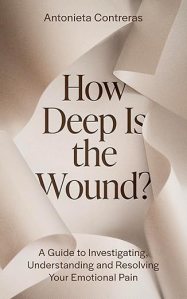
How Deep is the Wound by Antonieta Contreras

I received a copy of this book from the author in exchange for my honest opinion.

Synopsis: Finally, a Clear Path Through the Confusion of Modern Trauma Language

If you’ve ever wondered whether your struggles “count” as trauma, felt overwhelmed by conflicting mental health advice, or questioned why some healing approaches work for others but not for you—this book offers the clarity you’ve been seeking. Today’s mental health conversations have reduced the rich complexity of human suffering into a single box labeled “trauma,” used for both devastating life-altering experiences and everyday disappointments—a confusion that serves no one well. This tendency leaves people either minimizing genuine injuries or pathologizing normal life challenges.

Antonieta Contreras introduces an approach that distinguishes different types of psychological wounds based on their actual depth and impact on your nervous system. Drawing from years of clinical practice, extensive research, and personal recovery, she provides the missing understanding to accurately assess your experiences and match them with effective strategies.

You’ll discover the differences between:

  • Emotional Pain: Hurts that sting but don’t fundamentally alter your system
  • Emotional Wounds: Deeper impacts that linger after the initial hurt
  • Traumatization: The active process of seeking safety
  • Trauma: Deep injuries that rewire how you perceive the world

Learn why using a hammer for surgery or a scalpel for construction both create problems—and how matching your healing approach to your actual wound depth accelerates recovery while preventing unnecessary suffering.

Discover how to honor your pain without being defined by it, moving from identity-based labels toward agency-focused growth that reclaims your power to heal and thrive. This book examines how your unique nervous system responds to overwhelm.

Real-World Applications

  • Assess childhood experiences accurately without minimizing or catastrophizing
  • Recognize trauma bonding and attachment wounds that keep you from living fully
  • Understand why some relationships feel impossible to leave
  • Navigate narcissistic abuse and emotional manipulation
  • Distinguish between healthy processing and rumination that reinforces pain
  • Build genuine resilience based on nervous system regulation

This book is for:

  • Anyone confused about whether their experiences constitute “trauma”
  • People who’ve tried multiple healing approaches without lasting results
  • Individuals stuck in cycles of pain, insecurity, lack of motivation or satisfaction, or relationship difficulties
  • Those seeking to understand childhood experiences and their adult impact
  • Anyone wanting to move beyond victim identity toward empowered recovery
  • Mental health professionals seeking more nuanced assessment tools and practical exercises for their clients

When you understand the actual depth of your wounds, you can choose interventions that match their severity. This prevents both under-treatment that leaves you unresolved and over-treatment that creates unnecessary pathology. You will spend less time on ineffective approaches and focus your energy on strategies that are effective for your specific situation.

This book avoids both toxic positivity and victim mentality, acknowledging real suffering while emphasizing human capacity for growth and adaptation. Learn to work with your nervous system’s intelligence rather than against it. You’ll finish with practical tools for regulation, boundaries, and building the safety your system needs to thrive.

Stop wondering if your pain is “enough” to deserve attention. Learn to honor your experiences and discover what it means to finally feel yourself again. Transform your relationship with your own story and step into the clarity, agency, and hope that effective healing provides.

Summary: Overall, Antonieta Contreras’s How Deep is the Wound?  blends clinical expertise with accessible storytelling to help readers understand the spectrum of emotional pain—ranging from everyday struggles to deep trauma—and argues that distinguishing between them is key to healing. By challenging the overuse of trauma language while offering practical exercises and compassionate guidance, Contreras reframes pain as a sign of our innate adaptability rather than evidence of brokenness, ultimately encouraging readers to approach their wounds with clarity, agency, and hope.

See the full review here: How Deep is the Wound?
Purchase here