Review: Swallowing the Muskellunge by Lawrence P. O’Brien

Synopsis:

Wild things run loose at the border. They know that the caravan is coming. Their reach is disturbingly effective, and they have a fierce appetite. The sentinels are patient and can be quite disarming.

From the outskirts of Boston, in 1800, London Oxford’s family climbed aboard a sleigh that was bound for the promised land. They, as part of the Wrights’ caravan, travelled north in the dead of winter. London joined four other young families. Nineteen children were twelve years or younger. Dozens of young, single men, armed with axes, followed on foot. London, who wasn’t always free, was risking everything for a chance at a better life.

Moving through the frigid cold and the blinding white made the adults tired and numb. They felt like they were already asleep. That might be why no-one noticed the drag marks in the snow, or why so few questioned the disappearances. The little ones were left to run recklessly and unfettered. London felt like that—until that something woke him up.

Favorite Lines:

“…in the end nature does not belong to us, we belong to it.”

“The blood-red eyes of the loon were captivated by shadowed wisps lit by the sunset’s tangerine glare.”

My Opinion:

I received a copy of this book from the author in exchange for my honest opinion.

Swallowing the Muskellunge is one of those books that sneaks up on you. It starts slow and earthy, and before you know it, you’re knee-deep in a story that feels both intimate and unsettling. Lawrence P. O’Brien mixes real history with small, quiet moments of fear, love, and survival.

The story centers on London Oxford and his family, a free Black family in Massachusetts in the late 1700s, trying to hold on to what little freedom and dignity they have while serving the Wrights — a white family planning to move north into what’s now Canada. It’s not a loud book. Instead, it builds through the weight of ordinary things — cooking, chores, travel, exhaustion — all the things that make up a hard life that still manages to have small joys in it.

What I liked most is how real it feels. The writing doesn’t rush. It gives you time to see the world as London sees it: every sound in the woods, every small act of cruelty, every moment of kindness. There’s a scene where he takes his young son, Abner, on a wagon trip that starts as a simple errand and turns into something terrifying. It’s written so quietly that when the danger comes, it feels almost too real.

The book doesn’t romanticize anything. It shows how freedom wasn’t clean or complete — how even “free” people still lived in the shadow of being owned, watched, or taken. But it also shows a family trying to love each other in the middle of that, and that’s what makes it stay with you.

This is a slower read, but it’s worth it. If you like stories that feel like they could’ve really happened — something between historical fiction and family saga — you’ll probably appreciate this one. 

Summary:

Overall, this book is about ordinary people trying to make choices that might finally give their children a better life. O’Brien writes with a calm, observant tone that makes even the hardest moments feel deeply human. It’s a good fit for readers who like historical fiction that feels honest, emotional, and quietly powerful — the kind of story that stays with you after the last page. Happy reading!

Check out Swallowing the Muskellunge here!


Monthly Features – July 2025

MATE: A Novel in Twenty Games by Robert Castle

I received a copy of this book from the author in exchange for my honest opinion.

Synopsis: MATE: a novel in twenty games deals with marriage as a chess game. What distinguishes MATE from other stories and novels about the life and death of a relationship is its radical correlation of the actions of a husband and wife to chess moves. The logic of the novel suggests: chess is war reduced to a game; marriage is chess; marriage is war. That is the tragedy—marriage, as a human institution and human desire, is innately tragic. In marriage, one or the other partner feel obliged to annihilate the other in a struggle for…what? This is the central question and riddle of MATE.

Summary: Overall, sharp, exhausting, and wickedly funny, MATE argues that when love turns into a tournament, the best most of us can hope for is a well-fought draw—and maybe a laugh at the post-game press conference.

See the full review here: MATE
Purchase here


Hearing My Secrets by Julie L. James

I received a copy of this book from the author in exchange for my honest opinion.

Synopsis: At first glance, Marion Andrews would seem to have it all. She’s just been promoted at her job at the top home design magazine where she’s worked for a few years on the creative team, and she’s earned it, even after a few blunders. Her personality and work ethic have taken her far, but not everything is as it seems in her personal life.

Marion’s been hiding her biggest insecurity for years, and now that she’s working closer with her handsome and austere boss, Mr. Shaler, she’s never felt more unsure about whether or not she should reveal it. Mr. Shaler isn’t as intimidating as Marion thought and she never expected things between them to be quite so friendly.

During her transition in her new position, she meets Charlie, a stranger who insinuates he knows things about her past. Charlie keeps popping up in her life, revealing more each time, and getting closer to Marion in every way.

Caught between her tragic past and her dramatic present life, Marion realizes she doesn’t have control over everything and has to find a way to navigate how she can “have it all” without the unforeseen drama that comes with it.

Summary: Overall,  this book is full of warmth, wit, and an eye for every day beauty. It offers a slow-burning romance wrapped in emotional honesty, making it a refreshingly grounded and relatable read. If you like romance with a splash of comedy, then this book could be for you.

See the full review here: Hearing My Secrets
Purchase here


Review: MATE: A Novel in Twenty Games by Robert Castle

Synopsis:

MATE: a novel in twenty games deals with marriage as a chess game. What distinguishes MATE from other stories and novels about the life and death of a relationship is its radical correlation of the actions of a husband and wife to chess moves. The logic of the novel suggests: chess is war reduced to a game; marriage is chess; marriage is war. That is the tragedy—marriage, as a human institution and human desire, is innately tragic. In marriage, one or the other partner feel obliged to annihilate the other in a struggle for…what? This is the central question and riddle of MATE.

Favorite Lines:

“Psychological brutality alone would have satisfied the patrons of the Roman Colosseum.”

“This is tragedy of the modern game, the games cannot avoid desperate attempts to defeat one’s opponent.”

My Opinion:

I received a copy of this book from the author in exchange for my honest opinion.

MATE: A Novel in Twenty Games imagines marriage as a grand-master tournament, complete with opening gambits, trash-talking color commentary, and a running scoreboard that rewards the first spouse to notch six wins. Robert Castle’s conceit lands fast: every domestic flare-up—whether it’s bedtime negotiations or political chatter over lamb chops—gets diagrammed like a tactical skirmish. The result is part sports broadcast, part relationship post-mortem, and entirely compulsive to read.

Most chapters replay a single “game.” Castle’s unseen narrator calls the moves with gleeful precision, pausing to highlight blunders and propose sharper sidelines the players never see. A simple grocery-store run, for instance, spirals into feints, sacrifices, and counter-punches that would impress a blitz champion. The play-by-play can be savage, but its real charm is how it exposes tiny hurts we all recognize—the sigh before an argument, the silent tally of old grievances—without ever dropping the tournament mask.

Beneath the quick wit sits a bleak observation: perfectly played matches end in stalemate, and no clever tactic erases the cost of constant competition. Scores swing wildly—one chapter leaves Pillsbury a single victory from clinching the match—yet triumph feels hollow when the commentary reminds us another round always looms. Class anxiety, gender scripts, and ‘90s pop politics all take turns on the board, their influence measured in incremental positional gains rather than sweeping mates.

If there’s a hurdle, it’s overload. Castle peppers every game with alternative lines and psychological footnotes; the barrage can feel like reading an annotated grand-master classic without diagrams. Still, that density is the punchline: marriage, he suggests, is endless analysis paralysis, where the move you regret is always the one you just made.

Summary:

Overall, sharp, exhausting, and wickedly funny, MATE argues that when love turns into a tournament, the best most of us can hope for is a well-fought draw—and maybe a laugh at the post-game press conference. Happy reading!

Check out MATE: A Novel in Twenty Games here!


Review: Mercury to the Moon by J.Q. Gagliastro

Synopsis:

It is no secret that planet Earth is home to the notoriously greedy species known as humans. What remains a secret to these humans is the community of aliens who live hidden under invisible force fields across neighboring planets and moons. They eat eat fried butterflies for lunch, travel through interplanetary vortexes, and coexist with giant bees, solar dragons, and hairy one-hundred-legged spiders—peacefully for the most part.

Eighteen-year-old Truman Howard is not like his classmates. While they roll around in their parents’ riches and travel the globe, Truman takes care of himself, t working part time as a ski instructor and thrifting his clothes. He has no family, no friends, and a roommate who gives donkeys a bad rep.

But everything changes the day Truman meets a mysterious woman who invites him to an unforgettable place that will make him and anyone who reads his story feel like they belong. For it is there, among the stars, where Truman embarks on a remarkable voyage and finds new friends, fantastic creatures, and a dangerous destiny that’s been brewing for him for many, many moons!

Favorite Lines:

“The Sun, stubborn and strong-willed, broke through thinning clouds.”

“Hands make me, ears love me, but eyes never catch me.”

“But hey, think on the bright side. Some people can be completely heartless!”

My Opinion:

I received a copy of this book from the author in exchange for my honest opinion.

Mercury to the Moon is the magical first installment in J.Q. Gagliastro’s Truman’s Space Odyssey series. The story follows Truman Howard, an eccentric, kind-hearted teen raised in a prestigious boarding school in the Canadian Rockies. His life is abruptly turned upside down when a supernatural event triggers the discovery that he is not just a regular boy—he is an alien with the ability to manipulate water and emotions. Swept away from Earth and into the fantastical solar system of Aether, Truman joins other “will-gifted” teens on a dragon-backed space journey led by an eclectic team of interplanetary mentors. Blending contemporary boarding school drama with richly imaginative sci-fi fantasy, this novel is as whimsical as it is poignant.

Mercury to the Moon is an exhilarating cosmic coming-of-age story that thrives on rich world-building and emotional honesty. Truman is instantly likable—an outsider who’s endured both classism and cruelty, yet continues to treat others with patience and grace. Gagliastro brings a fresh voice to YA fantasy by pairing magical realism with real-world issues such as bullying, grief, identity, and socioeconomic disparity. The characters feel fully formed, from the acid-tongued but loyal Esmeralda to the charmingly flirtatious Vedrò, each carrying their own trauma, secrets, and strength.

The novel’s greatest achievement lies in its balance: poetic prose pairs seamlessly with interstellar action; laugh-out-loud moments are layered with deeply vulnerable revelations. Gagliastro’s descriptions sing with color and style—lavender sidewalks on Mercury, dragons with hieroglyphic scales, a boarding school dorm with aquarium beds—and the story never shies away from celebrating queer, neurodiverse, and international identities. Truman’s self-discovery is not just about powers—it’s about belonging, family, and courage.

Gagliastro also smartly structures the plot around a literal and metaphorical journey: Truman and his new cohort will travel planet to planet, learning both academic lessons and emotional truths. Readers will be delighted by the imaginative elements—like Cherry the Blossom Dragon, bleeding-heart alert systems, and invisible domes—but the heart of the story remains in the relationships formed between characters, particularly the reunion between Truman and his long-lost sister. The emotional payoff is tender, surprising, and earned.

If you’re looking for a genre-bending YA adventure that fuses high-concept space fantasy with grounded emotional arcs, Mercury to the Moon is a brilliant debut. It’s perfect for fans of Percy Jackson, The School for Good and Evil, or Heartstopper—and for anyone who has ever felt different and dreamed of a world where they finally belong.

Summary:

Overall, Mercury to the Moon is a lyrical, expansive, and deeply human fantasy adventure about identity, family, and the magic of finding your place in the universe. Gagliastro has created a richly layered world full of wonder, wit, and warmth—and this first installment leaves readers eager for Book Two. Happy reading!

Check out Mercury to the Moon here!


Review: Stitches by Julie L. James

Synopsis:

After an unpleasant experience getting stitches leaves her disenfranchised with doctors, Hero Atticus Taylor decides to be proactive. Capitalizing off of her literary-inspired name, she creates the Hero Atticus Taylor School of Manners for All Doctors, and uses both her prejudice toward doctors and her passion for Emily Post to educate medical students in all forms of etiquette. Her job has been a fulfilling and successful endeavor, until an agitating interaction with a former heart surgeon has Hero’s manner betraying her.

Doctor Lee Taylor is interested in enrolling the surgical students he oversees in Hero’s manners school but he can’t help himself from asking her on a date within minutes of meeting her. He is direct, decisive, and confident. Hero’s refusal and assumption that he is just like every other doctor who belittles her profession, only makes her more interesting to him. Even though he is completely smitten with Hero, Lee cannot see to gracefully reveal his secrets as their courtship continues.

Favorite Lines:

“If you leave this school having learned one thing, let it be this: Manners are the glue of society.”

“Don’t you all think she should have to go out to dinner with me to make up for the ruined sweater, and the permanent scar I’ll have on my stomach until I die?”

“Yes. My doctors permit me to have two cups a day. One with children so that I can scare them half to death, and one with a beautiful face for the evenings.”

My Opinion:

I received a copy of this book from the author in exchange for my honest opinion.

Julie L. James’s Stitches starts with what feels like a rom-com collision in a hospital corridor: Hero Taylor, etiquette coach extraordinaire, is determined to civilize doctors, while superstar surgeon Dr. Lee Taylor strides in convinced he needs no polishing. Their very first run-in—complete with an airborne water bottle—makes it clear the book will balance slapstick energy with a sharp look at professional pride.

Hero’s crusade for better bedside manners grew out of a childhood accident that left her literally stitched together and philosophically convinced that courtesy saves lives. The classes she runs at her “Madhatters School” offer endless comic fodder as she pits teacup drills and mock-patient role-plays against Lee’s arched-eyebrow scepticism. Their back-and-forth lands because both characters mean well; it’s just that one teaches polite small talk and the other performs trauma surgery.

Halfway through, the story pivots: Lee reveals a personal health crisis that suddenly makes Hero’s lessons feel less like window dressing and more like survival gear. The tension between keeping calm for patients and facing your own mortality gives the romance real weight, turning former sparring partners into reluctant confidants.

James keeps the mood light with zippy dialogue and meme-ready banter, yet she layers in enough medical detail and emotional honesty to ground the comedy. Late-night heart-to-hearts, a chaotic children’s tea party, and a surprisingly tender discussion of Greek myths all showcase writing that moves smoothly from laugh-out-loud to lump-in-throat without whiplash. The result is a love story that respects both the scalpel and the spoon.

Summary:

Overall, Stitches is a breezy weekend binge for readers who like their enemies-to-lovers stories sprinkled with hospital drama and anchored by genuine stakes. Expect quick laughs, a few gut-punch moments, and the feel-good reminder that a little kindness—delivered at exactly the right moment—can be as healing as any procedure. Happy reading!

Check out Stitches here!


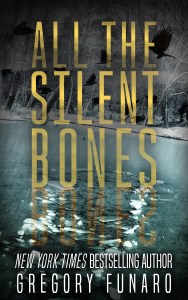
Review: All the Silent Bones by Gregory Funaro

Synopsis:

When they were boys, Ray Dawley, Eddie Sayers, and Matthew Kauffman were the best of friends. Then new kid Bobby “Bones” Bonetti fell through the ice at Blackamore Pond. The other boys saved Bobby from drowning, but something else came out of the water that day, something dangerous that would tear their friendship apart and set one of them on a dark path.

Forty years after the incident on the ice, Ray, a retired college professor, has moved back into his childhood home. Eddie is a retired homicide detective, and Matthew is a successful investment banker. Bobby, who is on disability from his job as a corrections officer at a juvenile detention center, has a secret: the darkness that found him under the ice when he was a kid has made him do terrible things.

Following a reunion at Ray’s house, Matthew is found murdered in his car beside the old pond. The killer includes a chilling message that only the three remaining friends would recognize. Could one of their own be a murderer?

All the Silent Bones, a tense and disturbing thriller told from alternating perspectives of morally complex characters, explores the lasting impact of childhood trauma and its influence on adult relationships.

Favorite Lines:

“You make plans, you prepare for war, you work hard to ensure your kid stays far away from the front lines so that when you see the enemy on the horizon, you’re ready to hit them back with everything you have without collateral damage. But it was also important to make time to play, to get lost in it with abandon—like a child on a snow day. All the worries buried far beneath the pristine white.”

““I always loved you. Even when I didn’t know how.”

My Opinion:

I received a copy of this book from the author in exchange for my honest opinion.

Gregory Funaro’s All the Silent Bones is a chilling, atmospheric thriller that balances psychological horror with literary nuance. Set in Rhode Island and steeped in childhood trauma, abuse, and dissociation, the novel follows Ray Dawley and David Ruggieri as they struggle with the legacies of their pasts and the spectral presence of “Bones”—a dark alter ego that may be more than just a psychological construct.

At its core, All the Silent Bones is a story about memory, trauma, and the brutal ghosts of childhood. The narrative explores the complicated psychological effects of abuse through the lens of dissociative identity disorder, giving shape to an internal world where elves, shadows, and monsters are metaphors for brokenness—and sometimes frighteningly real.

Funaro’s prose is both sharp and lyrical. The characters—particularly Dave/Bones—are unforgettable in their complexity. Bones, the snarling, darkly comedic, and tragically constructed alter ego, becomes the emotional center of the book, embodying both horror and heartbreak. Dr. Natalia Morris, the therapist unraveling Dave’s fractured psyche, serves as a grounded counterbalance to the surreal and disturbing revelations that emerge.

The book isn’t for the faint of heart. It does not flinch from describing graphic abuse, dissociation, and the descent into mental illness, but does so with care, intent, and a deep understanding of its psychological subject matter. There’s a sense of dread throughout that builds slowly and lands with real emotional weight. The themes are heavy, but handled with deftness and honesty.

Funaro’s ability to blend horror and heartbreak is what elevates this book. While the elves and alternate personalities add a supernatural edge, the real terror comes from the raw portrayal of pain, abandonment, and the desperate need to be loved.

Summary:

Overall, a dark and devastating psychological thriller, Gregory Funaro’s All the Silent Bones is a brutal but beautifully told story about the lingering damage of childhood abuse and the fragile hope of healing. It’s an unflinching exploration of trauma and identity, laced with eerie symbolism and grounded by authentic human emotion. Highly recommended for fans of psychological horror, literary thrillers, and trauma-informed storytelling. Happy reading!

Check out All the Silent Bones here!


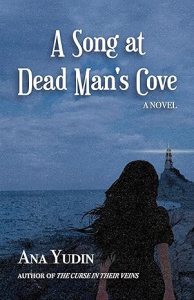
Review: A Song at Dead Man’s Cove by Ana Yudin

Synopsis:

Never turn your back on the ocean…

2023. Another person has disappeared at Dead Man’s Cove in coastal Washington. Jaded from her job at the historic Irving Hotel, Zarya wanders to the scene of the tragedy. She has heard her Russian mother’s tales of rusalki—vengeful spirits that have died unclean deaths near a body of water—and never paid them much attention. But now, on a misty headland beside an abandoned lighthouse, Zarya locks eyes with the rusalka and is chosen to be the next victim. She must unearth the siren’s tragedy before Rusalka Week, a period in early summer when water-spirits roam freely on land.

1850. Josephine has just joined her newlywed husband in Washington, in the lighthouse erected by local businessman Hurley Irving. Marriage is not quite what she expected, and her melancholia grows over the course of the winter. The medic prescribes pregnancy as the antidote. What he doesn’t realize is how far Josephine is willing to go in order to become a mother.

The Gothic horror novel follows two protagonists, a modern-day misanthrope who fears intimacy and a woman in the Victorian era who thinks stealing love will make her whole. But how long can a person hide from love, and can love really be taken by force?

Favorite Lines:

“She decided right then and there that there are two kinds of loneliness: the kind borne of solitude, and the kind that swelters in a crowd full of people. In both cases, loneliness was the same—it emptied the soul until there was nothing left. No distractions could ever be enough to feel full again.”

“She could not have known what was about to happen. She could not have known that the ocean would break its promise to her. “

“Josephine seemed determined to never learn her lesson—that one cannot take love by force, that love must be freely given to be real.”

“Grief could be a funny thing. Sometimes, the biggest loss of all was for a person who had never even existed.”

My Opinion:

Ana Yudin’s A Song at Dead Man’s Cove is a chilling, atmospheric blend of contemporary mystery and gothic folklore, wrapped in lyrical prose and deep emotional undercurrents. Set in a sleepy coastal town plagued by a history of disappearances, shipwrecks, and lingering spirits, the novel expertly straddles two timelines—1850s and present-day—to tell a tale as haunting as the sea itself.

The story follows Zarya, a concierge at the historic Irving Hotel, who becomes entangled in a series of eerie events that link back to the tragic story of Josephine Byrne, a 19th-century woman whose love affair, mental anguish, and suicide cast a long shadow over the town. When modern-day women begin vanishing under similar circumstances, Zarya must uncover the dark legacy left behind—one connected to mythic sirens, sunken ships, and generational secrets.

What sets this book apart is its rich, evocative atmosphere. Yudin conjures foggy coves, crumbling lighthouses, and salt-bitten ghosts with the kind of vivid detail that lingers in your mind like brine in the air. Her depiction of grief, longing, and the desire for connection—across time and beyond death—adds layers of emotional complexity to what could have easily been a simple supernatural thriller.

As the threads between Zarya’s present and Josephine’s past tighten, the novel builds tension with finesse. It’s not just about what happened, but what it means. The sirens themselves are not one-note monsters, but spectral figures full of sadness and rage, blurring the line between victim and villain. This nuanced approach makes A Song at Dead Man’s Cove a standout in the genre.

The climax is both cinematic and intimate, offering moments of genuine horror as well as deep introspection. Themes of love, betrayal, womanhood, and the price of silence echo throughout, making the story feel as ancient and universal as the ocean itself.

If you love books with dual timelines, mythological influence, ghostly lore, and women reclaiming their power through untold stories, this book should absolutely be on your list.

Summary:

A Song at Dead Man’s Cove is a mesmerizing, multilayered ghost story that manages to be both otherworldly and deeply human. Ana Yudin delivers a narrative that is as much about ancestral trauma and unspoken truths as it is about sirens and shipwrecks. It’s a tale of women silenced by history—singing now through salt and shadow to be heard.

Highly recommended for fans of Silvia Moreno-Garcia, Erin Morgenstern, and readers who crave gothic atmosphere with a feminist edge. Happy reading!

Check out A Song at Dead Man’s Cove here!


Monthly Monthly Features – May 2025

The Cobbler’s Crusaders by Rick Steigelman

I received a copy of this book from the author in exchange for my honest opinion.

Synopsis: Jacquelyn Pajot is a nine-year-old American girl whose excitement over a solo visit to her grandmother in Paris is soon diminished by the discovery that the grandmother is far more devoted to dragging her to church every day than she is in showing her the much-anticipated sights of the city. Jacquelyn’s despair is remedied when she meets a pair of local girls, Nicolette and Genevieve, who are only too happy to lead the American astray. Jacquelyn, to her giddy astonishment, finds herself cajoled into joining her young companions in singing for money on the streets of Montmartre and leg kicking for laughs before the doors of the Moulin Rouge.

Jacquelyn’s joy over this ‘new’ life is tempered when she learns the circumstances of Genevieve’s father, a charming but financially struggling cobbler. Employing her own creative skills to produce a flier, Jacquelyn devises an advertising campaign that quickly spirals out of her control and into the hands of her more mischievous friends. By means both legal and not, the two French girls set a dubious course that has Jacquelyn flirting with the prospect of prison, purgatory and, most perilously, her grandmother’s righteous indignation.

Summary: Overall, if you’re in the mood for something offbeat but grounded, funny yet poignant, and filled with the kind of observational detail that makes even the smallest moment sing, The Cobbler’s Crusaders is a journey worth taking. It’s not just a week in Paris—it’s a week in the emotional lives of people who are messy, loving, ridiculous, and completely real.

See the full review here: The Cobbler’s Crusaders
Purchase here


Half Made Up by James Dunlop

I received a copy of this book from the author in exchange for my honest opinion.

Synopsis: How far would you go for a friend? Andrew MacKay, the sort of man who’s more likely to bet his last penny on a losing horse than lift a finger for anything resembling responsibility, is about to find out. An incurable gambler, chain-smoker, and binge drinker, Andy’s only real talent lies in outliving his own poor choices. But when his mate is shot dead and robbed of a classified secret, Andy finds himself bound to retrieve it, purely out of loyalty and an alarming lack of common sense.

Andy learns the stolen secret is a new nerve agent deadly enough to make any terrorist giddy with joy. Wanting nothing more than to ignore the whole thing, he finds himself drawn into a web of corporate espionage, government corruption, and terrorists with excellent taste in chemical warfare. He’ll have to rely on his wits to stay one step ahead of MI-5, who want him behind bars, if he hopes to recover the secret, and stop the zealots from killing thousands.

Time is running out. Andy’s got only one chance to make things right. Can he do it?

Summary: Half Made Up is a blistering, witty, and emotionally resonant debut that proves James Dunlop has the chops to stand alongside authors like Mick Herron and Ian Fleming. If you like your thrillers with more punchlines than platitudes—and aren’t averse to your heroes being half-unhinged—this book deserves a place on your shelf. Beneath the biting humor and barroom brawls is a novel that asks serious questions about morality, manipulation, and memory in a world where everything might be… well, half made up.

See the full review here: Half Made Up
Purchase here


Review: The Goldilocks Team: Master Retention and Hiring by Minal Joshi Jaeckli

Synopsis:

We all have a universal desire to work with great people, but they can be hard to find and even harder to keep for the long-term. Leaders facing disengaged employees, high turnover rates, and fierce competition for skilled professionals, know too well that the cost of losing talent goes beyond financial impacts, it disrupts your organization, stunts innovation and undermines your competitive position.

In The Goldilocks Team: Master Retention and Hiring, you’ll take an illuminating and entertaining deep dive into the core drivers of employee engagement, the evolution of workplace culture, values alignment, and interpersonal alignment, and learn how to:
• Address the root causes of turnover and improve retention
• Implement practical, immediately actionable tactics to engage your team
• Align your organization’s retention strategies with employee values for lasting success
• Build high-performing teams that deliver for the long-term, without guesswork

Whether you’re a seasoned business leader or a new manager, this provides a clear roadmap to keep your existing team members engaged for the long-term and to successfully hire top talent that is positioned to thrive within your organization.

Ready to build a team that’s high-performing, fully engaged and loyal? This book will show you how.

Favorite Lines:

“Engaged employees lead to happy customers, which leads to a thriving business. It’s a win-win-win!”

“You know you can pay people to do things, but you can’t pay people to care. Engaged employees care.”

My Opinion:

I received a copy of this book from the author in exchange for my honest opinion.

In The Goldilocks Team, Minal Joshi Jaeckli delivers a refreshingly insightful and practical framework for building highly engaged, high-performing teams in a time when traditional hiring practices are breaking down. Through sharp storytelling, strategic thinking, and deeply personal experience, she challenges business leaders to rethink everything they know about employee engagement.

The book is built on the foundational idea that the perfect team isn’t formed by hiring the smartest, fastest, or most accomplished people—it’s about creating the “just right” combination of traits, values, and interpersonal dynamics. This Goldilocks approach—drawing from the classic tale where things must not be too extreme but just right—serves as both a metaphor and a methodology for curating teams that can thrive sustainably.

Jaeckli distills decades of experience across global industries—from pharmaceuticals to tech—to argue that disengagement is not simply a talent issue; it’s a leadership one. She outlines four critical engagement drivers: safety & certainty, contribution & purpose, growth & significance, and connection & belonging. By addressing these pillars thoughtfully, leaders can turn unmotivated employees into mission-driven contributors.

The writing style is candid and witty, laced with clever analogies (Cinderella hiring, diffused culture, stale shipwrecks), making even complex topics approachable. Jaeckli doesn’t shy away from naming what’s broken—outdated job descriptions, misaligned onboarding, superficial perks—and offers concrete suggestions for building real alignment between individual motivation and organizational goals.

One of the book’s most powerful ideas is the call to flip hiring and retention on their heads. Instead of finding “right” people, we should focus on forming the “right fit.” Instead of throwing perks at disengagement, we need to listen, build trust, and understand what people truly want in a workplace.

Summary:

Overall, The Goldilocks Team is more than a leadership guide—it’s a manifesto for how the modern workplace needs to evolve. Minal Joshi Jaeckli doesn’t just talk about fixing disengagement; she offers a human-first framework to build teams that actually work. This book will resonate with anyone who has ever led a team, struggled to keep talent, or wondered why traditional hiring just isn’t cutting it anymore. Insightful, smart, and surprisingly entertaining, this is a must-read for leaders ready to build organizations where people feel purpose, not just pressure.

Check out The Goldilocks Team here!


Review: No Stars: Victor Wolff Book 1 by Henri Leag

Synopsis:

Victor buried his conscience long ago—six feet deep beneath a smile he perfected under the training of Adolf Wren, the merciless head of a corporate empire that spans the galaxy. He was trained to be heartless. Ruthless behind a polished mask.
But redemption has a way of clawing its way back to the surface. When Victor is hired to rescue Marilyn Finch, the daughter of Wren’s bitter rival Norton Crow.
In this gripping interstellar thriller, Victor must confront the enemies closing in on every side, and bring Wren’s empire crumbling down on the secrets that make up its foundation. But how can he do that without giving in to the very monster he’s trying to escape?

Favorite Lines:

“Power, the most valuable resource in the universe.”

” The phrase ‘ignorance is bliss’ comes to mind. He wishes for ignorance now. But knowing. Knowing is a curse. Knowing has him in a terrible grip, and it won’t let him go until he does something about it. He knows he can’t go back. No matter what he tells himself, he can’t go back.”

“The contrast between the two rooms is like the contrast between light and shadow. There’s no dancing in the sitting room. No real smiles here. It’s all fake happy.”

My Opinion:

I received a copy of this book from the author in exchange for my honest opinion.

Henri Leag’s No Stars is a sleek, gripping noir thriller that pulls readers into a world where power is currency, trust is a weakness, and survival depends on making the right move before it’s too late. Set in the towering metropolis of Urbis—a city of wealth, corruption, and hidden dangers—the novel follows Victor Wolff, a man who knows how to play the game. As a high-level consultant, his job is to navigate the shadowy corridors of influence, ensuring those in power stay there. But when a new job forces him to choose between ambition and survival, Victor quickly realizes he’s in deeper than ever before.

Victor Wolff is the perfect noir anti-hero—calculating, composed, and always three steps ahead. He’s a man who understands that words can be sharper than knives, and in Urbis, that’s how you stay alive. But while he thrives in the game of deception, No Stars doesn’t just present him as an untouchable figure—it peels back the layers of his confidence, revealing cracks in his armor. His biggest strength isn’t his power; it’s his ability to read a room, manipulate a conversation, and know when to walk away.

Urbis itself is a character in the novel, dripping with wealth and excess at the top while the lower levels are filled with people trying to climb their way up. Leag paints a cinematic world of gold-trimmed tuxedos, penthouse meetings, and whispered threats over expensive whiskey. The novel’s setting is sleek, stylish, and brimming with an undercurrent of danger—like Blade Runner meets John Wick, where every handshake hides a dagger and every ally could be the next enemy.

The novel’s pacing is razor-sharp, each chapter tightening the noose as Victor realizes that the game he’s playing might not have a way out. There’s always another layer to the deception, another move on the board, and just when he thinks he has control, the rules change. The tension never lets up, keeping readers locked in as Victor fights to stay ahead of the storm. At its core, No Stars is about power—who has it, who wants it, and what it takes to hold onto it.

Summary:

Overall, for fans of noir thrillers, political intrigue, and high-stakes deception, No Stars delivers in every way. Henri Leag has crafted a fast-paced, intelligent thriller that is as stylish as it is intense. With a protagonist you can’t look away from and a world where every choice has consequences, this is a novel that lingers long after the final page. Happy reading!

Check out No Stars here!