
Review: Enoch Mast’s Ballroom by Paul H. Lepp

Synopsis:

Plantations filled the Antebellum Period and mansions the Gilded Age. Much is known about those who lived and designed them, little is known about those who built and renovated them. At the time, the public had their halls and theaters to discuss their issues, and the wealthy had their private auditoriums or ballrooms to weigh what the public was saying. The story of Enoch Mast’s Ballroom takes place on the eve of World War I and covers all types of terrain, ending where it began in Cleveland, Ohio. It revolves around a contract Enoch Mast entered with the Lasbrith family to renovate their ballroom on Euclid Avenue, a location better known as Millionaires Row. He entered this agreement against the advice of associates and friends who told him they never pay the full amount. The Lasbriths’ have an army of lawyers on retainer and who always give any work to be done to the highest bidder and then have their lawyers beat the contractor down to the price found on the lowest bid. This approach didn’t work on Enoch Mast. He succeeds in taking over their ballroom, it becomes his. There he leaves his mark on the ballroom and history.

Favorite Lines:

“The lion’s share of history consists of anonymous people and random events.”

The past always surrenders its secrets to fate…

“Let the cube explain to them the present can’t exist without the past, and  the future can’t exist without the present—the present trapped between the two.”

My Opinion:

I received a copy of this book from the author in exchange for my honest opinion.

Enoch Mast’s Ballroom opens quietly, almost deceptively so, with a stonemason, a cemetery, a single object placed with care. At first, I thought I was settling into a historical piece. Instead, I realized pretty quickly that this book is interested in something slower and stranger: how stories get embedded in objects, how history speaks when people don’t, and how much meaning can be hidden in what looks ornamental.

What struck me most is how patiently the novel builds its scaffolding. The voice lingers. It circles. It pauses to look backward before it ever moves forward. At times, this felt indulgent—but more often, it felt intentional. The book seems deeply aware of time: how people experience it, how nations mark it, how individuals are crushed or shaped by it. Enoch Mast himself is less a traditional protagonist and more a gravitational center. Lives, events, and ideas orbit him, sometimes loosely, sometimes with uncomfortable closeness.

There’s a heavy historical weight here—slavery, class divisions, labor, wealth, power—but it’s filtered through a personal lens that keeps it from becoming a textbook. Still, this isn’t light reading. The book asks you to sit with uncomfortable truths and to notice patterns that repeat themselves across generations. The metaphor of the ballroom works especially well: a space meant for beauty, display, and privilege, sitting atop systems that are far less elegant. I found myself thinking about how often wealth hides violence simply by polishing its surfaces.

That said, this book won’t be for everyone. The pacing is deliberate, sometimes slow to the point of testing your patience, and the narrative voice can feel distant. If you’re looking for a tight plot or constant forward motion, this may feel frustrating. But if you’re willing to let the book unfold on its own terms, it rewards attention. By the time I finished, I didn’t feel like I had just read a story—I felt like I had walked through a long corridor of American memory, stopping at doors that are usually left closed.

Summary:

Overall, I would recommend this to readers who enjoy literary historical fiction, idea-driven narratives, and books that linger on symbolism, class, labor, and the long shadows of American history. As a slow, reflective historical novel that’s more concerned with memory, power, and what gets buried than with plot momentum, this book may be best suited for patient readers who don’t mind a deliberate pace and prefer atmosphere and reflection over action-heavy storytelling. Happy reading!

Check out Enoch Mast’s Ballroom here!


Monthly Features – February 2026

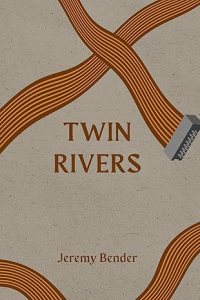
Twin Rivers by Jeremy Bender

I received a copy of this book from the author in exchange for my honest opinion.

Synopsis: The High Priest rules the city of Twin Rivers in the name of the Lord of Mercy, his AI god. In this land, where robotic Brothers complete all labor and humans are left to enjoy the fruits of this Eden, something rotten grows. Yonatan, a newly ascended Priest in the sclerotic Priesthood, is meant to shore up the faith of those left behind. Yet as Yonatan’s preaching takes him deep into the city’s bowels, he must confront heresy far deeper rooted than he ever imagined. When he sees one of the city’s paramilitary Keepers leave a young woman to die because of her unsanctioned implants, Yonatan must decide whether his faith in the Lord of Mercy outweighs his own belief in human exceptionalism.

Summary: Overall, Twin Rivers is a dense, unsettling dystopian sci-fi novel about a city that calls itself paradise while feeding on control, faith, and violence. Through priests, enforcers, and those left outside the walls, it explores how power hides behind ritual and how mercy becomes a weapon. Dark, intense, and uncomfortable in the right ways, it’s a story about what people are willing to ignore to keep believing they’re safe.

See the full review here: Twin Rivers
Purchase here


The Dog Years of Ananias Zachenko by Paul H. Lepp

I received a copy of this book from the author in exchange for my honest opinion.

Synopsis: What do you do when you run out of time? Ask Ananias Ezra Zachenko what he did after he was diagnosed. He set an agenda, took care of finances, delved into relationships, considered the heroic act. Didn’t go into denial, but defiance, there’s a difference.

He put it all in motion during the time he had left. A dog gets seven years to our one. Chenko rationalized the relationship by taking the best from both, our days the dog’s years and began to calculate. Anything to lengthen the short leash he is on.

During his dog years he planned for everything, but nothing turned out as expected. He concentrated on time, when he should have been looking at weight. No matter the type of year, when one runs out of time on this side, one has to figure out how to make weight on the other side.

Summary: Overall, The Dog Years of Ananias Zachenko  is a quiet, thoughtful novel about illness, time, and the way diagnosis forces a person to renegotiate their relationship with living. Grounded, reflective, and emotionally restrained, this story explores how we measure time when the future becomes uncertain — and whether time can ever really be controlled at all. 

See the full review here: The Dog Years of Ananias Zachenko
Purchase here


Her Ravishing Heartless Prince by A P Von K’Ory

I received a copy of this book from the author in exchange for my honest opinion.

Synopsis: He’s a European prince with a thousand-year lineage—and he hates her as much as he craves her.

Alyssa:

Prince Carl-Theodor Frederick Maximillian Christoph Albert Maria Johann Anselm is as insufferable as his name is long. Arrogant, powerful, entitled—everything I despise wrapped in devastatingly gorgeous packaging.

So I do what I do best: verbally eviscerate him and his precious bloodline with razor-sharp insults. I avoid him like the plague.

But avoidance only delays the inevitable.

Soon he has me exactly where I’ve been secretly fantasizing—on my knees before him. The problem? I can’t tell if this is seduction or revenge. Prince Hot and Cold swings between arctic ice and molten lava, dragging me to the edge of beautiful insanity.

The real question: will I survive the fall?

Prince Carl-Theodor:

Alyssa obliterates my world like a derailed train the moment we meet. Her beauty blinds me—then her vicious tongue insults thirteen thousand years of noble bloodline.

No one has ever dared.

As Head and Defender of the House of Saxony-Bremer, I vow on my ancestors’ graves to make her pay. I’ll bend her. Break her. Make her beg until she drowns in regret.

But here’s the twisted irony that threatens everything: hurting her destroys me too.

I can watch her crumble, hear her wounded cries—but the moment she surrenders, something in my chest stops cold.
Have I sworn an oath that will damn us both? And why does her pain feel like my own destruction?

Summary: Overall, this is a high-drama, ego-heavy royal romance where attraction and revenge walk hand in hand. If you enjoy dominant alpha tension, pride-fueled misunderstandings, and romance wrapped in luxury and lineage, this delivers an intense, indulgent ride.

See the full review here: Her Ravishing Heartless Prince
Purchase here


The 7 Albums of Stovepipe by Paul H. Lepp

I received a copy of this book from the author in exchange for my honest opinion.

Synopsis: From 1948 to 1982 nothing was as high mileage as a turntable. The speed limit was set at 331/3 rpms to take a spin down a highway of tunes on a ten-inch vinyl LP (Long Play) record album. The turning point 1982 when Compact Discs began to put the albums in our attics and closets. To some the change from LP to CD was a turning point on the same level as BC to AD. A wealthy collector has a well-trained staff they spend their time on finding the artifacts the turning points of the Boomer Generation left behind, items like Lee Harvey Oswalt’s belt, Jack Ruby’s cuff links. His staff comes across a nine word offer on the net, “Any Albums Made by the Stovepipe – Name Your Price.” He allows his staff to investigate, the project becomes an obsession. What they find out is a group known as The Chronologists are also interested in the authenticity of Stovepipe, the Musical Massiah between LP and CD, master of voice and instrument, lord of technology. Both Collector and Chronologists want to prove Stovepipe beyond a myth like Paul Bunyan or Johnny Appleseed, but for different reasons. One wants to prove he is alive, the other dead, and only one can be right.

Summary: Overall, a dense, unconventional novel that blends conspiracy, cultural history, and myth-making, The Seven Albums of Stovepipe is less about proving whether its central figure exists and more about why we need him to. The book rewards patient readers who enjoy experimental fiction, unreliable narrators, and stories that feel part oral history, part conspiracy file — especially those interested in music culture and how influence gets erased or mythologized. 

See the full review here: The 7 Albums of Stovepipe
Purchase here


Review: The 7 Albums of Stovepipe by Paul H. Lepp

Synopsis:

From 1948 to 1982 nothing was as high mileage as a turntable. The speed limit was set at 331/3 rpms to take a spin down a highway of tunes on a ten-inch vinyl LP (Long Play) record album. The turning point 1982 when Compact Discs began to put the albums in our attics and closets. To some the change from LP to CD was a turning point on the same level as BC to AD. A wealthy collector has a well-trained staff they spend their time on finding the artifacts the turning points of the Boomer Generation left behind, items like Lee Harvey Oswalt’s belt, Jack Ruby’s cuff links. His staff comes across a nine word offer on the net, “Any Albums Made by the Stovepipe – Name Your Price.” He allows his staff to investigate, the project becomes an obsession. What they find out is a group known as The Chronologists are also interested in the authenticity of Stovepipe, the Musical Massiah between LP and CD, master of voice and instrument, lord of technology. Both Collector and Chronologists want to prove Stovepipe beyond a myth like Paul Bunyan or Johnny Appleseed, but for different reasons. One wants to prove he is alive, the other dead, and only one can be right.

Favorite Lines:

“Every great turning point in history leaves behind some artifact of the moment.”

“Human nature moves in two gears: conscious and subconscious, what we see and what we dream. At times, human nature finds it hard to separate the real from the imagined. That it’s in our nature to combine the two and call it history.”

“The only thing we can’t afford is to overlook any moment in our time that changed us.”

My Opinion:

I received a copy of this book from the author in exchange for my honest opinion.

This is a book that doesn’t want to be read quickly. It wants to be circled, revisited, argued with, and maybe put down for a while before you come back. The Seven Albums of Stovepipe presents itself as a kind of investigation, but it quickly becomes something stranger: a meditation on authenticity, myth-making, and how culture decides what (and who) matters.

The framing device — a wealthy collector obsessed with historical turning points — works as more than a narrative hook. It becomes a lens for examining how we assign value. The artifacts, the surveillance, the obsession with documentation all point toward a deeper anxiety: that something meaningful slipped past unnoticed, and that history might have gotten it wrong. Stovepipe isn’t just a missing musician; he’s a missing explanation.

What’s most compelling is the book’s refusal to settle into a single genre. It reads at times like a conspiracy file, at times like oral history, and at others like philosophical riffing disguised as cultural criticism. The voices of the First Contacts feel intentionally uneven — not polished, not always reliable, but deeply convinced. Their certainty becomes contagious. You start wanting Stovepipe to exist simply because so many people need him to.

The language is dense, rhythmic, and unapologetically idiosyncratic. This is not streamlined prose. Lepp leans hard into repetition, digression, and accumulation, and that choice mirrors the book’s central question: does meaning come from clarity, or from persistence? The reader is asked to do work here — to follow long riffs, to sit with ambiguity, to accept that proof may never arrive in a clean form.

By the time the book reaches its later sections, the search itself feels more important than the answer. The Chronologists, the collector, the First Contacts — all of them are trying to control a narrative before it controls them. Whether Stovepipe is real almost becomes secondary. What matters is the hunger for belief, the fear of being late to history, and the quiet terror that the most important things might only exist on the margins, half-heard and easily erased.

This is a book about music, yes — but more than that, it’s about who gets to define influence. About how culture canonizes some voices while others survive only through rumor, devotion, and fragments. The Seven Albums of Stovepipe doesn’t give you answers so much as it dares you to decide what you’re willing to believe without them.

Summary:

Overall, a dense, unconventional novel that blends conspiracy, cultural history, and myth-making, The Seven Albums of Stovepipe is less about proving whether its central figure exists and more about why we need him to. The book rewards patient readers who enjoy experimental fiction, unreliable narrators, and stories that feel part oral history, part conspiracy file — especially those interested in music culture and how influence gets erased or mythologized. Happy reading!

Check out The 7 Albums of Stovepipe here!


Review: The Dog Years of Ananias Zachenko by Paul H. Lepp

Synopsis:

What do you do when you run out of time? Ask Ananias Ezra Zachenko what he did after he was diagnosed. He set an agenda, took care of finances, delved into relationships, considered the heroic act. Didn’t go into denial, but defiance, there’s a difference.

He put it all in motion during the time he had left. A dog gets seven years to our one. Chenko rationalized the relationship by taking the best from both, our days the dog’s years and began to calculate. Anything to lengthen the short leash he is on.

During his dog years he planned for everything, but nothing turned out as expected. He concentrated on time, when he should have been looking at weight. No matter the type of year, when one runs out of time on this side, one has to figure out how to make weight on the other side.

Favorite Lines:

“He reasoned as he waited, we’re just a wristwatch on the arm of time and can only be wound so many times or wear down so many batteries. Springs unwind, batteries go dead, and we stop. A watch never shows the same face twice when glanced at to see how much time has been used or how much time is left. Always leaving one to wonder if it’s the correct time. All the time, wishing for more, other times wishing for less. Such were the thoughts of Ananias Zachenko, better known as “Chenko,” as he entered the dog years of his life.”

“There is nothing permanent about us; no one gets out alive. Earth is a planet where all is temporary.”

“Change is a soul who wears many coats; some fit, some don’t.”

“Fate is like giving a box of matches to an arsonist; one doesn’t really know what they’ll do, but one has a pretty good idea. Fate is neither kind nor unkind; it’s like water and fire, as it can relieve your thirst and keep you warm one moment, or drown and burn down all that’s around you the next. Fate doesn’t care. Fate is just something out there that everyone has to deal with; it can’t be controlled, only survived.”

My Opinion:

I received a copy of this book from the author in exchange for my honest opinion.

This book opens with a man who understands, almost immediately, that his life has changed — not because of what he’s lost yet, but because of what’s been measured for him. Ananias Zachenko doesn’t rage against the diagnosis. He doesn’t dramatize it. Instead, he does something much more unsettling: he thinks. He observes. He calculates. He looks for leverage inside time itself.

The “dog years” metaphor could have been gimmicky. It isn’t. It becomes structural. Philosophical. Emotional. Time stops being linear and starts behaving like something you can bend, misinterpret, ration, or waste without noticing. The book doesn’t rush to reassure you that this is meaningful. It lets the idea sit there and bother you.

What surprised me most is how grounded the story feels even when it drifts into abstraction. This is a book full of ordinary movements — driving, eating breakfast, sitting in parking lots, handling paperwork — and yet each of those actions feels heavier than it should. Lepp captures that strange sensation where nothing looks different from the outside, but everything is already irrevocably altered.

Chenko (and the name itself matters here) is not written as a hero. He’s written as someone aware of his own limits. He knows where he’s strong, where he’s compromised, and where he’s lied to himself. The chess metaphor isn’t about winning — it’s about realizing you’re already mid-game and deciding whether to play anyway.

There’s a tenderness in the way memory is handled, especially when the narrative dips backward into childhood and scouting stories. Those sections don’t feel like nostalgia for comfort’s sake. They feel like an inventory: what shaped him, what taught him risk, what taught him responsibility, and what taught him that sometimes you step forward because someone else can’t.

By the time the book settles into its later chapters, the question isn’t “how long does he have?” It’s “what does time owe him — if anything at all?” The story doesn’t offer clean answers. It offers presence. Awareness. The recognition that control is often an illusion, but attention is not.

This is a book about illness, yes. But more than that, it’s a book about measurement. About how humans insist on quantifying what can’t be safely divided. About how love, memory, and meaning refuse to obey calendars. And about how sometimes the bravest thing you can do is stay inside the moment instead of trying to outrun it.

Summary:

Overall, The Dog Years of Ananias Zachenko  is a quiet, thoughtful novel about illness, time, and the way diagnosis forces a person to renegotiate their relationship with living. Grounded, reflective, and emotionally restrained, this story explores how we measure time when the future becomes uncertain — and whether time can ever really be controlled at all. Happy reading!

Check out The Dog Years of Ananias Zachenko here!