Monthly Features – September 2025

The Boy with the Thorn in His Side by L.J. Robson

I received a copy of this book from the author in exchange for my honest opinion.

Synopsis: For most of my life, I felt like something was wrong – like I was living with a shadow I couldn’t see, a weight I couldn’t name. My childhood was marked by fear, confusion, and memories that never quite fit together. I knew there were pieces missing, but I never expected the truth to be more terrifying than my worst nightmares.

This is my story. A journey through trauma, survival, and the battle to reclaim my own mind. It’s about the ghosts of the past that never stopped whispering, the questions no one wanted to answer, and the slow unravelling of a reality I had been forced to forget.

Told with raw honesty, The Boy with the Thorn in His Side is not just an account of what happened to me – it’s a testament to resilience, a fight for acceptance, and a message to anyone who has ever felt trapped by their own past.

Sometimes, the truth is the hardest thing to face. But in facing it, we find the strength to break free.

Summary: Overall, The Boy with the Thorn in His Side is a raw, unfiltered memoir of trauma, resilience, and healing. L. J. Robson takes you into the shadows of his childhood home, unafraid to expose the scars of abuse and the chaos of survival. It’s heavy, often heartbreaking, but threaded with moments of hope and honesty. A difficult yet rewarding read.

See the full review here: The Boy with the Thorn in His Side
Purchase here


The Hidden Life by Robert Castle

I received a copy of this book from the author in exchange for my honest opinion.

Synopsis: The police have just surrounded the hereditary mansion of Gladwynne Biddleton. He has just shot and wounded his security chief, Dominic Kittredge, and killed Dominic’s wife, Theresa. As he watches the siege unfold on TV, historical visions besiege Gladwynne’s mind. By turns he is a B-17 bombardier; an SS officer tasked with burning the bodies of Adolf Hitler and Eva Braun; a fugitive pursued by the celebrated Nazi hunter, Simon Wiesenthal; and a co-conspirator in the assassination of Austrian Archduke Franz Ferdinand and his wife, Sophie, Duchess of Hohenberg.

Between the television coverage and the pageant in his head, Gladwynne becomes dissociated from what has just actually happened. Fixation on his immediate physical needs and with life in the mansion tend to conceal the enormity of his crime from him. He descends into a narrowing and harrowing spiral of isolation.

Why did he shoot his closest confidant, Dominic? We don’t quite know. But in Dominic’s thirty year diary of serving Gladwynne we begin to find clues. In this chronicle, Dominic recounts the “golden age” of their association, a time when the two men devised a mock nation with Gladwynne as its center. With Dominic’s encouragement, Gladwynne came gradually to conceive of his own physical person as a sovereign state, competing diplomatically with other world states, persistently resisting their efforts to deprive him of his sovereignty. Between the hostile international powers out to get him and the police now at his door, will Gladwynne’s confusion become total?

Summary: Overall, Robert Castle’s The Hidden Life is a dark, ambitious novel that intertwines wealth, madness, and loyalty into a portrait of a man unraveling. Both unsettling and absorbing, it’s a story that lingers long after the final page, not just for what it says about one family, but for what it suggests about the hidden lives we all construct.

See the full review here: The Hidden Life
Purchase here


Settle Down by Ritt Deitz

I received a copy of this book from the author in exchange for my honest opinion.

Synopsis: A college kid endowed with hypnotic powers keeps telling himself there’s got to be more waiting for him after graduation than family in the neighborhood and an okay catering job. Maybe he just needs to get his story straight.

Kenny McLuher is far from his native Wisconsin, in his last year at the University of Virginia, majoring in history with no idea what he’s going to do with it. At his catering job, Kenny’s old Southern folktales keep putting his co-workers to sleep, and in Kenny’s dreams President Abraham Lincoln sure seems to be trying to tell him something.

Maybe the pieces will come back together after graduation when Kenny returns to Madison, where he can ask the big question: What is home, anyway?

Summary: Overall, Settle Down is a warm, heartfelt coming-of-age tale about finding home in unexpected places. It’s a quietly triumphant debut that will resonate with anyone who’s ever wondered where they truly belong. 

See the full review here: Settle Down
Purchase here
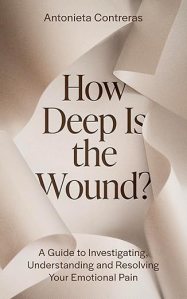


How Deep is the Wound by Antonieta Contreras

I received a copy of this book from the author in exchange for my honest opinion.

Synopsis: Finally, a Clear Path Through the Confusion of Modern Trauma Language

If you’ve ever wondered whether your struggles “count” as trauma, felt overwhelmed by conflicting mental health advice, or questioned why some healing approaches work for others but not for you—this book offers the clarity you’ve been seeking. Today’s mental health conversations have reduced the rich complexity of human suffering into a single box labeled “trauma,” used for both devastating life-altering experiences and everyday disappointments—a confusion that serves no one well. This tendency leaves people either minimizing genuine injuries or pathologizing normal life challenges.

Antonieta Contreras introduces an approach that distinguishes different types of psychological wounds based on their actual depth and impact on your nervous system. Drawing from years of clinical practice, extensive research, and personal recovery, she provides the missing understanding to accurately assess your experiences and match them with effective strategies.

You’ll discover the differences between:

  • Emotional Pain: Hurts that sting but don’t fundamentally alter your system
  • Emotional Wounds: Deeper impacts that linger after the initial hurt
  • Traumatization: The active process of seeking safety
  • Trauma: Deep injuries that rewire how you perceive the world

Learn why using a hammer for surgery or a scalpel for construction both create problems—and how matching your healing approach to your actual wound depth accelerates recovery while preventing unnecessary suffering.

Discover how to honor your pain without being defined by it, moving from identity-based labels toward agency-focused growth that reclaims your power to heal and thrive. This book examines how your unique nervous system responds to overwhelm.

Real-World Applications

  • Assess childhood experiences accurately without minimizing or catastrophizing
  • Recognize trauma bonding and attachment wounds that keep you from living fully
  • Understand why some relationships feel impossible to leave
  • Navigate narcissistic abuse and emotional manipulation
  • Distinguish between healthy processing and rumination that reinforces pain
  • Build genuine resilience based on nervous system regulation

This book is for:

  • Anyone confused about whether their experiences constitute “trauma”
  • People who’ve tried multiple healing approaches without lasting results
  • Individuals stuck in cycles of pain, insecurity, lack of motivation or satisfaction, or relationship difficulties
  • Those seeking to understand childhood experiences and their adult impact
  • Anyone wanting to move beyond victim identity toward empowered recovery
  • Mental health professionals seeking more nuanced assessment tools and practical exercises for their clients

When you understand the actual depth of your wounds, you can choose interventions that match their severity. This prevents both under-treatment that leaves you unresolved and over-treatment that creates unnecessary pathology. You will spend less time on ineffective approaches and focus your energy on strategies that are effective for your specific situation.

This book avoids both toxic positivity and victim mentality, acknowledging real suffering while emphasizing human capacity for growth and adaptation. Learn to work with your nervous system’s intelligence rather than against it. You’ll finish with practical tools for regulation, boundaries, and building the safety your system needs to thrive.

Stop wondering if your pain is “enough” to deserve attention. Learn to honor your experiences and discover what it means to finally feel yourself again. Transform your relationship with your own story and step into the clarity, agency, and hope that effective healing provides.

Summary: Overall, Antonieta Contreras’s How Deep is the Wound?  blends clinical expertise with accessible storytelling to help readers understand the spectrum of emotional pain—ranging from everyday struggles to deep trauma—and argues that distinguishing between them is key to healing. By challenging the overuse of trauma language while offering practical exercises and compassionate guidance, Contreras reframes pain as a sign of our innate adaptability rather than evidence of brokenness, ultimately encouraging readers to approach their wounds with clarity, agency, and hope.

See the full review here: How Deep is the Wound?
Purchase here


Review: How Deep is the Wound by Antonieta Contreras

Synopsis:

Finally, a Clear Path Through the Confusion of Modern Trauma Language

If you’ve ever wondered whether your struggles “count” as trauma, felt overwhelmed by conflicting mental health advice, or questioned why some healing approaches work for others but not for you—this book offers the clarity you’ve been seeking. Today’s mental health conversations have reduced the rich complexity of human suffering into a single box labeled “trauma,” used for both devastating life-altering experiences and everyday disappointments—a confusion that serves no one well. This tendency leaves people either minimizing genuine injuries or pathologizing normal life challenges.

Antonieta Contreras introduces an approach that distinguishes different types of psychological wounds based on their actual depth and impact on your nervous system. Drawing from years of clinical practice, extensive research, and personal recovery, she provides the missing understanding to accurately assess your experiences and match them with effective strategies.

You’ll discover the differences between:

  • Emotional Pain: Hurts that sting but don’t fundamentally alter your system
  • Emotional Wounds: Deeper impacts that linger after the initial hurt
  • Traumatization: The active process of seeking safety
  • Trauma: Deep injuries that rewire how you perceive the world

Learn why using a hammer for surgery or a scalpel for construction both create problems—and how matching your healing approach to your actual wound depth accelerates recovery while preventing unnecessary suffering.

Discover how to honor your pain without being defined by it, moving from identity-based labels toward agency-focused growth that reclaims your power to heal and thrive. This book examines how your unique nervous system responds to overwhelm.

Real-World Applications

  • Assess childhood experiences accurately without minimizing or catastrophizing
  • Recognize trauma bonding and attachment wounds that keep you from living fully
  • Understand why some relationships feel impossible to leave
  • Navigate narcissistic abuse and emotional manipulation
  • Distinguish between healthy processing and rumination that reinforces pain
  • Build genuine resilience based on nervous system regulation

This book is for:

  • Anyone confused about whether their experiences constitute “trauma”
  • People who’ve tried multiple healing approaches without lasting results
  • Individuals stuck in cycles of pain, insecurity, lack of motivation or satisfaction, or relationship difficulties
  • Those seeking to understand childhood experiences and their adult impact
  • Anyone wanting to move beyond victim identity toward empowered recovery
  • Mental health professionals seeking more nuanced assessment tools and practical exercises for their clients

When you understand the actual depth of your wounds, you can choose interventions that match their severity. This prevents both under-treatment that leaves you unresolved and over-treatment that creates unnecessary pathology. You will spend less time on ineffective approaches and focus your energy on strategies that are effective for your specific situation.

This book avoids both toxic positivity and victim mentality, acknowledging real suffering while emphasizing human capacity for growth and adaptation. Learn to work with your nervous system’s intelligence rather than against it. You’ll finish with practical tools for regulation, boundaries, and building the safety your system needs to thrive.

Stop wondering if your pain is “enough” to deserve attention. Learn to honor your experiences and discover what it means to finally feel yourself again. Transform your relationship with your own story and step into the clarity, agency, and hope that effective healing provides.

Favorite Lines:

“Your pain isn’t as permanent as it feels, and your potential for transformation is greater than you’ve been told.”

“In truth, healing from trauma doesn’t erase your most significant traits; it simply gives you the freedom to choose how you’ll respond instead of being run by harmful reactions.”

“I believe healing ripples outward in ways we can barely imagine.”

My Opinion:

I received a copy of this book from the author in exchange for my honest opinion.

What struck me first about How Deep is the Wound? is how directly it speaks to a cultural moment we’re living through. Everywhere you look—on social media, in everyday conversations, even among children—you hear the word “trauma” tossed around casually. Contreras doesn’t dismiss the pain behind those words, but she challenges the reflex to label every difficult experience as traumatic. That nuance is refreshing. Too often, books about emotional pain fall into one of two camps: either they minimize suffering or they overpathologize it. This book carves out a thoughtful middle space.

I appreciated how practical the writing felt without losing its warmth. Contreras weaves clinical knowledge with relatable metaphors—likening emotions to a child tugging at their mother’s arm until they escalate into a tantrum if ignored. She grounds her points in both neuroscience and lived experience, yet never drifts into inaccessible jargon. Reading it felt less like being lectured to and more like being accompanied by someone who has walked alongside many others on similar journeys.

Another strength is the book’s insistence on adaptation as a concept alongside resilience. That idea—that we aren’t just built to “bounce back” but to actively adjust and grow through challenges—stuck with me long after I put the book down. It reframes emotional pain not as proof of damage but as evidence that our systems are trying to reorganize and teach us something. In a world that rewards quick fixes and tidy labels, this felt like a radical but necessary reminder.

Of course, not every reader will agree with Contreras’s critique of “trauma culture.” Some might feel that drawing distinctions between trauma and emotional wounds risks invalidating their struggles. But I think that’s where the book’s heart really lies: in showing that recognizing the spectrum of emotional pain doesn’t diminish suffering—it clarifies it. For me, the takeaway was hopeful rather than minimizing: our wounds may run deep, but they are not all catastrophic, and understanding the difference is itself empowering.

Summary:

Overall, Antonieta Contreras’s How Deep is the Wound?  blends clinical expertise with accessible storytelling to help readers understand the spectrum of emotional pain—ranging from everyday struggles to deep trauma—and argues that distinguishing between them is key to healing. By challenging the overuse of trauma language while offering practical exercises and compassionate guidance, Contreras reframes pain as a sign of our innate adaptability rather than evidence of brokenness, ultimately encouraging readers to approach their wounds with clarity, agency, and hope.

Check out How Deep is the Wound? here!


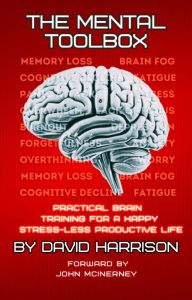
Review: The Mental Toolbox by David Harrison

Synopsis:

The Mental Toolbox

Practical Brain Training for a Happier, Stress-Free, and More Productive Life

In today’s fast-paced world, improving mental wellness has never been more important. The COVID-19 pandemic sparked a 25% rise in anxiety and depression worldwide, highlighting the urgent need for tools to build mental resilience.

The Mental Toolbox can help you create those tools, tailored to fit your lifestyle, and flip the script from mental illness to mental wellness. This book is for everyone—whether you’ve faced mental health challenges or not. Along the way, you’ll unlock the keys to a healthier mind, greater resilience, and your full potential.

Written in clear, straightforward language, The Mental Toolbox is practical and accessible to everyone. It offers tools, strategies, and advice that can strengthen your mental resilience, cognitive abilities, emotional intelligence, and ability to deal with stress. By doing so, it helps you enhance your overall well-being, serving as a valuable guide on your journey of personal growth.

Inside, you’ll be introduced to the five main pillars of mental health and overall well-being:

  • Sleep
  • Exercise
  • Nutrition
  • Mindfulness
  • Conscious Thinking

Understanding these pillars and how they interconnect is key to boosting your overall health and enhancing your ability to manage stress. By learning to apply these principles in your daily life, you’ll develop stronger mental resilience, improve cognitive function, and build a foundation for long-term well-being.

This book has the power to transform your mindset and your life. With the right approach, the possibilities are limitless.

Change your mind,
Change your life
—and discover just how far you can go with….

The Mental Toolbox.

Favorite Lines:

“Setting achievable, realistic goals is the key to maintaining motivation. Goals provide direction and structure to your efforts. It’s important to set goals that are challenging, attainable, and aligned with your values”

“Discernment requires that we ‘shield our eyes from the sun and look carefully’ before we make choices and that we look at the consequences our actions may have for ourselves and those around us”

My Opinion:

I received a copy of this book from the author in exchange for my honest opinion.

David Harrison’s The Mental Toolbox is a well-structured and engaging guide to optimizing brain health, reducing stress, and enhancing productivity. What sets this book apart is its deeply personal yet practical approach—Harrison combines scientific insights with real-world strategies to help readers build resilience, improve focus, and foster emotional intelligence.

The book takes a deep dive into topics like neuroplasticity, stress management, mindfulness, and the brain-body connection, breaking down complex concepts into digestible, actionable advice. It provides a range of tools—from cognitive exercises and nutritional recommendations to emotional regulation techniques—that readers can immediately incorporate into their daily lives.

One of the standout aspects of The Mental Toolbox is its balance between research-backed information and personal storytelling. Harrison doesn’t just present theories; he shares his own struggles with mental health, making the book feel both relatable and inspiring. The writing is approachable, avoiding overly technical jargon while still offering valuable insights into neuroscience and psychology.

While the book is packed with useful information, it never feels overwhelming. The structured layout, including self-assessment tools and step-by-step guides, makes it easy to navigate. Whether you’re looking to boost your mental performance, manage stress more effectively, or simply cultivate better habits, The Mental Toolbox provides a solid foundation for lifelong cognitive wellness.

Summary:

Overall, The Mental Toolbox serves as a valuable resource for those aiming to proactively manage stress, enhance cognitive abilities, and foster a happier, more productive life. It’s a testament to the idea that with the right tools and mindset, anyone can achieve mental wellness and resilience. I would recommend this book to anyone interested in practical brain training and self-improvement. Happy reading!

Check out The Mental Toolbox here!