Monthly Features – September 2025

The Boy with the Thorn in His Side by L.J. Robson

I received a copy of this book from the author in exchange for my honest opinion.

Synopsis: For most of my life, I felt like something was wrong – like I was living with a shadow I couldn’t see, a weight I couldn’t name. My childhood was marked by fear, confusion, and memories that never quite fit together. I knew there were pieces missing, but I never expected the truth to be more terrifying than my worst nightmares.

This is my story. A journey through trauma, survival, and the battle to reclaim my own mind. It’s about the ghosts of the past that never stopped whispering, the questions no one wanted to answer, and the slow unravelling of a reality I had been forced to forget.

Told with raw honesty, The Boy with the Thorn in His Side is not just an account of what happened to me – it’s a testament to resilience, a fight for acceptance, and a message to anyone who has ever felt trapped by their own past.

Sometimes, the truth is the hardest thing to face. But in facing it, we find the strength to break free.

Summary: Overall, The Boy with the Thorn in His Side is a raw, unfiltered memoir of trauma, resilience, and healing. L. J. Robson takes you into the shadows of his childhood home, unafraid to expose the scars of abuse and the chaos of survival. It’s heavy, often heartbreaking, but threaded with moments of hope and honesty. A difficult yet rewarding read.

See the full review here: The Boy with the Thorn in His Side
Purchase here


The Hidden Life by Robert Castle

I received a copy of this book from the author in exchange for my honest opinion.

Synopsis: The police have just surrounded the hereditary mansion of Gladwynne Biddleton. He has just shot and wounded his security chief, Dominic Kittredge, and killed Dominic’s wife, Theresa. As he watches the siege unfold on TV, historical visions besiege Gladwynne’s mind. By turns he is a B-17 bombardier; an SS officer tasked with burning the bodies of Adolf Hitler and Eva Braun; a fugitive pursued by the celebrated Nazi hunter, Simon Wiesenthal; and a co-conspirator in the assassination of Austrian Archduke Franz Ferdinand and his wife, Sophie, Duchess of Hohenberg.

Between the television coverage and the pageant in his head, Gladwynne becomes dissociated from what has just actually happened. Fixation on his immediate physical needs and with life in the mansion tend to conceal the enormity of his crime from him. He descends into a narrowing and harrowing spiral of isolation.

Why did he shoot his closest confidant, Dominic? We don’t quite know. But in Dominic’s thirty year diary of serving Gladwynne we begin to find clues. In this chronicle, Dominic recounts the “golden age” of their association, a time when the two men devised a mock nation with Gladwynne as its center. With Dominic’s encouragement, Gladwynne came gradually to conceive of his own physical person as a sovereign state, competing diplomatically with other world states, persistently resisting their efforts to deprive him of his sovereignty. Between the hostile international powers out to get him and the police now at his door, will Gladwynne’s confusion become total?

Summary: Overall, Robert Castle’s The Hidden Life is a dark, ambitious novel that intertwines wealth, madness, and loyalty into a portrait of a man unraveling. Both unsettling and absorbing, it’s a story that lingers long after the final page, not just for what it says about one family, but for what it suggests about the hidden lives we all construct.

See the full review here: The Hidden Life
Purchase here


Settle Down by Ritt Deitz

I received a copy of this book from the author in exchange for my honest opinion.

Synopsis: A college kid endowed with hypnotic powers keeps telling himself there’s got to be more waiting for him after graduation than family in the neighborhood and an okay catering job. Maybe he just needs to get his story straight.

Kenny McLuher is far from his native Wisconsin, in his last year at the University of Virginia, majoring in history with no idea what he’s going to do with it. At his catering job, Kenny’s old Southern folktales keep putting his co-workers to sleep, and in Kenny’s dreams President Abraham Lincoln sure seems to be trying to tell him something.

Maybe the pieces will come back together after graduation when Kenny returns to Madison, where he can ask the big question: What is home, anyway?

Summary: Overall, Settle Down is a warm, heartfelt coming-of-age tale about finding home in unexpected places. It’s a quietly triumphant debut that will resonate with anyone who’s ever wondered where they truly belong. 

See the full review here: Settle Down
Purchase here


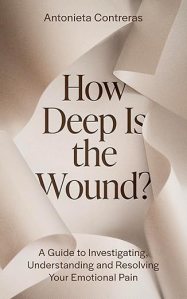
How Deep is the Wound by Antonieta Contreras

I received a copy of this book from the author in exchange for my honest opinion.

Synopsis: Finally, a Clear Path Through the Confusion of Modern Trauma Language

If you’ve ever wondered whether your struggles “count” as trauma, felt overwhelmed by conflicting mental health advice, or questioned why some healing approaches work for others but not for you—this book offers the clarity you’ve been seeking. Today’s mental health conversations have reduced the rich complexity of human suffering into a single box labeled “trauma,” used for both devastating life-altering experiences and everyday disappointments—a confusion that serves no one well. This tendency leaves people either minimizing genuine injuries or pathologizing normal life challenges.

Antonieta Contreras introduces an approach that distinguishes different types of psychological wounds based on their actual depth and impact on your nervous system. Drawing from years of clinical practice, extensive research, and personal recovery, she provides the missing understanding to accurately assess your experiences and match them with effective strategies.

You’ll discover the differences between:

  • Emotional Pain: Hurts that sting but don’t fundamentally alter your system
  • Emotional Wounds: Deeper impacts that linger after the initial hurt
  • Traumatization: The active process of seeking safety
  • Trauma: Deep injuries that rewire how you perceive the world

Learn why using a hammer for surgery or a scalpel for construction both create problems—and how matching your healing approach to your actual wound depth accelerates recovery while preventing unnecessary suffering.

Discover how to honor your pain without being defined by it, moving from identity-based labels toward agency-focused growth that reclaims your power to heal and thrive. This book examines how your unique nervous system responds to overwhelm.

Real-World Applications

  • Assess childhood experiences accurately without minimizing or catastrophizing
  • Recognize trauma bonding and attachment wounds that keep you from living fully
  • Understand why some relationships feel impossible to leave
  • Navigate narcissistic abuse and emotional manipulation
  • Distinguish between healthy processing and rumination that reinforces pain
  • Build genuine resilience based on nervous system regulation

This book is for:

  • Anyone confused about whether their experiences constitute “trauma”
  • People who’ve tried multiple healing approaches without lasting results
  • Individuals stuck in cycles of pain, insecurity, lack of motivation or satisfaction, or relationship difficulties
  • Those seeking to understand childhood experiences and their adult impact
  • Anyone wanting to move beyond victim identity toward empowered recovery
  • Mental health professionals seeking more nuanced assessment tools and practical exercises for their clients

When you understand the actual depth of your wounds, you can choose interventions that match their severity. This prevents both under-treatment that leaves you unresolved and over-treatment that creates unnecessary pathology. You will spend less time on ineffective approaches and focus your energy on strategies that are effective for your specific situation.

This book avoids both toxic positivity and victim mentality, acknowledging real suffering while emphasizing human capacity for growth and adaptation. Learn to work with your nervous system’s intelligence rather than against it. You’ll finish with practical tools for regulation, boundaries, and building the safety your system needs to thrive.

Stop wondering if your pain is “enough” to deserve attention. Learn to honor your experiences and discover what it means to finally feel yourself again. Transform your relationship with your own story and step into the clarity, agency, and hope that effective healing provides.

Summary: Overall, Antonieta Contreras’s How Deep is the Wound?  blends clinical expertise with accessible storytelling to help readers understand the spectrum of emotional pain—ranging from everyday struggles to deep trauma—and argues that distinguishing between them is key to healing. By challenging the overuse of trauma language while offering practical exercises and compassionate guidance, Contreras reframes pain as a sign of our innate adaptability rather than evidence of brokenness, ultimately encouraging readers to approach their wounds with clarity, agency, and hope.

See the full review here: How Deep is the Wound?
Purchase here



Review: How Deep is the Wound by Antonieta Contreras

Synopsis:

Finally, a Clear Path Through the Confusion of Modern Trauma Language

If you’ve ever wondered whether your struggles “count” as trauma, felt overwhelmed by conflicting mental health advice, or questioned why some healing approaches work for others but not for you—this book offers the clarity you’ve been seeking. Today’s mental health conversations have reduced the rich complexity of human suffering into a single box labeled “trauma,” used for both devastating life-altering experiences and everyday disappointments—a confusion that serves no one well. This tendency leaves people either minimizing genuine injuries or pathologizing normal life challenges.

Antonieta Contreras introduces an approach that distinguishes different types of psychological wounds based on their actual depth and impact on your nervous system. Drawing from years of clinical practice, extensive research, and personal recovery, she provides the missing understanding to accurately assess your experiences and match them with effective strategies.

You’ll discover the differences between:

  • Emotional Pain: Hurts that sting but don’t fundamentally alter your system
  • Emotional Wounds: Deeper impacts that linger after the initial hurt
  • Traumatization: The active process of seeking safety
  • Trauma: Deep injuries that rewire how you perceive the world

Learn why using a hammer for surgery or a scalpel for construction both create problems—and how matching your healing approach to your actual wound depth accelerates recovery while preventing unnecessary suffering.

Discover how to honor your pain without being defined by it, moving from identity-based labels toward agency-focused growth that reclaims your power to heal and thrive. This book examines how your unique nervous system responds to overwhelm.

Real-World Applications

  • Assess childhood experiences accurately without minimizing or catastrophizing
  • Recognize trauma bonding and attachment wounds that keep you from living fully
  • Understand why some relationships feel impossible to leave
  • Navigate narcissistic abuse and emotional manipulation
  • Distinguish between healthy processing and rumination that reinforces pain
  • Build genuine resilience based on nervous system regulation

This book is for:

  • Anyone confused about whether their experiences constitute “trauma”
  • People who’ve tried multiple healing approaches without lasting results
  • Individuals stuck in cycles of pain, insecurity, lack of motivation or satisfaction, or relationship difficulties
  • Those seeking to understand childhood experiences and their adult impact
  • Anyone wanting to move beyond victim identity toward empowered recovery
  • Mental health professionals seeking more nuanced assessment tools and practical exercises for their clients

When you understand the actual depth of your wounds, you can choose interventions that match their severity. This prevents both under-treatment that leaves you unresolved and over-treatment that creates unnecessary pathology. You will spend less time on ineffective approaches and focus your energy on strategies that are effective for your specific situation.

This book avoids both toxic positivity and victim mentality, acknowledging real suffering while emphasizing human capacity for growth and adaptation. Learn to work with your nervous system’s intelligence rather than against it. You’ll finish with practical tools for regulation, boundaries, and building the safety your system needs to thrive.

Stop wondering if your pain is “enough” to deserve attention. Learn to honor your experiences and discover what it means to finally feel yourself again. Transform your relationship with your own story and step into the clarity, agency, and hope that effective healing provides.

Favorite Lines:

“Your pain isn’t as permanent as it feels, and your potential for transformation is greater than you’ve been told.”

“In truth, healing from trauma doesn’t erase your most significant traits; it simply gives you the freedom to choose how you’ll respond instead of being run by harmful reactions.”

“I believe healing ripples outward in ways we can barely imagine.”

My Opinion:

I received a copy of this book from the author in exchange for my honest opinion.

What struck me first about How Deep is the Wound? is how directly it speaks to a cultural moment we’re living through. Everywhere you look—on social media, in everyday conversations, even among children—you hear the word “trauma” tossed around casually. Contreras doesn’t dismiss the pain behind those words, but she challenges the reflex to label every difficult experience as traumatic. That nuance is refreshing. Too often, books about emotional pain fall into one of two camps: either they minimize suffering or they overpathologize it. This book carves out a thoughtful middle space.

I appreciated how practical the writing felt without losing its warmth. Contreras weaves clinical knowledge with relatable metaphors—likening emotions to a child tugging at their mother’s arm until they escalate into a tantrum if ignored. She grounds her points in both neuroscience and lived experience, yet never drifts into inaccessible jargon. Reading it felt less like being lectured to and more like being accompanied by someone who has walked alongside many others on similar journeys.

Another strength is the book’s insistence on adaptation as a concept alongside resilience. That idea—that we aren’t just built to “bounce back” but to actively adjust and grow through challenges—stuck with me long after I put the book down. It reframes emotional pain not as proof of damage but as evidence that our systems are trying to reorganize and teach us something. In a world that rewards quick fixes and tidy labels, this felt like a radical but necessary reminder.

Of course, not every reader will agree with Contreras’s critique of “trauma culture.” Some might feel that drawing distinctions between trauma and emotional wounds risks invalidating their struggles. But I think that’s where the book’s heart really lies: in showing that recognizing the spectrum of emotional pain doesn’t diminish suffering—it clarifies it. For me, the takeaway was hopeful rather than minimizing: our wounds may run deep, but they are not all catastrophic, and understanding the difference is itself empowering.

Summary:

Overall, Antonieta Contreras’s How Deep is the Wound?  blends clinical expertise with accessible storytelling to help readers understand the spectrum of emotional pain—ranging from everyday struggles to deep trauma—and argues that distinguishing between them is key to healing. By challenging the overuse of trauma language while offering practical exercises and compassionate guidance, Contreras reframes pain as a sign of our innate adaptability rather than evidence of brokenness, ultimately encouraging readers to approach their wounds with clarity, agency, and hope.

Check out How Deep is the Wound? here!


Review: The Boy with the Thorn in His Side by L.J. Robson

Synopsis:

For most of my life, I felt like something was wrong – like I was living with a shadow I couldn’t see, a weight I couldn’t name. My childhood was marked by fear, confusion, and memories that never quite fit together. I knew there were pieces missing, but I never expected the truth to be more terrifying than my worst nightmares.

This is my story. A journey through trauma, survival, and the battle to reclaim my own mind. It’s about the ghosts of the past that never stopped whispering, the questions no one wanted to answer, and the slow unravelling of a reality I had been forced to forget.

Told with raw honesty, The Boy with the Thorn in His Side is not just an account of what happened to me – it’s a testament to resilience, a fight for acceptance, and a message to anyone who has ever felt trapped by their own past.

Sometimes, the truth is the hardest thing to face. But in facing it, we find the strength to break free.

Favorite Lines:

“We were haunted by old ghosts that were just too painful to talk about. It was like an elephant in the room for years when we were together…”

“Like a new green leaf on a tree just gets used to its summer conditions, then it slowly starts to turn to brown with autumn.”

My Opinion:

I received a copy of this book from the author in exchange for my honest opinion.

Some memoirs feel like quiet confessions, whispered to the reader. The Boy with the Thorn in His Side is not one of those books. Instead, it’s raw, unflinching, and at times gut-punchingly vivid. Robson does not dress up the past or soften the edges—he walks you straight back into his childhood home, sits you down in the living room, and makes you face the darkness right along with him.

What struck me most was the honesty. There’s no attempt to make himself the “perfect survivor” or to tie everything up neatly with a bow. The narrative moves between moments of fragile hope and crushing despair, often with dreamlike sequences that blur memory and trauma. At times it’s unsettling, but that’s what makes it powerful.

Robson’s gift is in the way he captures both the innocence of childhood and the corrosive impact of abuse, poverty, and instability. You feel his joy at football matches and music just as strongly as his dread when violence creeps into the home. It reminded me that memoir doesn’t have to be polished—it has to be true. And this one is brutally, achingly true.

This isn’t a light read. There are nights, addictions, betrayals, and moments of unbearable tension. But there’s also resilience, the bonds of brothers trying to survive together, and the long, slow path of healing. By the end, you feel not only the weight of Robson’s scars but also the strength it takes to write them down.

For readers who appreciate memoirs that don’t hide from the hard stuff—this belongs on your list.

Summary:

Overall, The Boy with the Thorn in His Side is a raw, unfiltered memoir of trauma, resilience, and healing. L. J. Robson takes you into the shadows of his childhood home, unafraid to expose the scars of abuse and the chaos of survival. It’s heavy, often heartbreaking, but threaded with moments of hope and honesty. A difficult yet rewarding read.

Check out The Boy with the Thorn in His Side here!


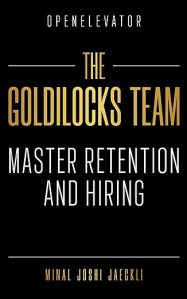
Review: The Goldilocks Team: Master Retention and Hiring by Minal Joshi Jaeckli

Synopsis:

We all have a universal desire to work with great people, but they can be hard to find and even harder to keep for the long-term. Leaders facing disengaged employees, high turnover rates, and fierce competition for skilled professionals, know too well that the cost of losing talent goes beyond financial impacts, it disrupts your organization, stunts innovation and undermines your competitive position.

In The Goldilocks Team: Master Retention and Hiring, you’ll take an illuminating and entertaining deep dive into the core drivers of employee engagement, the evolution of workplace culture, values alignment, and interpersonal alignment, and learn how to:
• Address the root causes of turnover and improve retention
• Implement practical, immediately actionable tactics to engage your team
• Align your organization’s retention strategies with employee values for lasting success
• Build high-performing teams that deliver for the long-term, without guesswork

Whether you’re a seasoned business leader or a new manager, this provides a clear roadmap to keep your existing team members engaged for the long-term and to successfully hire top talent that is positioned to thrive within your organization.

Ready to build a team that’s high-performing, fully engaged and loyal? This book will show you how.

Favorite Lines:

“Engaged employees lead to happy customers, which leads to a thriving business. It’s a win-win-win!”

“You know you can pay people to do things, but you can’t pay people to care. Engaged employees care.”

My Opinion:

I received a copy of this book from the author in exchange for my honest opinion.

In The Goldilocks Team, Minal Joshi Jaeckli delivers a refreshingly insightful and practical framework for building highly engaged, high-performing teams in a time when traditional hiring practices are breaking down. Through sharp storytelling, strategic thinking, and deeply personal experience, she challenges business leaders to rethink everything they know about employee engagement.

The book is built on the foundational idea that the perfect team isn’t formed by hiring the smartest, fastest, or most accomplished people—it’s about creating the “just right” combination of traits, values, and interpersonal dynamics. This Goldilocks approach—drawing from the classic tale where things must not be too extreme but just right—serves as both a metaphor and a methodology for curating teams that can thrive sustainably.

Jaeckli distills decades of experience across global industries—from pharmaceuticals to tech—to argue that disengagement is not simply a talent issue; it’s a leadership one. She outlines four critical engagement drivers: safety & certainty, contribution & purpose, growth & significance, and connection & belonging. By addressing these pillars thoughtfully, leaders can turn unmotivated employees into mission-driven contributors.

The writing style is candid and witty, laced with clever analogies (Cinderella hiring, diffused culture, stale shipwrecks), making even complex topics approachable. Jaeckli doesn’t shy away from naming what’s broken—outdated job descriptions, misaligned onboarding, superficial perks—and offers concrete suggestions for building real alignment between individual motivation and organizational goals.

One of the book’s most powerful ideas is the call to flip hiring and retention on their heads. Instead of finding “right” people, we should focus on forming the “right fit.” Instead of throwing perks at disengagement, we need to listen, build trust, and understand what people truly want in a workplace.

Summary:

Overall, The Goldilocks Team is more than a leadership guide—it’s a manifesto for how the modern workplace needs to evolve. Minal Joshi Jaeckli doesn’t just talk about fixing disengagement; she offers a human-first framework to build teams that actually work. This book will resonate with anyone who has ever led a team, struggled to keep talent, or wondered why traditional hiring just isn’t cutting it anymore. Insightful, smart, and surprisingly entertaining, this is a must-read for leaders ready to build organizations where people feel purpose, not just pressure.

Check out The Goldilocks Team here!


Review: Solving the Anxiety Equation: The Formula to Free Yourself from Fear by Wendy Leeds

Synopsis:

Easing Anxiety Is Possible—and Here’s How

Left untreated, anxiety can be hugely disruptive to our lives. It can keep us up at night, cause difficulties at work, and interfere in relationships. Anxiety can keep us trapped and alone, and persistent social stigmas can make it feel like we’re the only ones suffering.

As a three-time cancer survivor, Wendy Leeds knows what it’s like to deal with anxiety. As a licensed psychotherapist (LMHC), she has experience helping herself and others heal from the effects of anxiety. Wendy brings that unique perspective to her new book, Solving the Anxiety Equation: The Formula to Free Yourself from Fear.

With easy-to-implement tools and techniques for dealing with anxious thoughts, negative beliefs, and physical symptoms of anxiety, Solving the Anxiety Equation takes the mystery out of what makes us anxious and offers a hands-on, individualized approach for getting to the root of our anxiety—and healing it. Mixing personal stories of struggle and triumph with the latest research on the causes, impacts, and solutions, Wendy offers a path to recovery from anxiety that can help every reader live with less fear and greater ease.

Favorite Lines:

“…when self-doubt is running things, it’s like driving through life with one foot on the gas pedal and the other foot on the brake.”

“Fear comes in all sorts of forms and sizes. It shows up differently for all of us. It can be predictable, or it can show up unexpectedly.”

“Every new moment brings the chance to begin again.”

My Opinion:

I received a copy of this book from the author in exchange for my honest opinion.

Anxiety is something nearly everyone experiences at some point, but for those who struggle with it daily, it can feel like an insurmountable force. In Solving the Anxiety Equation, Wendy Leeds provides a thoughtful, compassionate, and practical approach to managing and ultimately overcoming anxiety. As both a psychotherapist and someone who has personally battled anxiety, Leeds blends professional insight with lived experience, making this book not just informative but deeply relatable.

One of the book’s biggest strengths is its clear, structured approach. Leeds breaks anxiety down into three core components:

  1. Self-doubt – The internal voice that tells us we’re not good enough, smart enough, or strong enough.
  2. Fear of change – The worry that any shift in our circumstances will only make things worse.
  3. Physical anxiety – The way our bodies react to stress, from racing hearts to sweaty palms to full-blown panic attacks.

By understanding how these elements work together, Leeds argues that we can begin to dismantle anxiety’s grip on our lives. She introduces thought-swapping techniques to help counteract negative self-talk, the BEAR method for managing panic attacks, and mindfulness practices to re-center ourselves in moments of distress.

What makes this book stand out is its deeply personal tone. Leeds openly shares her own struggles with anxiety, including how she navigated intense fear during her cancer diagnoses. These moments of vulnerability make the book feel incredibly authentic—it’s not just another self-help book written from a distance, but rather a conversation with someone who truly understands what it’s like to live with anxiety.

She also emphasizes the importance of rewriting our internal narratives. Many people with anxiety tell themselves stories like, I’m not strong enough to handle this or I’ll never be able to cope. Leeds challenges these assumptions and offers ways to replace them with more empowering thoughts, such as I have overcome challenges before, and I will again. This simple but profound shift in mindset can be life-changing.

Leeds doesn’t just offer advice—she guides the reader through exercises that help reinforce these techniques. Her writing style is warm and reassuring, making complex psychological concepts easy to understand and apply.

Summary:

Overall, whether you’re dealing with occasional anxiety or chronic worry, Solving the Anxiety Equation is an invaluable resource. Leeds provides hope without false promises—she acknowledges that anxiety doesn’t disappear overnight, but with the right tools, it can be managed in a way that allows us to lead happier, more fulfilling lives. Happy reading!

Check out Solving the Anxiety Equation here!


Monthly Features – March 2025

Black Cliff Chronicles by Steve Sterling

I received a copy of this book from the author in exchange for my honest opinion.

Synopsis: Three intertwined time travel rescue missions reveal how ordinary people rise to extraordinary acts of valor, driven by selflessness and a willingness to sacrifice for others.

The thriving university town of New Jerusalem nestles in the secluded hill country north of the Ozark National Forest in rural Arkansas. New Jerusalem is a wonderful place to put down roots as long as you don’t go into the experimental forest and find Black Cliff, a place of dark power.

Was it a simple misstep in 1989 when high school seniors Mary Sanders and Charlie Barrows became lost during a fall hike and stood facing Black Cliff? Or were other forces at play?

Before they can flee, Black Cliff entangles Mary in a web of time travel, strands that transport her back 300 years in history to a horrific civil war and a daring solo rescue mission.

Months later, Mary returns to New Jerusalem and to 1989, battered by her war experiences and heartsick over those she left behind. Once home, her struggles continue. Time travelers and friends gather to help Mary and Charlie. They have less than three days to rescue America from a plot to seize the presidency.

Summary: Overall, Black Cliff Chronicles is more than just a time travel adventure—it’s a thought-provoking exploration of what it means to confront the past and shape the future. Whether you’re a fan of speculative fiction, historical thrillers, or character-driven dramas, this book has something to offer. Happy reading!

See the full review here: Black Cliff Chronicles
Purchase here


Hoplite Ridge by Sean Patrick Sayers

I received a copy of this book from the author in exchange for my honest opinion.

Synopsis: Hoplite Ridge – A Military, Dystopian, and Post-Apocalyptic Science Fiction Epic

In a universe where war is eternal and gods refuse to be forgotten, Hoplite Ridge thrusts readers into a high-stakes conflict that will determine the fates of worlds. This gripping military science fiction saga blends dystopian science fiction with post-apocalyptic science fiction, exploring the cost of loyalty, the power of rebellion, and the blurred lines between destiny and free will.

Spanning across multiple war-torn planets, Hoplite Ridge follows elite warriors caught in a battle far greater than themselves. As political tensions rise and hidden forces awaken, alliances are tested, secrets unravel, and a dangerous truth comes to light—one that could reshape the course of history.

For fans of Frank Herbert’s Dune and Joe Haldeman’s The Forever WarHoplite Ridge delivers pulse-pounding action, deep philosophical themes, and a richly detailed world where strategy, survival, and sacrifice define the battlefield.

Prepare for an unforgettable journey through war, myth, and the unknown. In the fight for the future, only those who dare to challenge fate will survive.

Summary: Overall, Hoplite Ridge is an ambitious, cerebral, and ultimately rewarding read. It challenges, entertains, and invites reflection—qualities I value in speculative fiction. If you’re looking for a novel that pushes the boundaries of genre and explores the deeper questions of existence, this one is worth diving into. Happy reading!

See the full review here: Hoplite Ridge
Purchase here


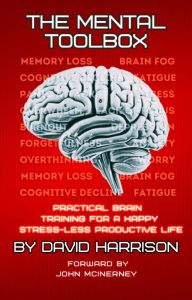
The Mental Toolbox by David Harrison

I received a copy of this book from the author in exchange for my honest opinion.

Synopsis: Practical Brain Training for a Happier, Stress-Free, and More Productive Life

In today’s fast-paced world, improving mental wellness has never been more important. The COVID-19 pandemic sparked a 25% rise in anxiety and depression worldwide, highlighting the urgent need for tools to build mental resilience.

The Mental Toolbox can help you create those tools, tailored to fit your lifestyle, and flip the script from mental illness to mental wellness. This book is for everyone—whether you’ve faced mental health challenges or not. Along the way, you’ll unlock the keys to a healthier mind, greater resilience, and your full potential.

Written in clear, straightforward language, The Mental Toolbox is practical and accessible to everyone. It offers tools, strategies, and advice that can strengthen your mental resilience, cognitive abilities, emotional intelligence, and ability to deal with stress. By doing so, it helps you enhance your overall well-being, serving as a valuable guide on your journey of personal growth.

Inside, you’ll be introduced to the five main pillars of mental health and overall well-being:

  • Sleep
  • Exercise
  • Nutrition
  • Mindfulness
  • Conscious Thinking

Understanding these pillars and how they interconnect is key to boosting your overall health and enhancing your ability to manage stress. By learning to apply these principles in your daily life, you’ll develop stronger mental resilience, improve cognitive function, and build a foundation for long-term well-being.

This book has the power to transform your mindset and your life. With the right approach, the possibilities are limitless.

Change your mind,
Change your life
—and discover just how far you can go with….

The Mental Toolbox.

Summary: Overall, The Mental Toolbox serves as a valuable resource for those aiming to proactively manage stress, enhance cognitive abilities, and foster a happier, more productive life. It’s a testament to the idea that with the right tools and mindset, anyone can achieve mental wellness and resilience. I would recommend this book to anyone interested in practical brain training and self-improvement. Happy reading!

See the full review here: The Mental Toolbox
Purchase here


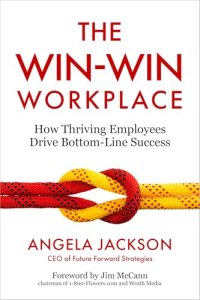
Review: The Win-Win Workplace: How Thriving Employees Drive Bottom-Line Success by Angela Jackson

Synopsis:

Do you want the key to driving equity and skyrocketing profits? It’s hand over control to your workers.

Discover 9 strategies to create better, healthier workplaces, grounded in evidence-based research.

This revolutionary guide aims to revolutionize the workplace for justice, equity, and profitability by handing the reins over to the real drivers of the workers.

Based on research from over 1,200 companies, including WalMart, Google, and JPMorgan Chase, this book follows real-world cases from companies where employees evolved from silent contributors to masterminds steering corporate strategies. These cases are the vanguard of a vibrant era in which workers will be the architects of their destinies, shaping not just their own careers but the entire trajectories of their organizations. Her work has quantified the financial impact investing in people can have on an organization- the first reliable calculation in the literature of talent retention.

From this research, 9 key strategies
•Centering employee voices
•Mutualistic working relationships
•Intersectional inclusion strategies
•Reimaging employee benefits
•Frontline leader drive DEIJ strategies
•Hire STARS
•Develop deep talent benches
•Human capital reporting as a competitive strategy
•Distributed leadership

This book goes deeper to show how these strategies are working in the real-world today. When workers have stakes, everyone businesses surge, and teams ride a high they’ve never felt before. This is a win-win both management and labor win when you put people first.

Favorite Lines:

“The modern workplace has long been a battle of ‘employee versus employer,’ but it doesn’t have to be this way.”

“When employees feel like valued stakeholders rather than replaceable assets, they are more engaged, innovative, and productive.”

“The companies that will thrive in the future are those that see their people as more than just workers, but as partners in success.”

“Organizations that prioritize well-being and continuous learning don’t just attract top talent—they keep it.”

My Opinion:

I received a copy of this book from the author in exchange for my honest opinion.

Angela Jackson’s The Win-Win Workplace is a timely and thought-provoking guide that redefines the relationship between employees and employers. In a world where workplace dynamics are rapidly shifting—marked by trends like the Great Resignation, quiet quitting, and the rise of gig work—Jackson presents a compelling case for moving beyond the traditional transactional employment model. She argues that when companies prioritize employee well-being, they don’t just create happier workplaces—they build more profitable and sustainable businesses.

The book is structured around nine core pillars that define a “Win-Win Workplace,” including centering employee voices, reimagining benefits, activating frontline leaders, and fostering continuous learning. Drawing from years of research across diverse industries, Jackson provides real-world case studies that illustrate how forward-thinking organizations have embraced these principles with measurable success. Her findings are backed by data showing that companies that prioritize employee engagement see increased revenue, higher productivity, and stronger financial performance.

What makes The Win-Win Workplace stand out is its practical approach. Jackson doesn’t just diagnose the problems with modern workplaces—she provides a roadmap for change. She outlines specific strategies for businesses to implement, from hiring based on skills rather than credentials to creating feedback loops that empower employees. The book is as much a call to action as it is a blueprint for transformation.

Summary:

Overall, Jackson makes a compelling argument that when employees thrive, businesses do too—proving that success in the modern workforce isn’t a zero-sum game, but a partnership that benefits everyone. This book could be for leaders and employees alike looking to build more resilient, inclusive, and high-performing work-places. Happy reading!

Check out The Win-Win Workplace here!


Review: The Mental Toolbox by David Harrison

Synopsis:

The Mental Toolbox

Practical Brain Training for a Happier, Stress-Free, and More Productive Life

In today’s fast-paced world, improving mental wellness has never been more important. The COVID-19 pandemic sparked a 25% rise in anxiety and depression worldwide, highlighting the urgent need for tools to build mental resilience.

The Mental Toolbox can help you create those tools, tailored to fit your lifestyle, and flip the script from mental illness to mental wellness. This book is for everyone—whether you’ve faced mental health challenges or not. Along the way, you’ll unlock the keys to a healthier mind, greater resilience, and your full potential.

Written in clear, straightforward language, The Mental Toolbox is practical and accessible to everyone. It offers tools, strategies, and advice that can strengthen your mental resilience, cognitive abilities, emotional intelligence, and ability to deal with stress. By doing so, it helps you enhance your overall well-being, serving as a valuable guide on your journey of personal growth.

Inside, you’ll be introduced to the five main pillars of mental health and overall well-being:

  • Sleep
  • Exercise
  • Nutrition
  • Mindfulness
  • Conscious Thinking

Understanding these pillars and how they interconnect is key to boosting your overall health and enhancing your ability to manage stress. By learning to apply these principles in your daily life, you’ll develop stronger mental resilience, improve cognitive function, and build a foundation for long-term well-being.

This book has the power to transform your mindset and your life. With the right approach, the possibilities are limitless.

Change your mind,
Change your life
—and discover just how far you can go with….

The Mental Toolbox.

Favorite Lines:

“Setting achievable, realistic goals is the key to maintaining motivation. Goals provide direction and structure to your efforts. It’s important to set goals that are challenging, attainable, and aligned with your values”

“Discernment requires that we ‘shield our eyes from the sun and look carefully’ before we make choices and that we look at the consequences our actions may have for ourselves and those around us”

My Opinion:

I received a copy of this book from the author in exchange for my honest opinion.

David Harrison’s The Mental Toolbox is a well-structured and engaging guide to optimizing brain health, reducing stress, and enhancing productivity. What sets this book apart is its deeply personal yet practical approach—Harrison combines scientific insights with real-world strategies to help readers build resilience, improve focus, and foster emotional intelligence.

The book takes a deep dive into topics like neuroplasticity, stress management, mindfulness, and the brain-body connection, breaking down complex concepts into digestible, actionable advice. It provides a range of tools—from cognitive exercises and nutritional recommendations to emotional regulation techniques—that readers can immediately incorporate into their daily lives.

One of the standout aspects of The Mental Toolbox is its balance between research-backed information and personal storytelling. Harrison doesn’t just present theories; he shares his own struggles with mental health, making the book feel both relatable and inspiring. The writing is approachable, avoiding overly technical jargon while still offering valuable insights into neuroscience and psychology.

While the book is packed with useful information, it never feels overwhelming. The structured layout, including self-assessment tools and step-by-step guides, makes it easy to navigate. Whether you’re looking to boost your mental performance, manage stress more effectively, or simply cultivate better habits, The Mental Toolbox provides a solid foundation for lifelong cognitive wellness.

Summary:

Overall, The Mental Toolbox serves as a valuable resource for those aiming to proactively manage stress, enhance cognitive abilities, and foster a happier, more productive life. It’s a testament to the idea that with the right tools and mindset, anyone can achieve mental wellness and resilience. I would recommend this book to anyone interested in practical brain training and self-improvement. Happy reading!

Check out The Mental Toolbox here!


Review: Astronaut by Ali Rizvi

Synopsis:

I dealt with mental health at many turning points in life and learned to mask my real-self at an early age but world wasn’t gentle enough for me to be accepted. I finally sought professional help and started treatment for Depression & some of its companions a few years ago. It has helped me to understand myself better, but not the cruel world.

The year 2024 made a mark in my journey with many surprises, and I decided to write again after many years.

This is a collection of poems from my recent & enduring pilgrimage to Depression & some other places.

Favorite Lines:

As always with poem collections, here are a few that I enjoyed the most:  Fate, Closer, and Autumn.

My Opinion:

I received a copy of this book from the author in exchange for my honest opinion.

Ali Rizvi’s Astronaut is a poignant collection of poems that delves into the raw and deeply personal experience of navigating depression and the often unkind world around us. Written after years of silence, this work is a powerful testament to the resilience of a soul grappling with mental health challenges and seeking understanding in a world that can feel isolating.

Rizvi’s poetry doesn’t shy away from confronting the complex and often dark realities of depression. Instead, it embraces vulnerability and turns it into art, offering readers a glimpse into the mind of someone battling their inner demons. The simplicity of the language used in the poems makes the emotions feel genuine and accessible, resonating deeply with anyone who has struggled with mental health or sought solace in their own creative expression.

For those who may not have personally experienced depression, Astronaut serves as an insightful exploration of the mindset of someone navigating mental health struggles. Rizvi’s willingness to lay bare his thoughts and emotions allows readers to develop empathy and a better understanding of the challenges faced by individuals dealing with depression and related disorders.

What stands out about Astronaut is its relatability. Rizvi’s words carry an authenticity that makes readers feel understood, as if he’s articulating emotions they’ve felt but couldn’t quite express themselves. The themes of alienation, self-discovery, and resilience are universal, making this book not just a collection of poems but a shared experience.

Summary:

Overall, Astronaut is not just a book of poems—it’s an emotional journey that invites readers to walk alongside Rizvi as he shares his battles and triumphs. Whether you’re seeking comfort in knowing you’re not alone in your struggles or looking to better understand the experiences of those who live with depression and/or other mental health disorders, this book is a compelling and heartfelt read.

Check out Astronaut here!


Review: Post Traumatic Growth by Jesse Hewitt

Synopsis:

This book is an account of the journey following encounters of trauma and taking steps towards personal growth. I served in the Canadian Armed Forces for 12 years, with 5 years serving as a Close Protection Operator undertaking multiple operations in high-conflict environments – both domestically and overseas. Having completed there missions, I witnessed first-hand the damages of war and having experienced the consequences of combat.

This is a tale of a torment and tribulation but is also the story of reparation and recovery. A story of surviving trauma and overcoming the wounds war inflicted upon my mind. Within this book, you will read about these traumas. Personal crises and living in a state of mind that is unwell will be shared. The approach to conquering my personal mental health struggles was multi-faceted, and details of this journey will be disclosed in order to hopefully empower others to take the first steps in their own recovery. Things such as various treatment styles, inter-personal connections and the accidental introduction to Equine Therapy were all supports to becoming a healthier me.

It is my hope that through sharing the intricacies of what I faced and how I committed to treatment to find meaning, purpose, and strength once again, will help others rediscover their own fortitude, resilience, and resolve as they endeavor into the emotional trenches of recovery and emerge healthier, happier, and having taken their own steps towards Post Traumatic Growth.

Favorite Lines:

“I’m not the man I was before getting hurt, I’m better.”

“Fun Fact: Horses can hear a human heartbeat from 4 feet away and interpret it; they also sense energetic shifts and facial expressions as well as body language and moods.”

My Opinion:

I received a copy of this book from the author in exchange for my honest opinion.

As someone who suffers with mental health issues, I am no stranger to books on the topic but they usually fall more in the self-help/advice category. This was my first time reading a book written from the perspective of someone who also suffers with mental health issues where their intent is to tell their story and inspire others to not give up; to let them know that there is always hope no matter how dark it seems to get.

While I don’t usually ready biographical books, I thought this was a really well written and, quite frankly, inspiring book. Hewitt takes us through his life from early childhood, flashbacks to traumatic events that caused/contributed to various mental health issues, and his multiple different therapy style attempts – most interestingly equine therapy – some of which I hadn’t even heard of before. I thought the insights that Hewitt had to share from his personal experiences and observations were not only interesting but also valuable. I gained some new perspectives that I have a feeling will stick with me for quite awhile.

I can appreciate how difficult it is to open yourself up when it comes to mental health related topics and I think Hewitt is incredibly brave for sharing his story with the world. While he doesn’t suffer from the same mental health issues that I do, we have a lot of similar therapy experiences and share some of the same outlooks on mental health as a whole. Hewitt is further along in his journey than I am but I found his story to be incredibly humble and inspiring. It is always nice to know you are not alone in how you feel and that no matter how hard things get, it can always get better.

Summary:

Overall, if you are interested in inspiring, real life stories about overcoming mental health challenges especially as it relates to PTSD, depression, substance abuse disorders, and eating disorders, then this book could be for you. Happy reading!

Check out Post Traumatic Growth here!