Review: What the ESL by Melanie Graysmith

Synopsis:

This one-of-a-kind memoir shares the author’s memories of teaching experiences and interactions over a span of time. More than a teacher’s story, What the ESL amplifies the voices of learners’ real-life stories from adult ESL classrooms. As a hybrid memoir, woven into the learner stories is a benefit for readers to come away with. No matter what level of familiarity readers may have with foreign language study, there is always something relatable in the effort to succeed. With warmth, insight, and humor, the author offers a moving portrait of language learning through a teacher’s eyes and the myriad paths learners take striving to master English while managing complex lives.

Whether you’re an educator, language student, or simply fascinated by conversation, this book helps you rethink your assumptions about ESL learners and the teaching journey.

  • Discover the varied motivations and goals of adult ESL learners
  • Step into the classroom through the teacher’s eyes
  • Understand how empathy, humor, and cultural intelligence shape language teaching
  • Gain a deeper appreciation for the persistence of adult learners

Favorite Lines:

“Creativity has always defined my strengths and led me forward or sheltered me in times of need.”

“It’s crucial for teachers to adapt and embrace new technology and teaching methods to remain up to date.”

“Fortunately, my creativity always saved my spirits; it was my lifeline, my comfort.”

My Opinion:

I received a copy of this book from the author in exchange for my honest opinion.

There’s something comforting about reading a memoir that feels like sitting in the back of a classroom — not as a student, but as someone who’s quietly observing the rhythm of learning. In What the ESL, Melanie Graysmith opens that classroom door and invites us in, one story at a time.

What starts as a modest recollection of her first day teaching quickly turns into a lifetime’s worth of insight about language, culture, and the strange beauty of human connection. You don’t have to be a teacher to relate — you just have to have ever tried to make yourself understood in a world that doesn’t always speak your language.

Graysmith’s voice is warm and witty, often self-deprecating but never cynical. She writes with the humor of someone who has learned to find joy in chaos — a classroom without a plan, a lesson that veers off course, a student’s heartbreaking confession that becomes a turning point. Through each chapter, she balances teaching anecdotes with cultural snapshots — Saudi students navigating independence, a French man misinterpreting “pull over,” a Venezuelan sharing his love for arepas.

The memoir’s greatest strength lies in its empathy. Every story — even the small, funny ones — reminds you that language is never just grammar and pronunciation. It’s identity. It’s power. It’s the bridge between who we are and who we hope to become.

This book reads like a letter to anyone who’s ever stumbled through a new beginning: teachers, travelers, lifelong learners. It’s about resilience, but also about grace — the quiet kind that grows from listening more than speaking.

Summary:

Overall, What the ESL is a celebration of connection — between teacher and student, between languages and cultures, and between mistakes and growth. It’s a memoir that doubles as a love letter to the messy, beautiful process of learning.

Graysmith’s stories span decades and continents, yet the heart of the book stays the same: curiosity, compassion, and the humility to keep learning alongside the people you teach.

Readers who love memoirs of teaching, cross-cultural stories, or human-centered nonfiction will find something special here. It’s especially for those who believe language is more than words — it’s understanding. Happy reading!

Check out What the ESL here!


Monthly Features – September 2025

The Boy with the Thorn in His Side by L.J. Robson

I received a copy of this book from the author in exchange for my honest opinion.

Synopsis: For most of my life, I felt like something was wrong – like I was living with a shadow I couldn’t see, a weight I couldn’t name. My childhood was marked by fear, confusion, and memories that never quite fit together. I knew there were pieces missing, but I never expected the truth to be more terrifying than my worst nightmares.

This is my story. A journey through trauma, survival, and the battle to reclaim my own mind. It’s about the ghosts of the past that never stopped whispering, the questions no one wanted to answer, and the slow unravelling of a reality I had been forced to forget.

Told with raw honesty, The Boy with the Thorn in His Side is not just an account of what happened to me – it’s a testament to resilience, a fight for acceptance, and a message to anyone who has ever felt trapped by their own past.

Sometimes, the truth is the hardest thing to face. But in facing it, we find the strength to break free.

Summary: Overall, The Boy with the Thorn in His Side is a raw, unfiltered memoir of trauma, resilience, and healing. L. J. Robson takes you into the shadows of his childhood home, unafraid to expose the scars of abuse and the chaos of survival. It’s heavy, often heartbreaking, but threaded with moments of hope and honesty. A difficult yet rewarding read.

See the full review here: The Boy with the Thorn in His Side
Purchase here


The Hidden Life by Robert Castle

I received a copy of this book from the author in exchange for my honest opinion.

Synopsis: The police have just surrounded the hereditary mansion of Gladwynne Biddleton. He has just shot and wounded his security chief, Dominic Kittredge, and killed Dominic’s wife, Theresa. As he watches the siege unfold on TV, historical visions besiege Gladwynne’s mind. By turns he is a B-17 bombardier; an SS officer tasked with burning the bodies of Adolf Hitler and Eva Braun; a fugitive pursued by the celebrated Nazi hunter, Simon Wiesenthal; and a co-conspirator in the assassination of Austrian Archduke Franz Ferdinand and his wife, Sophie, Duchess of Hohenberg.

Between the television coverage and the pageant in his head, Gladwynne becomes dissociated from what has just actually happened. Fixation on his immediate physical needs and with life in the mansion tend to conceal the enormity of his crime from him. He descends into a narrowing and harrowing spiral of isolation.

Why did he shoot his closest confidant, Dominic? We don’t quite know. But in Dominic’s thirty year diary of serving Gladwynne we begin to find clues. In this chronicle, Dominic recounts the “golden age” of their association, a time when the two men devised a mock nation with Gladwynne as its center. With Dominic’s encouragement, Gladwynne came gradually to conceive of his own physical person as a sovereign state, competing diplomatically with other world states, persistently resisting their efforts to deprive him of his sovereignty. Between the hostile international powers out to get him and the police now at his door, will Gladwynne’s confusion become total?

Summary: Overall, Robert Castle’s The Hidden Life is a dark, ambitious novel that intertwines wealth, madness, and loyalty into a portrait of a man unraveling. Both unsettling and absorbing, it’s a story that lingers long after the final page, not just for what it says about one family, but for what it suggests about the hidden lives we all construct.

See the full review here: The Hidden Life
Purchase here


Settle Down by Ritt Deitz

I received a copy of this book from the author in exchange for my honest opinion.

Synopsis: A college kid endowed with hypnotic powers keeps telling himself there’s got to be more waiting for him after graduation than family in the neighborhood and an okay catering job. Maybe he just needs to get his story straight.

Kenny McLuher is far from his native Wisconsin, in his last year at the University of Virginia, majoring in history with no idea what he’s going to do with it. At his catering job, Kenny’s old Southern folktales keep putting his co-workers to sleep, and in Kenny’s dreams President Abraham Lincoln sure seems to be trying to tell him something.

Maybe the pieces will come back together after graduation when Kenny returns to Madison, where he can ask the big question: What is home, anyway?

Summary: Overall, Settle Down is a warm, heartfelt coming-of-age tale about finding home in unexpected places. It’s a quietly triumphant debut that will resonate with anyone who’s ever wondered where they truly belong. 

See the full review here: Settle Down
Purchase here


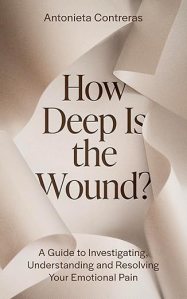
How Deep is the Wound by Antonieta Contreras

I received a copy of this book from the author in exchange for my honest opinion.

Synopsis: Finally, a Clear Path Through the Confusion of Modern Trauma Language

If you’ve ever wondered whether your struggles “count” as trauma, felt overwhelmed by conflicting mental health advice, or questioned why some healing approaches work for others but not for you—this book offers the clarity you’ve been seeking. Today’s mental health conversations have reduced the rich complexity of human suffering into a single box labeled “trauma,” used for both devastating life-altering experiences and everyday disappointments—a confusion that serves no one well. This tendency leaves people either minimizing genuine injuries or pathologizing normal life challenges.

Antonieta Contreras introduces an approach that distinguishes different types of psychological wounds based on their actual depth and impact on your nervous system. Drawing from years of clinical practice, extensive research, and personal recovery, she provides the missing understanding to accurately assess your experiences and match them with effective strategies.

You’ll discover the differences between:

  • Emotional Pain: Hurts that sting but don’t fundamentally alter your system
  • Emotional Wounds: Deeper impacts that linger after the initial hurt
  • Traumatization: The active process of seeking safety
  • Trauma: Deep injuries that rewire how you perceive the world

Learn why using a hammer for surgery or a scalpel for construction both create problems—and how matching your healing approach to your actual wound depth accelerates recovery while preventing unnecessary suffering.

Discover how to honor your pain without being defined by it, moving from identity-based labels toward agency-focused growth that reclaims your power to heal and thrive. This book examines how your unique nervous system responds to overwhelm.

Real-World Applications

  • Assess childhood experiences accurately without minimizing or catastrophizing
  • Recognize trauma bonding and attachment wounds that keep you from living fully
  • Understand why some relationships feel impossible to leave
  • Navigate narcissistic abuse and emotional manipulation
  • Distinguish between healthy processing and rumination that reinforces pain
  • Build genuine resilience based on nervous system regulation

This book is for:

  • Anyone confused about whether their experiences constitute “trauma”
  • People who’ve tried multiple healing approaches without lasting results
  • Individuals stuck in cycles of pain, insecurity, lack of motivation or satisfaction, or relationship difficulties
  • Those seeking to understand childhood experiences and their adult impact
  • Anyone wanting to move beyond victim identity toward empowered recovery
  • Mental health professionals seeking more nuanced assessment tools and practical exercises for their clients

When you understand the actual depth of your wounds, you can choose interventions that match their severity. This prevents both under-treatment that leaves you unresolved and over-treatment that creates unnecessary pathology. You will spend less time on ineffective approaches and focus your energy on strategies that are effective for your specific situation.

This book avoids both toxic positivity and victim mentality, acknowledging real suffering while emphasizing human capacity for growth and adaptation. Learn to work with your nervous system’s intelligence rather than against it. You’ll finish with practical tools for regulation, boundaries, and building the safety your system needs to thrive.

Stop wondering if your pain is “enough” to deserve attention. Learn to honor your experiences and discover what it means to finally feel yourself again. Transform your relationship with your own story and step into the clarity, agency, and hope that effective healing provides.

Summary: Overall, Antonieta Contreras’s How Deep is the Wound?  blends clinical expertise with accessible storytelling to help readers understand the spectrum of emotional pain—ranging from everyday struggles to deep trauma—and argues that distinguishing between them is key to healing. By challenging the overuse of trauma language while offering practical exercises and compassionate guidance, Contreras reframes pain as a sign of our innate adaptability rather than evidence of brokenness, ultimately encouraging readers to approach their wounds with clarity, agency, and hope.

See the full review here: How Deep is the Wound?
Purchase here


Review: The Boy with the Thorn in His Side by L.J. Robson

Synopsis:

For most of my life, I felt like something was wrong – like I was living with a shadow I couldn’t see, a weight I couldn’t name. My childhood was marked by fear, confusion, and memories that never quite fit together. I knew there were pieces missing, but I never expected the truth to be more terrifying than my worst nightmares.

This is my story. A journey through trauma, survival, and the battle to reclaim my own mind. It’s about the ghosts of the past that never stopped whispering, the questions no one wanted to answer, and the slow unravelling of a reality I had been forced to forget.

Told with raw honesty, The Boy with the Thorn in His Side is not just an account of what happened to me – it’s a testament to resilience, a fight for acceptance, and a message to anyone who has ever felt trapped by their own past.

Sometimes, the truth is the hardest thing to face. But in facing it, we find the strength to break free.

Favorite Lines:

“We were haunted by old ghosts that were just too painful to talk about. It was like an elephant in the room for years when we were together…”

“Like a new green leaf on a tree just gets used to its summer conditions, then it slowly starts to turn to brown with autumn.”

My Opinion:

I received a copy of this book from the author in exchange for my honest opinion.

Some memoirs feel like quiet confessions, whispered to the reader. The Boy with the Thorn in His Side is not one of those books. Instead, it’s raw, unflinching, and at times gut-punchingly vivid. Robson does not dress up the past or soften the edges—he walks you straight back into his childhood home, sits you down in the living room, and makes you face the darkness right along with him.

What struck me most was the honesty. There’s no attempt to make himself the “perfect survivor” or to tie everything up neatly with a bow. The narrative moves between moments of fragile hope and crushing despair, often with dreamlike sequences that blur memory and trauma. At times it’s unsettling, but that’s what makes it powerful.

Robson’s gift is in the way he captures both the innocence of childhood and the corrosive impact of abuse, poverty, and instability. You feel his joy at football matches and music just as strongly as his dread when violence creeps into the home. It reminded me that memoir doesn’t have to be polished—it has to be true. And this one is brutally, achingly true.

This isn’t a light read. There are nights, addictions, betrayals, and moments of unbearable tension. But there’s also resilience, the bonds of brothers trying to survive together, and the long, slow path of healing. By the end, you feel not only the weight of Robson’s scars but also the strength it takes to write them down.

For readers who appreciate memoirs that don’t hide from the hard stuff—this belongs on your list.

Summary:

Overall, The Boy with the Thorn in His Side is a raw, unfiltered memoir of trauma, resilience, and healing. L. J. Robson takes you into the shadows of his childhood home, unafraid to expose the scars of abuse and the chaos of survival. It’s heavy, often heartbreaking, but threaded with moments of hope and honesty. A difficult yet rewarding read.

Check out The Boy with the Thorn in His Side here!


Review: ลูกครึ่ง: Only Half a Person by Rowland Grover

Synopsis:

When Rowland Grover asked his preschool teacher if he could ฉี่ (chi), she looked at him like he wasn’t speaking English. After holding it for too long, he peed his pants and realized he was different from everyone around him.

As a half-Thai/half-white kid raised Mormon in Idaho, shame, guilt, and confusion were normal for Rowland. He didn’t understand why he took off his shoes at his house, but his friends could keep theirs on and drag dog poop all over the floor. When Rowland lived in Thailand, Thai people said he looked farang, but white people called him Mexican. This made him wonder who he was and where he belonged.

ลูกครึ่ง: Only Half a Person is an captivating and hilarious collection of essays and short stories that explores culture, faith, and identity. The stories range from “stinky lunches” to a talking lizard questioning Rowland’s religion. Others are more serious such as when a stranger called the cops because Rowland looked threatening riding an old beach cruiser bike. Tackled with humor and heart, Rowland dives into the depths to find himself and wonders if he’ll come up for air.

Favorite Lines:

 “You don’t see me calling out ‘white customer’ to get your attention, do you?”

“Our foods aren’t weird. Our cultures aren’t weird. Our people aren’t weird.”

 “I share my story so people can be aware of what others face.”

My Opinion:

I received a copy of this book in exchange for my honest opinion.

Rowland Grover’s ลูกครึ่ง — Only Half a Person feels less like a polished memoir and more like an afternoon swapping stories with a friend who finally trusts you enough to laugh at the worst parts. It kicks off with a preschool mishap in rural Idaho—one short misunderstanding, one very damp pair of pants—and the sudden realization that nobody around him speaks the mix of Thai and English rattling in his head. That flash of embarrassment becomes the thread he keeps tugging for the rest of the book.

Each chapter lands like a quick comedy bit that refuses to fade to black. Grover bounces from teachers butchering his mum’s Thai name to a fast-food customer who labels every brown worker “Mexican” and to a missionary buddy daring him to chew kaffir-lime leaves just to watch him squirm. The punch lines are tight, but they always swing back and nick something tender—pride, doubt, the weird ache of feeling both inside and outside at the same time.

Halfway through, the jokes stretch into essays and open letters. A riff on “authentic” pad thai turns into a quiet rebuke of people who gate-keep culture; another piece answers a reader who calls Asian food “weird,” and the patience in that reply is razor-thin. By the time Grover writes a mock cease-and-desist to his future haters, the laughs carry a distinct after-taste of anger and relief—like finally exhaling after holding it far too long. The real hook, though, is his voice. Grover flips between English, transliterated Thai, and full Thai script without italicizing or apologizing. The code-switching isn’t there for flair; it’s there because that’s simply how his thoughts land on the page. Reading it feels a bit like being handed earbuds and invited into the soundtrack of his brain—off-beat, bilingual, and impossible to file under one neat label.

Summary:

Overall, short, sharp, and genuinely funny, ลูกครึ่ง — Only Half a Person reminds us that identity isn’t a puzzle you solve once—it’s a joke you keep rewriting until it stops hurting. If you’ve ever lived in the hyphen or asked someone to explain theirs, this one’s worth an afternoon. Happy reading!

Check out ลูกครึ่ง — Only Half a Person here!


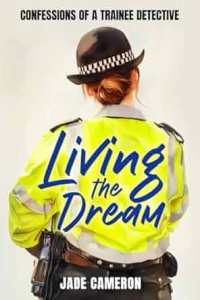
Review: Living the Dream: Confessions of a Trainee Detective by Jade Cameron

Synopsis:

When Jade finally achieved her dream of becoming a detective, she discovered that the reality wasn’t quite as she’d imagined. Living the Dream: Confessions of a Trainee Detective offers a gripping and unfiltered look at the hidden realities of life as a detective in training. With unflinching honesty, Jade pulls back the curtain on her journey within Thames Valley Police, exposing the camaraderie and conflicts, the pride and frustrations, the adrenaline-fuelled moments, and the thankless tasks.

This powerful memoir will captivate, enlighten, and take you far beyond TV’s glamour and heroics. Join Jade on a journey that is eye-opening, deeply personal, and profoundly human—as she discovers what it truly means to live the dream.

Favorite Lines:

“We were taught to be ‘professionally curious’, to think outside the box and challenge things we disagreed with. Apparently, lots of reviews of cases where things had gone badly wrong had found that people weren’t thinking critically when doing their job — they were just going through the motions and processes that their training had taught them. The drive to be professionally curious was supposed to counter that, but it seemed obvious to me that the culture and the teaching materials clashed massively. Worse, I’m not sure that the senior officers ever say the problem.”

“It felt like a luxury to me — I was being paid to sit in a classroom and learn about topics I found really interesting. At university, I had to pay to attend.”

My Opinion:

I received a copy of this book from the author in exchange for my honest opinion.

Jade Cameron opens with a punchline that doubles as a warning: the force’s favourite greeting, “living the dream,” is equal parts camaraderie and coping mechanism. From that first, self-aware shrug, her narrative balances pride in the badge with a clear-eyed assessment of what it costs to keep wearing it.

Much of the tension comes from the gap between academy ideals and operational reality. One day Cameron is handed sweeping authority and the next she is steered back into line for asking why certain procedures never match the textbook. Her anecdotal style makes these contradictions land harder than any policy paper; the reader can feel the drift from principled curiosity toward quiet compliance.

The strongest chapters move out of the classroom and onto the night shift. Custody suites, roadside crises, and an Acute Behavioral Disorder call-out reveal how quickly theory buckles under adrenaline. Cameron’s admission of feeling “completely lost” lends the book its spine: she never hides behind bravado, and the honesty grounds every scene.

Stylistically, the prose is straightforward but attentive to detail; think desk-lamp glow on paperwork, radio hiss in the patrol car, and that stale station-coffee taste nobody mentions after the first week. Humor appears sparingly, as a pressure valve rather than a performance; when she does crack a joke, it’s usually at her own expense. The result is a memoir that respects the reader’s intelligence and the profession’s complexity in equal measure.

Summary:

Overall, Living the Dream is an unvarnished, quietly compelling account of what happens after the oath but before experience hardens into instinct. If you value memoirs that tell the truth without chasing heroics—or if you’ve ever wondered how much learning really happens once the uniform goes on—Jade Cameron’s story is worth your time. Happy reading!

Check out Living the Dream: Confessions of a Trainee Detective here!


Review: MMMM: and the music that made me by Heather Joy

Synopsis:

Do you need a laugh or a mindless read? How about song suggestions for your next playlist? You can find that and more in Heather Joy’s explicit debut.

Heather Joy’s essays are balanced with pop culture references and her tireless crusade to spark a connection (which sometimes leans on the debaucherous side of things). 

Favorite Lines:

As always with short stories and collections, rather than picking favorite lines, I am picking a favorite chapter. In this memoir, the chapter that I found particularly engaging, which quite frankly surprised myself, was “Mixed Media”. It focuses on today’s society’s addiction to technology as well as the impact that art has had across generations. Joy makes some compelling arguments that feel loud and bold but I found that I respected many of them.

My Opinion:

I received a copy of this book from the author in exchange for my honest opinion.

This is my first book from Joy and she had me hooked from the Introduction. I knew rather quickly that her sense of humor and writing style were going to have me aggressively exhaling out of my nose many times throughout this book (I’m sure you know what I mean) and I was excited to dive right in as I am always a fan of creative works such as these. 

A collection of 13 personal essays, Joy takes us through her life from her early party-girl days to becoming a single mother working for engineering firms. This memoir is full of raw honesty, dark humor, and overall compelling writing. While Joy is writing from her own personal experiences, I found that I could relate to a lot of them in my own way and I imagine that other readers will feel the same. I am appreciative that Joy shared such deeply personal experiences with us to remind us that we are not alone in our own experiences and the impacts they leave on our lives.

I think what I found most compelling in this collection was Joy’s author voice and tone. I found that Joy brought a unique sense of energy and creativity that really shined through and kept me thoroughly engrossed and entertained throughout the memoir. She is brutally honest both with herself and the world around her which I thought only added to her remarkable storytelling abilities and brought a very personal but relatable perspective on a variety of topics.

Summary:

Overall, I found this book to be incredibly rewarding and I quite frankly feel a bit awe struck that I got to experience it. I would call this a diamond in the rough and would recommend to anyone who is interested in personal memoirs that focus on one woman’s take on just everything life.

Check out MMMM: and the music that made me here!


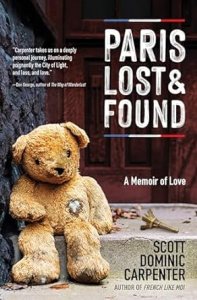
Review: Paris Lost and Found: A Memoir of Love by Scott Dominic Carpenter

Synopsis:

After his hilarious introduction to Paris in French Like Moi, Scott Dominic Carpenter returns to the scene of the crime with more tales of intrigue. 
 
This time, though, the story takes a surprising turn as his wife struggles with dementia. Humor may be the best medicine, but even the antics of a vandal in their building can’t cement the tiles of her memory for long. Before he expects it, Carpenter finds himself alone in a capital that is also blighted by the pandemic. 
 
It’s against this backdrop that the city comes roaring back to life. From bizarre encounters on the Metro to comical clashes with authority figures, and even a quixotic battle against a flock of migrant parrots, Paris Lost and Found unveils sides of the great city that are as quirky as they are authentic. With his unique blend of wit, insight, and wistfulness, Carpenter charts a path through his new labyrinth of solitude—only to emerge on the other side, squinting into the bright light of hope and new beginnings.


Favorite Lines:

“France is a paradise inhabited by people who believe they’re in hell.” (This is technically cheating because it is a quote by Sylvain Tesson in the start of this memoir but I thought it really set the tone for what the rest of the memoir would be and I loved it)

“It confirmed my hunch that emotion is the mortar that cements memoires in place.”

“In France, the experience is different. If you want to get a handgun here, there’s really just one recommended course of action: forget it. They put you through an obstacle course of required training, applications, waiting periods, and even letters of recommendation from the head of your local shooting club.”

“They say the senses compensate for one another. You lose you your sigh, but your ears perk up. You go as deaf as a post, but suddenly you can read the bottom line of the eye chart. So, too, with people. You lose one, and others grow in importance. It was the unknown population around me who mattered now.”

My Opinion:

I received a copy of this book from the author in exchange for my honest opinion.

This book is a follow up to Carpenter’s first travel memoir, French Like Moi: A Midwesterner in Pariswhich I have not read but will definitely be reading after this. This memoir details Carpenter and his late wife Anne’s adaption to living in France. Carpenter not only takes us on the journey of their start in France but also the journey Carpenter must later embark on alone through loss and new beginnings after the passing of his wife.

I thought this book flowed very nicely and kept me engaged throughout. Carpenter did an excellent job at making me feel like I was right there along with him and Anne, living the experiences they were living. As an American who has never been to Europe, I thought the comparisons between French and American mentalities were really helpful, and quite frankly, sometimes humorous, to understand how different life can really be over there. Carpenter did a great job at combining serious topics and experiences with humor in a way that kept this book light-hearted and most definitely a page turner.

Summary:

Overall, I thought this was a really engaging read that gave a Midwesterner’s perspective on life in France. If you like travel memoirs that detail culture and are full of humor, life, and love then this book could be for you. Happy reading!

Check out Paris Lost and Found: A Memoir of Love here!