Monthly Features – June 2025

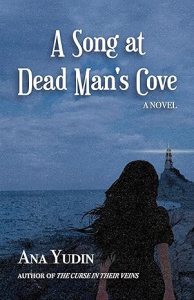
A Song at Dead Man’s Cove by Ana Yudin

I received a copy of this book from the author in exchange for my honest opinion.

Synopsis: Never turn your back on the ocean…

2023. Another person has disappeared at Dead Man’s Cove in coastal Washington. Jaded from her job at the historic Irving Hotel, Zarya wanders to the scene of the tragedy. She has heard her Russian mother’s tales of rusalki—vengeful spirits that have died unclean deaths near a body of water—and never paid them much attention. But now, on a misty headland beside an abandoned lighthouse, Zarya locks eyes with the rusalka and is chosen to be the next victim. She must unearth the siren’s tragedy before Rusalka Week, a period in early summer when water-spirits roam freely on land.

1850. Josephine has just joined her newlywed husband in Washington, in the lighthouse erected by local businessman Hurley Irving. Marriage is not quite what she expected, and her melancholia grows over the course of the winter. The medic prescribes pregnancy as the antidote. What he doesn’t realize is how far Josephine is willing to go in order to become a mother.

The Gothic horror novel follows two protagonists, a modern-day misanthrope who fears intimacy and a woman in the Victorian era who thinks stealing love will make her whole. But how long can a person hide from love, and can love really be taken by force?

Summary: A Song at Dead Man’s Cove is a mesmerizing, multilayered ghost story that manages to be both otherworldly and deeply human. Ana Yudin delivers a narrative that is as much about ancestral trauma and unspoken truths as it is about sirens and shipwrecks. It’s a tale of women silenced by history—singing now through salt and shadow to be heard.

Highly recommended for fans of Silvia Moreno-Garcia, Erin Morgenstern, and readers who crave gothic atmosphere with a feminist edge.

See the full review here: A Song at Dead Man’s Cove
Purchase here


With Time to Kill by Frank Ferrari

I received a copy of this book from the author in exchange for my honest opinion.

Synopsis: Everyone deserves a second chance, but how far would you go for one?

In the gritty streets of Edinburgh, Garry Plumb is about to find out. Living life on the periphery, never fitting in and always on his own, Garry’s world opens up when he meets Billy, the peculiar bus driver who has been watching him. Billy knows exactly how it feels to be ignored and his influence on Garry is immediate.

For the first time, Garry knows what it means to have his very own best friend. But this friendship is unlike any other, as Billy reveals how Garry can fix his entire life by changing his past.

But when the DCI John Waters, a relentless detective hunting a clever serial killer, enters Garry’s life, their friendship is put to the ultimate test.

Garry is willing to do anything for a second chance at life but, after meeting Billy, he has to ask would he kill for it?

This dark and captivating tale of self-discovery, murder and redemption will keep readers on the edge of their seats. With Time to Book One, a perfect blend of Scottish crime and sci-fi thriller, will leave you wanting more.

Summary: Overall, With Time to Kill is a gleefully dark mash-up of police procedural, serial-killer horror, and high-concept time travel. If you like your thrillers smart, Scottish, and just a little bit unhinged, clear an evening—you’ll race through this and immediately want the sequel.

See the full review here: With Time to Kill
Purchase here


The People Who Paint Rocks by Michael Stewart Hansen

I received a copy of this book from the author in exchange for my honest opinion.

Synopsis: The People Who Paint Rocks is a multi-generational horror epic that transcends the boundaries of its genre. What begins as a period horror/drama in 1910 Santa Fe evolves into a chilling supernatural thriller by 1975, where a pregnant nurse and a detective tormented by spiritual doubt race to stop an evil older than memory. A moody, unsettling, and unrelentingly atmospheric work that grips the reader from the first page and refuses to let go.

The opening act is steeped in Western gothic, introducing us to Albert McCord, a grieving husband and father seeking revenge on the wolf that took his family. But the creature he hunts is no ordinary predator—it is the origin of something far more terrifying. Hansen cleverly seeds this early chapter with themes of loss, legacy, and the illusion of control. Albert’s struggle is both physical and existential, as he fends off his late wife’s scheming family while unknowingly chasing a malevolent force that will haunt generations to come.

Fast-forward to 1975, and the novel pivots into psychological horror, following Charlie, a pregnant nurse caught in a web of ritualistic murders, and Alonzo, a detective whose beliefs are unraveling. This shift is not jarring but deliberate, echoing the disjointed sense of time that defines much of the book’s unsettling tone. The narrative connection between Albert and the events six decades later becomes a dark thread pulling the characters toward an inevitable confrontation.

Summary: Overall, The People Who Paint Rocks is a gritty, big-hearted mash-up of western, creature feature, and generational ghost story. Come for the demon wolf and six-gun showdowns, stay for the way Hansen turns painted pebbles into the creepiest grave markers this side of Stephen King country. It’s messy, mean, and—when the sun finally comes up over Red Rocks—oddly hopeful.

See the full review here: The People Who Paint Rocks
Purchase here


Review: The People Who Paint Rocks by Michael Stewart Hansen

Synopsis:

The People Who Paint Rocks is a multi-generational horror epic that transcends the boundaries of its genre. What begins as a period horror/drama in 1910 Santa Fe evolves into a chilling supernatural thriller by 1975, where a pregnant nurse and a detective tormented by spiritual doubt race to stop an evil older than memory. A moody, unsettling, and unrelentingly atmospheric work that grips the reader from the first page and refuses to let go.

The opening act is steeped in Western gothic, introducing us to Albert McCord, a grieving husband and father seeking revenge on the wolf that took his family. But the creature he hunts is no ordinary predator—it is the origin of something far more terrifying. Hansen cleverly seeds this early chapter with themes of loss, legacy, and the illusion of control. Albert’s struggle is both physical and existential, as he fends off his late wife’s scheming family while unknowingly chasing a malevolent force that will haunt generations to come.

Fast-forward to 1975, and the novel pivots into psychological horror, following Charlie, a pregnant nurse caught in a web of ritualistic murders, and Alonzo, a detective whose beliefs are unraveling. This shift is not jarring but deliberate, echoing the disjointed sense of time that defines much of the book’s unsettling tone. The narrative connection between Albert and the events six decades later becomes a dark thread pulling the characters toward an inevitable confrontation.

Favorite Lines:

“You got more balls than brains, son.”

“Some rocks are hard to read. Some are easy.”

“The wolf he’d hunted so determinedly suddenly seemed insignificant compared to the secrets the red rocks had been keeping.”

My Opinion:

I received a copy of this book from the author in exchange for my honest opinion.

Michael Stewart Hansen’s The People Who Paint Rocks splices a dust-blown 1910 New Mexico western to full-tilt folk-horror and somehow makes the seams feel natural. From page one we’re pitched into camp-fire mist and an injured stranger clutching a dead infant, while a spectral wolf circles just out of the light. What starts as a classic “frontier bad-omen” tale quickly sprawls across decades and states, dragging in an orphan-stuffed mission school, a crooked land grab, and a sanitarium where nuns hiss Latin that would curdle holy water. The mood stays taut because Hansen never lets the supernatural drown the human stakes; every eerie set piece, from a wolf pacing in a carnival cage to a demon-tinged asylum corridor, lands on the backs of characters already bowed by grief or greed.

At the center is Albert McCord, a rancher still raw from losing his family to a “black wolf”—animal, spirit, or both. His dogged hunt stitches the novel’s timelines together: one minute he’s evangelizing dynamite-strong coffee with his ranch hand Earl, the next he’s staring down that same black beast against a blood-red mesa. The wolf’s menace is real enough to draw actual Winchester fire, yet it also feels like whatever evil the locals have been whispering about since the priests of Our Lady of Sorrows were found slaughtered on All Hallows’ Eve. When Albert finally realizes the painted stones dotting his land may be grave markers rather than kids’ crafts, the horror pivots from creature-feature to something far older and sadder.

The large cast could have ballooned into chaos, but Hansen doles out POVs like camp-fire stories—each one lurid, self-contained, and building the overarching mythos. William Ward, the whiskey-soaked heir who wants Albert’s ranch, is more tobacco-spit than moustache-twirl, yet his brand of entitled cruelty fits the book’s grimy view of power. Later chapters jump to a 1970s asylum where Sister Kinney’s bone-snapping transformations crank the horror to Exorcist-level body fear, all while a pregnant nurse and an unnervingly prescient child pass painted rocks like cursed postcards. The tonal gear shifts might jar some readers, but the through-line—wolves, faith, and buried sins—keeps the engine firing.

What really sells the novel is the language: plain-spoken frontier grit bumping against sudden poetry. Hansen can describe a saloon stare-down with the same weight he gives a wolf’s last breath or a nun’s Latin snarl, and the dialogue rings true whether it’s ranch-hand humor or courtroom doom-saying. If there’s a flaw, it’s that the time jumps demand close attention—blink and you’ll miss which decade you’re bleeding in—but the payoff is worth the occasional whiplash. By the time Albert stands ankle-deep in desert soil written over with painted stones, the book has earned every chill.

Summary:

Overall, The People Who Paint Rocks is a gritty, big-hearted mash-up of western, creature feature, and generational ghost story. Come for the demon wolf and six-gun showdowns, stay for the way Hansen turns painted pebbles into the creepiest grave markers this side of Stephen King country. It’s messy, mean, and—when the sun finally comes up over Red Rocks—oddly hopeful. Happy reading!

Check out The People Who Paint Rocks here!


Review: Deadly Vision by T.D. Severin

Synopsis:

A revolutionary medical breakthrough. A technology, so advanced, people will kill to prevent its discovery. Dr. Taylor Abrahms, rising above his troubled past, is an expert in the burgeoning field of Medical Virtual Reality. A gifted researcher, he’s created an experimental fusion of virtual reality, artificial intelligence, and microsurgery that will revolutionize the way surgery is performed. With the Virtual Heart Project (VHP), Taylor can enter a virtual recreation of his patient’s beating heart and perform critical, life-saving surgery entirely within the realm of virtual reality. But in the political war zone of San Francisco University Medical Center, not everyone is thrilled. With a health care crisis threatening to bankrupt the nation, advanced biotechnology is a flashpoint in health care reform. Taylor’s research is scapegoated and he finds himself caught between warring factions in medicine and politics that will do anything to shut his project down, a battle that rages all the way to an upcoming Presidential election. Soon, Taylor finds himself the target of nonstop attacks: the destruction of his career, scientific sabotage, and murder, as those associated with the Virtual Heart Project are killed, one by one. Fighting for his medical career and eventually his life, Deadly Vision tells the tale of Taylor’s battle against overwhelming odds, political machinations, sabotage and murder, to bring this modern technology to reality and save the life of someone he loves.

Favorite Lines:

“Face time was a powerful currency in power-hungry Washington.”

“Blind idealism is a death sentence, Taylor.”

“Taylor didn’t think he’d ever get used to how amazing it was, to be standing inside a beating heart.”

My Opinion:

I received a copy of this book from the author in exchange for my honest opinion.

Todd Severin’s Deadly Vision tees up a Silicon-Valley whistle-blower murder, a bleeding-edge medical breakthrough, and a scorched-earth U.S. Senate race—then fires the starting gun on page one. The plot bounces between Dr. Taylor Abrahms, an earnest ER resident refining a “Virtual Heart” laser-surgery platform, and Senator Randolph McIntyre, a savvy populist who smells political gold in attacking Big Tech. Their collision course is set the moment a frantic programmer is gunned down on his way to the Justice Department, and the tension never really lets up.

Characters drive the fun. Abrahms is the sort of bright-eyed idealist who still believes science can change the world if you just work hard enough, while McIntyre is a back-slapping master of the photo-op who weaponises public fear with chilling ease. The supporting cast pops off the page too—think caffeine-fueled coders, hospital lifers who can fillet a budget request with two sharp questions, and money-men who treat venture capital like live ammunition.

What makes the thriller click is how grounded the breakthrough tech feels. Severin layers in the grant meetings, committee approvals, and cost-benefit knife fights that usually get hand-waved in this genre. When Abrahms finally demo-drives his digital heart, it’s exhilarating and utterly believable—but you can feel lobbyists and bureaucrats waiting to pounce the second something misfires.

Beneath the chase scenes and Senate hearings lurks a real ethical debate: how far should medicine bend to politics, and who actually benefits when it does? Severin lets those questions simmer without slowing the pace. A couple of late-book twists flirt with movie-villain bombast, yet the breathless energy carries them over the line and straight into a satisfyingly tense finale.

Summary:

Overall, Deadly Vision is a big, crunchy page-turner for anyone who likes their techno-thrillers wired with hospital monitors and Beltway intrigue. Expect smart science, messy conspiracies, and a hero stubborn enough to keep swinging even when the stakes jump from research funding to national security. Happy reading!

Check out Deadly Vision here!


Review: Stitches by Julie L. James

Synopsis:

After an unpleasant experience getting stitches leaves her disenfranchised with doctors, Hero Atticus Taylor decides to be proactive. Capitalizing off of her literary-inspired name, she creates the Hero Atticus Taylor School of Manners for All Doctors, and uses both her prejudice toward doctors and her passion for Emily Post to educate medical students in all forms of etiquette. Her job has been a fulfilling and successful endeavor, until an agitating interaction with a former heart surgeon has Hero’s manner betraying her.

Doctor Lee Taylor is interested in enrolling the surgical students he oversees in Hero’s manners school but he can’t help himself from asking her on a date within minutes of meeting her. He is direct, decisive, and confident. Hero’s refusal and assumption that he is just like every other doctor who belittles her profession, only makes her more interesting to him. Even though he is completely smitten with Hero, Lee cannot see to gracefully reveal his secrets as their courtship continues.

Favorite Lines:

“If you leave this school having learned one thing, let it be this: Manners are the glue of society.”

“Don’t you all think she should have to go out to dinner with me to make up for the ruined sweater, and the permanent scar I’ll have on my stomach until I die?”

“Yes. My doctors permit me to have two cups a day. One with children so that I can scare them half to death, and one with a beautiful face for the evenings.”

My Opinion:

I received a copy of this book from the author in exchange for my honest opinion.

Julie L. James’s Stitches starts with what feels like a rom-com collision in a hospital corridor: Hero Taylor, etiquette coach extraordinaire, is determined to civilize doctors, while superstar surgeon Dr. Lee Taylor strides in convinced he needs no polishing. Their very first run-in—complete with an airborne water bottle—makes it clear the book will balance slapstick energy with a sharp look at professional pride.

Hero’s crusade for better bedside manners grew out of a childhood accident that left her literally stitched together and philosophically convinced that courtesy saves lives. The classes she runs at her “Madhatters School” offer endless comic fodder as she pits teacup drills and mock-patient role-plays against Lee’s arched-eyebrow scepticism. Their back-and-forth lands because both characters mean well; it’s just that one teaches polite small talk and the other performs trauma surgery.

Halfway through, the story pivots: Lee reveals a personal health crisis that suddenly makes Hero’s lessons feel less like window dressing and more like survival gear. The tension between keeping calm for patients and facing your own mortality gives the romance real weight, turning former sparring partners into reluctant confidants.

James keeps the mood light with zippy dialogue and meme-ready banter, yet she layers in enough medical detail and emotional honesty to ground the comedy. Late-night heart-to-hearts, a chaotic children’s tea party, and a surprisingly tender discussion of Greek myths all showcase writing that moves smoothly from laugh-out-loud to lump-in-throat without whiplash. The result is a love story that respects both the scalpel and the spoon.

Summary:

Overall, Stitches is a breezy weekend binge for readers who like their enemies-to-lovers stories sprinkled with hospital drama and anchored by genuine stakes. Expect quick laughs, a few gut-punch moments, and the feel-good reminder that a little kindness—delivered at exactly the right moment—can be as healing as any procedure. Happy reading!

Check out Stitches here!


Review: With Time to Kill by Frank Ferrari

Synopsis:

Everyone deserves a second chance, but how far would you go for one?

In the gritty streets of Edinburgh, Garry Plumb is about to find out. Living life on the periphery, never fitting in and always on his own, Garry’s world opens up when he meets Billy, the peculiar bus driver who has been watching him. Billy knows exactly how it feels to be ignored and his influence on Garry is immediate.

For the first time, Garry knows what it means to have his very own best friend. But this friendship is unlike any other, as Billy reveals how Garry can fix his entire life by changing his past.

But when the DCI John Waters, a relentless detective hunting a clever serial killer, enters Garry’s life, their friendship is put to the ultimate test.

Garry is willing to do anything for a second chance at life but, after meeting Billy, he has to ask would he kill for it?

This dark and captivating tale of self-discovery, murder and redemption will keep readers on the edge of their seats. With Time to Book One, a perfect blend of Scottish crime and sci-fi thriller, will leave you wanting more.

Favorite Lines:

“Good morning, fabulous Major Investigations Team of this fair city.”

“It was clear to anyone observing Waters and his team that the level of respect he commanded and, in turn, the support he provided was unparalleled.”

“The sky was clear and the air a little muggy, which was great for the flowers. Doing not nearly so well was the salmon pink shirt Billy wore, which threatened to show the world exactly what his nipples looked like as he made his way to the hospital.”

My Opinion:

I received a copy of this book from the author in exchange for my honest opinion.

Frank Ferrari’s With Time to Kill doesn’t so much open as detonate. Within the first few pages we meet Garry Plumb, an Edinburgh every-man whose crippling invisibility at the office hides a far darker secret: he is also “one of the most prolific serial killers no one has ever heard of”. Ferrari drops that bombshell with such off-hand confidence that you know you’re not putting this book down after that.

From there the book splits its focus between Garry’s quietly methodical murders and Detective Chief Inspector John Waters, a rum-voiced Highlander whose Major Investigations Team is scrambling to explain a sudden spike in corpses around the city. Waters’s squad-room banter—equal parts gallows humour and procedural grit—gives the thriller its pulse, and the moment they realise all the victims were “assigned female at birth” the anxiety kicks up a gear. Running parallel is the oily bus-driver Billy Blunt, whose cheerful note slips under Garry’s fingers at lunchtime and drags the story into a gloriously seedy pub called The Northern Lights.

What elevates the novel beyond a straight serial-killer chase is Ferrari’s time-travel conceit. Garry isn’t just killing; he’s pruning history with an organic device he calls a “Carrier,” hopping back to erase abusers and bullies before they ever bloom. The ethical whiplash is terrific fun: one minute you’re rooting for him as avenging angel, the next you’re recoiling as the body-count rises. Ferrari keeps that moral compass spinning but never lets the sci-fi mechanics bog the narrative; the rules are clear enough to follow yet just sketchy enough to stay unnerving.

Stylistically, the prose lands somewhere between Tartan Noir and Blake Crouch’s twisty thrillers. Ferrari writes working-class Edinburgh with an affectionate sneer—sticky pub carpets, passive-aggressive rain, and HR managers you’d cheerfully shove off North Bridge. The pacing sprints, brakes, then careens again, and while a couple of subplot threads feel set up for book two, the central cat-and-mouse delivers the promised gut-punch. A special shout-out to Waters, whose Occam’s-razor lecture is the most charming digression on medieval philosophy I’ve read in a police procedural

Summary:

Overall, With Time to Kill is a gleefully dark mash-up of police procedural, serial-killer horror, and high-concept time travel. If you like your thrillers smart, Scottish, and just a little bit unhinged, clear an evening—you’ll race through this and immediately want the sequel. Happy reading!

Check out With Time to Kill here!


Monthly Monthly Features – May 2025

The Cobbler’s Crusaders by Rick Steigelman

I received a copy of this book from the author in exchange for my honest opinion.

Synopsis: Jacquelyn Pajot is a nine-year-old American girl whose excitement over a solo visit to her grandmother in Paris is soon diminished by the discovery that the grandmother is far more devoted to dragging her to church every day than she is in showing her the much-anticipated sights of the city. Jacquelyn’s despair is remedied when she meets a pair of local girls, Nicolette and Genevieve, who are only too happy to lead the American astray. Jacquelyn, to her giddy astonishment, finds herself cajoled into joining her young companions in singing for money on the streets of Montmartre and leg kicking for laughs before the doors of the Moulin Rouge.

Jacquelyn’s joy over this ‘new’ life is tempered when she learns the circumstances of Genevieve’s father, a charming but financially struggling cobbler. Employing her own creative skills to produce a flier, Jacquelyn devises an advertising campaign that quickly spirals out of her control and into the hands of her more mischievous friends. By means both legal and not, the two French girls set a dubious course that has Jacquelyn flirting with the prospect of prison, purgatory and, most perilously, her grandmother’s righteous indignation.

Summary: Overall, if you’re in the mood for something offbeat but grounded, funny yet poignant, and filled with the kind of observational detail that makes even the smallest moment sing, The Cobbler’s Crusaders is a journey worth taking. It’s not just a week in Paris—it’s a week in the emotional lives of people who are messy, loving, ridiculous, and completely real.

See the full review here: The Cobbler’s Crusaders
Purchase here


Half Made Up by James Dunlop

I received a copy of this book from the author in exchange for my honest opinion.

Synopsis: How far would you go for a friend? Andrew MacKay, the sort of man who’s more likely to bet his last penny on a losing horse than lift a finger for anything resembling responsibility, is about to find out. An incurable gambler, chain-smoker, and binge drinker, Andy’s only real talent lies in outliving his own poor choices. But when his mate is shot dead and robbed of a classified secret, Andy finds himself bound to retrieve it, purely out of loyalty and an alarming lack of common sense.

Andy learns the stolen secret is a new nerve agent deadly enough to make any terrorist giddy with joy. Wanting nothing more than to ignore the whole thing, he finds himself drawn into a web of corporate espionage, government corruption, and terrorists with excellent taste in chemical warfare. He’ll have to rely on his wits to stay one step ahead of MI-5, who want him behind bars, if he hopes to recover the secret, and stop the zealots from killing thousands.

Time is running out. Andy’s got only one chance to make things right. Can he do it?

Summary: Half Made Up is a blistering, witty, and emotionally resonant debut that proves James Dunlop has the chops to stand alongside authors like Mick Herron and Ian Fleming. If you like your thrillers with more punchlines than platitudes—and aren’t averse to your heroes being half-unhinged—this book deserves a place on your shelf. Beneath the biting humor and barroom brawls is a novel that asks serious questions about morality, manipulation, and memory in a world where everything might be… well, half made up.

See the full review here: Half Made Up
Purchase here


Review: Bring Down the Sky by Evelyn Hyde

Synopsis:

What do you do when your only safe haven is overrun by monsters?

With Silverwood under attack, Spymaster Vendrick Caecillion’s instinct is to plan. It’s to counterattack from the shadows. It’s to never expose your underbelly and never reveal your hard-kept secrets.

But to save his sister from the ruthless Unseen, he’ll have to break all of his old rules.

Swordswoman Frelia Valerius’ instinct is to fight. To charge forward and, yes, risk her life in others’ defense, if that’s what it takes to win. It’s to never surrender and never yield.

But how can she move forward when the dead keep trying to claw her back?

The Unseen will stop at nothing to claim all nine of the sacred Bloodrunes, and no one is safe from their hateful plans—not even the dead. To save Vendrick’s little sister, Frelia’s hometown, their students, and themselves, Frelia will have to face the past she hasn’t yet buried, and Vendrick will need to silence his doubts for good.

For if they can’t, world-ending monsters will only be the beginning.

Favorite Lines:

“What glitters like gold but hangs heavy as a stone?”

“What is done may only be answered for, and what is made can only be destroyed.”

“You, love, kept cracking my masks. And I had far fewer of them, as a student, so you were the first person in a very long time to just see… me.”

“…and he had no words for how much I’d bring down the sky for you echoed in his ears.”

My Opinion:

I received a copy of this book from the author in exchange for my honest opinion.

In Bring Down the Sky, Evelyn Hyde unleashes an epic continuation of her The Wolf and The Viper saga—a sprawling fantasy infused with wit, grit, and emotional intelligence. With rich worldbuilding, sharp character interplay, and moments of sheer cosmic awe, this book is a standout in the indie fantasy space and a testament to Hyde’s maturing narrative voice.

The story continues the journey of Frelia and Vendrick, two figures caught in the storm of rebellion, arcane secrets, and the shadowy threat of the Unseen. Hyde wastes no time plunging readers into complex interpersonal dynamics and existential peril. The pace is brisk but never rushed, balancing large-scale conflict with intensely personal moments of doubt, love, rage, and loyalty.

One of Hyde’s greatest strengths is dialogue. It crackles with sarcasm, warmth, and tension—sometimes all at once. Characters feel lived-in, full of contradictions and tenderness beneath their armor. Deadcut, in particular, brings levity and depth, while Vendrick’s arc explores trauma and self-worth with nuance rarely seen in the genre.

The magic system—based on Bloodrunes, darkbeasts, and spellbooks—is creative and well-integrated, never overwhelming the story’s emotional core. And while the action is cinematic (especially a pulse-pounding rooftop showdown with a monstrous Lord Huginn), it’s the quiet moments—of betrayal, bonding, and hard-won trust—that linger.

Hyde also lets the book play with genre conventions. Political intrigue, magical academia, gothic horror, and found family tropes blend into something wholly her own. Fans of Tamsyn Muir or Leigh Bardugo will find plenty to love, but Hyde’s voice is refreshingly unique.

This is a fantasy with heart. A story where emotional honesty matters as much as magical might. And if the last few chapters are any indication, the saga still has plenty of teeth—and secrets—left to bare.

Summary:

Bring Down the Sky is a fierce, funny, and often deeply moving fantasy that pushes its characters—and readers—to grapple with identity, loyalty, and legacy in a world on the edge of unraveling. If you’re searching for a richly layered, character-driven epic that still knows how to have fun (and make you feel things), Evelyn Hyde’s latest installment should be at the top of your list. Happy reading!

Check out Bring Down the Sky here!


Review: Castle Gap by Andy Ivey

Synopsis:

Castle Gap: A Chase Haven Thriller
In Horsehead Crossing, Texas, Chase Haven was finally feeling at home—until his girlfriend, Tacy Vernon, vanished under a wide, uncaring sky. She dared to defy the town’s bombastic mayor and scheming city manager, exposing a legacy of corruption that’s bled the land dry for generations. Now, Chase leads a desperate fight for her truth in a place that reeks of diesel, decay, and buried secrets.
A sabotaged radio tower crackles with static, whispering tales of betrayal. A body rots in a sewer pump station, too far gone to identify. Every dusty road Chase treads leads him deeper into a web of greed, where desperate men will stop at nothing to protect their power. Fists crack, shots ring out, and the air hums with unspoken lies. In a town hellbent on silence, Chase will risk everything to uncover what happened to Tacy.
Forged by Andy Ivey, a fifth-generation Texan and former KCLW 900 AM host, Castle Gap draws from the wild lore of rural Texas airwaves he knows by heart. This fast-paced rural thriller, perfect for fans of C.J. Box, is a tale of a man who is dragged beyond his moral lines in a land that keeps score.

Favorite Lines:

“You know the people of our town are too stupid to understand the airport!”

“That man is what you call the south end of a northbound horse.”

“Work to live, not live to work.”

My Opinion:

I received a copy of this book from the author in exchange for my honest opinion.

In Castle Gap, Andy Ivey crafts a compelling narrative set in the fictional West Texas town of Horsehead Crossing. The story follows Chase Haven, a newcomer who becomes entangled in local politics when he refuses to co-sign a questionable loan. This decision sets off a chain of events involving his girlfriend, Tacy Vernon, an economic development officer who is abruptly fired after challenging the town’s power structures. As Chase and Tacy delve deeper, they uncover corruption tied to a proposed airport expansion and the influential Baxter Whitey. The novel explores themes of civic responsibility, moral courage, and the complexities of small-town dynamics.

What makes Castle Gap so gripping is how deftly Andy Ivey blends humor, political intrigue, and emotional nuance into a story that feels both contemporary and timeless. The small-town backdrop is rich in personality and dysfunction, giving the novel the feel of a modern-day western wrapped in a government procedural. Ivey’s writing captures the unspoken rules and alliances of rural communities, where everyone knows everyone—and pretends not to.

Chase is a likable anchor for the story: quiet, decent, and skeptical of authority. But it’s Tacy who steals the spotlight. Her transformation from small-town bureaucrat to outspoken advocate is both believable and empowering. I appreciated how Ivey gives her space to be frustrated and afraid while still showing up to fight. Her radio interview scene was one of the most satisfying, especially when she refuses to back down from naming names.

The novel also smartly avoids falling into cliché. The villains aren’t cartoonishly evil—they’re polished, polite, and embedded in the system, which makes them far more dangerous. Ivey doesn’t write in absolutes. Instead, he lets the characters wrestle with difficult choices and ethical gray areas. The conflict over the airport loan, while local, mirrors broader issues of power, transparency, and how public resources get manipulated for private gain.

If you’re someone who loves character-driven political drama with a Texas twang and a slow burn of tension, Castle Gap will absolutely deliver. It’s equal parts cozy and confrontational, with sharp dialogue and an ending that satisfies without tying things too neatly. I’m hoping this isn’t the last we see of Chase Haven—because Horsehead Crossing feels like it still has secrets to give.

Summary:

Overall, Castle Gap is a thought-provoking and engaging novel that delves into the challenges of standing up against entrenched systems. Andy Ivey delivers a narrative that is both entertaining and reflective, making it a worthwhile read for those interested in stories about moral courage and community dynamics. Happy reading!

Check out Castle Gap here!


Review: The Goldilocks Team: Master Retention and Hiring by Minal Joshi Jaeckli

Synopsis:

We all have a universal desire to work with great people, but they can be hard to find and even harder to keep for the long-term. Leaders facing disengaged employees, high turnover rates, and fierce competition for skilled professionals, know too well that the cost of losing talent goes beyond financial impacts, it disrupts your organization, stunts innovation and undermines your competitive position.

In The Goldilocks Team: Master Retention and Hiring, you’ll take an illuminating and entertaining deep dive into the core drivers of employee engagement, the evolution of workplace culture, values alignment, and interpersonal alignment, and learn how to:
• Address the root causes of turnover and improve retention
• Implement practical, immediately actionable tactics to engage your team
• Align your organization’s retention strategies with employee values for lasting success
• Build high-performing teams that deliver for the long-term, without guesswork

Whether you’re a seasoned business leader or a new manager, this provides a clear roadmap to keep your existing team members engaged for the long-term and to successfully hire top talent that is positioned to thrive within your organization.

Ready to build a team that’s high-performing, fully engaged and loyal? This book will show you how.

Favorite Lines:

“Engaged employees lead to happy customers, which leads to a thriving business. It’s a win-win-win!”

“You know you can pay people to do things, but you can’t pay people to care. Engaged employees care.”

My Opinion:

I received a copy of this book from the author in exchange for my honest opinion.

In The Goldilocks Team, Minal Joshi Jaeckli delivers a refreshingly insightful and practical framework for building highly engaged, high-performing teams in a time when traditional hiring practices are breaking down. Through sharp storytelling, strategic thinking, and deeply personal experience, she challenges business leaders to rethink everything they know about employee engagement.

The book is built on the foundational idea that the perfect team isn’t formed by hiring the smartest, fastest, or most accomplished people—it’s about creating the “just right” combination of traits, values, and interpersonal dynamics. This Goldilocks approach—drawing from the classic tale where things must not be too extreme but just right—serves as both a metaphor and a methodology for curating teams that can thrive sustainably.

Jaeckli distills decades of experience across global industries—from pharmaceuticals to tech—to argue that disengagement is not simply a talent issue; it’s a leadership one. She outlines four critical engagement drivers: safety & certainty, contribution & purpose, growth & significance, and connection & belonging. By addressing these pillars thoughtfully, leaders can turn unmotivated employees into mission-driven contributors.

The writing style is candid and witty, laced with clever analogies (Cinderella hiring, diffused culture, stale shipwrecks), making even complex topics approachable. Jaeckli doesn’t shy away from naming what’s broken—outdated job descriptions, misaligned onboarding, superficial perks—and offers concrete suggestions for building real alignment between individual motivation and organizational goals.

One of the book’s most powerful ideas is the call to flip hiring and retention on their heads. Instead of finding “right” people, we should focus on forming the “right fit.” Instead of throwing perks at disengagement, we need to listen, build trust, and understand what people truly want in a workplace.

Summary:

Overall, The Goldilocks Team is more than a leadership guide—it’s a manifesto for how the modern workplace needs to evolve. Minal Joshi Jaeckli doesn’t just talk about fixing disengagement; she offers a human-first framework to build teams that actually work. This book will resonate with anyone who has ever led a team, struggled to keep talent, or wondered why traditional hiring just isn’t cutting it anymore. Insightful, smart, and surprisingly entertaining, this is a must-read for leaders ready to build organizations where people feel purpose, not just pressure.

Check out The Goldilocks Team here!


Review: No Stars: Victor Wolff Book 1 by Henri Leag

Synopsis:

Victor buried his conscience long ago—six feet deep beneath a smile he perfected under the training of Adolf Wren, the merciless head of a corporate empire that spans the galaxy. He was trained to be heartless. Ruthless behind a polished mask.
But redemption has a way of clawing its way back to the surface. When Victor is hired to rescue Marilyn Finch, the daughter of Wren’s bitter rival Norton Crow.
In this gripping interstellar thriller, Victor must confront the enemies closing in on every side, and bring Wren’s empire crumbling down on the secrets that make up its foundation. But how can he do that without giving in to the very monster he’s trying to escape?

Favorite Lines:

“Power, the most valuable resource in the universe.”

” The phrase ‘ignorance is bliss’ comes to mind. He wishes for ignorance now. But knowing. Knowing is a curse. Knowing has him in a terrible grip, and it won’t let him go until he does something about it. He knows he can’t go back. No matter what he tells himself, he can’t go back.”

“The contrast between the two rooms is like the contrast between light and shadow. There’s no dancing in the sitting room. No real smiles here. It’s all fake happy.”

My Opinion:

I received a copy of this book from the author in exchange for my honest opinion.

Henri Leag’s No Stars is a sleek, gripping noir thriller that pulls readers into a world where power is currency, trust is a weakness, and survival depends on making the right move before it’s too late. Set in the towering metropolis of Urbis—a city of wealth, corruption, and hidden dangers—the novel follows Victor Wolff, a man who knows how to play the game. As a high-level consultant, his job is to navigate the shadowy corridors of influence, ensuring those in power stay there. But when a new job forces him to choose between ambition and survival, Victor quickly realizes he’s in deeper than ever before.

Victor Wolff is the perfect noir anti-hero—calculating, composed, and always three steps ahead. He’s a man who understands that words can be sharper than knives, and in Urbis, that’s how you stay alive. But while he thrives in the game of deception, No Stars doesn’t just present him as an untouchable figure—it peels back the layers of his confidence, revealing cracks in his armor. His biggest strength isn’t his power; it’s his ability to read a room, manipulate a conversation, and know when to walk away.

Urbis itself is a character in the novel, dripping with wealth and excess at the top while the lower levels are filled with people trying to climb their way up. Leag paints a cinematic world of gold-trimmed tuxedos, penthouse meetings, and whispered threats over expensive whiskey. The novel’s setting is sleek, stylish, and brimming with an undercurrent of danger—like Blade Runner meets John Wick, where every handshake hides a dagger and every ally could be the next enemy.

The novel’s pacing is razor-sharp, each chapter tightening the noose as Victor realizes that the game he’s playing might not have a way out. There’s always another layer to the deception, another move on the board, and just when he thinks he has control, the rules change. The tension never lets up, keeping readers locked in as Victor fights to stay ahead of the storm. At its core, No Stars is about power—who has it, who wants it, and what it takes to hold onto it.

Summary:

Overall, for fans of noir thrillers, political intrigue, and high-stakes deception, No Stars delivers in every way. Henri Leag has crafted a fast-paced, intelligent thriller that is as stylish as it is intense. With a protagonist you can’t look away from and a world where every choice has consequences, this is a novel that lingers long after the final page. Happy reading!

Check out No Stars here!