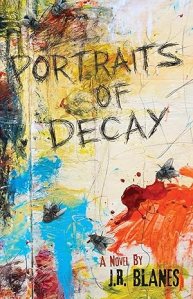
Review: Portraits of Decay by J.R. Blanes

Synopsis:

Up-and-coming young artist Jefferson Fontenot has everything going for him: The hot New Orleans art scene has noticed him, and he’s finally found his true love, Nevaeh Parker. But Fontenot’s bright future hides a darkness known as Gemma Landry— the artist’s lover and art scene influencer. Gemma believes Jefferson’s talent holds the key to her seizing control of the popular Carondelet Street Gallery. But when Gemma discovers Jefferson’s infidelity, she enslaves the artist with a poison she acquired from swamp-dwelling witch Mirlande St. Pierre.

Now trapped in a rotting body and plagued by hellish visions, Jefferson finds himself reduced to a zombie-like servant for his unhinged ex, while Nevaeh is forced to embrace her past, hoping to save the man she loves. As the dark curse courses through Jefferson’s veins, everyone involved soon discovers—in the most brutal of fashions—the terror that awaits when you cross Gemma Landry.

Favorite Lines:

“If I can’t create, I’ll die.”

“A mirror reflecting everything Gemma hated about herself.”

“Now, she was no longer ashamed of her scars. They were a testament to her survival.”

My Opinion:

I received a copy of this book from the author in exchange for my honest opinion.

Portraits of Decay is raw, unsettling, and emotionally relentless, but never careless. From the prologue onward, Blanes establishes a sense of dread rooted not just in horror elements, but in control, obsession, and emotional dependence. The violence is shocking, yes, but what lingers longer is the slow erosion of agency across the characters’ lives.

What makes the novel so compelling is how deeply embedded it is in its setting. New Orleans is not just a backdrop here; it bleeds into every interaction and impulse. The art scene, the humidity, the supernatural undertones, and the social hierarchies all feel lived-in rather than aestheticized. Blanes captures the precariousness of creative ambition with unsettling precision. The question at the heart of the book is not simply what happens when art is taken from you, but what happens when your identity is tied so tightly to someone else that you no longer recognize where your voice ends and theirs begins.

The character dynamics are where the novel truly shines. Jefferson’s passivity, Nevaeh’s vulnerability, and Gemma’s manipulative control form a volatile triangle that feels disturbingly plausible. No one is fully innocent, yet no one feels disposable. Even when characters make frustrating choices, those choices feel rooted in fear, insecurity, or survival rather than convenience. The emotional harm inflicted between characters is often more disturbing than the physical violence, because it is so recognizable.

Summary:

Overall, Portraits of Decay is not a comfortable read, but it is an effective one. It examines obsession, artistic ego, and emotional captivity with an unflinching eye, allowing its characters to be ugly, damaged, and honest. The horror lies less in the supernatural than in how easily control can masquerade as love, and how ambition can justify cruelty. This is a novel that trusts its readers to sit with discomfort and draw their own conclusions, and it is stronger for that restraint.

It will resonate most with readers who enjoy psychological horror, literary horror, and character-driven dark fiction. It is especially well suited for those interested in stories about artistic identity, toxic relationships, and emotional manipulation. Fans of slow-burn tension, morally complex characters, and atmospheric settings will likely find this novel both disturbing and deeply engaging. Happy reading!

Check out Portraits of Decay here!
Check out the book trailer here!


Monthly Features – June 2025

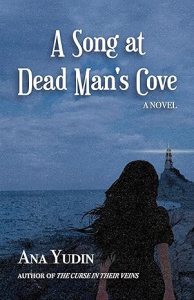
A Song at Dead Man’s Cove by Ana Yudin

I received a copy of this book from the author in exchange for my honest opinion.

Synopsis: Never turn your back on the ocean…

2023. Another person has disappeared at Dead Man’s Cove in coastal Washington. Jaded from her job at the historic Irving Hotel, Zarya wanders to the scene of the tragedy. She has heard her Russian mother’s tales of rusalki—vengeful spirits that have died unclean deaths near a body of water—and never paid them much attention. But now, on a misty headland beside an abandoned lighthouse, Zarya locks eyes with the rusalka and is chosen to be the next victim. She must unearth the siren’s tragedy before Rusalka Week, a period in early summer when water-spirits roam freely on land.

1850. Josephine has just joined her newlywed husband in Washington, in the lighthouse erected by local businessman Hurley Irving. Marriage is not quite what she expected, and her melancholia grows over the course of the winter. The medic prescribes pregnancy as the antidote. What he doesn’t realize is how far Josephine is willing to go in order to become a mother.

The Gothic horror novel follows two protagonists, a modern-day misanthrope who fears intimacy and a woman in the Victorian era who thinks stealing love will make her whole. But how long can a person hide from love, and can love really be taken by force?

Summary: A Song at Dead Man’s Cove is a mesmerizing, multilayered ghost story that manages to be both otherworldly and deeply human. Ana Yudin delivers a narrative that is as much about ancestral trauma and unspoken truths as it is about sirens and shipwrecks. It’s a tale of women silenced by history—singing now through salt and shadow to be heard.

Highly recommended for fans of Silvia Moreno-Garcia, Erin Morgenstern, and readers who crave gothic atmosphere with a feminist edge.

See the full review here: A Song at Dead Man’s Cove
Purchase here


With Time to Kill by Frank Ferrari

I received a copy of this book from the author in exchange for my honest opinion.

Synopsis: Everyone deserves a second chance, but how far would you go for one?

In the gritty streets of Edinburgh, Garry Plumb is about to find out. Living life on the periphery, never fitting in and always on his own, Garry’s world opens up when he meets Billy, the peculiar bus driver who has been watching him. Billy knows exactly how it feels to be ignored and his influence on Garry is immediate.

For the first time, Garry knows what it means to have his very own best friend. But this friendship is unlike any other, as Billy reveals how Garry can fix his entire life by changing his past.

But when the DCI John Waters, a relentless detective hunting a clever serial killer, enters Garry’s life, their friendship is put to the ultimate test.

Garry is willing to do anything for a second chance at life but, after meeting Billy, he has to ask would he kill for it?

This dark and captivating tale of self-discovery, murder and redemption will keep readers on the edge of their seats. With Time to Book One, a perfect blend of Scottish crime and sci-fi thriller, will leave you wanting more.

Summary: Overall, With Time to Kill is a gleefully dark mash-up of police procedural, serial-killer horror, and high-concept time travel. If you like your thrillers smart, Scottish, and just a little bit unhinged, clear an evening—you’ll race through this and immediately want the sequel.

See the full review here: With Time to Kill
Purchase here


The People Who Paint Rocks by Michael Stewart Hansen

I received a copy of this book from the author in exchange for my honest opinion.

Synopsis: The People Who Paint Rocks is a multi-generational horror epic that transcends the boundaries of its genre. What begins as a period horror/drama in 1910 Santa Fe evolves into a chilling supernatural thriller by 1975, where a pregnant nurse and a detective tormented by spiritual doubt race to stop an evil older than memory. A moody, unsettling, and unrelentingly atmospheric work that grips the reader from the first page and refuses to let go.

The opening act is steeped in Western gothic, introducing us to Albert McCord, a grieving husband and father seeking revenge on the wolf that took his family. But the creature he hunts is no ordinary predator—it is the origin of something far more terrifying. Hansen cleverly seeds this early chapter with themes of loss, legacy, and the illusion of control. Albert’s struggle is both physical and existential, as he fends off his late wife’s scheming family while unknowingly chasing a malevolent force that will haunt generations to come.

Fast-forward to 1975, and the novel pivots into psychological horror, following Charlie, a pregnant nurse caught in a web of ritualistic murders, and Alonzo, a detective whose beliefs are unraveling. This shift is not jarring but deliberate, echoing the disjointed sense of time that defines much of the book’s unsettling tone. The narrative connection between Albert and the events six decades later becomes a dark thread pulling the characters toward an inevitable confrontation.

Summary: Overall, The People Who Paint Rocks is a gritty, big-hearted mash-up of western, creature feature, and generational ghost story. Come for the demon wolf and six-gun showdowns, stay for the way Hansen turns painted pebbles into the creepiest grave markers this side of Stephen King country. It’s messy, mean, and—when the sun finally comes up over Red Rocks—oddly hopeful.

See the full review here: The People Who Paint Rocks
Purchase here


Review: The People Who Paint Rocks by Michael Stewart Hansen

Synopsis:

The People Who Paint Rocks is a multi-generational horror epic that transcends the boundaries of its genre. What begins as a period horror/drama in 1910 Santa Fe evolves into a chilling supernatural thriller by 1975, where a pregnant nurse and a detective tormented by spiritual doubt race to stop an evil older than memory. A moody, unsettling, and unrelentingly atmospheric work that grips the reader from the first page and refuses to let go.

The opening act is steeped in Western gothic, introducing us to Albert McCord, a grieving husband and father seeking revenge on the wolf that took his family. But the creature he hunts is no ordinary predator—it is the origin of something far more terrifying. Hansen cleverly seeds this early chapter with themes of loss, legacy, and the illusion of control. Albert’s struggle is both physical and existential, as he fends off his late wife’s scheming family while unknowingly chasing a malevolent force that will haunt generations to come.

Fast-forward to 1975, and the novel pivots into psychological horror, following Charlie, a pregnant nurse caught in a web of ritualistic murders, and Alonzo, a detective whose beliefs are unraveling. This shift is not jarring but deliberate, echoing the disjointed sense of time that defines much of the book’s unsettling tone. The narrative connection between Albert and the events six decades later becomes a dark thread pulling the characters toward an inevitable confrontation.

Favorite Lines:

“You got more balls than brains, son.”

“Some rocks are hard to read. Some are easy.”

“The wolf he’d hunted so determinedly suddenly seemed insignificant compared to the secrets the red rocks had been keeping.”

My Opinion:

I received a copy of this book from the author in exchange for my honest opinion.

Michael Stewart Hansen’s The People Who Paint Rocks splices a dust-blown 1910 New Mexico western to full-tilt folk-horror and somehow makes the seams feel natural. From page one we’re pitched into camp-fire mist and an injured stranger clutching a dead infant, while a spectral wolf circles just out of the light. What starts as a classic “frontier bad-omen” tale quickly sprawls across decades and states, dragging in an orphan-stuffed mission school, a crooked land grab, and a sanitarium where nuns hiss Latin that would curdle holy water. The mood stays taut because Hansen never lets the supernatural drown the human stakes; every eerie set piece, from a wolf pacing in a carnival cage to a demon-tinged asylum corridor, lands on the backs of characters already bowed by grief or greed.

At the center is Albert McCord, a rancher still raw from losing his family to a “black wolf”—animal, spirit, or both. His dogged hunt stitches the novel’s timelines together: one minute he’s evangelizing dynamite-strong coffee with his ranch hand Earl, the next he’s staring down that same black beast against a blood-red mesa. The wolf’s menace is real enough to draw actual Winchester fire, yet it also feels like whatever evil the locals have been whispering about since the priests of Our Lady of Sorrows were found slaughtered on All Hallows’ Eve. When Albert finally realizes the painted stones dotting his land may be grave markers rather than kids’ crafts, the horror pivots from creature-feature to something far older and sadder.

The large cast could have ballooned into chaos, but Hansen doles out POVs like camp-fire stories—each one lurid, self-contained, and building the overarching mythos. William Ward, the whiskey-soaked heir who wants Albert’s ranch, is more tobacco-spit than moustache-twirl, yet his brand of entitled cruelty fits the book’s grimy view of power. Later chapters jump to a 1970s asylum where Sister Kinney’s bone-snapping transformations crank the horror to Exorcist-level body fear, all while a pregnant nurse and an unnervingly prescient child pass painted rocks like cursed postcards. The tonal gear shifts might jar some readers, but the through-line—wolves, faith, and buried sins—keeps the engine firing.

What really sells the novel is the language: plain-spoken frontier grit bumping against sudden poetry. Hansen can describe a saloon stare-down with the same weight he gives a wolf’s last breath or a nun’s Latin snarl, and the dialogue rings true whether it’s ranch-hand humor or courtroom doom-saying. If there’s a flaw, it’s that the time jumps demand close attention—blink and you’ll miss which decade you’re bleeding in—but the payoff is worth the occasional whiplash. By the time Albert stands ankle-deep in desert soil written over with painted stones, the book has earned every chill.

Summary:

Overall, The People Who Paint Rocks is a gritty, big-hearted mash-up of western, creature feature, and generational ghost story. Come for the demon wolf and six-gun showdowns, stay for the way Hansen turns painted pebbles into the creepiest grave markers this side of Stephen King country. It’s messy, mean, and—when the sun finally comes up over Red Rocks—oddly hopeful. Happy reading!

Check out The People Who Paint Rocks here!


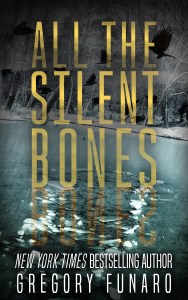
Review: All the Silent Bones by Gregory Funaro

Synopsis:

When they were boys, Ray Dawley, Eddie Sayers, and Matthew Kauffman were the best of friends. Then new kid Bobby “Bones” Bonetti fell through the ice at Blackamore Pond. The other boys saved Bobby from drowning, but something else came out of the water that day, something dangerous that would tear their friendship apart and set one of them on a dark path.

Forty years after the incident on the ice, Ray, a retired college professor, has moved back into his childhood home. Eddie is a retired homicide detective, and Matthew is a successful investment banker. Bobby, who is on disability from his job as a corrections officer at a juvenile detention center, has a secret: the darkness that found him under the ice when he was a kid has made him do terrible things.

Following a reunion at Ray’s house, Matthew is found murdered in his car beside the old pond. The killer includes a chilling message that only the three remaining friends would recognize. Could one of their own be a murderer?

All the Silent Bones, a tense and disturbing thriller told from alternating perspectives of morally complex characters, explores the lasting impact of childhood trauma and its influence on adult relationships.

Favorite Lines:

“You make plans, you prepare for war, you work hard to ensure your kid stays far away from the front lines so that when you see the enemy on the horizon, you’re ready to hit them back with everything you have without collateral damage. But it was also important to make time to play, to get lost in it with abandon—like a child on a snow day. All the worries buried far beneath the pristine white.”

““I always loved you. Even when I didn’t know how.”

My Opinion:

I received a copy of this book from the author in exchange for my honest opinion.

Gregory Funaro’s All the Silent Bones is a chilling, atmospheric thriller that balances psychological horror with literary nuance. Set in Rhode Island and steeped in childhood trauma, abuse, and dissociation, the novel follows Ray Dawley and David Ruggieri as they struggle with the legacies of their pasts and the spectral presence of “Bones”—a dark alter ego that may be more than just a psychological construct.

At its core, All the Silent Bones is a story about memory, trauma, and the brutal ghosts of childhood. The narrative explores the complicated psychological effects of abuse through the lens of dissociative identity disorder, giving shape to an internal world where elves, shadows, and monsters are metaphors for brokenness—and sometimes frighteningly real.

Funaro’s prose is both sharp and lyrical. The characters—particularly Dave/Bones—are unforgettable in their complexity. Bones, the snarling, darkly comedic, and tragically constructed alter ego, becomes the emotional center of the book, embodying both horror and heartbreak. Dr. Natalia Morris, the therapist unraveling Dave’s fractured psyche, serves as a grounded counterbalance to the surreal and disturbing revelations that emerge.

The book isn’t for the faint of heart. It does not flinch from describing graphic abuse, dissociation, and the descent into mental illness, but does so with care, intent, and a deep understanding of its psychological subject matter. There’s a sense of dread throughout that builds slowly and lands with real emotional weight. The themes are heavy, but handled with deftness and honesty.

Funaro’s ability to blend horror and heartbreak is what elevates this book. While the elves and alternate personalities add a supernatural edge, the real terror comes from the raw portrayal of pain, abandonment, and the desperate need to be loved.

Summary:

Overall, a dark and devastating psychological thriller, Gregory Funaro’s All the Silent Bones is a brutal but beautifully told story about the lingering damage of childhood abuse and the fragile hope of healing. It’s an unflinching exploration of trauma and identity, laced with eerie symbolism and grounded by authentic human emotion. Highly recommended for fans of psychological horror, literary thrillers, and trauma-informed storytelling. Happy reading!

Check out All the Silent Bones here!


Review: Her Dark Promises by E.H. Raven

Synopsis:

Stuck in a dead-end job and unable to afford independence, Jamila’s dreams of success fade daily. Desperate, she agrees to an arranged marriage orchestrated by her father, but it backfires, deepening her depression. 

She finds solace in horror movies about demonic possession, leading her to research real-life cases. Discovering some achieve success through dark means, she decides to summon her demon, hoping to change her fate. Possession grants Jamila immense confidence and success, but the dark alliance exacts a steep price.

The demon consumes her sanity, blurring reality and nightmare.

Can Jamila escape the darkness she unleashed?

Favorite Lines:

“Nothing I eat satisfies my hunger. This must be what stress eating is.”

“She recognized the tragic irony in humanity’s plight: their yearning for a better life had led them into an inescapable trap.”

“In her moments of clarity, Jamila realized the irony of her situation. She had sought possession to gain knowledge and power, but it was only in her damnation that she truly understood the depths of the world’s corruption. The knowledge she had gained was vast, but it came at the highest cost imaginable: her soul.”

My Opinion:

I received a copy of this book from the author in exchange for my honest opinion and just in time for spooky season to begin!

Can I start this review off by saying that something that really drew me in to this book was the cover alone. It was the perfect level of creepy and ends up fitting this book very well!

This story follows Jamila, a young woman who feels trapped in a mundane existence with a draining job who is unable to see a light at the end of the tunnel. To make matters worse, her father keeps insisting on an arranged marriage that she is less than thrilled about. To escape her reality, Jamila watches a lot of horror movies and becomes interested in real-life stories of people who have summoned demons. Taking inspiration from these stories, Jamila tries to summon a demon herself. What starts as a confidence boost for Jamila, quickly spirals out of control and readers follow along as Jamila fights a darkness as it begins to consume her.

I am a sucker for any psychological thrillers and this one did not disappoint – and it came just in time for spooky season! This is my first book by Raven and I loved the way that the world was set up only to have a purposeful tone shift once Jamila summoned the demon. Raven did a great job at setting up a terrifying and thrilling plot that had me on the edge of my seat. Throughout reading this, I regularly found myself picturing this on the big screen and think it could be a great plot for a scary, demon possession movie!

If I had to nitpick one thing, it would have to be the flow of the book. As some points, it came off as a bit choppy and could have probably flowed more smoothly from one scene to the next. However, I want to emphasize that this didn’t take away from the overall plot which I still found to be creative and interesting.

I wanted to put a trigger warning that this book does contain graphic violence, self-mutilation, sexual content, horror themes, and more and may not be suited for everyone.

Summary:

Overall, while this was my first book from Raven, I am confident that it won’t be my last. This was the perfect blend of creepy, thrilling, and addicting and I would recommend to anyone who is a fan of horror and psychological thrillers. Happy reading!

Check out Her Dark Promises here!


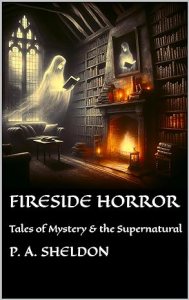
Review: Fireside Horror: The Wendlelow Mysteries by P.A. Sheldon

Synopsis:

There is a troubled town nestled on the border of Shropshire and Powys. Steeped in folklore, domain of ghosts, it is witch haunted Wendlelow. Pity those who dwell there.
Here is an collection of interconnected tales, ghostly, gothic and monstrous, so curl up by the fire, dim the lights, and prepare to be horrified.

Favorite Lines:

Rather than picking favorite lines, I thought it would be more appropriate to pick out a couple of my favorite short stories from this collection:  The Witch-Brands of Wendlelow and The Tunnel.

My Opinion:

I received a copy of this book from the author in exchange for my honest opinion.

I grew up with Scary Stories to Tell in the Dark, so you know I was excited to read this collection of mysterious and creepy stories. Spoiler: I was not disappointed. Sheldon brings a unique twist to both classic legends and new supernatural tales alike in this collection of short stories.

I chose to read this collection at night to really get in the mood for the creepy tales and I found myself having to turn a couple extra lights on! As an American, I am not very familiar with the area that this takes place in, near Shropshire and Powys, but they are real places and I imagine that if you are local, this book will have you nostalgic and maybe a touch paranoid. Nonetheless, being a local isn’t a prerequisite for enjoying this book as I certainly devoured it in one sitting.

I found that the tales were very well written and, as I had mentioned previously, Sheldon did a great job putting a unique spin on each plot. I was turning page after page and fully invested from start to finish. I hope that there are more to come for this collection in the future!

Summary:

Overall, I thoroughly enjoyed this book and I will certainly be reading it again closer to Halloween – but I’ll maybe make sure to leave some lights on…If you’re a fan of thrillers, horror, suspense, mystery, and the supernatural, then this book could be for you!

Check out Fireside Horror: The Wendlelow Mysteries here!