Review: Solving the Anxiety Equation: The Formula to Free Yourself from Fear by Wendy Leeds

Synopsis:

Easing Anxiety Is Possible—and Here’s How

Left untreated, anxiety can be hugely disruptive to our lives. It can keep us up at night, cause difficulties at work, and interfere in relationships. Anxiety can keep us trapped and alone, and persistent social stigmas can make it feel like we’re the only ones suffering.

As a three-time cancer survivor, Wendy Leeds knows what it’s like to deal with anxiety. As a licensed psychotherapist (LMHC), she has experience helping herself and others heal from the effects of anxiety. Wendy brings that unique perspective to her new book, Solving the Anxiety Equation: The Formula to Free Yourself from Fear.

With easy-to-implement tools and techniques for dealing with anxious thoughts, negative beliefs, and physical symptoms of anxiety, Solving the Anxiety Equation takes the mystery out of what makes us anxious and offers a hands-on, individualized approach for getting to the root of our anxiety—and healing it. Mixing personal stories of struggle and triumph with the latest research on the causes, impacts, and solutions, Wendy offers a path to recovery from anxiety that can help every reader live with less fear and greater ease.

Favorite Lines:

“…when self-doubt is running things, it’s like driving through life with one foot on the gas pedal and the other foot on the brake.”

“Fear comes in all sorts of forms and sizes. It shows up differently for all of us. It can be predictable, or it can show up unexpectedly.”

“Every new moment brings the chance to begin again.”

My Opinion:

I received a copy of this book from the author in exchange for my honest opinion.

Anxiety is something nearly everyone experiences at some point, but for those who struggle with it daily, it can feel like an insurmountable force. In Solving the Anxiety Equation, Wendy Leeds provides a thoughtful, compassionate, and practical approach to managing and ultimately overcoming anxiety. As both a psychotherapist and someone who has personally battled anxiety, Leeds blends professional insight with lived experience, making this book not just informative but deeply relatable.

One of the book’s biggest strengths is its clear, structured approach. Leeds breaks anxiety down into three core components:

  1. Self-doubt – The internal voice that tells us we’re not good enough, smart enough, or strong enough.
  2. Fear of change – The worry that any shift in our circumstances will only make things worse.
  3. Physical anxiety – The way our bodies react to stress, from racing hearts to sweaty palms to full-blown panic attacks.

By understanding how these elements work together, Leeds argues that we can begin to dismantle anxiety’s grip on our lives. She introduces thought-swapping techniques to help counteract negative self-talk, the BEAR method for managing panic attacks, and mindfulness practices to re-center ourselves in moments of distress.

What makes this book stand out is its deeply personal tone. Leeds openly shares her own struggles with anxiety, including how she navigated intense fear during her cancer diagnoses. These moments of vulnerability make the book feel incredibly authentic—it’s not just another self-help book written from a distance, but rather a conversation with someone who truly understands what it’s like to live with anxiety.

She also emphasizes the importance of rewriting our internal narratives. Many people with anxiety tell themselves stories like, I’m not strong enough to handle this or I’ll never be able to cope. Leeds challenges these assumptions and offers ways to replace them with more empowering thoughts, such as I have overcome challenges before, and I will again. This simple but profound shift in mindset can be life-changing.

Leeds doesn’t just offer advice—she guides the reader through exercises that help reinforce these techniques. Her writing style is warm and reassuring, making complex psychological concepts easy to understand and apply.

Summary:

Overall, whether you’re dealing with occasional anxiety or chronic worry, Solving the Anxiety Equation is an invaluable resource. Leeds provides hope without false promises—she acknowledges that anxiety doesn’t disappear overnight, but with the right tools, it can be managed in a way that allows us to lead happier, more fulfilling lives. Happy reading!

Check out Solving the Anxiety Equation here!
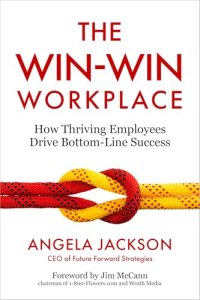


Review: The Win-Win Workplace: How Thriving Employees Drive Bottom-Line Success by Angela Jackson

Synopsis:

Do you want the key to driving equity and skyrocketing profits? It’s hand over control to your workers.

Discover 9 strategies to create better, healthier workplaces, grounded in evidence-based research.

This revolutionary guide aims to revolutionize the workplace for justice, equity, and profitability by handing the reins over to the real drivers of the workers.

Based on research from over 1,200 companies, including WalMart, Google, and JPMorgan Chase, this book follows real-world cases from companies where employees evolved from silent contributors to masterminds steering corporate strategies. These cases are the vanguard of a vibrant era in which workers will be the architects of their destinies, shaping not just their own careers but the entire trajectories of their organizations. Her work has quantified the financial impact investing in people can have on an organization- the first reliable calculation in the literature of talent retention.

From this research, 9 key strategies
•Centering employee voices
•Mutualistic working relationships
•Intersectional inclusion strategies
•Reimaging employee benefits
•Frontline leader drive DEIJ strategies
•Hire STARS
•Develop deep talent benches
•Human capital reporting as a competitive strategy
•Distributed leadership

This book goes deeper to show how these strategies are working in the real-world today. When workers have stakes, everyone businesses surge, and teams ride a high they’ve never felt before. This is a win-win both management and labor win when you put people first.

Favorite Lines:

“The modern workplace has long been a battle of ‘employee versus employer,’ but it doesn’t have to be this way.”

“When employees feel like valued stakeholders rather than replaceable assets, they are more engaged, innovative, and productive.”

“The companies that will thrive in the future are those that see their people as more than just workers, but as partners in success.”

“Organizations that prioritize well-being and continuous learning don’t just attract top talent—they keep it.”

My Opinion:

I received a copy of this book from the author in exchange for my honest opinion.

Angela Jackson’s The Win-Win Workplace is a timely and thought-provoking guide that redefines the relationship between employees and employers. In a world where workplace dynamics are rapidly shifting—marked by trends like the Great Resignation, quiet quitting, and the rise of gig work—Jackson presents a compelling case for moving beyond the traditional transactional employment model. She argues that when companies prioritize employee well-being, they don’t just create happier workplaces—they build more profitable and sustainable businesses.

The book is structured around nine core pillars that define a “Win-Win Workplace,” including centering employee voices, reimagining benefits, activating frontline leaders, and fostering continuous learning. Drawing from years of research across diverse industries, Jackson provides real-world case studies that illustrate how forward-thinking organizations have embraced these principles with measurable success. Her findings are backed by data showing that companies that prioritize employee engagement see increased revenue, higher productivity, and stronger financial performance.

What makes The Win-Win Workplace stand out is its practical approach. Jackson doesn’t just diagnose the problems with modern workplaces—she provides a roadmap for change. She outlines specific strategies for businesses to implement, from hiring based on skills rather than credentials to creating feedback loops that empower employees. The book is as much a call to action as it is a blueprint for transformation.

Summary:

Overall, Jackson makes a compelling argument that when employees thrive, businesses do too—proving that success in the modern workforce isn’t a zero-sum game, but a partnership that benefits everyone. This book could be for leaders and employees alike looking to build more resilient, inclusive, and high-performing work-places. Happy reading!

Check out The Win-Win Workplace here!


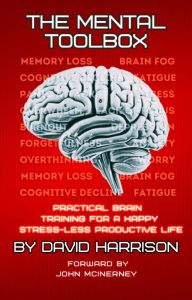
Review: The Mental Toolbox by David Harrison

Synopsis:

The Mental Toolbox

Practical Brain Training for a Happier, Stress-Free, and More Productive Life

In today’s fast-paced world, improving mental wellness has never been more important. The COVID-19 pandemic sparked a 25% rise in anxiety and depression worldwide, highlighting the urgent need for tools to build mental resilience.

The Mental Toolbox can help you create those tools, tailored to fit your lifestyle, and flip the script from mental illness to mental wellness. This book is for everyone—whether you’ve faced mental health challenges or not. Along the way, you’ll unlock the keys to a healthier mind, greater resilience, and your full potential.

Written in clear, straightforward language, The Mental Toolbox is practical and accessible to everyone. It offers tools, strategies, and advice that can strengthen your mental resilience, cognitive abilities, emotional intelligence, and ability to deal with stress. By doing so, it helps you enhance your overall well-being, serving as a valuable guide on your journey of personal growth.

Inside, you’ll be introduced to the five main pillars of mental health and overall well-being:

  • Sleep
  • Exercise
  • Nutrition
  • Mindfulness
  • Conscious Thinking

Understanding these pillars and how they interconnect is key to boosting your overall health and enhancing your ability to manage stress. By learning to apply these principles in your daily life, you’ll develop stronger mental resilience, improve cognitive function, and build a foundation for long-term well-being.

This book has the power to transform your mindset and your life. With the right approach, the possibilities are limitless.

Change your mind,
Change your life
—and discover just how far you can go with….

The Mental Toolbox.

Favorite Lines:

“Setting achievable, realistic goals is the key to maintaining motivation. Goals provide direction and structure to your efforts. It’s important to set goals that are challenging, attainable, and aligned with your values”

“Discernment requires that we ‘shield our eyes from the sun and look carefully’ before we make choices and that we look at the consequences our actions may have for ourselves and those around us”

My Opinion:

I received a copy of this book from the author in exchange for my honest opinion.

David Harrison’s The Mental Toolbox is a well-structured and engaging guide to optimizing brain health, reducing stress, and enhancing productivity. What sets this book apart is its deeply personal yet practical approach—Harrison combines scientific insights with real-world strategies to help readers build resilience, improve focus, and foster emotional intelligence.

The book takes a deep dive into topics like neuroplasticity, stress management, mindfulness, and the brain-body connection, breaking down complex concepts into digestible, actionable advice. It provides a range of tools—from cognitive exercises and nutritional recommendations to emotional regulation techniques—that readers can immediately incorporate into their daily lives.

One of the standout aspects of The Mental Toolbox is its balance between research-backed information and personal storytelling. Harrison doesn’t just present theories; he shares his own struggles with mental health, making the book feel both relatable and inspiring. The writing is approachable, avoiding overly technical jargon while still offering valuable insights into neuroscience and psychology.

While the book is packed with useful information, it never feels overwhelming. The structured layout, including self-assessment tools and step-by-step guides, makes it easy to navigate. Whether you’re looking to boost your mental performance, manage stress more effectively, or simply cultivate better habits, The Mental Toolbox provides a solid foundation for lifelong cognitive wellness.

Summary:

Overall, The Mental Toolbox serves as a valuable resource for those aiming to proactively manage stress, enhance cognitive abilities, and foster a happier, more productive life. It’s a testament to the idea that with the right tools and mindset, anyone can achieve mental wellness and resilience. I would recommend this book to anyone interested in practical brain training and self-improvement. Happy reading!

Check out The Mental Toolbox here!