Review: The Garden of Abel by Cadeem Lalor

Synopsis:

Abel is in his thirties, divorced and feels stuck in his job as a high school teacher. When a version of himself visits from another dimension, he becomes the target of a fascist government.

Adam — the other version of Abel — was part of the team that developed a teleporter for accessing other dimensions. While the teleporter was meant to facilitate trade between planets, the government planned to use it to colonize less advanced worlds. Now Adam must flee a military that is eager to get its greatest weapon back.

Favorite Lines:

“Terrified, but fear’s kept us alive so far. It’s made us cautious, made us smart. I can embrace it without letting it cripple me.”

“Did you get that quote from a self-help book?”

“There were no good plans anymore; there were only ones that were slightly better than another.”

My Opinion:

I received a copy of this book from the author in exchange for my honest opinion.

The Garden of Abel starts with a quiet shock that never fully fades. The image of Abel confronting someone who looks almost exactly like him sets the tone for a novel that is less about spectacle and more about destabilization. What follows isn’t an action-heavy sci-fi story so much as a slow reckoning with what it means to be pulled into something much larger than yourself, whether you want to be or not.

What I appreciated most is how grounded the story feels, even with its interdimensional premise. The science is present, but it never overwhelms the human side of the story. Abel reacts the way a real person might: cautious, skeptical, curious, and increasingly uneasy. He doesn’t jump at the chance to be a hero, and he doesn’t fully trust what’s happening, even as the evidence stacks up. That hesitation makes his eventual involvement feel earned rather than convenient.

The relationship between Abel and his counterpart is where the book really finds its footing. Their conversations carry real weight and tension, not because they’re dramatic, but because they force uncomfortable questions into the open. The visiting Abel isn’t written as a clear villain, but he’s not absolved either. He’s complicated, burdened by guilt and justification in equal measure, and the book allows that messiness to exist without smoothing it out for the reader.

As the story builds toward confrontation, the tension feels personal rather than explosive. The stakes matter because of what they mean for Abel’s ordinary life, not just the fate of worlds. By the end, The Garden of Abel feels less like a story about alternate dimensions and more like one about unintended responsibility and moral fallout. It lingers because it asks you to think about what you would do when the consequences aren’t theoretical anymore.

Summary:

Overall, The Garden of Abel reads as thoughtful, restrained science fiction that values ethical tension over spectacle. If you enjoy sci-fi that focuses on choice, consequence, and quiet unease rather than nonstop action, this book will likely resonate. It’s the kind of story that unfolds slowly and stays with you after you’re done. Happy reading!

Check out The Garden of Abel here!


Review: Driftless Spirits by Karen Ringel

Synopsis:

Charlotte Burke can’t shake her recurring dream. Over and over again she dreams of finding a mysterious journal on a candlelit desk while wandering through a strange house in the middle of the night. Every dream has shown her a framed picture of an old woman sitting at the same desk, except the latest version. Last night, the woman stood and offered Charlotte a keyring. In the morning, Charlotte woke up with her car keys in her hand.

Her best friend is worried but skeptical when Charlotte insists the house is real. The dream is metaphorical, Ivy says, reflecting Charlotte’s restless state. Ivy gifts her a journal and urges her to take the trip her subconscious is demanding before she wakes up behind the wheel. A roadtrip of self-discovery will help Charlotte figure out what she really wants.

Charlotte agrees to the trip but not for Ivy’s reasons. To her, the house, the journal and the woman in her dream are all too real. She sets off to do the impossible. She doesn’t know it yet, but if she can find the house and uncover its secrets in time, she might save far more than her driftless life.

Favorite Lines:

“It’s the kind of place that passerby barely notice and would never stop. It’s also the kind of place that’s cherished if you live there.”

“The internet has everything if you look hard enough.”

“Sometimes you just have to take a chance and jump.”

“Drifting through some days was fine but drifting through her years without intention squandered a precious gift.

My Opinion:

I received a copy of this book from the author in exchange for my honest opinion.

From the opening dream sequence, Driftless Spirits establishes an atmosphere rooted in intuition, restlessness, and the slow pull of something unnamed. Charlotte’s story feels immediately familiar in the best way. She is not running from tragedy or danger but from stagnation, from the unsettling realization that her life has begun to feel paused. That emotional starting point gives the book a gentle but persistent momentum.

What Ringel does especially well is treat place as both setting and catalyst. Wisconsin’s Driftless region is not just where the story happens, it is part of what the story is about. The landscape mirrors Charlotte’s internal state: winding roads, unexpected valleys, quiet towns that seem easy to overlook unless you stop and really look. Casten’s Horn feels lived in rather than constructed, and its routines, celebrations, and peculiar rhythms give the town a sense of layered history without overwhelming the narrative.

Charlotte herself is an easy protagonist to root for because her doubts feel honest and unembellished. Her curiosity outweighs her fear, but just barely, and that balance keeps the tension grounded. The mystery elements arrive slowly and organically, never disrupting the cozy tone but gently complicating it. The supernatural aspects are understated and feel more like an extension of intuition and memory than something overtly threatening, which makes them more intriguing than alarming.

At its core, Driftless Spirits is a story about listening. Listening to instincts, to forgotten history, to places that seem to call quietly rather than loudly. The novel resists neat answers and dramatic twists, opting instead for gradual revelation and emotional payoff. It invites the reader to slow down, pay attention, and trust that small moments can still carry significance. The result is a story that feels comforting without being predictable, and reflective without losing narrative direction.

Summary:

Overall, Driftless Spirits may appeal to readers who enjoy cozy mysteries, gentle supernatural elements, and character-driven stories set in small towns. It is well suited for those who appreciate atmospheric storytelling, introspective journeys, and mysteries that unfold through mood and discovery rather than danger. Readers who enjoy themes of self-rediscovery, intuition, and place-based storytelling will likely find this a satisfying and quietly engaging read. Happy reading!

Check out Driftless Spirits here!


Review: Portraits of Decay by J.R. Blanes

Synopsis:

Up-and-coming young artist Jefferson Fontenot has everything going for him: The hot New Orleans art scene has noticed him, and he’s finally found his true love, Nevaeh Parker. But Fontenot’s bright future hides a darkness known as Gemma Landry— the artist’s lover and art scene influencer. Gemma believes Jefferson’s talent holds the key to her seizing control of the popular Carondelet Street Gallery. But when Gemma discovers Jefferson’s infidelity, she enslaves the artist with a poison she acquired from swamp-dwelling witch Mirlande St. Pierre.

Now trapped in a rotting body and plagued by hellish visions, Jefferson finds himself reduced to a zombie-like servant for his unhinged ex, while Nevaeh is forced to embrace her past, hoping to save the man she loves. As the dark curse courses through Jefferson’s veins, everyone involved soon discovers—in the most brutal of fashions—the terror that awaits when you cross Gemma Landry.

Favorite Lines:

“If I can’t create, I’ll die.”

“A mirror reflecting everything Gemma hated about herself.”

“Now, she was no longer ashamed of her scars. They were a testament to her survival.”

My Opinion:

I received a copy of this book from the author in exchange for my honest opinion.

Portraits of Decay is raw, unsettling, and emotionally relentless, but never careless. From the prologue onward, Blanes establishes a sense of dread rooted not just in horror elements, but in control, obsession, and emotional dependence. The violence is shocking, yes, but what lingers longer is the slow erosion of agency across the characters’ lives.

What makes the novel so compelling is how deeply embedded it is in its setting. New Orleans is not just a backdrop here; it bleeds into every interaction and impulse. The art scene, the humidity, the supernatural undertones, and the social hierarchies all feel lived-in rather than aestheticized. Blanes captures the precariousness of creative ambition with unsettling precision. The question at the heart of the book is not simply what happens when art is taken from you, but what happens when your identity is tied so tightly to someone else that you no longer recognize where your voice ends and theirs begins.

The character dynamics are where the novel truly shines. Jefferson’s passivity, Nevaeh’s vulnerability, and Gemma’s manipulative control form a volatile triangle that feels disturbingly plausible. No one is fully innocent, yet no one feels disposable. Even when characters make frustrating choices, those choices feel rooted in fear, insecurity, or survival rather than convenience. The emotional harm inflicted between characters is often more disturbing than the physical violence, because it is so recognizable.

Summary:

Overall, Portraits of Decay is not a comfortable read, but it is an effective one. It examines obsession, artistic ego, and emotional captivity with an unflinching eye, allowing its characters to be ugly, damaged, and honest. The horror lies less in the supernatural than in how easily control can masquerade as love, and how ambition can justify cruelty. This is a novel that trusts its readers to sit with discomfort and draw their own conclusions, and it is stronger for that restraint.

It will resonate most with readers who enjoy psychological horror, literary horror, and character-driven dark fiction. It is especially well suited for those interested in stories about artistic identity, toxic relationships, and emotional manipulation. Fans of slow-burn tension, morally complex characters, and atmospheric settings will likely find this novel both disturbing and deeply engaging. Happy reading!

Check out Portraits of Decay here!
Check out the book trailer here!


Review: The Orichalcum Crown by J.J.N. Whitley

Synopsis:

Makoto lost her mother to a battle she can’t remember before being adopted into the Kauneus Empire’s royal family. Upon her eighteenth birthday, she receives her mother’s necklace from the emperor. Makoto’s memories slowly return, haunting her with visions of her lost sister and her mother’s murder.

She is torn between the family and answers awaiting her across the sea and the relationships with her family, best friend, and his handsome brother. Makoto fears returning home will cast doubt upon her loyalty to the emperor and sever her from the family. After all, Kauneus has no need for a disloyal princess.

Makoto’s eldest adoptive sister, Athena, remains banished from Zenith Palace for uncovering the emperor’s secret bastard. She is visited by her former dragon uncle, who shares a rumor that the emperor will be assassinated during the annual ball. Athena has no choice but to break her exile to save her father. Returning home risks death, but she’ll pay any price for her family’s safety.

As night falls upon the ball, lurking shadows and hidden agendas threaten the empire’s fragile peace. Makoto and Athena must navigate the delicate lines between loyalty and betrayal and learn what they are willing to sacrifice for freedom, truth, and family.

Favorite Lines:

“Even a good dog could still bite.”

“Of all the things she wanted to remember, now she had something she wished to forget.”

“She burned brightly for those she loved but scorched her enemies.”

My Opinion:

I received a copy of this book from the author in exchange for my honest opinion.

From the very first pages, The Orichalcum Crown feels weighted with memory loss, grief, and inherited responsibility, but it never leans too heavily into melodrama. Instead, it allows those emotions to surface naturally through Makoto’s perspective. What struck me most early on was how tender the writing is even when it’s describing frightening or brutal moments. Pain and wonder exist side by side, which gives the story a softness that makes its harsher scenes more impactful.

Makoto is a compelling protagonist because she isn’t framed as heroic in the traditional sense. She is frightened, uncertain, and often confused, but never passive. The tension between who she is expected to become and who she actually is drives much of the emotional arc. The idea of “beauty in strength” repeats throughout the novel in ways that feel earned rather than symbolic. Strength here is not dominance or fearlessness, but endurance, restraint, and the ability to care when it would be easier to close oneself off.

The political dynamics and family structures add depth without overwhelming the personal story. Emperor Rudolph is especially well written; his affection, cruelty, fear, and pride all coexist in a way that makes him unsettling yet believable. Relationships feel earned, particularly the bond between Makoto and Ephraim, which provides warmth and safety in a story that often feels cold and precarious. These quieter connections ground the larger fantasy elements and make the stakes feel intimate rather than abstract.

What ultimately makes The Orichalcum Crown linger is its refusal to simplify morality. No one emerges unmarked by violence, grief, or compromise. Even moments of love are threaded with loss. The novel trusts the reader to sit with discomfort, to hold conflicting truths at the same time, and to recognize that survival often reshapes people in ways they did not choose. It feels like the beginning of a larger saga, but it stands confidently on its own as a story about identity, power, and the cost of protection.

Summary:

Overall, The Orichalcum Crown may be best suited for readers who enjoy character-driven fantasy, political intrigue, and emotionally grounded coming-of-age stories. Fans of epic fantasy who value internal conflict over constant action will appreciate its pacing and tone. It also works well for readers drawn to themes of grief, found family, and morally complex authority figures, making it a strong choice for those who enjoy thoughtful, atmospheric fantasy with emotional weight. Happy reading!

Check out The Orichalcum Crown here!


Monthly Features – November 2025

The Amalfi Secret by Dean Reineking and Catherine Reineking

I received a copy of this book from the authors in exchange for my honest opinion.

Synopsis: When Gabe Roslo arrives in Amalfi, Italy, a long-awaited reunion with his grandparents takes a tragic turn. His beloved grandfather is dead—and a cryptic diary left behind is Gabe’s only clue to the mystery surrounding his sudden death. But what starts as a personal tragedy quickly spirals into a high-stakes international puzzle.

Teaming up with Anna, a resourceful Roman local, Gabe follows a trail of hidden truths that stretches from the stunning Amalfi coast to the corridors of global power. Secret codes, powerful enemies, and a legacy of deception pull them into a world where nothing is as it seems. With each twist, they are forced to question their allies and uncover dark secrets that could shift the global balance of power.

But as the walls close in, Gabe and Anna must risk everything to expose the truth before it’s buried forever. Will they decipher the mystery and reveal the sinister forces at play? Or will they become the next victims of The Amalfi Secret?
Perfect for fans of Dan Brown and Robert Ludlum, The Amalfi Secret is a pulse-pounding thriller that will keep you guessing until the final, breathtaking twist.

Summary: Overall, The Amalfi Secret is a richly layered political and historical thriller that blends mystery, faith, and love against a vivid European backdrop. It’s ideal for readers who enjoy intelligent thrillers, religious or historical mysteries, dual-timeline narratives, and character-driven suspense. 

See the full review here: The Amalfi Secret
Purchase here


Blade Rider by Jaime A. Sevilla

I received a copy of this book from the author in exchange for my honest opinion.

Synopsis: In a future where stars map the last frontier and infinite space paves the road to dreams, Raven stands at the precipice of her world. In a vibrant, multi-species society filled with possibilities, she yearns to fly amongst the stars as an Air Ranger, an elite group of space pilots that navigate the cosmos and safeguard the world.

There’s only one catch: females aren’t allowed.

As Raven gets closer to her aspirations and learns what it takes to join them, she discovers lasting friendships,  new challenges, and what it ultimately means to be a ranger.

Can Raven push beyond the boundaries of societal norms and break through the stratosphere of glass ceilings, or will her star-filled quest for acceptance remain out of reach? Join her on this high-stakes,  interstellar ride and experience her exciting journey as she blazes her own path amongst the stars.

Based on the musical by Jaime A. Sevilla, “Blade Rider” spins an electrifying and poignant tale of courage, determination, and the relentless pursuit of dreams.

Summary: Blade Rider is perfect for readers who love hopeful science fiction, YA adventure, and music-infused storytelling. Think Ender’s Game if it had a soundtrack and a heroine who refuses to take no for an answer. Sevilla’s background as a composer gives the book a cinematic flow: every chapter feels scored.

For anyone who ever dreamed of flying — or just fighting for the chance to try — Blade Rider delivers that spark. 

See the full review here: Blade Rider
Purchase here


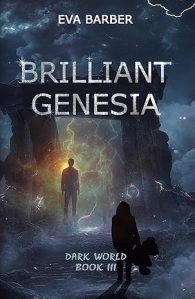
The Gift by Eva Barber

I received a copy of this book from the author in exchange for my honest opinion.

Synopsis: Emery travels through the dark dimension guided by dark shadows. She drops into a black hole and plummets into a desolate land that she believes is thousands of years in the past. She has to rely on her instincts to survive and her unwavering spirit to endure the harsh conditions.

A tribal chief’s daughter, Visla, finds her after she ingests poisonous berries and saves her life. Their friendship blossoms as they discover they share similar traits and both mourn the loss of their mothers.

Emery learns of the existence of the “bad people” whose description matches that of her mother. She sets out on a mission to find them. Visla leaves the tribe after learning her father held secrets from her. She joins Emery in her quest, which also becomes hers. But the “bad people” find them first, imprison Emery, and threaten to change Visla into a “superior” being against her will.

Emery escapes her prison using her powers and finds herself in a bizarre underground city with advanced technology outpacing the Stone Age. In her quest to find Visla, she befriends two beings whose humanity she questions. A brother and sister help her for reasons they do not fully understand. Emery’s presence cast doubts on their lives. They begin to suspect it is imposed on them by powerful “superior” beings. Looming over their quest to find Visla is the fear of change inflicted on those who rebel.

Captured again by the enigmatic “bad people”, Emery finds unexpected help from an unfathomable being whose identity further deepens the mystery surrounding her.

In the strange gray city, she stumbles on an artifact that shatters her understanding of the world around her and deepens the mystery further, implicating her mother in humanity’s most atrocious acts performed in the name of progress and survival. To find the answers, she forgoes the safety of the world on the surface and dives back into the underground, discovering more secrets and meeting the Masters—the superior beings with unmatched cruelty and depravity.

She barely escapes with her life, with even more questions, but with a budding understanding of what she has to do to get the answers and continue with her mission. If she’s going to save humanity, she’ll have to make choices that weigh losing what is most precious to her against the world’s survival.

Summary: Overall, The Gift  is a genre-bending blend of science fiction, fantasy, and metaphysical adventure, perfect for readers who enjoy character-driven journeys, time travel, and philosophical explorations of love, purpose, and destiny. Think The Time Traveler’s Wife meets Interstellar, with a touch of spiritual myth. It’s beautifully written and emotionally charged, ideal for fans of romantic sci-fi, cosmic or multiverse fiction, and stories where imagination meets heart. 

See the full review here: The Gift
Purchase here


Review: The Gift by Eva Barber

Synopsis:

Emery travels through the dark dimension guided by dark shadows. She drops into a black hole and plummets into a desolate land that she believes is thousands of years in the past. She has to rely on her instincts to survive and her unwavering spirit to endure the harsh conditions.

A tribal chief’s daughter, Visla, finds her after she ingests poisonous berries and saves her life. Their friendship blossoms as they discover they share similar traits and both mourn the loss of their mothers.

Emery learns of the existence of the “bad people” whose description matches that of her mother. She sets out on a mission to find them. Visla leaves the tribe after learning her father held secrets from her. She joins Emery in her quest, which also becomes hers. But the “bad people” find them first, imprison Emery, and threaten to change Visla into a “superior” being against her will.

Emery escapes her prison using her powers and finds herself in a bizarre underground city with advanced technology outpacing the Stone Age. In her quest to find Visla, she befriends two beings whose humanity she questions. A brother and sister help her for reasons they do not fully understand. Emery’s presence cast doubts on their lives. They begin to suspect it is imposed on them by powerful “superior” beings. Looming over their quest to find Visla is the fear of change inflicted on those who rebel.

Captured again by the enigmatic “bad people”, Emery finds unexpected help from an unfathomable being whose identity further deepens the mystery surrounding her.

In the strange gray city, she stumbles on an artifact that shatters her understanding of the world around her and deepens the mystery further, implicating her mother in humanity’s most atrocious acts performed in the name of progress and survival. To find the answers, she forgoes the safety of the world on the surface and dives back into the underground, discovering more secrets and meeting the Masters—the superior beings with unmatched cruelty and depravity.

She barely escapes with her life, with even more questions, but with a budding understanding of what she has to do to get the answers and continue with her mission. If she’s going to save humanity, she’ll have to make choices that weigh losing what is most precious to her against the world’s survival.

Favorite Lines:

“To get all the way here through the dark world and the black hole only to die in the desert would be so pathetic and so wrong. Oh, just shut up and keep going. Stop being a baby. You haven’t even walked a whole day yet.

“You are the embodiment of perfection. Not just your beauty. Your face, eyes, body, and hair couldn’t be more perfect. Everything about you is perfection, the embodiment of human beauty. But not in the sense our media portrays it. Your perfection and beauty stem from something deeper inside of you. It is timeless, primal, sexual, and intellectual. Your magnetism and strength have no limits, but encompass everything around you and make it shine with life. You embody life and love. You are my Aphrodite.”

My Opinion:

I received a copy of this book from the author in exchange for my honest opinion.

The Gift is book 2 in Eva Barber’s Dark World series. You can find my review for book 1, Unborn, here.

The Gift is one of those novels that blurs the boundaries between genres — part science fiction, part spiritual odyssey, and part love story. It opens in the afterlife, in a space both beautiful and terrifying, where Emery is pulled through darkness, light, and time itself. What begins as a quest to find her mother quickly expands into something larger — a story about creation, destiny, and the cost of saving the world. Barber writes with a cinematic style, full of color and motion, yet always anchored in emotion. Every scene feels vivid and alive, from the vast black hole to the primitive landscapes Emery explores.

What struck me most was how personal this story feels, even when it’s operating on a cosmic scale. Emery isn’t a detached hero — she’s grieving, flawed, often angry, and full of questions. Her voice feels real. You can feel her exhaustion, her stubbornness, her wonder. The philosophical ideas about time, destiny, and rebirth work because they’re filtered through her very human fear and longing. The story moves like a dream, but it’s grounded by her voice and her will to survive.

Barber also has a gift for worldbuilding. The scenes through the black hole — the eerie blue lights, the strange worlds, the silvery beings — read like visual art. And when Emery finally lands in a prehistoric world and meets the gentle, curious Visla, the novel shifts tone completely. What was cosmic becomes intimate. Their friendship becomes the emotional center of the book, a bridge between two eras and two souls. Through Visla, the story breathes; it becomes about connection, compassion, and the timelessness of human love.

The Gift asks big questions: What would you sacrifice to save others? Can destiny and free will coexist? And what if the greatest power you carry is love itself? It’s a story that balances science and spirit, mythology and physics, light and shadow. It’s deeply imaginative but never loses its heart. I finished it feeling both small and infinite — which is exactly what a story about the universe should make you feel.

Summary:

Overall, The Gift  is a genre-bending blend of science fiction, fantasy, and metaphysical adventure, perfect for readers who enjoy character-driven journeys, time travel, and philosophical explorations of love, purpose, and destiny. Think The Time Traveler’s Wife meets Interstellar, with a touch of spiritual myth. It’s beautifully written and emotionally charged, ideal for fans of romantic sci-fi, cosmic or multiverse fiction, and stories where imagination meets heart. Happy reading!

Check out The Gift here!


Review: Blade Rider by Jaime A. Sevilla

Synopsis: 

In a future where stars map the last frontier and infinite space paves the road to dreams, Raven stands at the precipice of her world. In a vibrant, multi-species society filled with possibilities, she yearns to fly amongst the stars as an Air Ranger, an elite group of space pilots that navigate the cosmos and safeguard the world.

There’s only one catch: females aren’t allowed.

As Raven gets closer to her aspirations and learns what it takes to join them, she discovers lasting friendships,  new challenges, and what it ultimately means to be a ranger.

Can Raven push beyond the boundaries of societal norms and break through the stratosphere of glass ceilings, or will her star-filled quest for acceptance remain out of reach? Join her on this high-stakes,  interstellar ride and experience her exciting journey as she blazes her own path amongst the stars.

Based on the musical by Jaime A. Sevilla, “Blade Rider” spins an electrifying and poignant tale of courage, determination, and the relentless pursuit of dreams.

Favorite Lines:

“If you’re watching this and wondering what happened or what went wrong, I guess you could say this is all kinda my fault.”

“Wrapped in the velvet blanket of night, the world was asleep, even the shadows in slumber.”

“I don’t even think that’s a fair number. And how many of those were assists? You ever hear of Magic Johnson?”

My Opinion:

I received a copy of this book from the author in exchange for my honest opinion.

Blade Rider is equal parts sci-fi adventure and heart-driven coming-of-age story. It reads like a cinematic blend of Top Gun, Star Wars, and a Saturday-morning dream about flying. Sevilla clearly built this world first through music — you can feel the rhythm in the pacing — and the story keeps that pulse all the way through.

At its core, this isn’t just about high-speed flight; it’s about purpose. Raven Pierce is determined, stubborn, and constantly underestimated, but she carries the kind of optimism that sci-fi sometimes forgets to make room for. Her dream to become a Ranger isn’t just about glory — it’s about belonging, responsibility, and proving that belief and persistence matter more than permission.

The world of Blade Rider feels lived-in: diverse species, interplanetary alliances, and detailed flight tech that would make any space-opera fan grin. Yet what lingers is the emotion beneath it — the father-daughter moments, the camaraderie, the faith that one person can still make a difference. It’s big-hearted storytelling with old-school adventure energy.

Summary:

Blade Rider is perfect for readers who love hopeful science fiction, YA adventure, and music-infused storytelling. Think Ender’s Game if it had a soundtrack and a heroine who refuses to take no for an answer. Sevilla’s background as a composer gives the book a cinematic flow: every chapter feels scored.

For anyone who ever dreamed of flying — or just fighting for the chance to try — Blade Rider delivers that spark. Happy reading!

Check out Blade Rider here!


Review: The Amalfi Secret by Dean and Catherine Reineking

Synopsis:

When Gabe Roslo arrives in Amalfi, Italy, a long-awaited reunion with his grandparents takes a tragic turn. His beloved grandfather is dead—and a cryptic diary left behind is Gabe’s only clue to the mystery surrounding his sudden death. But what starts as a personal tragedy quickly spirals into a high-stakes international puzzle.

Teaming up with Anna, a resourceful Roman local, Gabe follows a trail of hidden truths that stretches from the stunning Amalfi coast to the corridors of global power. Secret codes, powerful enemies, and a legacy of deception pull them into a world where nothing is as it seems. With each twist, they are forced to question their allies and uncover dark secrets that could shift the global balance of power.

But as the walls close in, Gabe and Anna must risk everything to expose the truth before it’s buried forever. Will they decipher the mystery and reveal the sinister forces at play? Or will they become the next victims of The Amalfi Secret?
Perfect for fans of Dan Brown and Robert Ludlum, The Amalfi Secret is a pulse-pounding thriller that will keep you guessing until the final, breathtaking twist.

Favorite Lines:

“She was slight of stature and frail to look at, but he knew from experience that she had an inner strength that would get her through almost any trial.”

“The Italians sure have style. Only  here would someone wear black leather driving gloves.”

“We Italians are more concerned with beauty than perfection.”

My Opinion:

I received a copy of this book from the author in exchange for my honest opinion.

The Amalfi Secret is the kind of thriller that sneaks up on you. It starts quietly, almost cinematically, and before you realize it, you’ve been swept into a world of prophecies, politics, and secrets buried deep in the marble corridors of history. The story moves between the present and the past with a rhythm that feels effortless, and even when the stakes climb, the authors manage to keep the human element right where it belongs—at the center. What surprised me most wasn’t the espionage or the religious intrigue, but the emotion underneath it all. It’s a story about love, legacy, and how far people will go to protect the truth.

There’s a gravity to the writing that reminds me of old-school political thrillers, but with more heart. Gabe Roslo is not your typical hero; he’s quietly capable, haunted, and deeply loyal. His grief feels genuine, and his need for answers pulls you along as much as the mystery itself. The story’s backdrop—the cliffs of Amalfi, the solemn air of Rome, the shadowed corners of the Vatican—adds an atmospheric beauty to the unfolding tension. You can almost smell the sea salt and espresso as danger closes in.

I also appreciated that the authors didn’t rush the reveal. They take their time, letting secrets drip out through journal entries, coded mirrors, and the wary exchanges between friends who might not be what they seem. Every conversation feels loaded, every clue slightly out of reach. The pacing builds slowly but deliberately. And just when you think you understand the scope of the story, it widens again—to global conspiracies, ancient orders, and moral choices that test faith and loyalty.

This isn’t just a novel about espionage or religion—it’s about the spaces between them. About belief turned dangerous, power wrapped in prophecy, and how history never stays buried for long. It’s a slow burn that rewards patience and curiosity, a blend of The Da Vinci Code’s intrigue with All the Light We Cannot See’s emotional depth. If you like stories that balance intellect with heart, this one lingers after you close the book.

Summary:

Overall, The Amalfi Secret is a richly layered political and historical thriller that blends mystery, faith, and love against a vivid European backdrop. It’s ideal for readers who enjoy intelligent thrillers, religious or historical mysteries, dual-timeline narratives, and character-driven suspense. Happy reading!

Check out The Amalfi Secret here!


Reviews: The Moaning Lisa by Rosemary and Larry Mild

Synopsis:

If Paco and Molly LeSoto captivated you in Locks and Cream CheeseHot Grudge Sunday, and Boston Scream Pie, you’re sure to love The Moaning Lisa—their fourth murder mystery with a smidgen of humor.

Now in their eighties, Paco and Molly have moved into Gilded Gates, an assisted living community in Maryland. They expect their golden years to be blissful. They are dead wrong. Some residents are missing and no one knows what has happened to them.

One suspicious resident is a sleepwalker and claims to have heard mysterious moaning during his night walks, but for the life of him he can’t figure out where the anguished sounds are coming from.

“Inspector Paco” has retired as head of the Black Rain Corners police force. But many residents of Gilded Gates fear they might be next on the list of the missing. They beg Paco to investigate.

Naturally, Molly also pokes her keen nose and shrewd insights into the baffling disappearances.

Favorite Lines:

“Getting old is not for sissies”

“The movie’s nothing like the book.”

“Molly, sweetie, I’ve got four good reasons to love you. One, you’re the kindest, most considerate person I know. Tow, you’re clever and creative enough to help me with my detective work. Three, you’re the only one that knows how to put up with me. And four, there’s so much more of you to love.”

“You know, sweetie, we have something most marriages never achieve. We’re a team!”

My Opinion:

I received a copy of this book from the authors in exchange for my honest opinion.

The Moaning Lisa is filled with heart, humor, and the kind of small-town mystery that never needs to shout to hold your attention. Paco and Molly LeSoto’s adventures continue as they face both personal decline and a new mystery that brews inside an assisted living community. The story blends humor and heartache as the couple navigates health scares, reluctant moves, and the strange cast of residents and staff at Gilded Gates.

What makes this book shine isn’t the crime itself, but the humanity around it. The authors write aging not as tragedy but as transformation—stubborn, funny, and full of life. Molly’s dialogue is full of warmth and humor even in the book’s heaviest moments. Paco’s quiet steadiness softens the edges, grounding the story in love rather than cynicism.

There’s a sly intelligence in the way Rosemary and Larry Mild handle tone—balancing mystery with a real tenderness toward their characters. It’s the sort of mystery you don’t rush through; you linger for the small moments. Beneath the cozy veneer is a subtle sadness about time, loss, and how people try to hold on to purpose when life insists on taking things away.

If you like your mysteries with heart instead of hard edges, The Moaning Lisa is that kind of read—quietly moving, funny in its own offbeat way, and filled with two characters who feel lived-in, not written.

Summary:

Overall, The Moaning Lisa is a story about love late in life, about finding purpose even when the world starts shrinking. Recommended for readers who love gentle mysteries like The Thursday Murder Club —especially those who prefer character-driven storytelling, sharp humor, and a dash of melancholy beneath the charm. Happy reading!

Check out The Moaning Lisa here!


Review: Zero by Jason O’Leary

Synopsis:

Smith Babbitt is in the prime of his life: he’s only 25 years into his 89-year lifespan.

He knows this because of Timmy®, the mysterious app that can tell you with infallible accuracy how old you will be when you die. Smith still has 64 years to go. But lately he’s been in a rut, and his long lifespan is starting to feel like a sentence.

Possible salvation arrives in the form of Mavis Pead, a co-worker at Smith’s demoralizing job. Smith is infatuated, despite the age difference: Mavis has just entered the last of her 43 years. She’s a “zero” – the most shunned demographic in society. When a careless act leads to their boss’s apparent death before his time, Smith and Mavis are thrown together in an intrigue that could call Timmy®’s infallibility into question. Mavis might not be so old after all – nor Smith so young.

A laugh-out-loud sendup of a technologically dependent culture, Zero is also a tender love story and a big-hearted reflection on the true meaning of age. A story that asks the question, What do we do with the time we’re given, whether we know how long we have…or we don’t?

Favorite Lines:

“I don’t want to waste my life, that’s all. And I wish I didn’t have to know how much of my life is still left for me to waste.”

“Here I am. My wholeness is not determined by the sum of my parts.”

“What a cruel fate to be human, to comprehend our mortality but have no idea what it means.”

“I still have a little time left.”

My Opinion:

I received a copy of this book from the author in exchange for my honest opinion.

Zero is one of those rare dystopian novels that feels both absurd and uncomfortably real. O’Leary builds a world where technology predicts your exact lifespan down to the year, where aging is a countdown, and where morality and bureaucracy mix in a gray, numbing fog.

The narrator, Smith, is painfully awkward, overthinking everything from his boss’s smile to the ethics of approving medication for his own father. He’s not a classic hero — just someone trying to survive inside a machine that’s both literal and societal. I found myself cringing for him, then rooting for him, then realizing he’s just one of millions quietly losing themselves in the monotony of data, rules, and meaningless metrics.

What really works here is O’Leary’s tone — dry, darkly funny, and relentlessly sharp. Every office scene feels familiar, even though it’s set in a future where people measure life in countdown clocks instead of birthdays. The satire hits close: the mandatory “handbook acknowledgments,” the boss who mistakes control for care, the idea that emotional exhaustion has become a corporate performance metric. It’s the kind of story that makes you laugh and then immediately feel slightly nauseated for doing so.

Summary:

Overall, if The Office and Black Mirror had a bleakly funny child, it might look like Zero. It’s part dystopian satire, part existential meltdown, and perfect for readers who love dark humor, speculative fiction, and character-driven narratives about bureaucracy, mortality, and meaning. 

This isn’t a novel about saving the world — it’s about trying not to disappear inside it. Happy reading!

Check out Zero here!