Review: The Orichalcum Crown by J.J.N. Whitley

Synopsis:

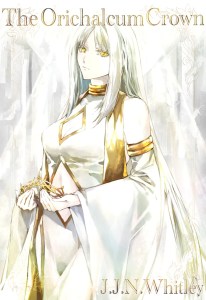
Makoto lost her mother to a battle she can’t remember before being adopted into the Kauneus Empire’s royal family. Upon her eighteenth birthday, she receives her mother’s necklace from the emperor. Makoto’s memories slowly return, haunting her with visions of her lost sister and her mother’s murder.

She is torn between the family and answers awaiting her across the sea and the relationships with her family, best friend, and his handsome brother. Makoto fears returning home will cast doubt upon her loyalty to the emperor and sever her from the family. After all, Kauneus has no need for a disloyal princess.

Makoto’s eldest adoptive sister, Athena, remains banished from Zenith Palace for uncovering the emperor’s secret bastard. She is visited by her former dragon uncle, who shares a rumor that the emperor will be assassinated during the annual ball. Athena has no choice but to break her exile to save her father. Returning home risks death, but she’ll pay any price for her family’s safety.

As night falls upon the ball, lurking shadows and hidden agendas threaten the empire’s fragile peace. Makoto and Athena must navigate the delicate lines between loyalty and betrayal and learn what they are willing to sacrifice for freedom, truth, and family.

Favorite Lines:

“Even a good dog could still bite.”

“Of all the things she wanted to remember, now she had something she wished to forget.”

“She burned brightly for those she loved but scorched her enemies.”

My Opinion:

I received a copy of this book from the author in exchange for my honest opinion.

From the very first pages, The Orichalcum Crown feels weighted with memory loss, grief, and inherited responsibility, but it never leans too heavily into melodrama. Instead, it allows those emotions to surface naturally through Makoto’s perspective. What struck me most early on was how tender the writing is even when it’s describing frightening or brutal moments. Pain and wonder exist side by side, which gives the story a softness that makes its harsher scenes more impactful.

Makoto is a compelling protagonist because she isn’t framed as heroic in the traditional sense. She is frightened, uncertain, and often confused, but never passive. The tension between who she is expected to become and who she actually is drives much of the emotional arc. The idea of “beauty in strength” repeats throughout the novel in ways that feel earned rather than symbolic. Strength here is not dominance or fearlessness, but endurance, restraint, and the ability to care when it would be easier to close oneself off.

The political dynamics and family structures add depth without overwhelming the personal story. Emperor Rudolph is especially well written; his affection, cruelty, fear, and pride all coexist in a way that makes him unsettling yet believable. Relationships feel earned, particularly the bond between Makoto and Ephraim, which provides warmth and safety in a story that often feels cold and precarious. These quieter connections ground the larger fantasy elements and make the stakes feel intimate rather than abstract.

What ultimately makes The Orichalcum Crown linger is its refusal to simplify morality. No one emerges unmarked by violence, grief, or compromise. Even moments of love are threaded with loss. The novel trusts the reader to sit with discomfort, to hold conflicting truths at the same time, and to recognize that survival often reshapes people in ways they did not choose. It feels like the beginning of a larger saga, but it stands confidently on its own as a story about identity, power, and the cost of protection.

Summary:

Overall, The Orichalcum Crown may be best suited for readers who enjoy character-driven fantasy, political intrigue, and emotionally grounded coming-of-age stories. Fans of epic fantasy who value internal conflict over constant action will appreciate its pacing and tone. It also works well for readers drawn to themes of grief, found family, and morally complex authority figures, making it a strong choice for those who enjoy thoughtful, atmospheric fantasy with emotional weight. Happy reading!

Check out The Orichalcum Crown here!


Monthly Features – October 2025

Hummingbird Moonrise by Sherri L. Dodd

I received a copy of this book from the author in exchange for my honest opinion.

Synopsis: The past two years have taken their toll on Arista Kelly. Once an eternal optimist, now she has faced the darkness and must recalibrate what true happiness means for her. Meanwhile, Shane, her ex-boyfriend, is pulling all the right moves to help keep her sane from her heightening paranoia. But it doesn’t help that Iris, her Great Aunt Bethie’s friend, has disappeared.

Still, one additional trial remains. While searching for Iris, Bethie and Arista stumble upon a grand revelation in the eccentric woman’s home. With the discovery, they realize their run of chaos and loss of kin may have roots in a curse that dates back to the 1940s—the time when their family patriarch first built Arista’s cottage in the redwoods and crafted his insightful Ouija table.

This pursuit will not follow their accustomed recipe of adrenalized action, but the high stakes remain. Will the mysterious slow burn of unfolding events finally level Arista’s entire world or be fully extinguished, once and for all?

Summary: Overall, Hummingbird Moonrise is a paranormal mystery that works because it never loses its human touch. Yes, there are curses, possessions, and supernatural forces, but there’s also cinnamon bread, inside jokes, and the kind of family loyalty that keeps people moving forward even when the odds feel impossible. What I admired most is the way Dodd lets the suspense simmer without sacrificing warmth. The book left me both unsettled and comforted—a rare combination that lingers long after the last page

See the full review here: Hummingbird Moonrise
Purchase here


Unborn by Eva Barber

I received a copy of this book from the author in exchange for my honest opinion.

Synopsis: Olesya was not born like other people but was found in the Siberian Forest by a couple unable to have children. Plagued by mysterious visions and dreams, she struggles to fit into a society both as a socially inept but brilliant child and as she becomes part of a research team to discover the nature of dark matter. The findings of this discovery never make it to the scientific community as the project leader goes missing and the physics lab blows up, destroyed by a powerful foe with seemingly noble intentions.

Seattle detectives question Olesya in connection with the explosion and the disappearance of her boss. She becomes a person of interest until she herself goes missing. From her kidnappers, she learns that her parents, knowing she lacked a belly button, suspected she was created by the Russian government as part of a scientific experiment, and emigrated to the USA to hide and protect her. She also learns she possesses powers related to dark matter and of the existence of a brother held captive since his discovery by the Russian government. Even though she suspects her kidnappers’ interest in her and their motivations aren’t so noble, she joins them in rescuing her brother. Catastrophic world events following the successful rescue force her to continue working with her foes to save the world from destruction.

While working to save the world, Olesya experiences a moral dilemma and becomes someone she never thought she’d be—a mother. Olesya learns of mysterious chambers scattered around the world, and her visions return to haunt her, until she opens the chambers and learns their secrets, wishing she hadn’t. Now she faces the heart-wrenching realization that she must travel into a dark dimension to save the world from self-destruction. Worse yet, her daughter, Emery, is the key to humanity’s salvation and must follow her mother once she becomes an adult because she is the only being who can travel where no one else can to restore balance to the universe and return with an extraordinary gift for humanity. But powerful entities have reasons to keep the gift away from humanity and will do anything to stop her.

Summary: Overall, Unborn is a haunting, beautiful story about science, motherhood, and the unknowable threads that connect us. It’s the kind of book that lingers quietly after you’ve finished it — the kind that leaves you wondering whether what you just read was speculative fiction or something closer to a modern myth.

If you like stories that mix atmosphere and emotion — think The Time Traveler’s WifeNever Let Me Go, or The Daughter of Doctor Moreau — you’ll find something to love here. It’s for readers who enjoy a story that makes you think and feel at the same time; readers who don’t mind when mystery lingers even after the answers come. 

See the full review here: Unborn
Purchase here


Smoke on the Wind by Syvila Weatherford

I received a copy of this book from the author in exchange for my honest opinion.

Synopsis: “Smoke on the Wind” is a captivating tale that weaves the perils and dangers encountered on the Western frontier by Will Lawton, a young Black cowboy, after kidnapping then wedding his young Native American bride, Niabi. He plods a path packed with uncertainty that ultimately winds its way to an unthinkable opportunity – a race for free land.

Follow the characters of Smoke: the beautiful Louisa Ortega, who haunts the memory of the Chief’s son, Nashoba; Captain Horton, head of Fort Townsend, charged with keeping peace between settlers and tribes, and Dakota Sam, a rambunctious Civil War veteran attached to his military blues and backwoodsman ways.

This is the second book in an epic series, following the success of Weatherford’s first novel, “Blessings from the Four Winds.”

In this sequel, new characters are introduced: Liao Ming Chow, a Chinese immigrant, Sargent Thomas of the Buffalo Soldiers, and Mr. Todd Morgan the railroad tycoon. Niabi and Will raise two children and enjoy the protective company of their horses: Rodeo and FireTip. Their journey is marked by resilience, the spirit of community, and the ongoing struggle for safety and belonging.

Summary: Overall, Smoke on the Wind is a vivid continuation of America’s untold stories — where race, heritage, and faith collide. It’s tender and unflinching, full of voices that feel like they’ve been waiting a century to be heard. Weatherford writes history the way it deserves to be written: not as distant fact, but as living memory. For readers who are drawn to immersive, historical fiction.

See the full review here: Smoke on the Wind
Purchase here


Review: Hummingbird Moonrise by Sherri L. Dodd

Synopsis:

The past two years have taken their toll on Arista Kelly. Once an eternal optimist, now she has faced the darkness and must recalibrate what true happiness means for her. Meanwhile, Shane, her ex-boyfriend, is pulling all the right moves to help keep her sane from her heightening paranoia. But it doesn’t help that Iris, her Great Aunt Bethie’s friend, has disappeared.

Still, one additional trial remains. While searching for Iris, Bethie and Arista stumble upon a grand revelation in the eccentric woman’s home. With the discovery, they realize their run of chaos and loss of kin may have roots in a curse that dates back to the 1940s—the time when their family patriarch first built Arista’s cottage in the redwoods and crafted his insightful Ouija table.

This pursuit will not follow their accustomed recipe of adrenalized action, but the high stakes remain. Will the mysterious slow burn of unfolding events finally level Arista’s entire world or be fully extinguished, once and for all?

Favorite Lines:

“There is almost nothing worse than coming face to face with an agitated serial killer.”

“Twice, she had accidentally crashed a wedding by walking through at inopportune times. She would miss that lovely park.”

My Opinion:

I received a copy of this book from the author in exchange for my honest opinion.

This is book three in Sherri L. Dodd’s paranormal mystery series, Murder, Tea, and Crystals—you can find my review to the first two books here: Murder Under Redwood Moon (book 1) & Moonset on Desert Sands (book 2).

As the third and final book in this trilogy, Hummingbird Moonrise blends cozy domestic rituals with creeping dread in a way that feels both comforting and unsettling. One moment you’re sipping apple spice tea with Arista and her Auntie, and the next you’re peering into shadowy rooms, wondering if the curse that has haunted their family for generations is about to resurface. I loved the way the novel keeps this balance—never letting you forget the warmth of family bonds, but always threading in a sense of danger just out of sight.

What makes the book stand out is how personal it feels. The Kelly family’s history—haunted by curses, betrayals, and supernatural debts—doesn’t read like distant lore. It weighs directly on the characters’ everyday choices. Arista, still finding her place as a “prophesied witch,” doesn’t get the luxury of choosing between a normal life and a magical one; the two are woven together, whether she’s ready or not. That tension keeps the story engaging, because you’re always watching her struggle between the pull of destiny and her desire for peace.

The atmosphere of the California redwoods adds so much texture. The setting becomes a character of its own, cloaked in fog, filled with shadows, and alive with whispers of both natural and supernatural dangers. Dodd writes with a rhythm that sometimes lulls you with cozy descriptions and then jolts you with eerie details—just like her characters, you never know when the ground beneath your feet will shift.

At its heart, though, Hummingbird Moonrise is about resilience. It’s about how families carry their curses, their traumas, and their secrets—but also how they carry one another. Arista and Auntie’s bond is the emotional anchor of the book, and their mixture of banter, affection, and fierce loyalty gives the story its heart. Even amid possessions, missing persons, and malevolent artifacts, the real magic lies in love and perseverance.

Summary:

Overall, Hummingbird Moonrise is a paranormal mystery that works because it never loses its human touch. Yes, there are curses, possessions, and supernatural forces, but there’s also cinnamon bread, inside jokes, and the kind of family loyalty that keeps people moving forward even when the odds feel impossible. What I admired most is the way Dodd lets the suspense simmer without sacrificing warmth. The book left me both unsettled and comforted—a rare combination that lingers long after the last page. Happy reading!

Check out Hummingbird Moonrise here!


Review: Finding Destiny by Aliyah Hastings

Synopsis:

The truth is hidden in plain sight, and the answers will cost her everything.

Tara has spent her life chasing the truth, the mystery of her father’s death, and the secrets buried with him. But when she is torn from her quiet existence and thrust into the heart of Velmora, a city consumed by a malevolent presence, she stumbles into something ancient.

What she thought was a simple pursuit of truth was only the beginning. Each revelation unveils a deeper layer of deceit. And when a sacred ceremony ends in bloodshed, Tara is forced to flee. But running is not enough. The Queen is rising, and her influence is rapidly expanding; even the heavens aren’t safe.

The world is teetering on the brink. What’s she going to do?

Favorite Lines:

“Another day dawned, indifferent to my feelings, a quiet statement.”

“Love makes you do weird things.”

“I didn’t heal, not yet. But I sat. I breathed. And for now, that was enough.”

My Opinion:

I received a copy of this book from the author in exchange for my honest opinion.

Aliyah Hastings’ Finding Destiny is a lush, imaginative coming-of-age tale wrapped in fantasy’s shimmer and shadow. From the very first pages, the novel strikes a balance between aching nostalgia and the thrill of stepping into an unknown world. It opens quietly, with a young woman caught between memory and longing, but soon tumbles into an adventure threaded with myth, family secrets, and a search for belonging.

What makes this story stand out is its lyrical detail. Hastings lingers on sensory moments—the warmth of sunlight breaking through curtains, the sting of stepping on a seashell, the whisper of air inside a cavern—as if reminding us that destiny isn’t just found in grand revelations but in the small textures of living. Each chapter feels both intimate and cinematic, pulling you from pink-painted bedrooms into cavernous secrets and chateaus that breathe menace.

The heart of the book, though, isn’t just fantasy spectacle—it’s vulnerability. The protagonist’s longing for connection, her memories of lost love, and her search for her place in a fractured world all carry an honesty that feels deeply human. Hastings doesn’t shy away from pain or disappointment, but she always threads hope through the narrative. When the heroine finally realizes that destiny is not about running away but stepping fully into herself, the moment lands with quiet, powerful clarity.

For readers who enjoy fantasy woven with emotion, Finding Destiny is both immersive and poignant. It’s a story about courage, grief, and the possibility of transformation—written with a voice that makes you pause and savor.

Summary:

Overall, Finding Destiny is a beautifully written fantasy about grief, self-discovery, and courage. Poetic detail and heartfelt emotion make this novel linger long after the last page. Happy reading!

Check out Finding Destiny here!


Review: Spellbound by the Captain’s Curse by Frances Mary Dunham

Synopsis:

A Spicy Fantasy Romance of Blood Magic, Cursed Lovers, and Storm-Bound Passion.

She came for vengeance. He offered ruin. Together, they’ll defy the gods—or die trying.

Heiress Abigail Derby was born to rule the seas. She’s fought her way through storms, smugglers, and scheming noblemen to claim her place at the helm of her father’s shipping business. But when a shipment critical to her family’s legacy is stolen by none other than her long-time rival—Captain Wesley Northrup, the maddeningly seductive pirate with a devil’s grin and a taste for destruction—Abigail launches a personal mission of retribution. What she doesn’t expect is to uncover his devastating secret: Wesley is a cursed warlock.

Bound by ghost-forged chains and the ancient power of a fractured Oathstone, Wesley is slowly being consumed by magic—body and soul. Each silver-blue link etched across his chest is both a prison and a death sentence. The only way to break the curse is through blood magic—dark, forbidden rituals that require sacrifice, pain, and a bond no spell can fake. The deeper they go, the more Abigail must give. Her blood. Her trust. Her desire.

And she’s burning with all three.

As they descend into a world of haunted ruins, sea beasts, smugglers, and betrayal, Abigail and Wesley find themselves fighting not just for survival, but for control—of the curse, of their futures, and of the explosive passion that ignites every time they touch. What begins as an uneasy truce becomes an irresistible hunger neither of them can deny.

Every ritual draws them closer. Every broken chain demands a deeper intimacy. And every act of magic tempts fate itself.

But the curse is not the only danger.

There are forces in Salem who want Abigail’s empire to fall. Enemies from Wesley’s past who would see him dragged beneath the waves. Ghosts. Gods. Monsters. And as the storm builds around them, the final ritual may cost more than blood—it may demand their hearts, their souls, or the destruction of everything they swore to protect.

Will they break the curse before it breaks them? Or will love be the greatest risk of all?

Prepare to be swept away by:
Enemies-to-lovers heat that explodes off the page
Forced marriage by decree
Erotic blood magic & soul-binding rituals
A cursed rogue sea captain & a proud, powerful heiress
Sea monsters, ghost-inked chains & salt-kissed kisses
Savage intimacy, sacred vows & one unforgettable final bond

Set against the dark allure of colonial Salem and the raging Atlantic, Spellbound By The Captain’s Curse is a deliciously wicked blend of slow-burn tension, supernatural danger, and off-the-charts spice. This standalone fantasy romance delivers everything you crave—grit, guts, and gasp-worthy passion wrapped in lyrical prose and high-stakes adventure.

The rituals are brutal. The sex is searing. The love is something they never saw coming.

For readers who devour the seductive danger of The Bridge Kingdom, the raw intensity of From Blood and Ash, and the dark romantic magic of A Soul to Keep, this book will leave you aching, breathless, and completely spellbound.

Favorite Lines:

“I am terrified not of dying, but of opening myself to Wesley—of letting him see the soft, damaged parts I keep hidden even from myself. And that, I realize, is exactly what the curse wants.”

“I forgot how allergic you are to being outbid.”

“You mistake audacity for cleverness…You mistake privilege for immunity.”

“The storm didn’t claim them. Desire did.”

My Opinion:

I received a copy of this book from the author in exchange for my honest opinion.

From the very first page, Frances Mary Dunham’s Spellbound by the Captain’s Curse sweeps you into Abigail Derby’s world of salt‑sprayed decks, candlelit archives, and auctions where fortunes—and honor—are won or lost in a heartbeat. Abigail, acting head of Derby Shipping, is introduced in full force at a high‑stakes auction where she dares to outbid Salem’s fiercest merchant captains—until Captain Wesley Northrup, the legendary “North Sea Devil,” arrives to crush her last vestige of pride.

Dunham balances razor‑sharp wit with crackling sexual tension. Abigail’s fierce determination and Wesley’s dark magnetism play off each other like thunder and lightning: each encounter leaves them both scorched and craving more. Unlike many romances, their enemies‑to‑lovers arc is driven as much by legacy and honor as by desire. The looming threat of the ancient Oathstone—a relic that can bind souls as surely as chains bind wrists—raises the stakes from personal rivalry to a battle for free will itself.

The novel’s pacing is masterful. After the charged auction scene, we follow Abigail into the storm‑lashed Maritime Archives, where she uncovers forbidden laws and the terrible power of the Oathstone. Moments of high romance—stolen glances, near‑touches, and whispered challenges—are threaded through discoveries that could undo her family’s legacy forever. Dunham’s prose is evocative without ever becoming overwrought: you taste the brine on your lips, feel the weight of Abigail’s defiance, and shiver at every hint of magic lurking in Salem’s shadows.

At its heart, this is a story about choice: whether to cling to the safety of solitude or risk everything for connection. Abigail and Wesley must decide if the bond the Oathstone forces upon them is a prison—and whether their own hearts are worth the gamble. 

Summary:

Overall, for readers who love gritty coastal settings, smart heroines, morally complex heroes, and slow‑burn romance that truly earns its happy ending, Spellbound by the Captain’s Curse is an absolute must‑read. Happy reading!

Check out Spellbound by the Captain’s Curse here!


Review: The Chronicles of Ordi: Brotherhood of the Lost Gems by Alex Zenk

Synopsis:

In the sprawling fantasy realm of Asheros, Ordi—a dwarf mage of unprecedented talent—finds himself thrust into a desperate quest when rumors emerge that the Dark Lord Xerxes has returned from the dead. Together with his loyal posh hound companion Mira and his warrior brother Verdun, Ordi must embark on a perilous journey to recover the legendary Otthroite gems, ancient artifacts of immense power.

As darkness spreads across the land, Ordi’s party grows to include unlikely allies: a mysterious elven druid named Nimue, a gnome healer, and a charismatic bard hiding dark secrets. Their quest takes them through treacherous forests, abandoned dwarven strongholds, and into territories untraveled for centuries, all while battling the forces of the encroaching evil.

With each step, Ordi discovers more about the world’s forgotten magic and his own extraordinary connection to the arcane. The gems they seek were once used to enhance the weapons and armor of legendary heroes—but finding them proves far more dangerous than anticipated when betrayal strikes from within their ranks.

Time is running short as reports of attacks along the borderlands grow more frequent and disturbing. Ordi must master ancient spells, navigate political tensions between races, and confront enemies both seen and unseen if he hopes to prevent the prophecies of destruction that haunt his dreams.

If you enjoyed The Fellowship of the Ring, The Eye of the World, and The Wise Man’s Fear, you’ll love The Chronicles of Ordi: Brotherhood of the Lost Gems.

Favorite Lines:

““Oh, the winds, they sing our tale, of heroes bold who shall not fail. Our hopes and dreams will see us through the mist and twilight’s hue.”

“I can make you a god… but first, you must die.”

My Opinion:

I received a copy of this book from the author in exchange for my honest opinion. 

In The Chronicles of Ordi: Brotherhood of the Lost Gems, Alex Zenk gives us a fantasy tale that wears its heart proudly on its sleeve. It’s a classic quest at its core—complete with a call to action, a legendary artifact, and a band of unlikely heroes—but what sets it apart is the emotional vulnerability of its central character and the steady exploration of themes like faith, forgiveness, and the meaning of purpose.

The story follows Ordi, a reclusive dwarf who has spent years hiding from the world—and from his past. But when an unexpected vision shakes him out of his spiritual exile, he’s drawn into a divine mission that might be bigger than he’s prepared for. He’s not a warrior or a prophet, but he is someone who believes in doing what’s right, even if it hurts. That kind of quiet courage powers much of the book’s emotional momentum.

As the journey unfolds, Ordi joins forces with a growing band of companions, forming the “Brotherhood of the Lost Gems.” Their quest isn’t just to retrieve magical stones—it’s a search for hope, healing, and second chances. Zenk’s writing isn’t flashy or dense; it’s clear, sincere, and often meditative, especially in its reflections on Ordi’s relationship with Elandril, the world’s creator deity. The spiritual undertones feel authentic and integrated, adding depth without becoming preachy.

This is a book for readers who enjoy fantasy driven by relationships and ideals as much as by action. It has moments of danger and suspense, yes—but also long stretches of conversation, camaraderie, and introspection. The pacing may feel gentle to some, but the rewards are emotional rather than explosive.

Summary:

Overall, Brotherhood of the Lost Gems is a thoughtful, redemptive fantasy debut with a rich spiritual core. It champions kindness, humility, and the power of belief—not just in gods or magic, but in each other. If you’re looking for a quest with soul, this one’s worth answering.

Check out The Chronicles of Ordi: Brotherhood of the Lost Gems here!


Review: Coven of Andromeda by Ron Blacksmith

Synopsis:

When a powerful magical artifact disappears from the Tanner home, Bree uncovers her family’s true legacy: they’re descendants of witches who fled a dying world centuries ago. Now, Bree must forge an uneasy alliance with Sam Sorken, her mysterious neighbor who harbors secrets of his own—he’s a necromancer from that same world, sworn to protect the coven.

Together, they race against time to stop Kestral Drach, a vengeful voodoo witch preparing to breach the Realm of the Dead and consume the power of countless spirits. As ancient histories collide with present dangers, Bree must embrace her heritage and master unexpected magic that binds her family across generations, before Kestral unleashes forces that could destroy both worlds.

Favorite Lines:

“The timing of destiny is rarely convenient”

“Balance has never been particularly difficult to disrupt.”

“Different paths sometimes lead to the same destination, my boy.”

My Opinion:

I received a copy of this book from the author in exchange for my honest opinion.

At first glance The Coven of Andromeda looks like two different novels stitched together: a high-fantasy apprenticeship set beneath lavender skies on Eldoria, and a contemporary tale of bayou folk-magic unfolding in rural Louisiana. The stitching, however, is deliberate. As dimensional rifts widen, necropolis spirits seep into southern swampland, and the narrative threads converge with satisfying inevitability.

Blacksmith frames the entire story around one idea—that so-called “life-magic” and “death-magic” are complementary halves of the same discipline . Sameril, a meticulous student of necromancy, and Bree Tanner, a reluctant heir to her grandmother’s coven, spend much of the book wrestling with that paradox. Their eventual alliance is persuasive because both characters must confront inherited duty: Sameril through the austere Codex Mortis , Bree through a family legacy that offers “truths we must face” rather than evade .

Structurally, the novel alternates measured training chapters with brisk set-piece battles; the rhythm reminds me of a well-paced anime season. The climax is undeniably crowded—multiple factions, a power-hungry voodoo queen, and a spirit of chaos invoked in a single ritual—but the ambition rarely tips into confusion. When the rifts finally erupt, Blacksmith delivers the promised spectacle without abandoning the quieter question of what balance between worlds should look like.

Stylistically, the writing alternates between lyrical description and colloquial banter. A paragraph detailing obsidian pillars flickering with ghost-light may be followed by a dry aside about who is responsible for bringing refreshments to the next ritual. This tonal flexibility works because the characters themselves embrace both gravity and levity; a sisterly bond forged late in the novel underscores that the real stakes are personal before they are cosmic .

Summary:

Overall, I would describe this as A Darker Share of Magic colliding with Practical Magic at a Cajun cookout. Readers who enjoy expansive fantasy with contemporary texture will find The Coven of Andromeda an engaging—and occasionally demanding—journey. Its length requires patience, but the reward is a robust exploration of power, responsibility, and the fragile equilibrium between the realms of the living and the dead. Happy reading!

Check out Coven of Andromeda here!


Review: Mercury to the Moon by J.Q. Gagliastro

Synopsis:

It is no secret that planet Earth is home to the notoriously greedy species known as humans. What remains a secret to these humans is the community of aliens who live hidden under invisible force fields across neighboring planets and moons. They eat eat fried butterflies for lunch, travel through interplanetary vortexes, and coexist with giant bees, solar dragons, and hairy one-hundred-legged spiders—peacefully for the most part.

Eighteen-year-old Truman Howard is not like his classmates. While they roll around in their parents’ riches and travel the globe, Truman takes care of himself, t working part time as a ski instructor and thrifting his clothes. He has no family, no friends, and a roommate who gives donkeys a bad rep.

But everything changes the day Truman meets a mysterious woman who invites him to an unforgettable place that will make him and anyone who reads his story feel like they belong. For it is there, among the stars, where Truman embarks on a remarkable voyage and finds new friends, fantastic creatures, and a dangerous destiny that’s been brewing for him for many, many moons!

Favorite Lines:

“The Sun, stubborn and strong-willed, broke through thinning clouds.”

“Hands make me, ears love me, but eyes never catch me.”

“But hey, think on the bright side. Some people can be completely heartless!”

My Opinion:

I received a copy of this book from the author in exchange for my honest opinion.

Mercury to the Moon is the magical first installment in J.Q. Gagliastro’s Truman’s Space Odyssey series. The story follows Truman Howard, an eccentric, kind-hearted teen raised in a prestigious boarding school in the Canadian Rockies. His life is abruptly turned upside down when a supernatural event triggers the discovery that he is not just a regular boy—he is an alien with the ability to manipulate water and emotions. Swept away from Earth and into the fantastical solar system of Aether, Truman joins other “will-gifted” teens on a dragon-backed space journey led by an eclectic team of interplanetary mentors. Blending contemporary boarding school drama with richly imaginative sci-fi fantasy, this novel is as whimsical as it is poignant.

Mercury to the Moon is an exhilarating cosmic coming-of-age story that thrives on rich world-building and emotional honesty. Truman is instantly likable—an outsider who’s endured both classism and cruelty, yet continues to treat others with patience and grace. Gagliastro brings a fresh voice to YA fantasy by pairing magical realism with real-world issues such as bullying, grief, identity, and socioeconomic disparity. The characters feel fully formed, from the acid-tongued but loyal Esmeralda to the charmingly flirtatious Vedrò, each carrying their own trauma, secrets, and strength.

The novel’s greatest achievement lies in its balance: poetic prose pairs seamlessly with interstellar action; laugh-out-loud moments are layered with deeply vulnerable revelations. Gagliastro’s descriptions sing with color and style—lavender sidewalks on Mercury, dragons with hieroglyphic scales, a boarding school dorm with aquarium beds—and the story never shies away from celebrating queer, neurodiverse, and international identities. Truman’s self-discovery is not just about powers—it’s about belonging, family, and courage.

Gagliastro also smartly structures the plot around a literal and metaphorical journey: Truman and his new cohort will travel planet to planet, learning both academic lessons and emotional truths. Readers will be delighted by the imaginative elements—like Cherry the Blossom Dragon, bleeding-heart alert systems, and invisible domes—but the heart of the story remains in the relationships formed between characters, particularly the reunion between Truman and his long-lost sister. The emotional payoff is tender, surprising, and earned.

If you’re looking for a genre-bending YA adventure that fuses high-concept space fantasy with grounded emotional arcs, Mercury to the Moon is a brilliant debut. It’s perfect for fans of Percy Jackson, The School for Good and Evil, or Heartstopper—and for anyone who has ever felt different and dreamed of a world where they finally belong.

Summary:

Overall, Mercury to the Moon is a lyrical, expansive, and deeply human fantasy adventure about identity, family, and the magic of finding your place in the universe. Gagliastro has created a richly layered world full of wonder, wit, and warmth—and this first installment leaves readers eager for Book Two. Happy reading!

Check out Mercury to the Moon here!


Review: A Song at Dead Man’s Cove by Ana Yudin

Synopsis:

Never turn your back on the ocean…

2023. Another person has disappeared at Dead Man’s Cove in coastal Washington. Jaded from her job at the historic Irving Hotel, Zarya wanders to the scene of the tragedy. She has heard her Russian mother’s tales of rusalki—vengeful spirits that have died unclean deaths near a body of water—and never paid them much attention. But now, on a misty headland beside an abandoned lighthouse, Zarya locks eyes with the rusalka and is chosen to be the next victim. She must unearth the siren’s tragedy before Rusalka Week, a period in early summer when water-spirits roam freely on land.

1850. Josephine has just joined her newlywed husband in Washington, in the lighthouse erected by local businessman Hurley Irving. Marriage is not quite what she expected, and her melancholia grows over the course of the winter. The medic prescribes pregnancy as the antidote. What he doesn’t realize is how far Josephine is willing to go in order to become a mother.

The Gothic horror novel follows two protagonists, a modern-day misanthrope who fears intimacy and a woman in the Victorian era who thinks stealing love will make her whole. But how long can a person hide from love, and can love really be taken by force?

Favorite Lines:

“She decided right then and there that there are two kinds of loneliness: the kind borne of solitude, and the kind that swelters in a crowd full of people. In both cases, loneliness was the same—it emptied the soul until there was nothing left. No distractions could ever be enough to feel full again.”

“She could not have known what was about to happen. She could not have known that the ocean would break its promise to her. “

“Josephine seemed determined to never learn her lesson—that one cannot take love by force, that love must be freely given to be real.”

“Grief could be a funny thing. Sometimes, the biggest loss of all was for a person who had never even existed.”

My Opinion:

Ana Yudin’s A Song at Dead Man’s Cove is a chilling, atmospheric blend of contemporary mystery and gothic folklore, wrapped in lyrical prose and deep emotional undercurrents. Set in a sleepy coastal town plagued by a history of disappearances, shipwrecks, and lingering spirits, the novel expertly straddles two timelines—1850s and present-day—to tell a tale as haunting as the sea itself.

The story follows Zarya, a concierge at the historic Irving Hotel, who becomes entangled in a series of eerie events that link back to the tragic story of Josephine Byrne, a 19th-century woman whose love affair, mental anguish, and suicide cast a long shadow over the town. When modern-day women begin vanishing under similar circumstances, Zarya must uncover the dark legacy left behind—one connected to mythic sirens, sunken ships, and generational secrets.

What sets this book apart is its rich, evocative atmosphere. Yudin conjures foggy coves, crumbling lighthouses, and salt-bitten ghosts with the kind of vivid detail that lingers in your mind like brine in the air. Her depiction of grief, longing, and the desire for connection—across time and beyond death—adds layers of emotional complexity to what could have easily been a simple supernatural thriller.

As the threads between Zarya’s present and Josephine’s past tighten, the novel builds tension with finesse. It’s not just about what happened, but what it means. The sirens themselves are not one-note monsters, but spectral figures full of sadness and rage, blurring the line between victim and villain. This nuanced approach makes A Song at Dead Man’s Cove a standout in the genre.

The climax is both cinematic and intimate, offering moments of genuine horror as well as deep introspection. Themes of love, betrayal, womanhood, and the price of silence echo throughout, making the story feel as ancient and universal as the ocean itself.

If you love books with dual timelines, mythological influence, ghostly lore, and women reclaiming their power through untold stories, this book should absolutely be on your list.

Summary:

A Song at Dead Man’s Cove is a mesmerizing, multilayered ghost story that manages to be both otherworldly and deeply human. Ana Yudin delivers a narrative that is as much about ancestral trauma and unspoken truths as it is about sirens and shipwrecks. It’s a tale of women silenced by history—singing now through salt and shadow to be heard.

Highly recommended for fans of Silvia Moreno-Garcia, Erin Morgenstern, and readers who crave gothic atmosphere with a feminist edge. Happy reading!

Check out A Song at Dead Man’s Cove here!


Review: Bring Down the Sky by Evelyn Hyde

Synopsis:

What do you do when your only safe haven is overrun by monsters?

With Silverwood under attack, Spymaster Vendrick Caecillion’s instinct is to plan. It’s to counterattack from the shadows. It’s to never expose your underbelly and never reveal your hard-kept secrets.

But to save his sister from the ruthless Unseen, he’ll have to break all of his old rules.

Swordswoman Frelia Valerius’ instinct is to fight. To charge forward and, yes, risk her life in others’ defense, if that’s what it takes to win. It’s to never surrender and never yield.

But how can she move forward when the dead keep trying to claw her back?

The Unseen will stop at nothing to claim all nine of the sacred Bloodrunes, and no one is safe from their hateful plans—not even the dead. To save Vendrick’s little sister, Frelia’s hometown, their students, and themselves, Frelia will have to face the past she hasn’t yet buried, and Vendrick will need to silence his doubts for good.

For if they can’t, world-ending monsters will only be the beginning.

Favorite Lines:

“What glitters like gold but hangs heavy as a stone?”

“What is done may only be answered for, and what is made can only be destroyed.”

“You, love, kept cracking my masks. And I had far fewer of them, as a student, so you were the first person in a very long time to just see… me.”

“…and he had no words for how much I’d bring down the sky for you echoed in his ears.”

My Opinion:

I received a copy of this book from the author in exchange for my honest opinion.

In Bring Down the Sky, Evelyn Hyde unleashes an epic continuation of her The Wolf and The Viper saga—a sprawling fantasy infused with wit, grit, and emotional intelligence. With rich worldbuilding, sharp character interplay, and moments of sheer cosmic awe, this book is a standout in the indie fantasy space and a testament to Hyde’s maturing narrative voice.

The story continues the journey of Frelia and Vendrick, two figures caught in the storm of rebellion, arcane secrets, and the shadowy threat of the Unseen. Hyde wastes no time plunging readers into complex interpersonal dynamics and existential peril. The pace is brisk but never rushed, balancing large-scale conflict with intensely personal moments of doubt, love, rage, and loyalty.

One of Hyde’s greatest strengths is dialogue. It crackles with sarcasm, warmth, and tension—sometimes all at once. Characters feel lived-in, full of contradictions and tenderness beneath their armor. Deadcut, in particular, brings levity and depth, while Vendrick’s arc explores trauma and self-worth with nuance rarely seen in the genre.

The magic system—based on Bloodrunes, darkbeasts, and spellbooks—is creative and well-integrated, never overwhelming the story’s emotional core. And while the action is cinematic (especially a pulse-pounding rooftop showdown with a monstrous Lord Huginn), it’s the quiet moments—of betrayal, bonding, and hard-won trust—that linger.

Hyde also lets the book play with genre conventions. Political intrigue, magical academia, gothic horror, and found family tropes blend into something wholly her own. Fans of Tamsyn Muir or Leigh Bardugo will find plenty to love, but Hyde’s voice is refreshingly unique.

This is a fantasy with heart. A story where emotional honesty matters as much as magical might. And if the last few chapters are any indication, the saga still has plenty of teeth—and secrets—left to bare.

Summary:

Bring Down the Sky is a fierce, funny, and often deeply moving fantasy that pushes its characters—and readers—to grapple with identity, loyalty, and legacy in a world on the edge of unraveling. If you’re searching for a richly layered, character-driven epic that still knows how to have fun (and make you feel things), Evelyn Hyde’s latest installment should be at the top of your list. Happy reading!

Check out Bring Down the Sky here!