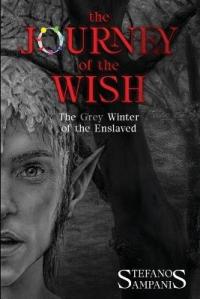
Review: The Journey of the Wish – Part I: The Grey Winter of the Enslaved by Stefanos Sampanis

Synopsis:

I perceived the world and acknowledged all of its colours. There was truth; the kind you cannot simply speak of. A tale suits the cause better. It is a disguise that anyone can enjoy and if intrigued, look behind it. This is my testament. A fantasy saga exploring the most human reality. A Journey that lies ahead and matures with each page turned.

Favorite Lines:

“Yet, though that name somehow remained, most of his knowledge from those days is useless and forgotten – belonging to a life vastly different from the cursed existence he now endures.”

“More important than anyone, but least important to all.”

My Opinion:

I received a copy of this book from the author in exchange for my honest opinion.

The Grey Winter of the Enslaved is a book that doesn’t ease you into its world—it immerses you, then asks you to endure it. From the opening pages, it’s clear this is a story built on suffering, memory, and consequence, told through a mythic lens that feels both ancient and emotionally immediate. The prose leans lyrical and deliberate, often reading more like a lament or an oral history than a conventional fantasy narrative, which suits the story it’s trying to tell.

What stood out to me most is how deeply this book commits to the idea of loss as a permanent condition rather than a temporary obstacle. Glimm’s story isn’t about overcoming trauma in a neat, redemptive arc; it’s about surviving it, living alongside it, and being shaped—sometimes deformed—by it. The physical transformations inflicted on the Enslaved mirror the emotional ones, and the book never lets you forget the cost of endurance. Winter here isn’t just a season; it’s a system, a sentence, and a state of being.

The worldbuilding is dense and methodical, layered with gods, rituals, hierarchies, and mythic laws that govern who belongs where and at what cost. This isn’t the kind of fantasy that explains itself quickly or cleanly. Instead, it trusts the reader to keep up, to sit with uncertainty, and to piece meaning together over time. At times, this can feel heavy—especially when paired with the book’s emotional weight—but it also gives the story a sense of gravity and purpose. Nothing here feels accidental or decorative.

This is not an easy book, either emotionally or structurally. It lingers in grief, cruelty, and moral ambiguity, and it often refuses the comfort of hope. But there’s something quietly powerful in that refusal. The Grey Winter of the Enslaved feels less like a story meant to entertain and more like one meant to be witnessed. By the end, it leaves you with the sense that survival itself can be a form of resistance—even when it costs more than it gives.

Summary:

Overall, The Grey Winter of the Enslaved is a dark, myth-heavy fantasy that leans into grief, endurance, and moral cost rather than heroics or easy redemption. I found it to be an emotionally demanding and richly imagined story where survival comes at a steep price and loss is never fully undone. It’s immersive, somber, and unapologetically heavy. This story could be for readers who enjoy lyrical, myth-inspired fantasy; stories centered on suffering, memory, and survival; and worlds governed by harsh systems rather than hopeful destinies. Best for patient readers comfortable with slow pacing, dense worldbuilding, and emotionally heavy themes. Happy reading!

Check out The Grey Winter of the Enslaved here!
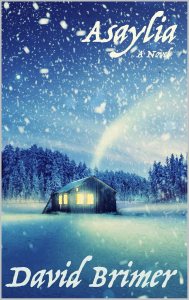


Review: Asaylia by David Brimer

Synopsis:

Julie Wade’s grandmother is not your ordinary grandmother. The locals tell wild tales about her supposed witchcraft and the myriad of secrets hidden on her vast estate in the central Florida swamps. During a summer visit, Julie discovers the stories may be more than just fiction, and her grandmother may be dabbling in more than just witchcraft.

Julie suddenly finds herself trapped in the wintry world of Sidhe without memory of how she arrived. There she finds others who live under the iron will of The Great Spirit, none remembering how they became prisoners in the perpetual winter. It is only upon the arrival of the enigmatic stranger, Asyalia, that Julie discovers the horrifying truth of The Great Spirit and accepts a destiny she never knew was hers.

David Brimer, author of the acclaimed The Devil You Know and Piedmont, returns with a brand new epic of suspense and wonder. Full of the same sharp storytelling and unexpected twists Brimer is known for, Asaylia explores new territory of fantasy unlike anything you’ve ever read before.

Favorite Lines:

“These people are so proudly backward.”

“You’ll only be as miserable as you make yourself.”

“Let time decide whether our paths cross again.”

My Opinion:

I received a copy of this book from the author in exchange for my honest opinion.

Asaylia begins as a deeply grounded story about displacement—geographical, emotional, and generational. Julie Wade isn’t swept into another world right away—she’s exiled from Chicago and dragged into a summer she doesn’t want, in a place that feels sticky, isolated, and wrong from the moment she arrives. Central Florida presses in on her with heat and silence, and the story lets that discomfort linger. It’s the kind of opening that trusts the reader to sit with unease instead of rushing toward spectacle.

At the center of that unease is Julie’s family, especially her grandmother. Mrs. B’s home feels carefully arranged, overly controlled, and just a little too watchful. The garden gnomes, at first odd and almost funny, slowly take on a different weight. Rules are everywhere. Explanations are not. Julie senses that the adults in her life are managing her rather than protecting her, and that realization lands with a familiar teenage sting. The book does a good job of showing how confusion can feel like betrayal, especially when it comes from people who claim to love you.

When the fantastical elements finally rupture the realism, Asaylia does not abandon its emotional core. Instead, it expands it. The mushroom circle is not just a portal—it’s a reckoning. Memory, guilt, and buried identity become literal forces, and the cost of ignorance is made brutally clear. Asaylia herself emerges not as a benevolent guide, but as a hardened survivor shaped by violence and duty. Her world is cold, ruthless, and governed by consequences, and Julie’s arrival destabilizes more than just the balance of power. Watching Julie move through this world is less about learning magic and more about learning the truth—about herself, about her family, and about what has been done in her name.

The latter half of the novel accelerates into something darker and more urgent, where family history, magical warfare, and moral responsibility collide. The reunion between Julie and her mother is one of the book’s most emotionally charged moments, transforming love into a weapon against erasure. By the time the truth of Mrs. B’s role is confronted, Asaylia has fully shed any coming-of-age softness. What remains is a story about choosing to remember, even when remembering hurts, and about deciding whether love excuses harm. It doesn’t offer comfort so much as clarity, and that choice gives the ending its weight.

Summary:

Overall, Asaylia is a dark fantasy rooted in family secrets, lost memory, and the damage caused by people who believe they’re doing what’s best. What begins as an unwanted summer slowly turns into a fight for truth and survival. It’s unsettling, emotional, and often harsh, but it never loses sight of the human cost at the center of the story. Happy reading!

Check out Asaylia here!