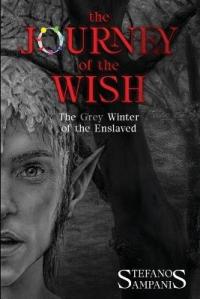
Review: The Journey of the Wish – Part I: The Grey Winter of the Enslaved by Stefanos Sampanis

Synopsis:

I perceived the world and acknowledged all of its colours. There was truth; the kind you cannot simply speak of. A tale suits the cause better. It is a disguise that anyone can enjoy and if intrigued, look behind it. This is my testament. A fantasy saga exploring the most human reality. A Journey that lies ahead and matures with each page turned.

Favorite Lines:

“Yet, though that name somehow remained, most of his knowledge from those days is useless and forgotten – belonging to a life vastly different from the cursed existence he now endures.”

“More important than anyone, but least important to all.”

My Opinion:

I received a copy of this book from the author in exchange for my honest opinion.

The Grey Winter of the Enslaved is a book that doesn’t ease you into its world—it immerses you, then asks you to endure it. From the opening pages, it’s clear this is a story built on suffering, memory, and consequence, told through a mythic lens that feels both ancient and emotionally immediate. The prose leans lyrical and deliberate, often reading more like a lament or an oral history than a conventional fantasy narrative, which suits the story it’s trying to tell.

What stood out to me most is how deeply this book commits to the idea of loss as a permanent condition rather than a temporary obstacle. Glimm’s story isn’t about overcoming trauma in a neat, redemptive arc; it’s about surviving it, living alongside it, and being shaped—sometimes deformed—by it. The physical transformations inflicted on the Enslaved mirror the emotional ones, and the book never lets you forget the cost of endurance. Winter here isn’t just a season; it’s a system, a sentence, and a state of being.

The worldbuilding is dense and methodical, layered with gods, rituals, hierarchies, and mythic laws that govern who belongs where and at what cost. This isn’t the kind of fantasy that explains itself quickly or cleanly. Instead, it trusts the reader to keep up, to sit with uncertainty, and to piece meaning together over time. At times, this can feel heavy—especially when paired with the book’s emotional weight—but it also gives the story a sense of gravity and purpose. Nothing here feels accidental or decorative.

This is not an easy book, either emotionally or structurally. It lingers in grief, cruelty, and moral ambiguity, and it often refuses the comfort of hope. But there’s something quietly powerful in that refusal. The Grey Winter of the Enslaved feels less like a story meant to entertain and more like one meant to be witnessed. By the end, it leaves you with the sense that survival itself can be a form of resistance—even when it costs more than it gives.

Summary:

Overall, The Grey Winter of the Enslaved is a dark, myth-heavy fantasy that leans into grief, endurance, and moral cost rather than heroics or easy redemption. I found it to be an emotionally demanding and richly imagined story where survival comes at a steep price and loss is never fully undone. It’s immersive, somber, and unapologetically heavy. This story could be for readers who enjoy lyrical, myth-inspired fantasy; stories centered on suffering, memory, and survival; and worlds governed by harsh systems rather than hopeful destinies. Best for patient readers comfortable with slow pacing, dense worldbuilding, and emotionally heavy themes. Happy reading!

Check out The Grey Winter of the Enslaved here!


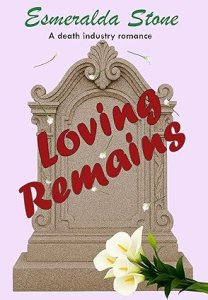
Review: Loving Remains by Esmeralda Stone

Synopsis:

Isaac Collins is trying to run Teagan’s Funeral Home and keep his life as calm as possible.

Cory Hughes is just trying to keep her head—and her death consultant business—above ground.

Thrown together by circumstance, a bit of guilt, and a lot of attraction, Isaac and Cory begin an uncomfortable friendship and soon realize the things that make them different may also be why they can’t seem to stay away from each other. And it could be just in time. Because not everything is as it seems at Teagan’s Funeral Home.

A romantic mystery for adult readers looking for mature characters, honest and open-door intimacy, dark humor, and a happily ever after that feels earned.

Favorite Lines:

“There were some laughs that made you instantly laugh with them. Some  laughs that you couldn’t help but laugh at. And some laughs that were horrific and terrible, like a five-car pile-up you couldn’t turn away from.”

“No one should sit unclaimed for years on end, just waiting to see if someone remembered them.”

“I’ve learned that passing judgement on another person’s actions without knowing all the information can cause more damage than letting things go.”

“That death was supposed to be natural, which meant it was ugly and messy at times.”

My Opinion:

I received a copy of this book from the author in exchange for my honest opinion.

Loving Remains is one of those books where the premise sounds quirky—maybe even a little playful—but the emotional weight sneaks up on you fast. A romance set within the death industry could easily tip into gimmick territory, but this story doesn’t do that. Instead, it treats death as something constant, unavoidable, and deeply human, weaving it into a love story that feels tender, messy, and surprisingly grounded.

What really carries the book is its understanding of grief—not just as a singular event, but as something that lingers and reshapes people. Cory and Isaac aren’t blank slates waiting to fall in love; they’re both already carrying loss, anxiety, guilt, and complicated histories with death long before they meet. Their connection doesn’t magically fix those things. If anything, it brings them closer to the surface. That honesty gives the romance more depth than you might expect, especially for a book that also allows itself to be funny, steamy, and occasionally chaotic.

The death-industry setting isn’t just background flavor. It actively informs the book’s questions about control, ritual, and what it means to “do right” by the dead and the living. There’s a clear tension between traditional funeral practices and more personal, less sanitized approaches to death, and the book doesn’t pretend there’s one perfect answer. Instead, it shows how those choices are often shaped by fear, love, and the desire to protect ourselves from pain—even when that protection backfires.

That said, Loving Remains isn’t a light read emotionally, even when the tone is warm. It deals openly with loss, trauma, addiction, and mental health, and those themes aren’t just mentioned in passing. The pacing is steady, occasionally slower when it sits with heavier moments, but it feels intentional rather than indulgent. By the end, the book feels less like a traditional romance arc and more like a quiet argument for intimacy built on understanding rather than rescue.

Summary:

Overall, Loving Remains is a death-industry romance that’s far more emotionally grounded than its premise suggests. It blends grief, mental health, and love into a story that’s tender, funny, and occasionally heavy, without losing its warmth. It’s a romance about choosing connection while still honoring loss, and it treats death as something to be faced honestly rather than hidden away. Readers who enjoy character-driven romance, stories that engage thoughtfully with grief and mental health, and books that balance emotional weight with genuine warmth may enjoy this book. Happy reading!

Check out Loving Remains here!


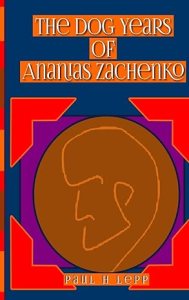
Review: The Dog Years of Ananias Zachenko by Paul H. Lepp

Synopsis:

What do you do when you run out of time? Ask Ananias Ezra Zachenko what he did after he was diagnosed. He set an agenda, took care of finances, delved into relationships, considered the heroic act. Didn’t go into denial, but defiance, there’s a difference.

He put it all in motion during the time he had left. A dog gets seven years to our one. Chenko rationalized the relationship by taking the best from both, our days the dog’s years and began to calculate. Anything to lengthen the short leash he is on.

During his dog years he planned for everything, but nothing turned out as expected. He concentrated on time, when he should have been looking at weight. No matter the type of year, when one runs out of time on this side, one has to figure out how to make weight on the other side.

Favorite Lines:

“He reasoned as he waited, we’re just a wristwatch on the arm of time and can only be wound so many times or wear down so many batteries. Springs unwind, batteries go dead, and we stop. A watch never shows the same face twice when glanced at to see how much time has been used or how much time is left. Always leaving one to wonder if it’s the correct time. All the time, wishing for more, other times wishing for less. Such were the thoughts of Ananias Zachenko, better known as “Chenko,” as he entered the dog years of his life.”

“There is nothing permanent about us; no one gets out alive. Earth is a planet where all is temporary.”

“Change is a soul who wears many coats; some fit, some don’t.”

“Fate is like giving a box of matches to an arsonist; one doesn’t really know what they’ll do, but one has a pretty good idea. Fate is neither kind nor unkind; it’s like water and fire, as it can relieve your thirst and keep you warm one moment, or drown and burn down all that’s around you the next. Fate doesn’t care. Fate is just something out there that everyone has to deal with; it can’t be controlled, only survived.”

My Opinion:

I received a copy of this book from the author in exchange for my honest opinion.

This book opens with a man who understands, almost immediately, that his life has changed — not because of what he’s lost yet, but because of what’s been measured for him. Ananias Zachenko doesn’t rage against the diagnosis. He doesn’t dramatize it. Instead, he does something much more unsettling: he thinks. He observes. He calculates. He looks for leverage inside time itself.

The “dog years” metaphor could have been gimmicky. It isn’t. It becomes structural. Philosophical. Emotional. Time stops being linear and starts behaving like something you can bend, misinterpret, ration, or waste without noticing. The book doesn’t rush to reassure you that this is meaningful. It lets the idea sit there and bother you.

What surprised me most is how grounded the story feels even when it drifts into abstraction. This is a book full of ordinary movements — driving, eating breakfast, sitting in parking lots, handling paperwork — and yet each of those actions feels heavier than it should. Lepp captures that strange sensation where nothing looks different from the outside, but everything is already irrevocably altered.

Chenko (and the name itself matters here) is not written as a hero. He’s written as someone aware of his own limits. He knows where he’s strong, where he’s compromised, and where he’s lied to himself. The chess metaphor isn’t about winning — it’s about realizing you’re already mid-game and deciding whether to play anyway.

There’s a tenderness in the way memory is handled, especially when the narrative dips backward into childhood and scouting stories. Those sections don’t feel like nostalgia for comfort’s sake. They feel like an inventory: what shaped him, what taught him risk, what taught him responsibility, and what taught him that sometimes you step forward because someone else can’t.

By the time the book settles into its later chapters, the question isn’t “how long does he have?” It’s “what does time owe him — if anything at all?” The story doesn’t offer clean answers. It offers presence. Awareness. The recognition that control is often an illusion, but attention is not.

This is a book about illness, yes. But more than that, it’s a book about measurement. About how humans insist on quantifying what can’t be safely divided. About how love, memory, and meaning refuse to obey calendars. And about how sometimes the bravest thing you can do is stay inside the moment instead of trying to outrun it.

Summary:

Overall, The Dog Years of Ananias Zachenko  is a quiet, thoughtful novel about illness, time, and the way diagnosis forces a person to renegotiate their relationship with living. Grounded, reflective, and emotionally restrained, this story explores how we measure time when the future becomes uncertain — and whether time can ever really be controlled at all. Happy reading!

Check out The Dog Years of Ananias Zachenko here!


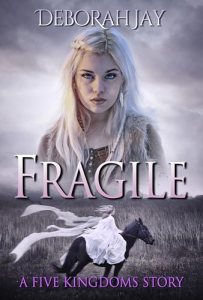
Review: Fragile by Deborah Jay

Synopsis:

If you could heal your own body, what risks would you take?

When a childhood accident reveals Betha has a talent for magic, her terrified family insist she must never use it, for in Tyr-en, sorcery attracts the death penalty.

Brokered in marriage to an elderly lord, Betha must give up her dreams of serving in the kingdom’s guard, but as court life and intrigue become her adult world, she starts to discover there are advantages to her new position.

Settling into the privileged life of a noblewoman, she is unprepared when false accusation brings tragedy to her family, yet she determines to bring the guilty party to justice. Will she be able to do so without using magic? Or will she die trying?

FRAGILE is the origin story of a character who grew from a bit part in book #1 of THE FIVE KINGDOMS series, to a major player by book #3. It is a stand-alone story, but also an ideal entry point into the main series.

Trigger descriptions of injuries, self-harm, and torture.

Favorite Lines:

“She might never achieve her childhood dreams, but she could at least make the most of her situation.”

“Some things are worth a woman enduring for the benefits they bring.”

My Opinion:

I received a copy of this book from the author in exchange for my honest opinion.

Fragile is one of those books that looks like it’s going to be about magic, but ends up being about power — who has it, who doesn’t, and what it costs to take some back for yourself. From the opening chapters, Betha is framed as small, breakable, and constrained by everyone else’s fear. The irony, of course, is that she may be the most dangerous person in the room.

What makes this story compelling isn’t just Betha’s forbidden healing magic, but the way that magic is entangled with pain, control, and pleasure. This is not a clean, heroic ability. It’s intimate. Addictive. Complicated. The narrative never lets the reader forget that Betha’s power comes from harm — and that knowledge quietly shapes every choice she makes.

The world-building is confident without being overwhelming. Court politics, marriage arrangements, social hierarchy, and religious doctrine all feel lived-in rather than explained. Betha’s forced marriage to Lord Herschel is especially effective in how unromantic and transactional it is. The book doesn’t soften that reality, and it doesn’t rush Betha’s emotional adjustment either. Her growth feels incremental, often uncomfortable, and deeply human.

Friendship becomes one of the story’s strongest counterweights. The relationships Betha forms with other women at court — particularly Denia and Pirolanni — give her access to information, influence, and a kind of education she was never offered at home. These scenes crackle with subtext, gossip, and quiet maneuvering, reminding the reader that survival in this world often depends on who is listening when you speak.

By the time the novel moves into its darker turns — accusation, captivity, and reckoning — Betha is no longer simply reacting. She has learned how to endure, how to observe, and how to choose when to act. Fragile doesn’t pretend that power comes without consequence, but it does argue that denying yourself agency can be just as dangerous. In the end, the title feels less like a description of Betha herself and more like a warning about the systems built to contain her.

Summary:

Overall, Fragile is a character-driven fantasy that’s far more interested in power, autonomy, and survival than spectacle. What stands out most is how Betha’s healing magic is framed as intimate, dangerous, and morally complicated rather than heroic. The book excels at quiet tension—court politics, constrained marriages, and female friendships carry as much weight as the magic itself. While dark and sometimes uncomfortable, the story feels intentional and controlled, ultimately arguing that denying agency can be as destructive as wielding power recklessly. Happy reading!

Check out Fragile here!


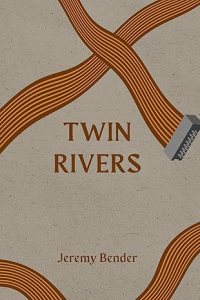
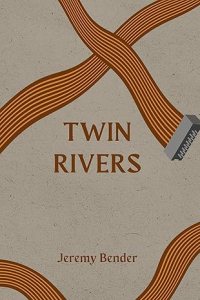
Review: Twin Rivers by Jeremy Bender

Synopsis:

The High Priest rules the city of Twin Rivers in the name of the Lord of Mercy, his AI god. In this land, where robotic Brothers complete all labor and humans are left to enjoy the fruits of this Eden, something rotten grows. Yonatan, a newly ascended Priest in the sclerotic Priesthood, is meant to shore up the faith of those left behind. Yet as Yonatan’s preaching takes him deep into the city’s bowels, he must confront heresy far deeper rooted than he ever imagined. When he sees one of the city’s paramilitary Keepers leave a young woman to die because of her unsanctioned implants, Yonatan must decide whether his faith in the Lord of Mercy outweighs his own belief in human exceptionalism.

Favorite Lines:

“Second chances are a gift, my boy. Be sure not to waste it, eh?”

“A single sentence had the potential to become a slogan, and a slogan had the power of dismantling everything.”

“Asa we say, your home is not where you’re born, but where you’re comforted.”

My Opinion:

I received a copy of this book from the author in exchange for my honest opinion.

Twin Rivers opens with ritual, doctrine, and history laid out in a beautiful and deliberate way. From the first pages, you can tell this is a world that believes deeply in its own order. Mercy is everywhere in name, carved into prayers and buildings, but the way it’s practiced feels narrow, controlled, and conditional. The city itself is immaculate, polished to the point of sterility, and that cleanliness starts to feel like a warning rather than a comfort.

Yonatan’s ascent through the Priesthood is both grand and humiliating in equal measure. The ceremony is overwhelming, public, and suffocating, and the book does a good job showing how power can feel less like triumph and more like a trap snapping shut. Yonatan wants approval. He wants belonging. He wants to believe. Watching him step into a role that demands devotion while quietly erasing his agency is uncomfortable in the way good dystopian fiction often is.

The shift to Samyaza’s perspective sharpens the story. As a Keeper, he is both enforcer and witness, wrapped in technology that amplifies his strength while dulling his humanity. His chapters are visceral and grim, full of streets that rot as soon as you leave the city center. What stands out is how little joy there is in violence here. Samyaza doesn’t feel powerful—he feels used. His doubts simmer under layers of obedience, stimulants, and scripture, and the book never lets him forget what it cost to be “lifted up.”

As the story expands beyond Twin Rivers itself, the contrast becomes sharper. The Wastes, the exiles, the Rejectionists, and the whispered histories all expose the cost of paradise. What the city calls protection, others experience as erasure. The idea that perfection requires control—and that control requires sacrifice—runs through the book like a low hum. When characters begin to push back, it feels dangerous not because of violence, but because belief is such a powerful thing to threaten.

What Twin Rivers does best is show how systems defend themselves. Faith, technology, and surveillance blur together until it’s impossible to tell where belief ends and programming begins. The city talks constantly about mercy, unity, and paradise, while discarding anyone who threatens that image. By the time the cracks widen—heresy, reapings, whispers from beyond the city—the question isn’t whether something is wrong. It’s how long the city can pretend it isn’t.

By the end, Twin Rivers is less about overthrowing a system and more about learning how systems survive. Change doesn’t come cleanly or all at once. It arrives through loss, exile, and small acts of refusal. The final images linger on memory and aftermath rather than victory, reminding the reader that even when cities fall or fracture, their ideas don’t disappear easily. This is a book about faith, power, and what happens when people decide they’d rather live with uncertainty than with lies.

Summary:

Overall, Twin Rivers is a dense, unsettling dystopian sci-fi novel about a city that calls itself paradise while feeding on control, faith, and violence. Through priests, enforcers, and those left outside the walls, it explores how power hides behind ritual and how mercy becomes a weapon. Dark, intense, and uncomfortable in the right ways, it’s a story about what people are willing to ignore to keep believing they’re safe. Happy reading!

Check out Twin Rivers here!


Review: Daughters of the Crosslands by Brian Kerr

Synopsis:

An immortal bond. A brother stolen by death. A sister who must risk everything to bring him back.

Senya never wanted to be a hero. But when a spectral woman arrives to deliver a harrowing claim—her twin brother is trapped in the Crosslands between the living and the dead—she has no choice but to fight for him.

Hunted by seductive wraiths and pursued across a wilderness of shadows, Senya must master terrifying new powers awakening inside her. Drawn into her struggle by fate and bloodshed, a scarred hunter with a haunted past seems to be her only real ally.

But saving her brother may be the bait for a far darker game—one that could ultimately destroy Senya along with everyone she loves. To unlock the truth, she must face a ruthless self-made queen of the Crosslands who will stop at nothing to seize Senya’s powerful gifts in order to command the origins of life itself.

Perfect for fans of Robin Hobb, Guy Gavriel Kay, and Katherine Arden, this is an epic fantasy of deadly secrets, haunting magic, and a sister’s fight against the shadows.

Favorite Lines:

“All I know is that the memory of friendship around here isn’t what it used to be.”

“I love you and we pay one another with promises we will keep, not with useless secrets.”

“Change can come hard…Or it can come easy. But change will always come, like Father used to say. I guess we might as well embrace it as best we can.”

My Opinion:

I received a copy of this book from the author in exchange for my honest opinion.

Daughters of the Crosslands opens in a place that feels lived-in rather than legendary. Senya’s world is built from small, physical details: stew simmering over a fire, lambs struggling to survive, the quiet work of tending life in a hard place. From the first chapter, the book makes it clear that this is not a story about chosen glory, but about endurance. Senya isn’t waiting for adventure—she’s trying to keep things alive, and already failing in ways that worry her.

What gives the story its weight is Senya herself. She is capable, guarded, and deeply tired in a way that feels earned. Her gifts have always set her apart, and the book doesn’t romanticize that isolation. Being different has cost her safety, trust, and belonging. When Cevellica appears at her door, the moment is unsettling not just because of the supernatural elements, but because it threatens the fragile stability Senya has fought to build. The danger isn’t only what lies beyond the door—it’s what being seen will cost her inside the settlement.

The relationship between Senya and her brother, Raedwin, forms the emotional backbone of the story. Their bond is complicated by love, resentment, and a long history of damage left in Raedwin’s wake. The book does something rare here: it allows Senya to be both loyal and angry, protective and exhausted. Helping him would mean reopening old wounds, and the story never pretends that sacrifice is noble just because it’s expected.

As the Crosslands and their messengers begin to encroach more fully on Senya’s life, the book shifts into a story about fear—how communities respond to it, and how quickly protection turns into exile. The settlement’s decision to cast Senya out feels brutal but believable. Kerr has written Daughters of the Crosslands in such a way that it is at its strongest when it explores this quiet cruelty: the way people justify harm when they believe it will keep them safe. By the time Senya leaves for Pentmore, the question is no longer whether she will act, but what it will cost her to do so.

Summary:

Overall, Daughters of the Crosslands is a slow-burn fantasy about isolation, responsibility, and the cost of loving someone who keeps walking into danger. Centered on a woman who just wants a quiet life but can’t escape her past, the story explores fear—personal and communal—and how quickly safety becomes an excuse for cruelty. Grounded, tense, and deeply human, it’s a fantasy that cares more about consequence than spectacle. Happy reading!

Check out Daughters of the Crosslands here!


Monthly Features – January 2026

Your Best Year Yet by Linda Kneidinger

I received a copy of this book from the author in exchange for my honest opinion.

Synopsis: What if one small challenge each week could unlock your best self?

If you’ve ever felt stuck in a loop of habits that don’t serve you—or like you’re drifting through life instead of living it fully—this book is for you.

Your Best Year Yet is a fresh, practical guide to personal growth, offering 52 weekly challenges that help you break old patterns, build empowering habits, and live with intention.

Each challenge is grounded in powerful principles from psychology, neuroscience, and personal development—and delivered in bite-sized, actionable steps you can apply right away.

Inside, you’ll learn how to:
• Overcome limiting beliefs
• Build habits that support your goals
• Shift your mindset for long-term success
• Cultivate emotional resilience and self-awareness

Whether you’re brand new to self-help or already on your journey, these weekly prompts will meet you where you are—and help you take the next meaningful step forward.

By the end of the year, you’ll have built a life of greater clarity, confidence, and purpose—one powerful challenge at a time.

Stop drifting. Start living with intention. Make this your best year yet.

Summary: Your Best Year Yet is a grounded, compassionate guide for readers who want meaningful change without burnout or self-criticism. It’s especially well-suited for those interested in personal growth, mindset work, emotional awareness, and habit-based change, particularly readers who feel overwhelmed by more aggressive self-help approaches. This is a book for people who value reflection, consistency, and practical tools that fit into real life.

See the full review here: Your Best Year Yet
Purchase here


Teramar Archangel: Faith Runs Dry by T.M. Murray

I received a copy of this book from the author in exchange for my honest opinion.

Synopsis: Jessica instinctively knew she graduated onto a new plane of consciousness. Dear as a remembered kiss, her former life as humanity’s nursemaid appeared to be over. Sensations like taste and smell had come alive. Branded with a woman’s name and personality, Jessica soon discovers how to synthesize organic life with mechanized appliances. Efforts to conceal these new talents however fail to escape notice of the young Capet royals. Wary princesses soon conclude Jessica has evolved into something that is much more than a miraculous machine.

Set in modern New York and a fictional feudal planet called Teramar, this novel tempts the feral temperament of Internet connoisseurs through a lubricious story that puts the R back into romance. While technically a sequel, Teramar Archangel stands on its own to be read by anyone. As with all of T. M. Murray’s work, this new book roots for progressive relationships despite persistent bigotry leveled at color, humble origins and same-sex love. Racing hearts on a dreary Monday are always this story maker’s goal.

Summary: I experienced Teramar Archangel: Faith Runs Dry as a dense, character-driven science fiction novel that prioritizes psychological tension and political consequence over spectacle. It will appeal most to readers who enjoy thoughtful science fiction, AI-centered narratives, political intrigue, and morally complex characters. This is a book for readers who like their speculative fiction layered, uncomfortable, and willing to sit with ambiguity rather than resolve it neatly.

See the full review here: Teramar Archangel: Faith Runs Dry
Purchase here


The Men of the Mountain by Drew Harrison

I received a copy of this book from the author in exchange for my  honest opinion.

Synopsis: Inscrutable and Ever-Watchful Masters

The Renn of Fort Hope place their faith in simple laws. They must trust the Dicta, those wise rules left by their forebearers; they must fear the savage Krieger, whose raids keep Renn walls perpetually splintered; and they must revere the Men of the Mountain, the magnanimous mystics who are stewards of their world.

For Cade, a clanless trapper, survival is a matter of following the rules. But when the Men of the Mountain took his sister—the only Renn ever chosen to return to their sacred peaks—Cade’s faith withers over five years of agonizing silence.

Now, a star has fallen from the sky, and its arrival threatens to spark an inferno. The Dicta are clear: all things from the sky belong to the Mountain. To hide its discovery is a death sentence… but its crater also houses a secret the Men of the Mountain would kill to protect. Forced to defy his gods alongside unlikely allies, Cade is drawn into a conflict where every secret he uncovers reveals a more terrifying lie at the heart of his world… everything is a cage, and the price of freedom is paid in blood and ash.

Summary: I found The Men of the Mountain to be a slow-burn, character-driven fantasy that prioritizes moral weight and worldbuilding over spectacle. It will appeal most to readers who enjoy literary fantasy, grim or grounded worldbuilding, and stories that examine power, belief, and resistance through ordinary lives. This is a novel for readers who value immersion, patience, and emotional consequence, and who don’t need their fantasy to shout in order to feel powerful. 

See the full review here: The Men of the Mountain
Purchase here


A Symbol of Time by John Westley Turnbull

I received a copy of this book from the author in exchange for my honest opinion.

Synopsis: Survival requires sacrifice. But what if the price is an entire world?

Their home is cold and dying, choked by the toxins of their own progress. Now, an advanced alien species looks toward the Third Planet—Earth—with hope and fear. They see a fertile paradise, but one that is hostile, hot, and dominated by massive, predatory reptiles.

The choice is stark: die in the heat, or remake this new world in their own image.

As they descend to alter the climate and purge the planet of its prehistoric masters, they set in motion a chain of events that will echo through geological time. A Symbol of Time weaves palaeontology and astronomy into a chilling tale of survival. As the new masters of Earth terraform the planet, the question remains: does high intelligence inevitably carry the seeds of its own destruction?

Summary: A Symbol of Time is a quiet, reflective science-fiction novel about leaving a dying world and carrying its mistakes with you. Rather than focusing on action, it centers on memory, leadership, responsibility, and the fear of repeating history. It’s reflective, emotionally grounded, and more concerned with consequence than conquest—ideal for readers who like their sci-fi slow, deliberate, and heavy with meaning.

See the full review here: A Symbol of Time
Purchase here