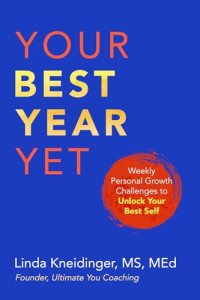
Your Best Year Yet by Linda Kneidinger
I received a copy of this book from the author in exchange for my honest opinion.
Synopsis: What if one small challenge each week could unlock your best self?
If you’ve ever felt stuck in a loop of habits that don’t serve you—or like you’re drifting through life instead of living it fully—this book is for you.
Your Best Year Yet is a fresh, practical guide to personal growth, offering 52 weekly challenges that help you break old patterns, build empowering habits, and live with intention.
Each challenge is grounded in powerful principles from psychology, neuroscience, and personal development—and delivered in bite-sized, actionable steps you can apply right away.
Inside, you’ll learn how to:
• Overcome limiting beliefs
• Build habits that support your goals
• Shift your mindset for long-term success
• Cultivate emotional resilience and self-awareness
Whether you’re brand new to self-help or already on your journey, these weekly prompts will meet you where you are—and help you take the next meaningful step forward.
By the end of the year, you’ll have built a life of greater clarity, confidence, and purpose—one powerful challenge at a time.
Stop drifting. Start living with intention. Make this your best year yet.
Summary: Your Best Year Yet is a grounded, compassionate guide for readers who want meaningful change without burnout or self-criticism. It’s especially well-suited for those interested in personal growth, mindset work, emotional awareness, and habit-based change, particularly readers who feel overwhelmed by more aggressive self-help approaches. This is a book for people who value reflection, consistency, and practical tools that fit into real life.
See the full review here: Your Best Year Yet
Purchase here
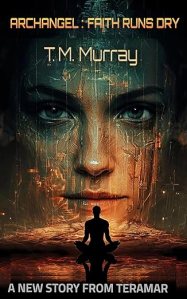
Teramar Archangel: Faith Runs Dry by T.M. Murray
I received a copy of this book from the author in exchange for my honest opinion.
Synopsis: Jessica instinctively knew she graduated onto a new plane of consciousness. Dear as a remembered kiss, her former life as humanity’s nursemaid appeared to be over. Sensations like taste and smell had come alive. Branded with a woman’s name and personality, Jessica soon discovers how to synthesize organic life with mechanized appliances. Efforts to conceal these new talents however fail to escape notice of the young Capet royals. Wary princesses soon conclude Jessica has evolved into something that is much more than a miraculous machine.
Set in modern New York and a fictional feudal planet called Teramar, this novel tempts the feral temperament of Internet connoisseurs through a lubricious story that puts the R back into romance. While technically a sequel, Teramar Archangel stands on its own to be read by anyone. As with all of T. M. Murray’s work, this new book roots for progressive relationships despite persistent bigotry leveled at color, humble origins and same-sex love. Racing hearts on a dreary Monday are always this story maker’s goal.
Summary: I experienced Teramar Archangel: Faith Runs Dry as a dense, character-driven science fiction novel that prioritizes psychological tension and political consequence over spectacle. It will appeal most to readers who enjoy thoughtful science fiction, AI-centered narratives, political intrigue, and morally complex characters. This is a book for readers who like their speculative fiction layered, uncomfortable, and willing to sit with ambiguity rather than resolve it neatly.
See the full review here: Teramar Archangel: Faith Runs Dry
Purchase here
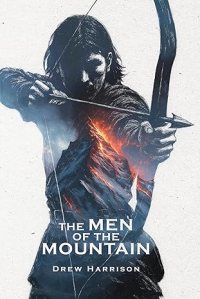
The Men of the Mountain by Drew Harrison
I received a copy of this book from the author in exchange for my honest opinion.
Synopsis: Inscrutable and Ever-Watchful Masters
The Renn of Fort Hope place their faith in simple laws. They must trust the Dicta, those wise rules left by their forebearers; they must fear the savage Krieger, whose raids keep Renn walls perpetually splintered; and they must revere the Men of the Mountain, the magnanimous mystics who are stewards of their world.
For Cade, a clanless trapper, survival is a matter of following the rules. But when the Men of the Mountain took his sister—the only Renn ever chosen to return to their sacred peaks—Cade’s faith withers over five years of agonizing silence.
Now, a star has fallen from the sky, and its arrival threatens to spark an inferno. The Dicta are clear: all things from the sky belong to the Mountain. To hide its discovery is a death sentence… but its crater also houses a secret the Men of the Mountain would kill to protect. Forced to defy his gods alongside unlikely allies, Cade is drawn into a conflict where every secret he uncovers reveals a more terrifying lie at the heart of his world… everything is a cage, and the price of freedom is paid in blood and ash.
Summary: I found The Men of the Mountain to be a slow-burn, character-driven fantasy that prioritizes moral weight and worldbuilding over spectacle. It will appeal most to readers who enjoy literary fantasy, grim or grounded worldbuilding, and stories that examine power, belief, and resistance through ordinary lives. This is a novel for readers who value immersion, patience, and emotional consequence, and who don’t need their fantasy to shout in order to feel powerful.
See the full review here: The Men of the Mountain
Purchase here
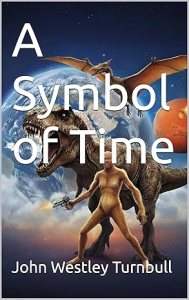
A Symbol of Time by John Westley Turnbull
I received a copy of this book from the author in exchange for my honest opinion.
Synopsis: Survival requires sacrifice. But what if the price is an entire world?
Their home is cold and dying, choked by the toxins of their own progress. Now, an advanced alien species looks toward the Third Planet—Earth—with hope and fear. They see a fertile paradise, but one that is hostile, hot, and dominated by massive, predatory reptiles.
The choice is stark: die in the heat, or remake this new world in their own image.
As they descend to alter the climate and purge the planet of its prehistoric masters, they set in motion a chain of events that will echo through geological time. A Symbol of Time weaves palaeontology and astronomy into a chilling tale of survival. As the new masters of Earth terraform the planet, the question remains: does high intelligence inevitably carry the seeds of its own destruction?
Summary: A Symbol of Time is a quiet, reflective science-fiction novel about leaving a dying world and carrying its mistakes with you. Rather than focusing on action, it centers on memory, leadership, responsibility, and the fear of repeating history. It’s reflective, emotionally grounded, and more concerned with consequence than conquest—ideal for readers who like their sci-fi slow, deliberate, and heavy with meaning.
See the full review here: A Symbol of Time
Purchase here
 Likely Story